
Which Farm Systems Got the Biggest Boost at the Deadline?
A few teams were able to completely overhaul their farm systems at this year's trade deadline. Who got the biggest boost?
With the trade deadline officially in the books, we can finally look back on the chaos that ensued and break down each of the moves that took place. Although it’s easy to consider many of the selling teams losers simply for the fact that the talent on their MLB rosters thinned out, it’s important to look at the return those teams received.
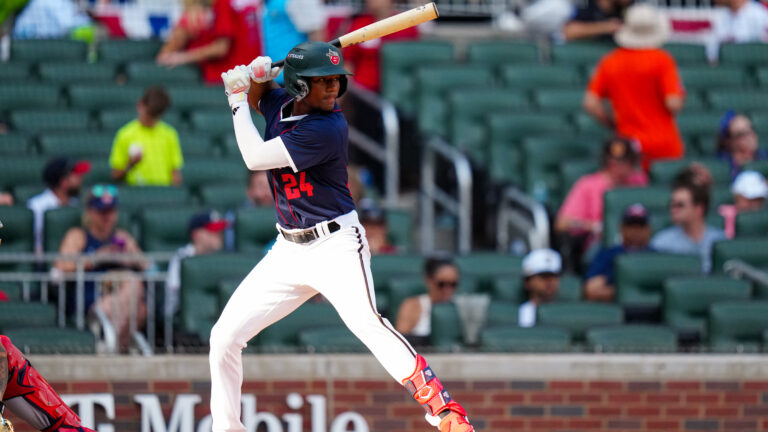
This year’s deadline saw quite a few top prospects in blockbuster deals, with multiple members of our top 100 being included in deals. Most notably, Leo De Vries, our number seven overall prospect, was one of these players.
With so many of these selling teams acquiring top-of-the-line talent, quite a few organizations were able to totally change their farm systems. In this story, we’ll cover the top three farm systems that improved with their deadline deals.
You may find a few of these squads shocking, as their big league clubs either didn’t get much worse, or they’re still relatively close to being a competitive team. Adding even more weapons to these future cores will only improve these teams as well.
Let’s dive in aland take a closer look at the three teams whose farm systems improved on deadline day.
Baltimore Orioles
With so many teams significantly improving their farm systems on deadline day, the race for the top spot was quite close. Unfortunately, the Baltimore Orioles just barely missed out on the number two spot. Although they missed this ranking, they still made some massive strides forward on deadline day, acquiring 16 prospects in total.
Due to their rough 2025 season, the Baltimore Orioles were in a key position as a seller, and they made the absolute most of it. The deal that proved most impactful for them in terms of bolstering the farm system was the Ryan O’Hearn trade, which netted them six solid prospects from the Padres in exchange for O’Hearn and Ramon Laureano.
Boston Bateman was arguably the most intriguing piece of this deal, as the former second-rounder has pitched quite well to this point in his career. Recording an ERA in the low 4.00s while posting solid strikeout numbers during his time with the Padres, Bateman is quite the intriguing piece.
He’s also flashed the potential to have multiple plus-pitches, including a fastball that touches the high-90s paired with a devastating slider. He’s got the potential to be a middle-of-the-rotation level starting pitcher, the type of arm the Orioles have desperately been searching for.
In addition to Bateman, the Orioles also received a trio of intriguing offensive prospects in Cobb Hightower, Brandon Butterworth, and Victor Figueroa. All three players have decent ceilings, especially given the fact that O’Hearn and Laureano were sellable assets.
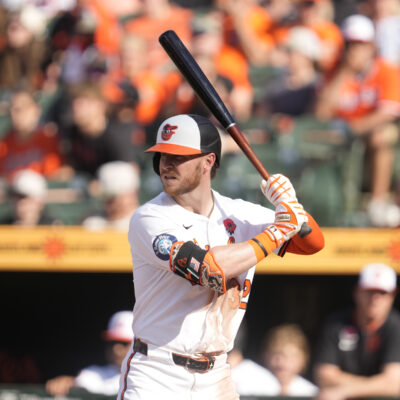

The Orioles also acquired Tyson Neighbors in the same deal, another interesting arm that should have some solid upside. The right-hander had pitched to a 2.57 ERA at Double-A before the deal, indicating some positive value may be on the horizon for him.
The Orioles didn’t just get solid players from the Padres, as they also made a solid deal with the Toronto Blue Jays, which netted them Juaron Watts-Brown in exchange for Seranthony Dominguez.
Watts-Brown is quite the interesting arm, as he’s posted an ERA of 3.87 alongside a strikeout rate of over 30% this season in the minor leagues. He’s quite the return for Dominguez, as he’s a rental piece for the Blue Jays.
These were just the highlights of the Orioles’ trades, but they did net some decent, smaller pieces, as well, such as Tanner Smith, Micah Ashman, and others. For the Orioles, this deadline was quite successful in bolstering their farm system.
Athletics
The Athletics were an interesting team heading into deadline day, as they didn’t have a clear indication of what they were going to do. Although they did end up selling, this wasn’t exactly clear leading up to deadline day, especially given the magnitude to which they sold.
The Athletics ended up selling off their star closer, Mason Miller, which left them with one of the best returns for a relief pitcher in this year’s deadline. This deal is what ultimately put them above the Orioles in terms of how much their farm systems improved due to the prestige of the players they received.
Our number seven-ranked prospect, Leo De Vries, was the headliner in this deal, and it’s not every day you see a player of this caliber moved on deadline day, let alone for a closer. De Vries is the highest-ranked prospect to ever be traded on deadline day, and he’s one of the highest-ranking prospects to ever be traded in general.
It’s easy to see why De Vries is viewed as such a hot commodity when you dive into his tools. He’s still just 18 years old, but his tools are well above his age. So far this season, De Vries is doing well in High-A. Across 89 games, he has slashed .246/.354/.405 with eight homers and a 114 wRC+, metrics that put him far ahead of his peers at just 18 years old.
His bat is the driving piece behind his game, as his contact skills and plate discipline allow him to stand above the rest. De Vries is also a switch-hitter, which just adds to the uniqueness of his game. He’s also a solid athlete, a strength that should help keep him at shortstop long term.
Despite De Vries’ ranking as a top prospect putting him well above the other pieces of this deal, the Athletics also netted two solid pitching prospects in Braden Nett and Henry Baez. Nett and Baez are both quite interesting arms, as they’ve pitched well so far this season.
Nett and Baez have showcased decent strikeout numbers, and both have posted ERAs below 3.55 this year in the minor leagues. A’s fans should be excited about them, as they’ll both become decent arms once in the big leagues.
The Athletics landed some other prospects in minor deals they did, such as the Miguel Andujar trade that brought them Kenya Higgins. None of these moves surpass the one that sent De Vries to the A’s, though, as it’s hard to surpass a consensus top 10 prospect being acquired.
Overall, the Athletics saw an opportunity to have one of the best moves by a seller at this year’s deadline, and they took it. Despite not receiving a high quantity of players back, the A’s certainly capitalized on the quality of the players they had access to.
Minnesota Twins
When it comes to the biggest sellers at this year’s deadline, you won’t find a single team who sold harder than the Minnesota Twins. They ended this year’s trade deadline by selling off 10 total players from their 26-man roster. However, with such an aggressive sell, the Twins’ farm system grew exponentially.
The trade that most significantly bolstered their farm system was the Jhoan Duran deal, where the Twins capitalized on the seller’s market for relievers in a big way. They acquired two top 100 prospects from the Phillies, Eduardo Tait and Mick Abel.
Tait has played well so far this season between two levels. In 87 games this year, he’s slashed .257/.320/.438 with 12 homers and a 108 wRC+. While these numbers aren’t eye-popping at first, it’s his tools that really stand out.
Similarly to Leo De Vries, Tait is also just 18 years old, and he’s very advanced for his age. Tait’s power will always be his main tool, as he still has some more work to do on his hit tool. Regardless, he’s quite the solid piece for the Twins to get back for Duran, as he fits into their future core nicely.
The Twins also received Mick Abel in this same deal, a right-handed pitcher with some serious upside if all goes as planned for him. Abel has bounced between Triple-A and the big leagues this season, where he’s showcased some interesting tools.
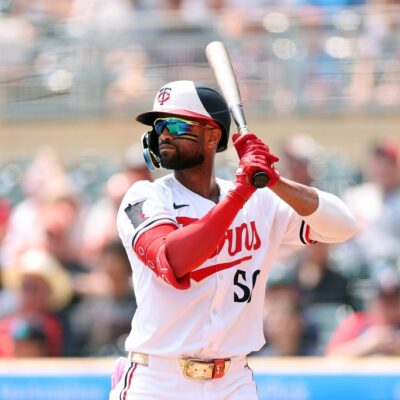

Since Abel has spent limited time in the big leagues, it’s important to examine his Triple-A data more closely. He’s pitched to a 2.16 ERA across 79 innings, striking out just over 27% of batters he faces. If these numbers can carry over to the big leagues, he’ll be in good shape moving forward.
While this deal was the most notable trade the Twins pulled off, they were also able to land another member of our top 100 for Louis Varland and Ty France. This prospect was left-handed pitcher Kendry Rojas.
Due to injuries, Rojas has bounced all over the minor leagues this season while rehabbing. He’s posted an ERA of just over 3.00 across all minor league levels while showcasing good stuff, including a fastball he regularly runs up into the upper 90s. Rojas is now healthy and with the Twins’ Triple-A affiliate, making this one of the most underrated prospect moves at the deadline.
While these were the biggest names the Twins received from their deadline day deals, they did land some other interesting pieces. Hendry Mendez, Garrett Horn, Enrique Jimenez, and others are among these players all helped bolster their farm system in a big way.
For Twins fans, seeing their team pull off such an aggressive sell was quite disappointing, as many franchise favorites left the team. However, this deadline was perfect for building their future, as they acquired three top 100 prospects, while adding plenty of other decent prospects in the process.
All things considered, no team improved their farm system more than the Twins at this year’s deadline.

Written by
Jay Staph, a huge baseball fan and stat nerd, founded and ran his own baseball writing website, BSBWrites, at just 16-years-old. With focal points around prospects,…