
How Should MLB’s Surprise Contenders Approach the Trade Deadline?
With a handful of teams stuck between picking trade deadline directions, we offer a solution for the Cardinals, Pirates, and Marlins.
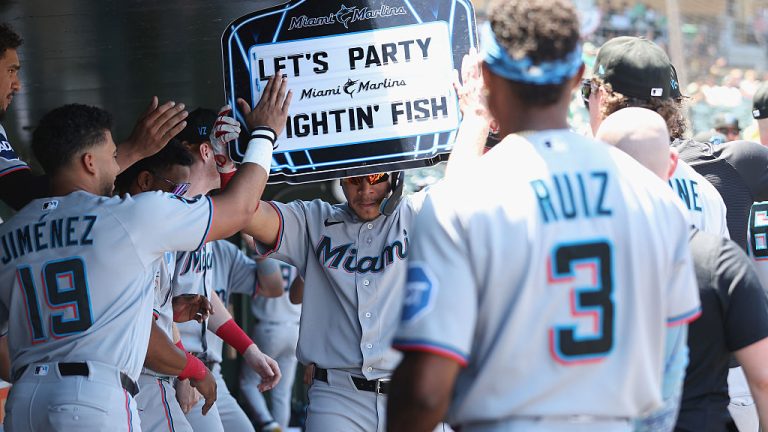
The trade deadline is relatively straightforward for teams at the extremes. Established World Series contenders should be looking for the final pieces of a championship roster. Teams buried in the standings should be identifying which short-term assets can be converted into future value.
The most interesting decisions belong to the teams in between.
The Pittsburgh Pirates, St. Louis Cardinals, and Miami Marlins have all played their way into the National League Wild Card picture despite entering the season as postseason underdogs. None should allow a promising first half to convince them that they are one blockbuster away from becoming a complete contender.
At the same time, reflexively selling would ignore both what these teams have accomplished and what their young players may be building.
How each organization approaches the deadline should depend on three questions: How sustainable is the current roster? Does the farm system have enough prospect capital to make a meaningful addition? And how much should two months of playoff probability influence the organization’s long-term plan?
All stats updated prior to games on Saturday, July 18
Pittsburgh Pirates
How Did They Get Here?
For once, Pittsburgh’s resurgence begins with the offense.
The Pirates entered the season expecting their pitching staff to carry an uncertain lineup. Instead, the lineup has quietly become one of the better units in baseball.
Brandon Lowe has been worth the price of acquisition, entering the All-Star break with a 115 wRC+ and 2.7 fWAR. He has supplied the kind of left-handed power Pittsburgh has lacked for years while giving Bryan Reynolds another established hitter alongside him.
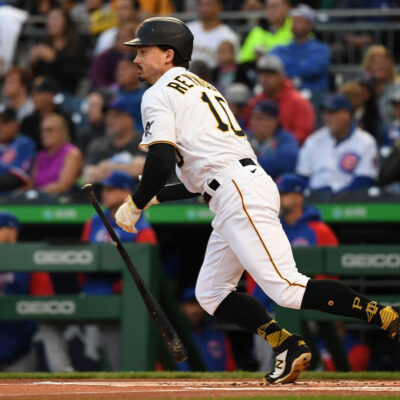
Reynolds is having one of the best seasons of his career and is on pace for his first three-win season since 2021. Ryan O’Hearn, another offseason addition, has further solidified the middle of the order. The Pirates no longer need Reynolds to generate nearly all of their credible offense.
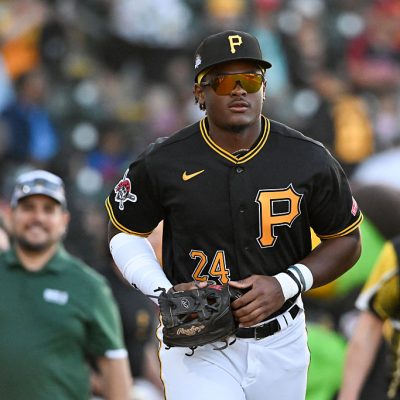
The supporting cast has also taken a step forward. Nick Gonzales has already established a career high with 1.9 fWAR, making this the most productive season of his career. Rookie Esmerlyn Valdez has provided an even more explosive jolt. His 186 wRC+ comes with the obvious small-sample disclaimer, but the power has been impossible to ignore.
More importantly, the lineup has continued producing while injuries have accumulated. Konnor Griffin, Oneil Cruz, and Spencer Horwitz have all missed time. Pittsburgh’s offense has not required perfect health or one unsustainable individual performance to remain productive.
The pitching staff presents a more complicated picture.
Braxton Ashcraft has paced the rotation, while Paul Skenes has encountered the first extended turbulence of his otherwise stellar career. Skenes remains the pitcher Pittsburgh would trust most in a postseason series, but he has not been quite as untouchable as he was during his first two major-league seasons.
The uncertainty comes behind Skenes and Ashcraft. Bubba Chandler has run hot and cold, which is unsurprising for a pitcher with his archetype. His best starts demonstrate why he was considered one of baseball’s most talented pitching prospects, but his inconsistency makes it difficult to treat him as a dependable postseason starter.
Jared Jones is beginning to find his footing after returning from injury, and his ceiling remains sky-high. The Pirates cannot yet assume, however, that he will immediately return to his best form while carrying a full starter’s workload.
That leaves Pittsburgh with two identifiable needs.
The bullpen has been stretched thin and could use another trustworthy late-inning option. In an ideal world, the Pirates would also acquire a more proven No. 3 starter while Jones works his way back and Chandler navigates the volatility that accompanies his profile.
The perfect addition would be capable of addressing both concerns: a proven major-league pitcher who could stabilize the rotation initially and transition into an important bullpen role if Jones and Chandler establish themselves during the second half.
Does the Farm System Have Enough to Buy?
Konnor Griffin’s graduation has removed the crown jewel from Pittsburgh’s farm system, thinning the organization’s top-end depth. The system is not barren, though. The Pirates still have enough desirable young talent to participate meaningfully at the deadline without sacrificing the foundation of their future roster.
Any serious discussion should begin by removing Seth Hernandez from the table.
Just Baseball ranks Hernandez as the No. 6 prospect in baseball. His combination of premium stuff, advanced pitchability, and frontline upside makes him the kind of player Pittsburgh should be trying to add around rather than use to acquire short-term help. No realistic deadline offer is likely to justify changing that calculation.
Edward Florentino is the best remaining position-player prospect in the system and ranks No. 35 on Just Baseball’s Top 100. Few minor-league hitters are capable of producing more majestic home runs. His swing is grooved to get the ball into the air to the pull side, while his high-end exit velocities provide a clear pathway toward significant offensive production.
Florentino has encountered some challenges at High-A, but those growing pains do not erase the offensive ceiling. He joins Hernandez as a player Pittsburgh should be extremely reluctant to discuss.
The Pirates also possess several intriguing arms, including Khristian Curtis, Hunter Barco, and Thomas Harrington. None would necessarily headline a major trade independently, but they give Pittsburgh options. One could slide into the major-league bullpen, while another could become part of a package for a more established big-league pitcher.
Murf Gray may be the most interesting deadline wild card in the system.
Gray was drafted out of college, so his production against lower-level competition requires context. It has nevertheless become difficult to dismiss. He produced a 171 wRC+ at Low-A before following it with a 141 wRC+ at High-A, including 15 home runs in his first 43 games at the level.
Gray’s combination of performance, proximity, and rising industry stock could make him particularly appealing to another organization. A package built around Gray and one of Pittsburgh’s upper-level arms could form the basis of an offer for bullpen help or a dependable big-league starter.
That is the line Pittsburgh should draw.
The system has enough depth to improve the major-league roster, but not enough remaining top-end talent to treat its best prospects as expendable. The Pirates can buy. They simply cannot afford to shop as though their farm system is bottomless.
Deadline Plan: Soft Buy
This is not the year for Pittsburgh to push all of its chips into the middle.
The Pirates remain an imperfect contender, and the volatility behind the top of the rotation makes it difficult to view them as one major acquisition away from becoming a clear National League favorite. Their position in the standings does not justify entering a bidding war for the deadline’s most expensive rental.
They should not stand still, either.
The organization has been vocal about wanting to maximize the seasons in which Skenes is both dominant and relatively inexpensive. That does not mean behaving recklessly at every deadline, but it does mean recognizing when the major-league roster has provided a legitimate reason to invest.
This offense is meaningfully better than what Pittsburgh has been trotting out during the early years of Skenes’ career. Reynolds is performing like a star again, the offseason additions have worked, Gonzales has taken a step forward, and Valdez has added another source of impact power.
Failing to support that group would be unnecessarily conservative.
There are internal avenues for improving the bullpen. Pittsburgh could transition one of its upper-level starters into relief work, and improved health may create additional flexibility. Relying entirely on those possibilities, however, would place too much faith in young pitchers who are either still developing or already being asked to cover important innings.
The Pirates should use a portion of their prospect capital to acquire one proven major-league arm. Multiple years of team control would be preferable, but Pittsburgh should not allow the pursuit of the perfect long-term fit to prevent it from acquiring useful short-term help at a reasonable price.
That means keeping Hernandez out of discussions and setting an extremely high bar for any deal involving Florentino. It also means being willing to build offers around the next tier of the system, potentially using Gray or one of the organization’s upper-level pitchers.
Deadline verdict: Soft buy.
Add one established pitcher capable of stabilizing the staff and covering meaningful innings down the stretch, but resist paying the premium required for a true frontline name. The Pirates have earned the right to improve this roster. They have not earned the right to mortgage the future for it.
St. Louis Cardinals
How Did They Get Here?
Only a few years ago, the Cardinals possessed one of baseball’s oldest and lowest-ceiling lineups. St. Louis was caught between declining veterans and a young core that had not developed quickly enough to replace them.
That version of the Cardinals is gone.
A genuine roster overhaul has transformed St. Louis into one of baseball’s most exciting collections of young offensive talent. Regardless of whether the Cardinals ultimately reach the postseason, the emergence of that group has completely changed how the organization should be discussed going forward.
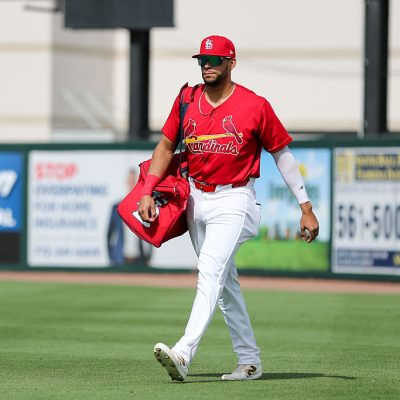
JJ Wetherholt has become the clearest symbol of that transformation. The rookie arrived in the majors and immediately established himself as an impact player, accumulating 3.5 fWAR before the All-Star break.
Wetherholt has not merely survived his first exposure to major league pitching. He has looked like one of the best players on a team in the playoff race.
Jordan Walker is no longer simply a good story from the Home Run Derby. He is one of the best right-handed power bats in baseball. Full stop.
The massive raw power was always present, but Walker previously struggled to consistently elevate the baseball enough to access it. His emergence gives St. Louis the kind of middle-of-the-order threat that can anchor a lineup rather than merely complement one.
Iván Herrera and Alec Burleson have remained steadily above average, carrying a 121 wRC+ and 127 wRC+, respectively. Neither needs to become the singular face of the offense. Their consistency provides a strong foundation around the higher ceilings of Wetherholt and Walker.
Lars Nootbaar remains a productive platoon bat capable of handling right-handed pitching and reaching base. Masyn Winn is not having his best offensive season, but his value has never depended exclusively on his bat.
Winn remains an elite defensive shortstop. Alongside Wetherholt, he gives St. Louis one of baseball’s best young up-the-middle defensive combinations.
The pitching staff has been considerably less overwhelming, but it has been plucky enough to keep the Cardinals competitive.
Dustin May has enjoyed a resurgence after signing a one-year contract. The former top prospect has remained healthy, restored some of the qualities that once made him one of baseball’s most intriguing young pitchers, and given St. Louis meaningful innings.
Michael McGreevy—Just Baseball’s Aram Leighton’s favorite innings eater—has done precisely that. McGreevy leads the Cardinals in innings despite striking out fewer than six batters per nine. His profile is not glamorous, but there is considerable value in a young starter who consistently takes the ball, limits free passes, and asks his defense to complete the job.
Kyle Leahy has provided a solid season with an ERA hovering around 4.00. Andre Pallante remains one of baseball’s premier ground-ball artists. Neither is a traditional frontline starter, but both have given St. Louis competitive innings.
The bullpen has followed a similar pattern. Riley O’Brien’s breakout has kept the unit afloat and supplied the Cardinals with a legitimate late-inning option.
Behind him, this is more a bullpen that survives through the sum of its parts than a true shut-the-door unit. St. Louis lacks the collection of overpowering relievers that would allow it to comfortably shorten games throughout a postseason series.
That distinction matters when evaluating what the Cardinals have accomplished.
They are not being carried by aging veterans enjoying temporary resurgences. The foundation of their success is a young position-player core that should remain relevant well beyond this season.
This team—and its record—is not a fluke.
That does not mean the Cardinals should sacrifice significant future value to chase a Wild Card berth. It does mean the broader conversation surrounding the franchise has changed. The question is no longer whether St. Louis possesses enough young talent to begin another competitive cycle.
Wetherholt, Walker, Herrera, Burleson, and Winn have already supplied that answer.
Does the Farm System Have Enough to Buy?
The Cardinals have rebuilt a more credible farm system than they possessed a few seasons ago, but they are not in a position to spend aggressively from it.
Just Baseball’s updated Top 100 includes four Cardinals prospects: Rainiel Rodriguez at No. 15, Jimmy Crooks at No. 85, Jurrangelo Cijntje at No. 88, and Liam Doyle at No. 94. Joshua Báez was one of the most notable players to narrowly miss the list.
That gives the organization legitimate talent, but those players should be viewed primarily as part of the next competitive core rather than as prospect capital waiting to be exchanged for a short-term upgrade.
Báez is the most immediate example. He has continued his offensive breakout at Triple-A, demonstrating the kind of power and athleticism that could soon force his way into the major-league lineup. His approach still carries risk, but he represents another potential impact bat for a team that is beginning to form a clear offensive identity.
The Cardinals could put together an attractive offer if they were determined to acquire a significant player. That does not mean doing so would be prudent.
This remains a talented but fragile roster whose pitching staff lacks both frontline certainty and overwhelming depth. Trading multiple meaningful prospects to marginally improve its chances of claiming a wild-card spot would run counter to the longer-term roster construction Chaim Bloom has begun.
The more complicated question is whether St. Louis should continue selling.
There is an unemotional team-building argument for doing so. May signed a one-year contract and has rebuilt his value during a successful season. Starting pitching is always coveted at the deadline, and moving him could allow St. Louis to convert a short-term reclamation success into another piece for the future.
O’Brien would be an even more aggressive name to dangle. His breakout has stabilized the back of the bullpen, and his remaining team control would make him attractive to contenders searching for late-inning relief.
From a pure asset-management perspective, moving either pitcher could be justified. May may never possess more deadline value than he does now, while the volatility of relief pitching always creates an argument for selling high on a player such as O’Brien.
Baseball teams do not exist solely to extract the maximum theoretical value from every asset, though.
The atmosphere surrounding the Cardinals has changed. Their young players are succeeding, the team is playing meaningful baseball, and a fan base that entered the season expecting another transitional year has been given a reason to invest in the present.
Selling important contributors while the club remains in the postseason race could interrupt that momentum for a return that may never materially alter the franchise.
If another organization overwhelms St. Louis with an offer for May, the Cardinals should listen. A pitcher on a one-year deal cannot be treated as untouchable simply because the first half has been enjoyable. O’Brien should require an even higher threshold because of his importance to the current bullpen and the control remaining.
Otherwise, standing pat makes more sense than attempting to extract every last ounce of value from the roster.
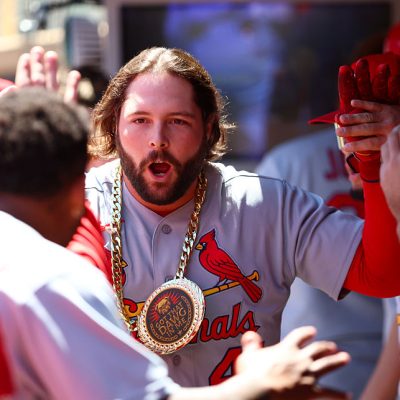
Deadline Plan: Hold
St. Louis should resist the temptation to force itself into either side of the traditional buyer-seller divide.
The Cardinals should not weaken their improved farm system to maximize a fun but still fragile 2026 team. The pitching staff has remained competitive, but it is several pieces away from resembling the staff of a true World Series favorite. One expensive deadline addition is unlikely to change that reality.
They should also avoid dismantling a roster whose young players are beginning to establish a new identity.
There is value in allowing Wetherholt, Walker, Winn, Herrera, and Burleson to experience meaningful games together. There is value in demonstrating to the clubhouse and fan base that the organization will not automatically retreat the moment an unexpected contender emerges.
That does not make May untouchable. If a contender is willing to pay significantly above the typical rental price, St. Louis should capitalize. The same principle applies to any veteran who is not central to the organization’s longer-term plans.
O’Brien presents a different calculation. A reliever with several remaining years of control can be part of the next good Cardinals team, not merely the current one. St. Louis should not move him simply because relievers are volatile or because another team is willing to offer a respectable package. The return would need to be substantial.
Deadline verdict: Hold.
Listen on May and any short-term veteran, but do not sell simply for the sake of maximizing theoretical asset value. Preserve the farm system, retain the controlled pieces who fit the next competitive roster, and allow the young core to continue playing meaningful baseball together.
Miami Marlins
How Did They Get Here?
Miami’s unexpected rise begins with Otto Lopez, whose career year has pushed him into an entirely different class of player.
Lopez is pacing toward a six-win season. The additional offensive impact, paired with good defense at shortstop, has transformed him from a useful contact-oriented player into one of the most valuable middle infielders in the sport.
Xavier Edwards has provided the ideal partner at second base. Edwards is on pace for the best fWAR season of his career and remains one of baseball’s premier bat-to-ball hitters. Second base is a better long-term defensive home for him, and the combination of Edwards and Lopez has given Miami a productive and athletic middle infield.
The lineup around them is not loaded with conventional stars, but it has developed legitimate depth.
Kyle Stowers, Griffin Conine, and Liam Hicks provide left-handed thump. Heriberto Hernández has been another pleasant surprise, giving Miami an additional source of offensive production.
The Marlins still play with the contact, athleticism, and aggressiveness that have characterized their best stretches, but they are no longer entirely dependent on stringing together singles to score.
Joe Mack may be the most important development of all.
Mack’s defense gives him an extremely high floor at the sport’s most demanding position. If he merely develops into a Patrick Bailey-level hitter, his work behind the plate could still make him a highly valuable major leaguer.
The early offensive returns suggest there may be more.
Mack entered the break with a 99 wRC+ and has already flashed legitimate pull-side thump. The 2026 version of Cal Raleigh is obviously an unfair standard, but there are traces of a “Cal Raleigh-lite” profile here: premium defense behind the plate with enough power to alter games offensively.
The rotation carries even more star power.
Sandy Alcantara has returned to his familiar workhorse role. His results have not been quite as dominant as they were during his Cy Young season, but he once again looks capable of taking the ball every fifth day and pitching deep into games.
For a young team navigating substantial pitching attrition, his ability to absorb innings has been nearly as important as pure dominance.
Max Meyer has supplied the breakout Miami had been waiting for, emerging as an All-Star. The Marlins’ move to call pitches from the dugout appears to have helped him focus more completely on execution, although it would be overly simplistic to attribute his entire leap to that decision.
Meyer is healthier, his arsenal is deeper, and he is finally beginning to resemble the top-of-the-rotation pitcher envisioned when Miami drafted him third overall.
Then there is Eury Pérez, whose overall numbers do not completely capture how dominant he can look.
Few pitchers in baseball can match Pérez at his best. The inconsistency and workload considerations remain, but the ceiling is unmistakable.
A postseason series built around Alcantara, Meyer, and Pérez would give Miami a chance against almost anyone.
The problem is getting there with enough pitching intact.
The Marlins have endured a barrage of injuries. Robby Snelling and Adam Mazur were lost to major elbow injuries, while Thomas White has also been sidelined. Those absences have removed several of the organization’s best potential reinforcements and significantly reduced the layer of pitching underneath the major-league rotation.
The bullpen presents a similar concern. The unit has survived, but it is thin and lacks enough established options to comfortably shorten every close game.
Miami’s style of play has helped cover some of those limitations. The Marlins put the ball in play, run the bases aggressively, defend important positions well, and appear to consistently squeeze as much production as possible from the talent available.
They are the hottest team in baseball, and the emergences of Lopez, Edwards, Mack, Meyer, and the rest of the young core has accelerated the organization’s timeline.
This team is real. That does not necessarily mean it is secure.
Miami possesses a credible position-player foundation and three starters capable of matching up with considerably more expensive teams. What it lacks is insulation. Another rotation injury or a period of bullpen regression could expose how little dependable pitching remains behind the top of the roster.
Does the Farm System Have Enough to Buy?
The Marlins have accumulated a wide collection of interesting young players under Peter Bendix. The system is meaningfully healthier than the one he inherited, but that does not necessarily mean Miami possesses enough surplus prospect capital to pursue one of the deadline’s biggest names.
Agustín Ramírez is one of the organization’s most intriguing potential trade pieces, even if he no longer qualifies as a traditional prospect.
Ramírez flashed exciting offensive tools at the major-league level, but the emergence of Mack and the production Miami has received from Hicks have squeezed him out of the immediate catching equation.
That does not make Ramírez expendable. His power, youth, and remaining team control give Miami several potential avenues for getting his bat back into the lineup. A team confident in its ability to improve his defense could still view him as a significant piece in a larger trade.
Miami could also explore cashing in on Hicks’ breakout with a catcher-needy team. His production has been so valuable to the current lineup, however, that trading him would address the farm-system question by weakening the major-league roster the Marlins are trying to improve.
Unless another organization values Hicks as a long-term starting catcher and is willing to pay accordingly, moving him would be too clever by half.
Aiva Arquette remains one of the system’s most talented position-player prospects and ranks No. 33 on Just Baseball’s Top 100. His first exposure to Double-A has been difficult, but those struggles do not erase the massive potential of a 6-foot-5 infielder with legitimate power upside.
Arquette is the kind of player Miami should be developing for its next core rather than using to rent help for the current one.
Cam Cannarella has been one of the system’s biggest breakouts, producing a 171 wRC+ across two levels. His surge has added offensive upside to a profile already supported by speed and center-field defense.
Brandon Compton has taken a much louder path to production.
The stocky, three-true-outcome outfielder is running a 142 wRC+ despite striking out in approximately 35% of his plate appearances. He is a fire hydrant with massive raw power, patience, and no shortage of volatility.
Compton’s ceiling makes him interesting to other organizations, but the swing-and-miss creates enough risk that Miami could justify moving him without feeling as though it had surrendered a foundational piece.
Those names illustrate both the progress of the system and its limitations as a source of deadline currency.
Miami has enough interesting players to construct a credible trade package. It would struggle to produce a high-level package, however, without including Arquette, Cannarella, Ramírez, or another player who has become central to the system’s improved outlook.
That would be difficult to justify for a rental or a marginal upgrade.
The Marlins have enough prospect capital to make a targeted addition. They do not have enough to win a major bidding war without reopening the holes Bendix has spent the past several years trying to fill.
Deadline Plan: Soft Buy With Control
Miami has earned the right to improve its roster, but not to abandon the patient team-building approach that allowed this young core to emerge.
There is little reason for the Marlins to sell from the major-league club. Their success has been driven primarily by players who fit the organization’s longer-term timeline or remain important to its current identity.
Moving Alcantara, Hicks, or another productive contributor while the team is firmly in the wild-card race would weaken a group that has already demonstrated it can compete.
An aggressive buying spree would be equally misguided.
Miami’s rotation has the high-end talent to make a postseason series interesting, but the injuries behind Alcantara, Meyer, and Pérez have made the pitching staff increasingly fragile. The Marlins are not one expensive acquisition away from becoming a complete championship favorite.
The appropriate middle ground is a targeted pursuit of controllable bullpen help.
Miami could build an offer around Compton, whose massive power ceiling makes him an appealing centerpiece without requiring the Marlins to surrender Arquette, Cannarella, or one of the organization’s premium young arms.
The Marlins could supplement that type of offer with a more advanced prospect such as Fenwick Trimble or Kemp Alderman. A package from that tier of the system could be enough to acquire a legitimate relief arm, particularly if Miami targets someone below the established-closing tier.
The years of control are essential.
Miami should not trade Compton and another legitimate prospect for a rental who may throw only 20 regular-season innings. That price becomes more defensible for a pitcher who strengthens the bullpen now and remains part of the staff in 2027 or 2028.
The ideal addition would miss bats, handle leverage, and provide enough flexibility to pitch before the ninth inning. Miami does not necessarily need a recognizable closer. It needs another dependable option who can reduce the burden on the existing bullpen and prevent every close game from becoming a nightly exercise in survival.
Deadline verdict: Soft buy with control.
Use the middle of the improved farm system to pursue a controllable reliever, potentially building a package around Compton and a more advanced prospect such as Trimble or Alderman. Preserve the premium talent, retain the major-league core, and make an addition that supports both the current playoff push and the seasons that follow.
Become a Member of Just Baseball
Subscribe and upgrade to go ad-free!
* Save 25% by subscribing annually.

Written by