
Exploring the Braves’ Options To Upgrade The Starting Rotation
The Braves have plenty of potential rotation options, but how many can they depend on? Here are some routes they could take for upgrades.
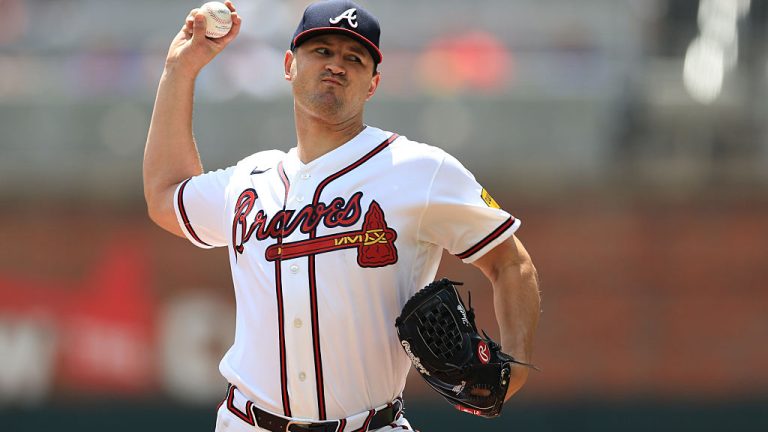
As the clock winds down toward an inevitable MLB lockout, teams are running out of time to execute their offseason plans. For an organization like the Atlanta Braves, that urgency is particularly important. Atlanta rarely shops at the top of the free agent market or gets involved in the bidding wars that could follow once a new CBA is reached.
The Braves have made one significant move, signing reliever Evan Phillips to a three-year, $35 million deal. Phillips is coming off five excellent seasons with the Los Angeles Dodgers and returns to the organization that originally drafted him in the 17th round of the 2015 MLB Draft.
Phillips strengthens a bullpen that was already among the best in baseball while demonstrating Atlanta’s willingness to spend to improve its roster. However, while the bullpen appears nearly set, the starting rotation remains a much bigger question mark.
Unfortunately, 2026 followed a familiar pattern. Spencer Schwellenbach, Spencer Strider, and Joey Wentz suffered injuries during spring training. Bryce Elder suffered a knee injury that derailed his final two months, Hurston Waldrep underwent Tommy John surgery, Reynaldo López battled lingering injuries, and AJ Smith-Shawver struggled to regain his form following his own Tommy John surgery.
Every team deals with injuries, but Atlanta’s rotation has been hit particularly hard over the last few seasons. Yet, the healthy arms continued to produce. Braves starters finished sixth in ERA (3.76), eighth in opponent batting average (.231), and 14th in WHIP (1.28). Pretty solid numbers considering the injuries and talent missing from the rotation.
General manager and president of baseball operations Alex Anthopoulos has made it clear that Atlanta wants to add to its rotation.
That leaves Atlanta in an interesting position.
The Braves have plenty of potential rotation options, but how many can they realistically depend on? To me, the answer isn’t necessarily adding more arms for the sake of depth. It’s finding at least one pitcher who can make a legitimate impact near the top of the rotation. I believe that’s exactly what Atlanta is looking for.
Current Internal Options
Before exploring external targets, let’s look at what Atlanta already has.
At the top is Chris Sale, who doesn’t need much of an introduction. After finishing third in National League Cy Young voting, Sale remains under team control for 2027 at $27 million, with a $30 million club option for 2028. After Sale, things get considerably more complicated.
If healthy, Spencer Schwellenbach and Spencer Strider would comfortably occupy the next two rotation spots. Unfortunately, both face significant questions entering 2027. Schwellenbach underwent surgery to remove bone spurs during spring training after fracturing his elbow in 2025 and has yet to return to the mound. Strider’s season was cut short by elbow inflammation, and although he began rehabbing, he was unable to return.
In a recent interview with 680 The Fan, Anthopoulos said neither pitcher has been ruled out for Spring Training or the start of the 2027 season. However, he reiterated that Atlanta isn’t counting on significant contributions from either.
Then there’s Bryce Elder, one of the more polarizing pitchers among Braves fans. Elder posted a 4.11 ERA with 15 quality starts across 26 outings. On one night, he’ll give you six innings of two run baseball. The next, he might struggle to get through four innings. Despite that inconsistency, he’s remained a valuable option.
Grant Holmes is another interesting case and one of Atlanta’s biggest pitching development success stories. Holmes has contributed as both a starter and reliever, although 50 of his 53 appearances over the past two seasons have been starts. He made 29 starts in 2026, posting an impressive 3.44 ERA.
Didier Fuentes might be the most intriguing option of the bunch. After one of the better relief seasons in baseball as a rookie, Atlanta wants to transition him back into the rotation. Working in both multi-inning and high leverage situations allowed Fuentes to gain valuable major league experience while showcasing his considerable talent.
Beyond those names, Atlanta has AJ Smith-Shawver, Reynaldo López, JR Ritchie, and Owen Murphy. All four appeared multiple times last season, but each experienced their share of struggles and concerns. Even Davis Polo and Cedric De Grandpre, two recently added 40-man roster prospects, could eventually enter the picture if they build on their minor league success.
The Braves aren’t lacking options. What they’re lacking is certainty and impact.
Popular FA Options
The free agent market is the easiest place to begin when looking for external additions.
Perhaps the most obvious target is Tyler Mahle, whom Atlanta acquired from the San Francisco Giants at last year’s trade deadline. After an inconsistent first half, Mahle adjusted his arsenal and completely turned his season around.
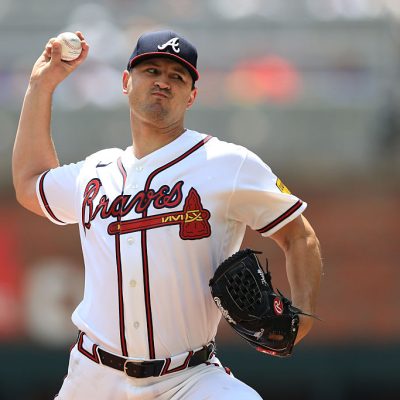
In nine starts with Atlanta, he recorded a remarkable 1.99 ERA and seven quality starts. He carried that success into October, allowing just two earned runs on nine hits with two walks and 10 strikeouts across two postseason starts. Mahle has openly expressed his desire to return, and I’d imagine Atlanta feels similarly if the price makes sense.
Clay Holmes is another name worth watching, particularly because of his ties to the Southeast and Atlanta’s coaching staff. The Alabama native could be interested in pitching closer to home and is already familiar with Braves pitching coach Jeremy Hefner from their time together with the New York Mets in 2025.
That season marked Holmes’ first extended opportunity as a major league starter, and he responded with a solid 3.53 ERA. Between his relationship with Hefner and the appeal of returning closer to home, Holmes could be an interesting target.
After having his club option declined, Nick Pivetta is back on the market and could be another intriguing option.
The right hander enters his age 34 season following an injury shortened 2026 campaign in which he made just eight starts but posted a 2.86 ERA, 1.01 WHIP, and 30.0% strikeout rate. When healthy, Pivetta remains a consistent starter, and his underlying metrics suggest he could return to form in 2027.
Finally, Trevor Rogers was a popular trade target among Braves fans last summer and is now readily available after rejecting the Baltimore Orioles’ qualifying offer. Rogers is arguably among the five best starting pitchers on the market, meaning his contract demands will likely exceed those of the previously mentioned options.
There’s also the additional cost of signing a qualifying offer free agent. Atlanta would surrender its second round selection, either a fourth or fifth round pick, and $1 million in international bonus pool money. That’s a significant price for an organization that values its farm system. However, if Rogers comes anywhere close to his 2025 performance, when he posted a remarkable 1.81 ERA across 18 starts, the investment could be worth it.
Big-Game Hunting
What if Atlanta decides to seriously pursue one of the most expensive starting pitchers available?
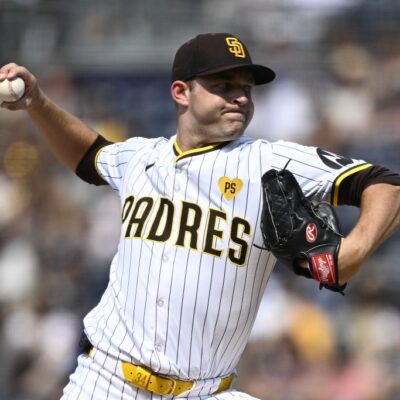
Michael King would certainly be near the top of the list. After rejecting his qualifying offer and re-signing with the San Diego Padres last offseason, King opted out of his contract following another excellent campaign. He made 32 starts and posted his third consecutive season with an ERA below 3.50.
His strikeout numbers have declined, but King remains one of baseball’s more reliable starters and will undoubtedly attract significant interest from teams looking for a pitcher capable of anchoring their rotation.
Freddy Peralta represents another fascinating possibility. There were rumors that Atlanta attempted to acquire Peralta before last season, but the deal reportedly fell apart because it was contingent on an extension he wasn’t interested in signing. Early in the season, that appeared to be a mistake. However, Peralta completely turned things around following a trade to the Tampa Bay Rays and now enters free agency positioned for one of the market’s larger contracts.
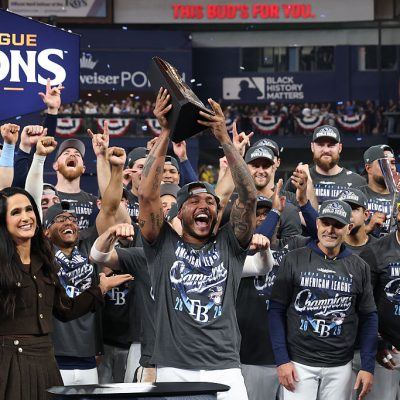
We’ve seen Peralta pitch like an ace in Milwaukee, and he appeared to rediscover that form with Tampa Bay. Pairing him with Sale would immediately give Atlanta a formidable combination atop its rotation while allowing younger pitchers to develop without being forced into prominent roles.
The final name in this category might be the most intriguing: Kaima Taira. He had pitched for the Saitama Seibu Lions in Japan’s NPB and was posted on November 1. Now, Taira must agree to a major league contract before the expected December 2 lockout.
The 5-foot8 right-hander features an impressive arsenal that includes an upper-90s fastball, cutter, splitter, sweeper, and changeup. Last season, he led the NPB with a 1.36 ERA across 22 starts, striking out 24.8% of hitters with a 7.9% walk rate. His smaller frame raises concerns about how he’ll handle a major league starter’s workload, but his track record in Japan makes him worth the risk.
Taira is also represented by Scott Boras, meaning Atlanta would likely need to make a substantial financial commitment or offer a shorter contract that could allow him to return to free agency after a couple of seasons. Neither approach fits Atlanta’s typical strategy, but his talent makes him worth considering.
Trade Options
Identifying realistic trade candidates is considerably more difficult than evaluating free agents. We have to consider both which pitchers might become available and which organizations could realistically match up with Atlanta. With that in mind, I’ve identified five potential trade partners.
Texas Rangers
The Texas Rangers might be the most logical partner. Texas has openly discussed the potential desire to reduce payroll, and Atlanta could be well positioned to take advantage.
Perhaps the most interesting possibility involves Jacob deGrom. At last year’s trade deadline, reports suggested the Braves and Rangers agreed to a deal sending deGrom to Atlanta for Spencer Strider. However, deGrom reportedly declined to approve the move.
If true, I’d be surprised if Anthopoulos hasn’t revisited those conversations to see if he has changed his mind. We’ve seen him pursue players for years before eventually acquiring them, with Sale and Mauricio Dubón being two examples.
Beyond deGrom, Nathan Eovaldi and MacKenzie Gore could be intriguing targets. Both are entering their final seasons of team control, with Eovaldi making $25 million and Gore earning approximately $10 million.
Given Texas’ payroll situation and Atlanta’s need for an established starter, I wouldn’t be surprised if the Braves have already discussed all three. Both teams have the ability to give the other exactly what they want.
Seattle Mariners
Even after Seattle traded Bryce Miller and Logan Evans to Kansas City for Maikel Garcia, I wouldn’t completely rule out another starting pitcher being moved.
At the top of my list is Logan Gilbert. He’s entering his final season of team control, and an extension with Seattle appears increasingly unlikely despite his continued success as a top of the rotation arm.
Interestingly, Atlanta is familiar with his agency, which also represents Chris Sale, Matt Olson, and Braves legend Chipper Jones to name a few. If there were ever a potential trade and extension candidate for Atlanta, Gilbert would be near the top of the list.
Emerson Hancock would be another fascinating possibility, although likely considerably more expensive in terms of prospects. The Thomasville, GA native and former Georgia Bulldog would make for a fun homecoming. However, with four years of control remaining and coming off the best season of his career, Seattle would demand a significant return.
George Kirby is the final name worth considering. He has two years of control remaining and remains a quality starter, but consecutive seasons of regression and concerning home and road splits away from T-Mobile Park raise legitimate questions about his value. Still, there’s enough talent for Atlanta to explore a potential deal.
Minnesota Twins
Minnesota made one of the more interesting moves of the offseason, signing Sonny Gray to a two-year, $55 million deal with an opt out after the first season. The Twins seemingly believe they can compete in the AL Central, but I still wouldn’t rule out moving another starter.
Joe Ryan would be the obvious headliner, although he’s probably unlikely to move. He’s entering his final season of control after posting an ERA below 3.80 for the third consecutive year while making 27 starts in 2026. Ryan has been one of baseball’s more consistent starters, but trading him could give Minnesota an opportunity to acquire young talent and upside for a pitcher who may not be around in 2028.
Pablo López presents a different opportunity. Still recovering from Tommy John surgery, López is expected to return in 2027. He’s entering the final year of his contract at $18.4 million, giving Minnesota a potential incentive to move him and allocate that money elsewhere.
For Atlanta, the real value could come beyond 2027. If López were willing to sign a one or two year extension, the Braves could potentially acquire a talented pitcher at a reduced trade cost while benefiting from his eventual return to form. It comes with obvious risks, but the upside makes it worth exploring.
Pittsburgh Pirates
Pittsburgh has quietly developed into something of a pitching factory, with several talented starters already in the majors and more on the way. That depth could allow the Pirates to move an arm to improve other areas of their roster.
Carmen Mlodzinski is one name that stands out. Although primarily a reliever, he’s made 12 starts in each of the past two seasons and has publicly expressed his desire to become a full-time starter. His six-pitch arsenal could be intriguing for Jeremy Hefner to work with, while his three remaining years of control would make him an appealing long-term addition.
Mitch Keller presents a different opportunity. Pittsburgh appears to have missed its chance to maximize Keller’s trade value. With two years remaining at $15.4 million annually and coming off a disappointing season, moving him could be more about clearing salary than receiving a significant return. Before last season, Keller made at least 31 starts in three consecutive years while consistently posting an ERA around 4.20. He’s not an impact starter, but he’s someone who can reliably take the ball every fifth day.
If Pittsburgh is looking primarily to clear salary, Atlanta could potentially acquire Keller for a modest prospect return, or even move one of its own undesirable contracts, and see whether Hefner can unlock another level of performance.
Cincinnati Reds
The Cincinnati Reds are the final team worth monitoring. The Reds have assembled an intriguing collection of young pitchers but has struggled to establish a consistent identity that translates into sustained success. That could eventually lead the Reds to move an arm to address other needs.
Nick Lodolo would be a fun target. He’s entering his final season of arbitration and is coming off his worst year since 2023. Still, the left hander has considerable potential as he approaches his age 30 season. In 2025, Lodolo posted a 3.33 ERA across 28 starts while generating an elite 32.7% chase rate. If Cincinnati is willing to move him, Atlanta could be buying at a relatively low point in his value.
Andrew Abbott would likely be more difficult to acquire with three seasons of control remaining. However, he is also coming off the worst season of his career, posting a 4.61 ERA across 32 starts after recording an impressive 2.87 ERA in 29 starts the year before. One disappointing season doesn’t erase that talent. If Cincinnati decides to strengthen its farm system by moving either left hander, Atlanta should absolutely be interested.
Outlook for 2027
The popular opinion surrounding Atlanta’s rotation is that the Braves need to acquire at least two starting pitchers this offseason. I’m not sure I agree, to a point. Atlanta already has upwards of nine pitchers who could realistically compete for rotation spots without dipping further into its farm system.
Does that mean I’m comfortable entering 2027 with the current group? Absolutely not. There are still too many question marks. Some pitchers are recovering from significant injuries, others have struggled with consistency, and several younger arms haven’t proven they can handle a full major league season.
But that’s exactly why I believe Atlanta needs to prioritize quality over quantity. The Braves already have depth. Adding more middle or back of the rotation starters isn’t necessarily going to move the needle for a team trying to return to World Series contention.
What they need is one legitimate impact starter. A second would certainly be welcomed, but I don’t believe it should be considered an absolute necessity.
Consider what the Braves accomplished last season. Atlanta finished sixth in baseball in starting pitcher ERA despite Grant Holmes, Martín Pérez, Bryce Elder, Reynaldo López, and JR Ritchie combining for approximately 65% of the team’s starts. That’s remarkable production considering the circumstances and reinforces my confidence in Jeremy Hefner, Walt Weiss, and the organization’s ability to get the most out of its pitchers.
I suspect Anthopoulos views things similarly. Last offseason, he publicly expressed his desire to add a pitcher capable of starting a postseason game, but the move never materialized. He repeated that goal at the trade deadline, and while Mahle didn’t initially look like that caliber of pitcher, he quickly proved capable of filling the role.
Now, he has again emphasized his desire for an impact starter. Until the right pitcher becomes available at a price he’s comfortable paying, I don’t expect him to simply acquire additional depth for the sake of making a move. Frankly, I don’t think he should.
If I had to make a prediction today, I’d say there’s a good chance one of Mahle, Holmes, Pivetta, or one of the Rangers’ starters end up in Atlanta in 2027. Combining Sale with at least one of those additions, alongside options such as Fuentes, Elder, Holmes, Ritchie, and Murphy, would give Atlanta a solid rotation.
And that’s before considering potential returns from Schwellenbach and Strider. If either can regain something resembling his previous form, Atlanta becomes significantly more dangerous. If both return healthy and effective, we could be looking at one of baseball’s best rotations.
I said it last offseason, and I’ll say it again: I trust the Atlanta Braves’ pitching development and the talent this organization has at its disposal. The results from 2026 only strengthened that belief.
Can the rotation improve? Absolutely. Should Atlanta make a serious effort to improve it? Without question, especially after everything that’s happened over the past two seasons. But improving doesn’t necessarily mean adding as many pitchers as possible. It means finding the right arms who can make a difference when October rolls around.
Pitching has long been at the forefront of the Braves organization, and I don’t expect that philosophy to change. Now it’s time for Anthopoulos to find the right pieces to take this rotation to another level.
Become a Member of Just Baseball
Subscribe and upgrade to go ad-free!
* Save 25% by subscribing annually.

Written by
Taylor is a baseball enthusiast and a writer for Just Baseball. An Atlanta native, he shares his love for the Braves, card collecting, and scouting the…