
The Race For MLB Expansion: Breaking Down the Six Leading Cities
MLB expansion is getting closer. We break down the six leading cities as detailed in the latest episode of Sources Tell Jeff Passan.
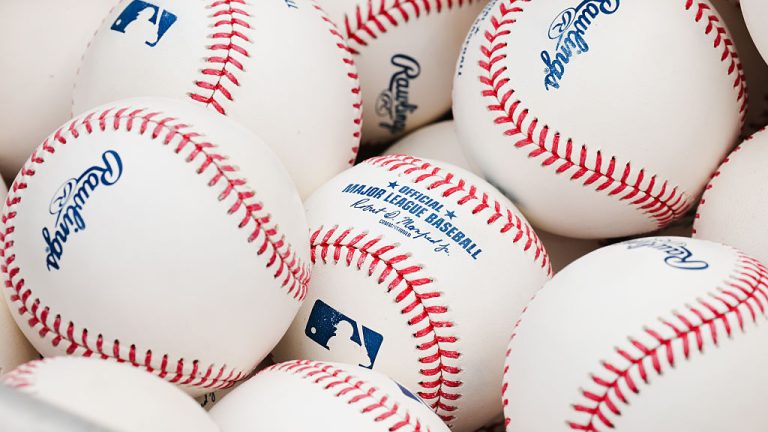
Expansion is coming.
Among all of the current issues and talking points surrounding Major League Baseball and the upcoming collective bargaining agreement, one topic has seemingly slipped through the cracks in the public eye: expansion.
The upcoming CBA negotiations are expected to be a brutal battle between the MLBPA and owners, with topics such as salaries, contract structure, roster size, and eligibility likely taking the forefront. Expansion, however, appears to benefit both sides. For players, it means more jobs. For owners, it means more exposure and more money flowing into the league.
Once a new CBA is agreed upon and baseball can resume as normal, commissioner Rob Manfred is expected to form an expansion committee. He has stated that before he retires in January 2029, he wants Major League Baseball to establish two new teams, one on the West Coast and one on the East Coast. That committee will ultimately be tasked with deciding which two cities are next to be welcomed into Major League Baseball.
On the September 8 episode of the Sources Tell Jeff Passan podcast, Passan broke down the impact of expansion, the likely next steps, and spoke with six key stakeholders representing the current favorites to land one of those coveted spots.
History Of MLB Expansion
Before we break down each city, let’s take a quick look at the history of expansion in Major League Baseball so we can better understand how much it has shaped the game we know today.
The first round of MLB expansion came in 1961 and 1962. The American League added the Washington Senators and Los Angeles Angels, while the National League followed by adding the Houston Colt .45s (now the Astros) and New York Mets.
Then came 1969, arguably the most impactful expansion in league history. The Kansas City Royals, Seattle Pilots (now the Milwaukee Brewers), San Diego Padres, and Montreal Expos were all added, bringing MLB to 24 teams. The move also led to both leagues being split into East and West divisions.
In 1977, the Seattle Mariners and Toronto Blue Jays joined the American League, bringing the total number of teams in Major League Baseball to 26.
Prospective fans and ownership groups would then have to wait 16 years for the next round of expansion. In 1993, the Colorado Rockies and Florida Marlins joined the league. Five years later, the Arizona Diamondbacks and Tampa Bay Devil Rays entered, bringing MLB to 30 teams, where it remains today.
Now, in 2026, another round of expansion appears to be on the horizon. For the first time in nearly three decades, Major League Baseball may soon be preparing to welcome two new cities into the league.
East Coast
Nashville, Tennessee
For years, Nashville has been treated as one of the presumed favorites whenever MLB expansion gets discussed. It is easy to understand why. Nashville has become one of America’s fastest-growing entertainment and sports cities, already supporting the NFL’s Titans, NHL’s Predators, and MLS’s Nashville SC, all while serving as the mecca of country music.
Despite all of that, Nashville remains one of the largest markets with multiple professional sports teams but no Major League Baseball franchise. That is not for a lack of trying. The city pursued teams during both the 1993 and 1998 rounds of expansion but ultimately came up short.
John Loar founded Music City Baseball in 2019 and has helped lead the Nashville Stars effort, which takes its name from the historic Negro Leagues franchise. That gives Nashville something most expansion candidates cannot immediately replicate: an existing brand with genuine historical roots and a connection to the game.
The market itself is also one of the more attractive among the current options. Opposing fans already travel to Nashville throughout the year, meaning an MLB team would not simply be reliant on local attendance. Much like Las Vegas, the city has the ability to turn tourism into additional ticket sales and revenue. Nashville’s existing entertainment districts and professional sports infrastructure also create opportunities for year-round development surrounding a future stadium.
When asked about potentially competing within what is currently considered “Braves Country,” Loar remained confident that both franchises could coexist. The region is not nearly as simple as drawing a circle around Atlanta. Cincinnati and St. Louis are also relatively close, while Tennessee itself stretches across several distinct sports markets.
The ownership effort has focused heavily on building local support while creating a group capable of attracting the primary investor eventually needed to purchase an expansion franchise. That last part remains extremely important.
Nashville doesn’t currently have its primary ownership investor secured, and stadium financing has not been finalized. The belief from those involved is that both pieces would become significantly easier once MLB signals that Nashville will actually receive a franchise. At that point, the group believes private investors, the state, and local stakeholders could quickly come together around a real estate and stadium proposal.
Public financing, however, could become the defining issue. Nashville mayor Freddie O’Connell has previously expressed opposition to using public money toward another professional sports stadium. For an expansion franchise that could require a new ballpark costing well north of $1 billion, that position cannot simply be brushed aside.
Ultimately, Nashville has one of the strongest overall packages to offer MLB in its bid for an expansion team. This time around, the biggest question may not be whether Nashville is a viable baseball market, but whether all of the pieces surrounding ownership and a stadium can come together.
Raleigh, North Carolina
One of the more overlooked markets in the expansion conversation may be Raleigh, NC.
The MLB Raleigh movement, co-founded by Lou Pascucci and a group of friends in 2019, has built its pitch around the idea that the city offers an ideal combination of market size, ownership potential, and demand for a baseball team. There may not be another available market with Raleigh’s combination of population, geography, and lack of existing MLB competition.
More people live within 60 miles of Raleigh than several current MLB markets, including Pittsburgh, Cincinnati, and St. Louis. That same radius reportedly contains roughly 1.2 million more people than Nashville’s. Raleigh is also the 22nd-largest media market in the country and one of the largest without a locally or regionally based MLB franchise.
Then there is North Carolina as a whole. It is one of the country’s largest states without an MLB team and contains three top-50 media markets. Washington is approximately 230 miles away, while Atlanta is only the fifth-closest MLB franchise, despite much of the state commonly being classified as Braves territory.
The ownership situation may make Raleigh even more interesting. Carolina Hurricanes owner Tom Dundon has emerged as a major figure behind the effort, while former Milwaukee Bucks owner Marc Lasry, who is currently involved with the NWSL’s North Carolina Courage, has also expressed interest in participating. That potentially gives Raleigh legitimate sports ownership experience and billionaire-level capital, something every expansion bid desperately needs.
Dundon’s involvement is especially notable because Raleigh has already seen what his ownership can do. The Hurricanes once faced persistent questions about their long-term future in the market but have since become a staple of the region and one of the NHL’s most prominent organizations. Even more importantly, he’s already developing an approximately 81-acre sports and entertainment district surrounding the Hurricanes’ arena. That could provide the foundation for the type of mixed-use development MLB franchises increasingly desire around modern stadiums.
The Raleigh effort has also emphasized broad local support for the project, potentially giving it a smoother pathway than some competing stadium proposals.
The biggest hurdle may simply be perception. Raleigh does not carry the immediate national brand recognition of Nashville, Montreal, or even Portland. It does not bring the tourism appeal of Orlando or Nashville. But when you look strictly at population, media market, geographic isolation, ownership potential, and available development opportunities, Raleigh’s argument becomes extremely difficult to ignore.
Orlando, Florida
Orlando, FL, is the third East Coast-based city detailed in Passan’s podcast, and this is not the city’s first attempt to land Major League Baseball, either. The city also pursued a franchise ahead of the 1998 expansion. Nearly three decades later, Orlando believes its market has changed enough to make the argument significantly stronger.
The Orlando Dreamers, co-founded in 2019 and currently led in part by COO Jim Schnorf, are spearheading the latest effort. Their pitch starts with three things: market size, tourism, and Florida’s deep connection to baseball.
The city is now one of the largest media markets in the United States without an MLB team, ranking around 14th nationally. The surrounding Central Florida region includes roughly five million people and sits within one of the fastest-growing metropolitan areas in one of the country’s fastest-growing states. Baseball is also already deeply embedded throughout the region through minor league baseball, spring training sites, and its status as an amateur baseball hotbed.
But Orlando possesses another advantage that almost no expansion candidate can match at its level: tourism. More than 80 million people visit the region annually, making Orlando one of the most visited destinations in the Western Hemisphere. Professional sports teams increasingly rely on more than their immediate resident population, and tourist-heavy markets can consistently bring opposing fans into stadiums. Las Vegas provides one of the clearest recent examples, with the Golden Knights quickly establishing a foothold in the market and the Athletics preparing to make the city their new home.
The Orlando Dreamers envision a nearly $2 billion ballpark and entertainment development and have identified a potential area for the project. The group has also pledged $1 billion in private investment toward the stadium, with that capital reportedly backed by a letter of intent. That level of private investment could become one of Orlando’s biggest selling points.
The group previously sought tourism-tax funding toward the project but was rejected because Orlando had not yet been awarded an MLB franchise and had not fully secured the stadium site. That does not necessarily mean the idea is dead. Instead, Orlando finds itself stuck in one of the classic stadium-development problems. Local leaders want certainty that a team is coming before committing money, while MLB wants certainty that a stadium can be built before awarding a team.
Another natural question surrounds territorial overlap with the Rays and, to a lesser extent, the Marlins. Orlando’s group argues that concern is overstated. Several existing MLB teams already operate closer to one another than Orlando and Tampa Bay would, and that argument could become even stronger if MLB eventually transitions toward a more nationalized local media model that reduces the importance of traditional regional television territories.
If expansion eventually leads MLB to reorganize into eight four-team divisions, a southeastern grouping featuring Atlanta, Miami, Tampa Bay, and Orlando would suddenly make plenty of sense.
Orlando has the population. It has tourism. It has significant private capital lined up. Like several cities on this list, the question is whether it can secure its primary ownership commitment and get a stadium across the finish line.
Montreal, Quebec
Unlike any other city on this list, Montreal, QC, does not need to imagine what Major League Baseball would look like there. The fans know. The city knows. The league knows.
The Expos played in Montreal from 1969-2004 before relocating to Washington and becoming the Nationals. That history makes Montreal one of the most recognizable potential expansion markets, while also making its candidacy more complicated than simply evaluating population numbers.
From a pure market standpoint, there is a lot to like. Montreal offers a large population, a significant corporate presence, relatively limited competition from other major professional sports and, most importantly, an existing baseball identity.
The final years of the Expos were defined by instability. The franchise struggled with an outdated stadium, ownership issues and declining fan morale that can be traced back in part to the aftermath of the 1994 strike. By the early 2000s, the situation had deteriorated enough that MLB purchased the team before eventually relocating it to Washington.
WatchMojo CEO Ashkan Karbasfrooshan has become one of the public faces of the newest effort to return baseball to the city. His view is that fan interest itself was never the primary issue during the Expos’ final years. Instead, those pushing to bring MLB back argue that Montreal did not fail baseball as much as baseball failed Montreal.
The goal this time would be to build an ownership group around strong local investors while also utilizing institutional and private equity capital. That money could provide additional capital, governance and business expertise alongside a primary ownership group with deep local ties. Considering how dramatically MLB franchise values have risen, it is not difficult to understand why investors could find the opportunity attractive.
The stadium plan would also be built around modern baseball economics, with the goal of creating a venue and surrounding development capable of generating revenue throughout the entire year rather than simply during 81 home games and the postseason.
The problem is that most of this remains conceptual. Montreal does not currently have a stadium site secured, nor does it have a finalized financing package comparable to what some competing cities already possess.
However, the market is proven. The history is there. Investor interest appears to be there. Now Montreal has to turn that interest into something tangible.
West Coast
Salt Lake City, Utah
The West Coast appears to have far less competition, with only two cities highlighted in Jeff Passan’s podcast. Like Nashville on the East Coast, Salt Lake City feels like the current leader in the clubhouse out West, and few potential expansion markets appear more prepared.
Utah is not the biggest market among the cities expected to compete for a team, but it has continued to prove that it can support professional sports. The state has roughly 3.5 million residents, while Salt Lake City sits comfortably as a medium-sized professional sports market.
More importantly, Utah has consistently shown what I will call a strong “care per capita.”
The Jazz have been one of the NBA’s more stable franchises since relocating to Utah ahead of the 1979-80 season. More recently, the state landed an NHL franchise relocation, now the Utah Mammoth, and quickly blew through early projections for attendance, merchandise sales, and overall interest. That matters because one of the biggest questions with any expansion market is not simply how many people live there, but how much those people will actually care.
Salt Lake City already has an ownership group lined up, too. The effort is being led by the Miller family, the former owners of the Utah Jazz who also own the Salt Lake Bees, the Triple-A affiliate of the Los Angeles Angels. That gives the group both deep local ties and direct experience operating a professional sports organization.
Where Salt Lake City may separate itself even further from the rest of the field, though, is the stadium situation. Utah Governor Spencer Cox signed legislation in 2024 that could provide up to $900 million in public financing toward a future MLB stadium. The proposed ballpark would be part of the Power District, a roughly 100-acre redevelopment project where work has already begun.
That is an enormous advantage. Finding ownership and building local support are difficult enough, but stadium negotiations can drag on for years and ultimately kill expansion or relocation efforts altogether. Salt Lake City has already cleared hurdles that some competing markets have not even reached yet.
The biggest question may simply be whether MLB views the market as large enough compared to some of the alternatives. But if the league values organization, infrastructure, and proven local support, it is hard to argue that Salt Lake City has not positioned itself near the front of the line.
Portland, Oregon
The final stop on our six-city tour takes us to the Pacific Northwest with Portland, OR. This is not Portland’s first attempt at landing Major League Baseball. The city pursued the Expos before their relocation to Washington and again surfaced when the Marlins’ future in Miami became uncertain during the late 2000s. Neither effort succeeded, but those failures are believed to have helped shape the current approach.
Instead of waiting for MLB expansion to officially begin, Portland has spent years trying to solve the ownership, real estate, and stadium questions ahead of time.
Geographically, few potential expansion markets make as much sense. The city fills one of the largest gaps on Major League Baseball’s current map. Portland sits between Seattle and the Bay Area, potentially creating an immediate regional rivalry with the Mariners while also helping reduce some of Seattle’s yearly travel burden. Due largely to their isolated location in the Pacific Northwest, the Mariners consistently rank among MLB’s most traveled teams.
The market itself brings plenty of appeal as well. Portland is the 23rd-largest U.S. market and currently has just one team from the traditional four major professional sports leagues, the NBA’s Trail Blazers.
There is also plenty of evidence that the city will support professional sports. The Trail Blazers once held one of the longest home sellout streaks in professional sports history, selling out 814 consecutive games across more than 18 years. Oregon and Oregon State have also developed passionate college fanbases, with baseball playing a significant role in both athletic programs.
The Pacific Northwest provides another potential advantage with its connection to the Pacific Rim. Portland maintains sister-city relationships throughout Japan, South Korea, China, and Taiwan. As Major League Baseball continues expanding its international footprint, there may be few American markets better positioned geographically to capitalize on those relationships.
The current expansion effort is being driven by the Portland Diamond Project, founded in 2017 by former Nike executive Craig Cheek. The group has also added recognizable names such as Russell Wilson and Ciara while continuing conversations surrounding primary ownership and additional capital.
Like Salt Lake City, Portland has also made meaningful progress on the stadium side. The group has a roughly 33-acre waterfront property at Zidell Yards under contract along the Willamette River, with plans centered around a new ballpark and surrounding mixed-use development. The project also has approximately $800 million in support earmarked toward stadium construction.
Portland has the market. It has the geographic fit. It has a stadium vision already taking shape. Now it simply needs Major League Baseball to open the door.
Become a Member of Just Baseball
Subscribe and upgrade to go ad-free!
* Save 25% by subscribing annually.

Written by
Taylor is a baseball enthusiast and a writer for Just Baseball. An Atlanta native, he shares his love for the Braves, card collecting, and scouting the…