
Top Left-Handed Pitching Prospects in Baseball Right Now
Headlined by the recently debuted Mariners' top prospect Kade Anderson, here's our ranking of the top southpaw prospects in baseball.
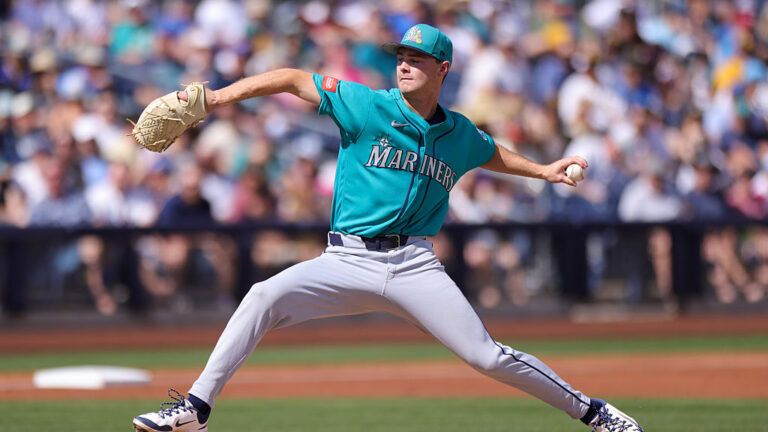
The following ranking of the top left-handed pitching prospects in baseball comes directly from our top 100, where exactly 10 southpaws made the list.

|
Rank
|
Player
|
Team
|
School
|
Age
|
Level
|
Position
|
ETA
|
FV
|
|
|---|---|---|---|---|---|---|---|---|---|
| 1 | Kade Anderson | Seattle Mariners | 22 | MLB | LHP | 2026 | 60 | ||
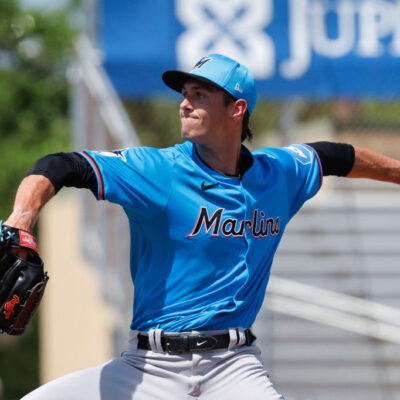
| 2 | Thomas White | Miami Marlins | 22 | AAA | LHP | 2027 | 55 | ||
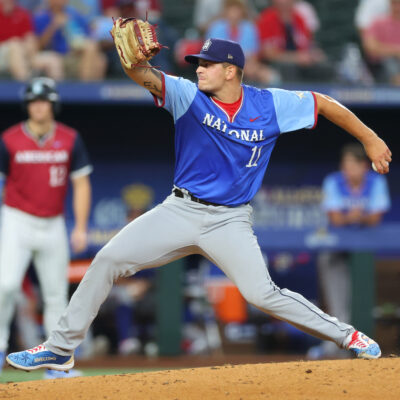
| 3 | Robby Snelling | Miami Marlins | 22 | MLB | LHP | 2026 | 50+ | ||
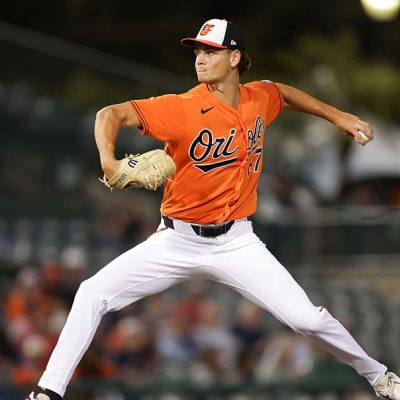
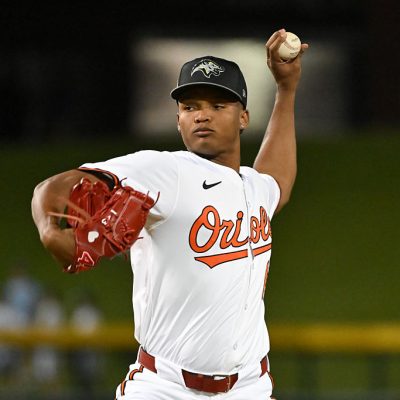
| 4 | Joseph Dzierwa | Baltimore Orioles | 22 | AA | LHP | 2028 | 50+ | ||
| 5 | Caden Hunter | Baltimore Orioles | 23 | AA | LHP | 2027 | 50 | ||
| 6 | Johnny King | Toronto Blue Jays | 20 | A+ | LHP | 2028 | 50 | ||
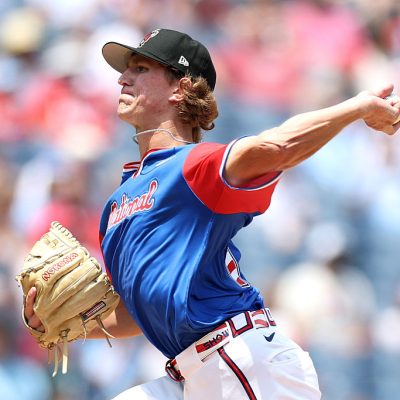
| 7 | Cam Caminiti | Atlanta Braves | 20 | AA | LHP | 2028 | 50 | ||
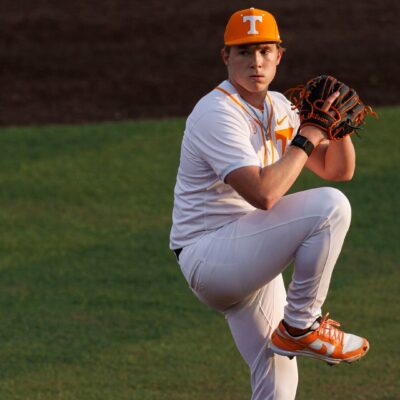
| 8 | Liam Doyle | St. Louis Cardinals | 22 | AA | LHP | 2027 | 50 | ||
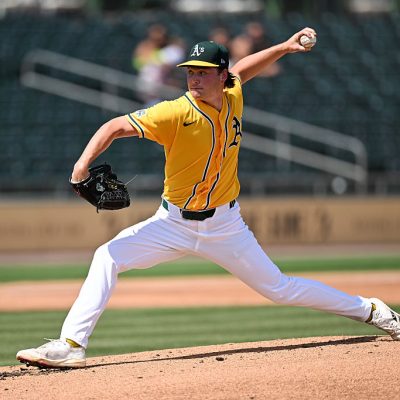
| 9 | Jamie Arnold | Athletics | 22 | AA | LHP | 2027 | 50 | ||
| 10 | Luis De León | Baltimore Orioles | 23 | AAA | LHP | 2027 | 50 | ||
1. Kade Anderson – LHP – Seattle Mariners
Height/Weight: 6’2″, 185 | Bat/Throw: L/L | 1st Round (3), 2025 (SEA) | ETA: 2026
| FASTBALL | SLIDER | CURVEBALL | CHANGEUP | COMMAND | FV |
| 55/55 | 60/60 | 55/55 | 50/55 | 50/55 | 60 |
Anderson was a highly touted prep arm in the 2023 class, though he withdrew his name from the draft after undergoing Tommy John surgery in 2022. He put together a solid freshman season in 2024 before breaking out as the best arm in the country as a draft-eligible sophomore.
Arsenal
Everything about Anderson’s game screams high-floor, but there’s plenty to dream on too. He commands four quality offerings with confidence, starting with a 92-95 MPH fastball with good carry and some cut. Anderson’s frame is projectable wit a quick arm, providing optimism for more velo.
Anderson picked up plus whiff rates within the zone on the fastball, along with plenty of weak contact. Interestingly, Anderson’s fastball command can waver more than his trio of secondaries, but he still maintained a strike rate around 64% with the pitch.
Both of his breaking balls look like potentially plus pitches with good shape and velocity separation. Our Tyler Jennings referred to the slider as a “baby sweeper” with good teeth that makes it effective to hitters from both sides of the plate in the mid 80s.
His curveball has impressive tilt in the upper-70s, mixing it in evenly to hitters of each side of the plate. The depth and late bite helped him pick up plenty of contact on the ground while keeping righties in particular in check.
His changeup doesn’t jump off of the page shape wise, but averages 10 MPH in velocity separation and is extremely difficult for hitters to pick up out of the hand, especially off of his hoppy fastball. Opponents hit below .200 against the offering in 2025.
Outlook
While he does not require much development, Anderson and the Mariners are a match made in heaven. He’s likely to fly through the Minor Leagues quickly with a high probability of at least landing as a back end starter. If the anticipated uptick follows in pro ball and or his fastball execution improves, Anderson could reach closer to his No. 2 ceiling.
Film: Louisiana State/Tennessee – April 14, 2024, LSU/South Carolina
2. Thomas White – LHP – Miami Marlins
Height/Weight: 6’5, 210 | Bat/Throw: L/L | 1st Round-A (35), 2023 (MIA) | ETA: 2027
| FASTBALL | SLIDER | Curveball | CHANGEUP | COMMAND | FV |
| 60/65 | 50/55 | 60/60 | 60/60 | 35/45 | 55 |
The top southpaw in the 2023 class, White already has an impressive feel for a strong four pitch mix. Despite some command challenges, White has flown through the Minor Leagues thanks to his big whiff stuff, reaching Triple-A by the end of his age 20 season.
Arsenal
Towering at a lanky 6-foot-5, White produces high quality stuff without a ton of effort and held his velocity throughout the season. His long arm action can be difficult to time up for him, affecting his command but his arm path also plays into the deception he creates, hiding the ball behind him before working down on the mound. The result is a fastball that can spring onto hitters more quickly than others at the same velocity despite just average extension.
His fastball sits in the mid 90s, touching 100 mph with late life. While that is already plenty of velocity, his projectable frame and relatively low-effort delivery make him a candidate to see an uptick into the upper 90s. Regardless, it is comfortably a plus heater.
Both White’s curveball and changeup are already above average with the latter looking like a plus pitch in the early stages of his pro career. The sweeping curveball sits in the low 80s with two plane break and roughly 14 inches of horizontal break. It is a big whiff pitch left on left but he has the tendency to leave it up at times, especially to righties. That said, it is still a great third option to opposite-handed hitters, especially when he buries it towards their back leg.
White’s preferred weapon to righties is his mid 80s changeup, which mirrors his fastball well thanks to his ability to maintain his arm speed and unique arm action. Averaging nearly 15 inches of vertical separation and 13 mph of velocity separation from his fastball with a similar movement profile to Ryan Weathers’ change.
Outlook
Already flashing three plus offerings and a quality fourth from the left side, White has frontline stuff. A strikeout rate of 40% between Double-A and Triple-A in his age 20 season only backs up the stuff, but he will certainly need to cut down on his 13.6% walk rate. With only a .174/.299/.225 slash line allowed in 2025 with just two home runs, it’s clear that the only person that can beat White in the upper minors is himself. There’s shades of Blake Snell here and, if White can manage even fringy command, he could still reach towards the front of a big league rotation.
White is sidelined for the remainder of the 2026 season after suffering a shoulder injury this spring, but is expected to make a full recovery heading into Spring Training in 2027.
3. Robby Snelling – LHP – Miami Marlins
Height/Weight: 6’3″, 210 | Bat/Throw: R/L | 1st Round (39), 2022 (SDP) | ETA: 2026
| FASTBALL | Curveball | CHANGEUP | Slider | COMMAND | FV |
| 60/60 | 60/60 | 50/55 | 50/50 | 55/60 | 50+ |
A top linebacker recruit in high school, Snelling is one of the more athletic pitchers you’ll find. After dominating to a 1.82 ERA across 103.2 IP. His stuff backed up a bit in 2024 and with that his command at points, resulting in a frustrating sophomore year before being traded to the Marlins as the headliner in the Tanner Scott/Bryan Hoeing return.
Snelling worked hard in the offseason heading into 2025 to regain his stuff and optimize his mechanics, emerging with a vastly improved fastball and better overall stuff, finishing the year by pitching to a 1.27 ERA in 63 2/3 innings at Triple-A. Snelling returned in 2026 with more of the same dominance, earning a call up to the big leagues, but unfortunately went down with a torn UCL in his first start. He’s expected to return mid way through the 2027 season.
Check out our interview with Robby Snelling!
Arsenal
A good feel for three pitches, Snelling features a fastball, curveball and changeup. Starting with his fastball, Snelling sat more 92-94 MPH in 2023, then saw his velocity drop a tick in 2024 before making some mechanical tweaks heading into 2025 that have allowed him to tick up to 94-96 MPH with improved carry, which he sustained through his seven Double-A starts as well.
He dominated upper minor league hitters to the tune of a batting average around .160, a strike rate north of 70% and a swinging strike rate of 15%, making it the best performing fastball in the Marlins organization.
In addition to his improved quality of fastball, Snelling’s mechanical tweaks helped him get his command back to where it typically has been, throwing strikes at an above average clip. He has leaned back into his sweeping curveball that had been effective for him early in his career, finding success with it in the upper minors both from a command and whiff perspective.
Snelling’s third offering is a changeup that is at least average and has benefitted from his improved fastball velocity and shape. He is not as consistent with it as his fastball and curveball, but it is a strong third pitch, averaging more than 13 inches of vertical separation and another six inches of horizontal.
Snelling added a gyro slider heading into 2025 which is a decent taste-breaking offering, especially left on left.
Outlook
After taking the Minor Leagues by storm in 2023, Snelling hit a wall in 2024 and was traded to the Marlins as part of the Tanner Scott/Bryan Hoeing return. As he detailed on The Call Up, Snelling worked hard in the offseason to optimize his mechanics and delivery, emerging in 2025 with the loudest stuff of his career and regained command.
Once viewed as a liability, Snelling’s fastball was one of the most effective in the entire minor leagues while maintaining his plus command. Teammates and people within the organization rave about the way that Snelling carries himself and competes. He is one of the highest floor arms in the minor leagues but has now pushed his ceiling to that of a strong No. 3 starter.
Snelling was set to be a key rotation piece for the Marlins in 2026 before undergoing internal brace surgery. He is expected to return mid way through the 2027 season.
4. Joseph Dzierwa – LHP – Baltimore Orioles
Height/Weight: 6’8″, 205 | Bat/Throw: L/L | 2nd Round, (58) 2025 (BAL) | ETA: 2028
| FASTBALL | Changeup | Cutter | Curveball | COMMAND | FV |
| 50/55 | 50/60 | 50/55 | 45/45 | 55/60 | 50+ |
A second round selection by the Orioles in the 2025 draft, Dzierwa sat mostly 91-93 MPH for Michigan State, but from a unique angle with plenty of projection within his 6-foot-8 frame.
Dzierwa dropped his release point a bit, flowing down the mound more athletically while adding some strength. The result has been louder stuff, which translated into Dzierwa dominating High-A to start his pro career, earning a promotion to Double-A after just 40 2/3 innings.
Arsenal
Previously sitting 90-92 MPH, Dzierwa ticked up after his first pro offseason, now hovering around 92-95 MPH with, run and ride that play up from a deceptive release. Exclusively working out of the stretch, he comes set with his back facing the hitter, hiding the ball well through his delivery.
That helps his best pitch–the changeup–play up with hitters really struggling to pick it up. Dzierwa gets 10 MPH of separation velocity-wise and 10 inches of vertical separation from the fastball, garnering plenty of swings over the cambio. Ironically, Dzierwa’s success in his through his first 10 pro starts has come without the consistent feel for his changeup he showcased as an amateur, relying on an improved cutter and newfound sweeping curveball.
The increase in velocity has also helped Dzierwa more effectively utilize a the aforementioned cutter in the mid 80s, tunneling off of his fastball well, generating plus whiff figures while pounding the zone with it. Given the 18 inches of horizontal action Dzierwa’s fastball averages, the glove side action plays up on the cutter to both tie up righties and dart away from lefties, more frequently and effectively using it against the latter.
He will mix in the sweeping curveball in the upper 70s against hitters of both handedness. The horizontal break plays up from his release point while featuring enough depth to bury towards the back leg of righties when he executes it well. It’s likely more of an early strike-stealing or taste breaking pitch, but is an effective weapon to erase hitter’s counts while the sit on presumably a different offering.
Outlook
Dzierwa left his first Spring Training with as much helium as any prospect in the Orioles organization, showcasing an uptick in stuff and a sharpened arsenal to pair with his plus command. The improvements immediately translated into his pro debut, dominating his way through High-A in 40 2/3 innings to the tune of 69 strikeouts and 11 walks before being promoted to Double-A.
Dzierwa is a high floor arm with a great chance of landing in the back of a rotation, but his 6-foot-8 frame with already improved stuff in his first pro season provides more to dream on.
5. Caden Hunter – LHP – Baltimore Orioles
Height/Weight: 6’2″, 205 | Bat/Throw: L/L | 6th Round (184), 2025 (BAL) | ETA: 2027
| Fastball | Slider | Changeup | Curveball | Command | FV |
| 60/65 | 50/55 | 55/60 | 40/45 | 35/45 | 50 |
One of the biggest breakout arms in the 2026 season, Hunter mowed his way from Low-A to Double-A in his first pro season, racking up strikeouts in droves, but with an elevated walk rate as well.
Arsenal
A four pitch mix headlined by a lively fastball, Hunter’s arsenal has helped him has overwhelmed both lefties and righties in his first pro season, The fastball sits in the mid 90s with plus carry, averaging 19 inches of induced vertical break from a slightly below average release height and above average extension. Hunter picks up tons of zone whiff and chase at the top as the heater clearly gets on hitters more quickly than expected and he does a good job of pounding the zone with the pitch.
Hunter’s changeup parachutes off of his fastball, averaging 13 inches of vertical separation with 10 MPH off of it. The pitch has helped him keep righties in check, striking them out north of 30% of the time through his first 20 starts.
Left on left matchups are understandably difficult with the cross-fire delivery Hunter features and a lively fastball to set the tone. His slider is his go-to secondary offering left on left. Given his pronation bias, the pitch features more of a gyro shape and is not as consistent command wise, but works off of his fastball well with still just enough glove side action to vary his looks enough.
He will mix it in to righties as well, where it is an effective way to get off of the fastball/changeup cadence as well. Hunter will also mix in a taste-breaking curveball, but his command of it lags behind even his slider.
Outlook
Another example of the Orioles identifying an under-the-radar arm outside of the top few rounds, Hunter immediately looks like one of the steals of the 2025 draft, with stuff that could play in the middle of a rotation with some further refinement. Hunter’s fastball gives him an excellent foundation while the changeup, slider and built-in deception help create consistency from a platoon splits perspective.
Hunter will need to cut down on the free passes some, but the underlying zone and strike numbers paint a rosier picture than the surface level walk rate in his first pro season, helping his case of sticking as a starter.
6. Johnny King – LHP – Toronto Blue Jays
Height/Weight: 6’3″, 210 | Bat/Throw: L/L | 3rd round (95), 2024 (TOR) | ETA: 2028
| FASTBALL | Curveball | Changeup | COMMAND | FV |
| 60/65 | 55/60 | 45/55 | 40/50 | 50 |
One of the youngest players in the 2024 class, the Jays snagged King in the third round of the draft, giving him late second round money in order to bet on his huge upside. The caliber of King’s stuff is uncommon from the left side; it’s just a matter of honing in the command.
Arsenal
King’s arsenal is highlighted by his four seam fastball in the mid 90s that features already plus carry that plays up from a more horizontal release than average, making it an easy plus pitch. King has generated a whiff rate of nearly 35% on the pitch against both lefties and righties between Low-A and High-A.
The go-to secondary pitch for King is a plus curveball in the low 80s. He’s tightened the breaking ball up some and is throwing it a couple ticks harder in 2026 than he did in 2025, which has helped him locate it more consistently.
Ad – content continues below
Rounding out the arsenal is an 86-88 MPH changeup that has really progressed in his second season. It features 15 inches of vertical separation from his fastball and King has been able to find the zone with it more consistently, now looking like what could be an above average pitch.
Outlook
King has a three-pitch mix that gives him the ceiling of a high-end middle-rotation arm. His plus heater from the left side gives him a strong foundation, and the development of the changeup has really helped his case as well. King will need to continue to make progress in the strike throwing department, taking a step in the right direction in his second pro season by cutting his walk rate by 4% from Low-A to High-A, but still hovering around 13%.
A good athlete on the mound while standing at 6-foot-3, 210 pounds, King could have room for more velocity as he matures, which will only push his ceiling higher. There’s inherent reliever risk with a prep lefty like King, but he also provides plenty of reason to believe he can wind up in the middle of a quality rotation as well.
7. Cam Caminiti – LHP – Atlanta Braves
Height/Weight: 6’3″, 200 | Bat/Throw: L/L | 1st Round (24), 2024 (ATL) | ETA: 2028
| FASTBALL | SLIDER | Changeup | Cutter | COMMAND | FV |
| 50/55 | 50/60 | 45/55 | 40/50 | 40/55 | 50 |
The nephew of former MVP Ken Caminiti, Cam reclassified into the 2024 class, making him one of the youngest players in the draft. Despite a delayed start due to forearm tendinitis, Caminiti turned in an impressive first pro season. He endured some turbulence at the start of the 2026 season at High-A before hitting his stride and earning a promotion to Double-A shortly before his 20th birthday.
Arsenal
A four pitch mix, Caminiti’s fastball leads the way, already sitting 93-95 MPH with room for more velocity in his repeatable delivery. While the characteristics on the fastball are somewhat standard, it plays up a bit from his slight cross-fire delivery. With his physicality and athleticism, it would not be surprising to see Caminiti sit in the mid 90s as he develops.
After lagging behind at points, Caminiti’s slider has come along nicely, flashing above average at around 80-82 mph. He’s still working to tighten it up some, but it has the potential to be at least an above average offering. His upper 80s changeup flashes as a solid third offering that has improved in 2026 with more velocity separation and fade.
His improved feel for it has helped him up the usage with positive results, but there’s still room to improve in terms of consistency. Caminiti added an 88-91 MPH cutter as well which is an effective bridge pitch and fourth offering.
Outlook
Caminiti’s athleticism and easy mechanics give him the potential for above average command with an uptick in stuff possibly in the tank. The improved changeup feel and added cutter helped round out an arsenal that has continued to come together nicely for a prep southpaw in his age 19 season. If the command can continue to come along, Caminiti at least looks like a solid back end arm, but with room to grow in the stuff department, there is middle rotation upside for the projectable lefty.
8. Liam Doyle – LHP – St. Louis Cardinals
Height/Weight: 6’2″, 220 | Bat/Throw: L/L | 1st Round (5), 2025 (STL) | ETA: 2027
| Fastball | Slider | Splitter | Curveball | Command | FV |
| 65/70 | 50/55 | 50/60 | 40/45 | 35/45 | 50 |
A year after impressing in a starting role for Coastal Carolina, Doyle transferred to Ole Miss where he struck out 35% of batters, but with an ERA just under 6.00. He transferred again to Tennessee for his draft year where his heater ticked up to become the best in college baseball, resulting in a 43% strikeout rate and 3.20 ERA.
Doyle has battled some command issues in his first full pro season as he works to sort out his secondaries, but when he is on, the stuff has been as advertised.
Arsenal
It’s all about the fastball with Doyle, averaging 96 MPH with good carry and late life. It has generated big in zone whiff numbers in his first pro season, but those have also come with some damage when behind in the count and or if he leaves it over the heart. His reliance on the fastball and tendency of pitching behind in the count has resulted in the surface numbers against the pitch being a bit worse and more overall damage against him and the hot ball in 2026 doesn’t make things easier.
Doyle’s most reliable secondary as a pro has been his slider at 85-87 MPH, but his splitter has the chance to be his best secondary offering. Doyle has used the slider effectively against both lefties and righties with the pitch looking like an above average offering.
The splitter, tunnels well of of his fastball with 13 inches of vertical separation. His feel for it is inconsistent, which has limited the effectiveness of the offering, but it has flashed plus when it is there.. He will also mix in a curveball in the low 80s that can blend some with the slider but can be useful left on left.
Outlook
Doyle’s high-effort delivery and heavy fastball reliance provides some reliever risk, but even if things were to trend in that direction, he has closer-caliber stuff from the left side. His improved command and overall stuff in his draft year really helped his case to potentially be an impactful starter, leading to him being taken with the fifth overall pick, but his strike throwing ability has backed up some as Doyle has been challenged by Double-A competition.
With a 70 grade fastball, Doyle could still turn lineups over with just average secondaries and the progress of his slider is encouraging. Doyle has continued to make tweaks to his arsenal as he tries to find consistency with his secondaries, but he has the stuff to be able to maneuver with a heavier two-pitch reliance than most other starters, the key will be the command and ability to hold his stuff late into ball games. It could go either way, but whether Doyle is a reliever or a starter, he will be a useful big league arm.
9. Jamie Arnold – LHP – Athletics
Height/Weight: 6’1″, 200 | Bat/Throw: L/L | 1st Round (11), 2025 (ATH) | ETA: 2027
| Fastball | Slider | Splitter | Cutter | Command | FV |
| 50/55 | 60/60 | 40/55 | 40/45 | 35/45 | 50 |
Viewed as the top arm in the class heading into the 2025 season, Arnold posted identical numbers from a run-prevention standpoint, but the command backed up some. As a result he “slipped” to the Athletics at pick No. 11 who were thrilled to add a high-upside arm to the fold. Arnold was sent straight to a hitter-friendly Texas League to start his pro career where he settled in as the season progressed, especially in the strike-throwing department.
Arsenal
Technically a five pitch mix, Arnold’s usage is dominated by a pair of fastballs and his slider. Arnold’s fastballs sit 92-94 MPH, topping at 97 from a very low three-quarters slot. He gets above average extension, which helps the velocity play up, but the inconsistent shape and command can result in more damage against his fastballs than desired.
His mid 80s slider is his best pitch, with horizontal action that plays up from his slot. It’s a natural throw for Arnold, landing it for a strike nearly 70% of the time. His ability to locate it to his arm side made it effective to both lefties and righties with strong and chase numbers.
Arnold’s third pitch is a splitter that flashes above average but is far too inconsistent to be relied upon, with a strike rate below 50% at Double-A. It seams like a difficult pitch to find for Arnold from his slot, with the tendency to lose it arm side most of the time he would throw it. That said, the shape is impressive, making it an offering worth being patient with. He will also mix in a cutter which is a fine bridge pitch in the upper 80s.
Outlook
Arnold entered pro ball with some questions around his command and a reliable third offering. As his first pro season progressed, Arnold’s command improved, especially with his fastball. His unique arm angle and solid stuff make for a good blend of swing and miss and ground balls. With the command progressing, the big key for Arnold will be finding some consistency with his changeup, which could push him towards his middle-rotation upside.
10. Luis De León – LHP – Baltimore Orioles
Height/Weight: 6’3″, 175 | Bat/Throw: L/L | IFA: $30,000, 2021 (BAL) | ETA: 2027
| FASTBALL | SLIDER | Changeup | Splitter | COMMAND | FV |
| 55/60 | 60/60 | 50/55 | 45/55 | 30/40 | 50 |
A very upright thrower, De Leon still creates a unique angle with an arsenal that features a ton of horizontal movement at a high velocity from the left side. Command is a question though.
Arsenal
An intriguing five-pitch mix from the left side that features both a changeup and a splitter, De Leon has the stuff to rack up whiffs in droves when he is harnessing it. The four seamer and sinker both sit at 94-96 MPH with some variance in shape due to his inconsistent release, but the sinker still averages plenty of arm side movement at 17 inches. The four seamer is more of a dead zone pitch shape wise, but in contrast to how much arm side his sinker and changeup get, it’s an effective pitch to mix in, especially at the upper third of the zone.
There is also a fair degree of variance in De Leon’s mid-80s slider shape, which is his best offering. The glove-side action plays up from his release point, sometimes looking more like a bullet while others with a bit more horizontal break. Even with the somewhat wide distribution of pitch shapes, De Leon lands his slider for a strike as consistently as any pitch in his arsenal.
The copycat changeup flashes what could be a third-plus offering for De Leon, averaging roughly 18 inches of horizontal and 9 MPH of separation from his fastball. Given that both pitches are heavy to the arm side, velo separation and execution will be important for the pitch to play to its potential, something De Leon has struggled with, sporting a strike rate around 50% with the pitch in 2026.
De Leon will also mix in a splitter, which looks like a strong fourth offering if he can find a more consistent feel for it as well. The shape is distinct from the changeup and two ticks slower, sitting closer to the Y-axis with more vertical separation from the fastball.
Outlook
De Leon boasts middle-rotation stuff, exemplified by his 28.5% strikeout rate as a pro, holding strong at each stop. Command is the most significant variable for De Leon, as his variance in release point affects both his ability to locate and pitch shape, both of which go hand-in-hand.
With two variations of changeups and a slider that plays well against opposite-handed hitters, De Leon should not struggle with platoon splits, but lefties in particular often look lost against him. Being more athletic with his lower half in his delivery could help De Leon find more consistency with his arm timing and delivery.
If the command can just reach 40 grade territory, De Leon could land as a volatile middle-rotation arm who, but there’s a chance he winds up in the bullpen where his stuff would surely play at leverage.

Written by
Ryan Finkelstein has led editorial for Just Baseball since 2021 and officially became the Editor-in-Chief in 2025. He also hosts Locked On Mets, the No. 1…