
Potential Prospect-For-Prospect Trades the Dodgers Could Make
The Dodgers are no strangers to prospect-for-prospect trades in recent years. Here are a few deals that could make sense at this year's trade deadline.
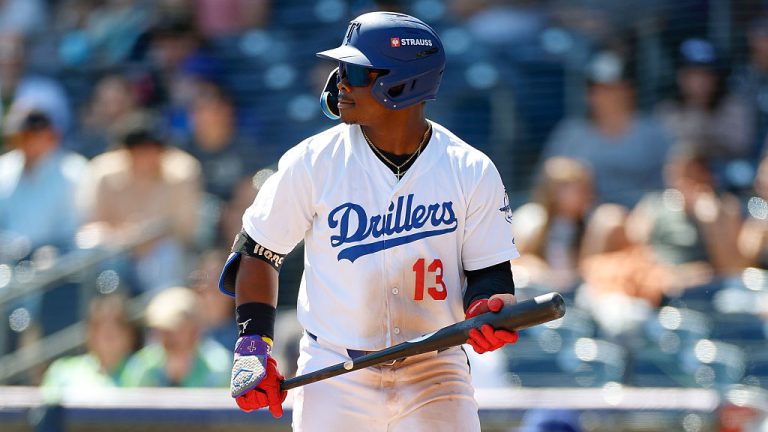
The Los Angeles Dodgers’ young outfielders have become one of the most impressive prospect groups in baseball.
Headlined by Josue De Paula and followed closely by fellow Top 40 prospects Mike Sirota, Eduardo Quintero, and Zyhir Hope, the depth doesn’t stop there. Charles Davalan cracks our Top 100 list, while James Tibbs III sits just outside. Zach Ehrhard, Kendall George, and Ching-Hsien Ko are also highly regarded within the organization.
All of this comes without a first-round pick over the past two summers, a testament to the Dodgers’ elite player evaluation and development.
While having this much talent is a blessing, it has also created a logjam within the system. The issue isn’t at the major league level, but rather throughout the minor leagues.
Per Katie Woo of The Athletic, the Dodgers are willing to explore trades involving their surplus of outfielders, with the exception of De Paula. In return, they are reportedly looking to acquire high-ceiling starting pitching, middle infield, and catching prospects.
Dodgers brass is no stranger to prospect-for-prospect deals.
Most notably, the organization swapped Michael Busch for Zyhir Hope and Jackson Ferris. Last season, they completed a midseason three-team deal that brought in Adam Serwinowski from the Reds and Paul Gervase from the Rays while sending third-string catcher Hunter Feduccia to Tampa Bay. They also made the Jorbit Vivas and Trey Sweeney swap in 2023.
A lesser-discussed storyline was the reported possibility of a Dalton Rushing trade, one that could have landed the Dodgers Franklin Arias and Brandon Clarke. It’s unclear how close the two sides came to a deal or how much validity the reported package held, but it remains an interesting example nonetheless.
A Dive Into the Dodgers’ Prospects
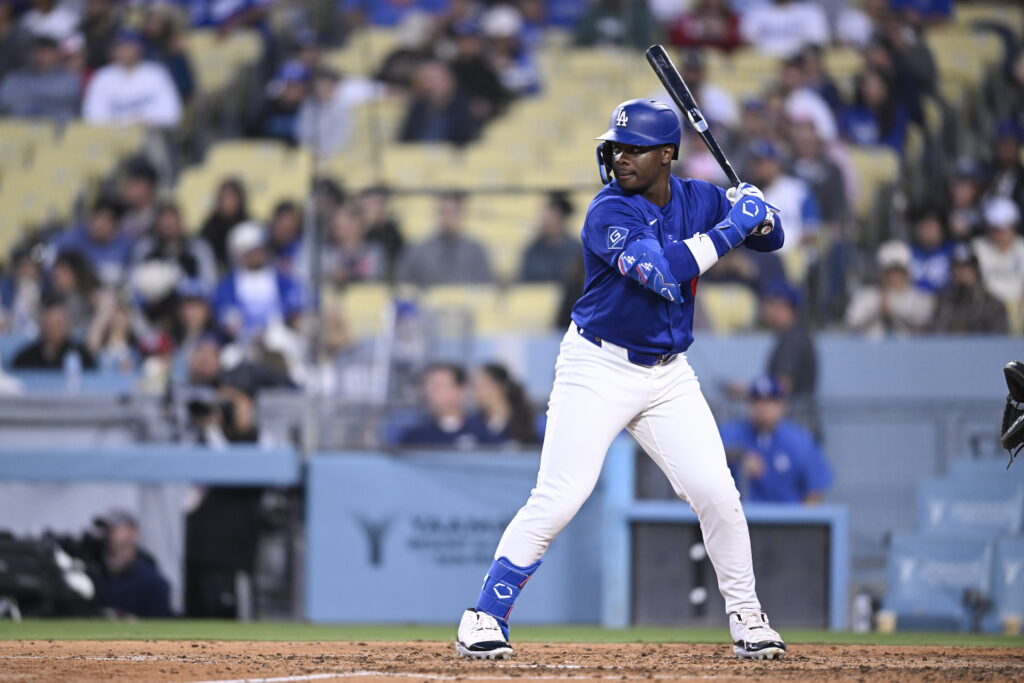
With De Paula ruled out of the rumors, here’s a look at the remaining chips available.
It’s also unclear how aggressive the Dodgers are willing to be. The fact that Sirota, Quintero, and Hope have not been excluded suggests the front office would be willing to move any of the trio for the right return.
Coming ahead of De Paula in our most recent top 100 update, Sirota (No. 14) just saw a 72-game on-base streak come to an end, slashing .340/.491/.602 in that span.
After an underwhelming junior season at Northwestern, Sirota experienced a significant power breakout with the Dodgers, posting higher exit velocities with wood bats than he did with metal. While there is some swing-and-miss in his game, he offsets it with 70-grade swing decisions, highlighted by his 19.9% walk rate this season.
Following an underwhelming junior year at Northwestern, Sirota saw a ridiculous power leap with the Dodgers, posting higher exit speeds with wood bats than he had with metal. While there’s swing-and-miss in his game, he hedges it with 70-grade swing decisions, running a 19.9% walk rate this season.
Quintero (No. 37) possesses legitimate five-tool potential, showing above-average contact skills and exit velocities for a 20-year-old. He also brings plus speed and the defensive ability to stick in center field. There is some inconsistency in his swing, meaning he requires more polish than some of his counterparts, but the ceiling is a player with 55-grade tools or better across the board.
The hottest of the bunch, Hope (No. 40) is slashing .373/.455/.760 with eight home runs since the start of July. He boasts the loudest tool in the system, with his game power bordering on 70-grade thanks to his ability to generate impact and consistently lift the ball to the pull side.
Davalan (No. 67) was one of the higher-floor bats in the 2025 draft. He runs plus contact rates with an advanced feel to play the angles. He’s been stuck in High-A as a result of the loaded Tulsa lineup. Davalan played second base at Arkansas, but he has yet to get run there as a Dodger.
Past the Top 100 Prospects
Tibbs has been one of the better power bats in Triple-A. He would have already debuted for a plethora of teams, making him one of the more likely names to be on the move. He runs elite contact quality metrics with 30-homer power projection, though whiff has crept into his game this season.
Ehrhard was acquired alongside Tibbs in the Dustin May trade, profiling as a well-rounded third or fourth outfielder. George owns 80-grade wheels and swiped 100 bags last season. Ko was one of the top prospects to come out of Taiwan with considerable projection in his frame.
It’s a wide spectrum of names to deal from, creating a vast pool of potential acquisitions this deadline.
Exploring Potential Trade Partners
A prospect-for-prospect trade is more complicated than simply identifying an intriguing name that fits into a system. It requires finding a team with both a need to address and a surplus of its own.
Looking at previous deals, the Cubs were searching for a young, MLB-ready first baseman. The price was Ferris, their fifth-ranked pitching prospect, along with an 11th-round over-slot signing from the previous draft.
Tampa Bay had long struggled to find consistent production behind the plate, while the Reds were searching for rotation depth, allowing the Dodgers to acquire two intriguing arms.
With the formula established, which teams should the Dodgers contact to further strengthen their farm system?
Chicago White Sox
After selecting two shortstops within the first three rounds last summer, including 10th overall pick Billy Carlson, the White Sox tripled down by selecting three middle infielders with their first three picks.
This comes on top of Colson Montgomery establishing himself as the franchise shortstop of the future.
Carlson was a popular name in draft circles last year, with some evaluators placing 70-grade marks on his glove and arm while praising his advanced approach at the plate and projectable frame.
A superb athlete, Carlson owns plus bat speed and has posted above-average contact rates in Low-A. However, his flatter swing path has consistently kept the ball on the ground, limiting his ability to tap into his power potential. His early career stat line has been underwhelming, and he has yet to hit a home run.
Not to say Carlson is an afterthought within the organization, but with Caleb Bonemer, Roch Cholowsky, and Montgomery ahead of him in the depth chart, Chicago could look to bolster its outfield group instead. Jaden Fauske is the top outfield prospect in the system, while Alex Weingartner is another recent draftee, with both players still teenagers.
On the pitching front, Christian Oppor oozes upside, reaching triple digits as a lefty. After struggling with command last season, those issues have followed him to Double-A, where he has posted a 9.49 ERA and a 27.9% walk rate.
Oppor attacks hitters with a sinker, sweeper, and changeup, but he currently lacks consistent feel for any of his offerings. Still, the flashes he showcased in 2025 are enough to maintain his prospect intrigue for the time being.
Tibbs and Davalan could be enticing adds for Chicago. The former could contribute to the potential playoff run now, while the latter looks to be a quick riser that can contribute by next season.
Cincinnati Reds
Maybe the Reds have soured on making deals with the Dodgers after giving up Sirota for Gavin Lux, but they do have a generous supply of young shortstops at their disposal.
Like the White Sox, the Reds took three prominent shortstops in the draft, adding to their current crop of Edwin Arroyo, Steele Hall, and Tyson Lewis. The latter two should spur more intrigue for the Dodgers.
Hall went a pick ahead of Carlson and has spent the entire season in rookie ball thus far. A late reclass and riser last year, Hall is an extremely twitchy athlete and will clock 80-grade run times. Just 5-foot-10, he’s unlocked much more power than expected, peaking at 111 mph and slugging 10 long balls in his first pro season.
Displaying actions, range, and arm strength, Hall projects as a plus defender that can stick at shortstop long-term.
Lewis is a much different prospect than Hall. A physical left-handed hitter, Lewis has recorded exit velocities as high as 119 mph. It’s an ultra-violent stroke with no second gear, already whiffing at fastballs at a high clip, and even more on softer stuff. That would be palatable for someone with the power potential of Lewis, but he also chases north of 40% of the time.
Despite a .687 OPS in Low-A, Lewis received a promotion and has settled nicely in Dayton, though the peripherals still aren’t pretty. Lewis splits time between shortstop and third base, but he has the athleticism to stick at the six.
Drafted in the third round last year out of Ole Miss, Mason Morris is an intriguing arm in the system. He’s struggled in his transition to starting, rocking a 6.18 ERA in Low-A. He sits 95 mph, peaking at 99 with a cut-ride four-seam, playing a low-90s cutter and mid-80s death ball off it. There’s a fringier sinker and changeup there as well.
A short extender with below-average command, Morris comes with reliever risk. However, he has the build and expansive mix to make it as a starter with further development.
Once again, Tibbs and Davalan would be potential targets for the Reds, though Cincinnati could push for a larger return with a deeper package of prospects. Acquiring either player would add another talented outfield bat to the organization alongside Hector Rodriguez, who has emerged as one of the better outfield prospects in baseball.
Tampa Bay Rays
If there’s any team willing to take a chance on a prospect-to-prospect deal, it would be the Rays.
After years of minimal catching talent in the organization, Tampa has hit on two backstops in Nathan Flewelling and Caden Bodine.
A swing change has unlocked Flewelling’s power potential, sending out 17 home runs this year in High-A, one of just five teenagers in the South Atlantic League. There are swing-and-miss concerns in Flewelling’s game, but he’s maintained advanced swing decisions through the season.
Bodine has climbed from Single-A to Double-A, holding a 90% contact rate through his rapid climb. Bodine is batting .356 with a 5.7% strikeout rate across all levels.
Both are completely different offensively but share the ability to handle the catching position at the major league level. Flewelling would better fit the Dodgers’ apparent strategy, while keeping the higher-floor bat would likely be in the Rays’ best interest.
Not to keep pulling from the 2025 draft pick bucket, but Daniel Pierce and Cooper Flemming are names of note. The Rays took shortstops Grady Emerson and Taj Marchand this summer.
The 14th overall pick, Pierce has struggled to find consistent success in his first professional stint, chasing and whiffing at a high rate. His pre-swing movement is loud, leading to inconsistent timing and contact quality. While the raw power is intriguing, it may not be enough to project above-average game power.
He is a phenomenal athlete; a plus runner, plus arm strength, and explosive lateral mobility, giving him an enhanced ability to stick at shortstop and play at an above-average level or better.
Flemming was their second-round pick and cracked our Top 100, coming in at No. 68. He features an advanced, simple left-handed swing that produces above-average contact rates with the potential to develop into at least average game power. A solid athlete with enough defensive ability to stick at shortstop, Flemming may ultimately profile better at either third or second base.
Past Theo Gillen, the Rays don’t have a ton of young outfield depth, so adding bats like Tibbs or Davalan would be advantageous. This group is a notch above the previous names mentioned, particularly Flewelling, so with a package, they could potentially push for one of the top three names.
Washington Nationals
Quietly putting together a deep farm system, Washington is loaded with young middle infield talent. Outfield depth, however, is a different story, as recently converted outfielder Gavin Fien would take the top spot.
Eli Willits won’t be on the move, but past him, there’s a flurry of intriguing names. Washington has a quartet of young, high-upside infielders with differing appeals in Devin Fitz-Gerald, Luke Dickerson, Ronny Cruz, and Coy James.
Soaring into our top 100 list at No. 66, Fitz-Gerald held a .903 OPS in High-A before hitting a wall upon his promotion. A switch-hitter, Fitz-Gerald runs above-average contact rates with a feel to lift. He’s begun to chase at a high clip and hasn’t handled the leap in competition well.
Dickerson can really pack a punch from a 5-foot-11 frame, already peaking at 112 mph while posting 70-grade run times. He’ll whiff a decent amount, but not in excess, and he rarely chases. Dickerson isn’t the cleanest of defenders at shortstop. He’s moved all across the field, but ultimately looks to settle into second base or center field.
Cruz is your prototypical lanky shortstop with plus power projection. The bat speed is loud, and he generates plenty of loft, though he’ll have trouble elevating at times. Cruz whiffs and chases at a high clip, which has been magnified through his promotion to High-A. A plus runner, Cruz has nice actions with the arm strength to stick at shortstop.
Signed for $2.5 million to pull him away from his Ole Miss commitment, James has been inconsistent through his first pro season. The counting numbers look appealing — 11 doubles, 14 home runs, and 25 stolen bases — but he’s coasting with a .733 OPS. There’s loud bat speed with a feel to lift, giving him the potential for 25-plus home run power. A fine shortstop, likely a second or third baseman in the future.
On the pitching side, Landon Harmon and Alejandro Rosario have traits the Dodgers seek.
A lean, athletic 6-foot-5, Harmon can reach the upper-90s with a cutter, getting around the ball extremely well. He’ll play a low-to-mid 80s baby sweeper shape off it, with solid command of his present two-pitch mix. Harmon will need to develop a proficient off-speed offering to start.
Injuring his elbow early in 2025, Rosario waited nearly a calendar year to undergo Tommy John surgery. A top-50 prospect when healthy, Rosario boasts a run-ride 96-98 mph fastball from a 5.5 foot release height. He complements it with a deeper sweeper shape and splitter, with all three of his pitches receiving plus grades.
Washington offers a lengthy list of intriguing names, but none appear to carry the value needed to pry away one of Los Angeles’ top three outfield prospects.
Seattle Mariners
Time to get fun and swing big.
The Mariners have the a loaded starting rotation with six arms that would be at least a three starter for most teams, and three legitimate aces. Coming through the pipeline are Ryan Sloan and Kade Anderson, our No. 5 and No. 10 ranked prospects, respectively.
Rumored to be shopping one of their MLB arms, the Mariners could look to offload one of their prized pitching prospects in exchange for premier outfield bats.
The cost would likely be two of Sirota, Quintero, and Hope. Sirota could be up by next season and join Julio Rodriguez and Dominic Canzone in the outfield. Hope following closely, while Quintero would take a year or two longer.
Do either arm have a chance to be dealt? No, but it’s an interesting thought exercise nonetheless. Realistically, Felnin Celesten, Nick Becker, and Luke Stevenson could be targets.
Celesten just missed the last top 100 update, struggling with inconsistent contact quality. A switch-hitter with a clean operation from both sides, Celesten runs above-average contact rates with projectable power. He’s a twitchy athlete with a shot at sticking at shortstop.
Following a stint in Low-A as a second-round pick last season, Becker has spent the entire year in rookie ball. A physical 6-foot-4 athlete, Becker has flashed double-plus run times and possesses plus bat speed. He is an ultra-projectable hitter with the tools to stick at shortstop long term.
Stevenson was Seattle’s second selection after Anderson last summer. He brings considerable thump and explosive bat speed, projecting for 25-plus home run power. There is some swing-and-miss in his game, but he rarely chases, occasionally becoming too passive in the strike zone. Strapped with a plus arm, Stevenson looks the part behind the plate with the receiving and blocking skills to remain at catcher.
Become a Member of Just Baseball
Subscribe and upgrade to go ad-free!
* Save 25% by subscribing annually.

Written by
Landon is a recent high school graduate, currently 17 years old going to study Media at UC Riverside next fall. He excels with data analysis inside…