
Red Sox Should Take Boston Celtics Approach This Winter
After two straight early playoff eliminations, the Red Sox should consider taking a page out of the Boston Celtics' book when they fall short.
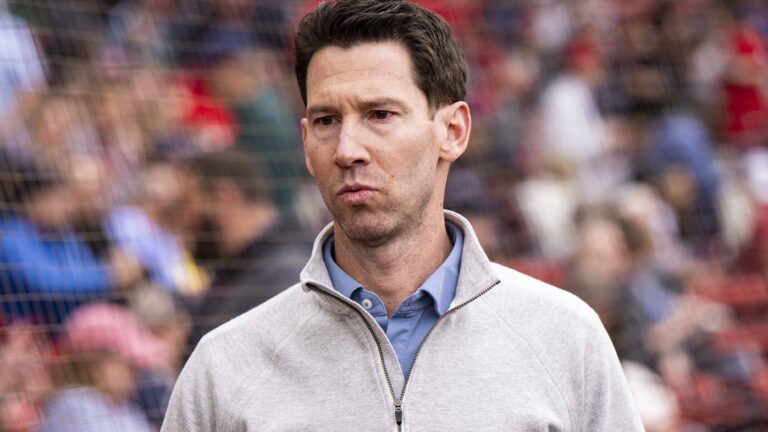
When the Boston Celtics lose a playoff series in embarrassing fashion, they get uncomfortable in reconfiguring their roster.
When the Boston Red Sox lose a playoff series in embarrassing fashion, they’ve dug deeper into their comfort zone and overall lowered the floor. But on the heels of the franchise’s second consecutive Wild Card Series disaster-class against the New York Yankees, it’s time to consider altering the approach.
Last year, Chief Baseball Officer Craig Breslow acknowledged the team’s need for a middle of the order bat. He accomplished his goal of acquiring one, first baseman Willson Contreras. However, the cost was another, third baseman Alex Bregman. Sure, there was some faith he had in his roster that wound up biting him. But the overall point is he didn’t do enough to change the fabric of the lineup.
The team still struggled against velocity. They also hit fewer home runs and were a very streaky lineup overall. But the biggest transgression of Breslow’s approach last winter was ignored with such little acknowledgment it almost felt intentional.
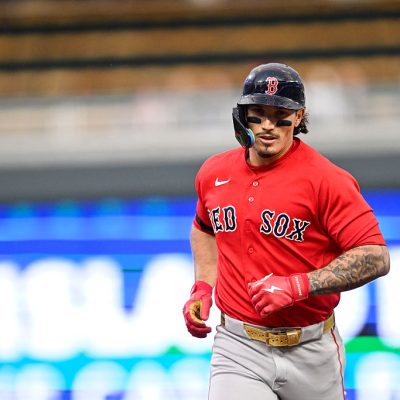
When outfielder Roman Anthony debuted last June, the reality was loud; the Red Sox needed to offload an outfielder. Even if that outfielder was Masataka Yoshida, who is more of a designated hitter at this juncture. Ideally, maximizing the value they could get for Jarren Duran was optimal.
Not only was Duran still there to open 2026, so was Yoshida. Anthony got hurt, making the issue go away in the interim. Then Yoshida got hurt a few weeks before Anthony’s return, keeping it away.
But the Red Sox need to do more than the obvious this winter. Simply removing Duran or Yoshida isn’t necessarily addition by subtraction. The only way to do that is to get uncomfortable; their neighbor, the Celtics, have showed the blueprint.
How the Celtics Do it
In Brad Stevens’ first three years as President of Basketball Operations, here are his major offseason moves:
- 2021-22: Traded Kemba Walker to the Oklahoma City Thunder for Al Horford (Result: Lost in NBA Finals)
- 2022-23: Traded Aaron Nesmith and bench filler to the Indiana Pacers for Malcolm Brogdon (Result: Lost in Eastern Conference Finals)
- 2023-24: Traded Marcus Smart to the Washington Wizards for Kristaps Porzingis; traded Robert Williams III to the Portland Trailblazers for Jrue Holiday (Result: Won NBA Finals)
They got progressively more uncomfortable, but the offseason following losing to a worse Miami Heat team in the Conference Finals, they traded two fan-favorites under 30 years old for established veterans. This isn’t to say the Red Sox will win the World Series in 2027 if they make a like-trade, but it’s proof of concept.
Within the same city, a team realized status quo wasn’t good enough. If the goal is to host parades, the process can’t always be the same. Especially considering there’s a lack of predictability in the market. The Red Sox can’t afford to sit on their hands, shoring up the margins of the roster and maybe get around to trading an outfielder.
By then, a division rival could land a marquee free agent or decide they’re willing to make a splash on a star-level player.
How Can the Red Sox Get Uncomfortable?
It’s already established the Red Sox need to do something about their outfield. However, getting uncomfortable in addressing it would be moving a second one.
The free agent pool this winter isn’t rife with star position players. Here are the top 10 ranked by fWAR, minimum 100 plate appearances, not including players with pending options:
There’s some good players on that list, but none the level we’ve seen in recent years like outfielders Kyle Tucker or Juan Soto.
The Red Sox have three young outfielders. Two are already extended in Anthony and Ceddanne Rafaela. The one who is not, right fielder Wilyer Abreu, has three arbitration years remaining before free agency. He’s also likely about to become a three-time Gold Glove winner while setting a career high in games played, home runs, runs batted in, and fWAR.
Not to say the Red Sox have to trade Abreu, but not every good young player needs to be part of the next great iteration of the roster. Obviously, they shouldn’t give him away, but there’s room to either replenish minor-league assets or package him for a bigger, more impactful hitter.
Of course, the perfect world is landing a big fish in free agency. However, it’s a fairly weak pool. There are not many high-impact, middle-of-the-order bats to choose from. The Red Sox could move an outfielder for prospects, or package one with others for a star.
Don’t Ignore the Comfort Zone Either
There are elements of the blueprint that works for the Red Sox, that is building a team that can win with pitching and defense. For years, that was an area the team neglected, oftentimes capping them as a competitive team that couldn’t last beyond the regular season.
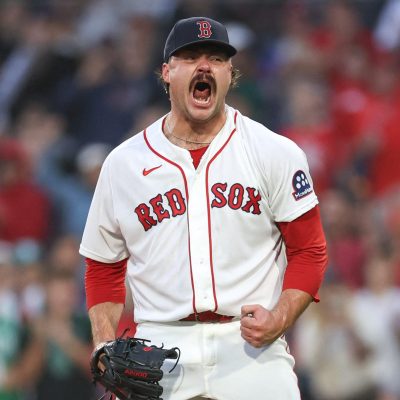
They’ve got plenty of great pitchers. Ranger Suarez and Payton Tolle headline those returning from big 2025s, while Garrett Crochet hopes to return to 2024 levels of performance and health. The Red Sox also have Brayan Bello and Jake Bennett; you could also add Tanner Houck, Kutter Crawford, and Jedixson Paez to the list of depth.
However, they don’t get to Yankee Stadium in the playoffs without veteran right-hander Sonny Gray. The 37-year-old had a career year in 2026, winning 18 games, posting a 2.72 ERA, and 3.4 fWAR. It wasn’t the same kind of excellence we’re accustomed to from Gray, but he was still stellar across 29 starts.
The Red Sox could bring him back, but replacing him isn’t something easy to do within. If there’s an opportunity to replace Gray, or retain him, they should entertain it.
Become a Member of Just Baseball
Subscribe and upgrade to go ad-free!
* Save 25% by subscribing annually.

Written by