
One Perfect Free Agent Fit for Every MLB Team
With the 2026-2027 offseason underway, we pick a perfect free-agent fit for every MLB team. The catch? Players can only be picked once.
 | |
The postseason has come and gone, awards have been handed out around MLB, and we’ve now got nothing but free agency to worry about in the immediate future.
The biggest moves don’t typically happen right away, and even without a potential lockout looming, it’s unclear if this offseason will be any different in that department.
We are still comfortably in the early stages of this offseason, but that doesn’t mean the movement hasn’t already begun around the league.
Evan Phillips became the first big piece off the board, as he signed a multi-year contract with the Atlanta Braves after a major career turnaround on the Los Angeles Dodgers. Just a few days later, Jake Bauers became the first position player off the board when he signed with the Boston Red Sox for $58 million on a four-year pact.
Since then, Ryan Jeffers (Twins) and David Bednar (Yankees) accepted qualifying offers, the Royals and Mariners made a significant trade surrounding Maikel Garcia, Dustin May signed with the White Sox, and Sonny Gray returned to the Twins. The action started early and will not be lifting anytime soon.
Before any more names fall off of the board, we’re going to dive in and assign one perfect free agent fit on every single team.
The only major rule we’re going to use here is that every free agent can only be picked once, as you don’t need me to tell you that Tarik Skubal would be a perfect add to the top of most teams’ starting rotations.
Perfect Free Agent Fits for Every Team in the AL West
Houston Astros: LHP Trevor Rogers
As of right at this moment, the Astros’ projected starting rotation for 2027 consists of the following:
- Hunter Brown, the undisputed staff ace.
- Hayden Wesneski, who turned in a 127 ERA+ across 11 starts and 61 innings in 2026, but has never topped 90 innings in a season at the game’s highest level (dating back to 2022).
- Cristian Javier, who lost his rotation spot at one point last year and has yet to find himself again after injuries wiped out his past few seasons.
- Peter Lambert, whose return from a year away in Japanese ball was outstanding, but his very limited track record leaves more quetions than answers.
- Tatsuya Imai, who had a spectacularly unspectacular first go-round in Major League Baseball. He showed glimpses of hope, yes, but is another arm that failed to stick around in the rotation all year.
Another thing you’ll notice, is that those are all right-handed pitchers.
Signing Rogers, a left-hander, who finished ninth in AL Cy Young voting in 2025 and had an up-and-down 2026, makes sense for a team that needs an impactful arm.
Rogers didn’t quite look himself in 17 first-half starts this past year, but he bounced back in a big way in 13 second-half outings, turning in a 3.52 ERA while increasing his K/9 from 6.9 in the first half to 10.0 in the second. He looked to be returning to his typical form as the year wound down, and his 2.53 ERA in five September starts (with 36 strikeouts against just two walks) is the last sample size we got from him.
Last year, the Astros had a left-hander make a start just four times all year – three from openers, and one from Colton Gordon, who was traded away at the deadline. The result? A 11.12 ERA across just 5.2 innings of work.
On a broader scale, Astros starters finished 27th in the majors in ERA this past season (4.81), and Rogers, who’s a former first-round pick that’s consistently shown significant upside, makes a ton of sense.
Just Baseball has Rogers projected to land a four-year, $80 million contract with the Padres, who are also starved for pitching, but the Astros-Rogers connection feels like a cleaner fit.
Los Angeles Angels: 2B Gleyber Torres
With the unproven-but-still-young Vaughn Grissom projected to hold down second base for the 2027 Angels, bringing in an established veteran on a one- or two-year pact makes a lot of sense. That’s where Torres comes in to play.
Torres, 30 in just under a month, spent the last two years in Detroit manning second base for the Tigers. Injuries limited him to just 96 games, but he was an All-Star the year prior, and his 109 wRC+ and .727 in 2026 isn’t horrible by any means, just not up to par with where he’s been at historically.
Over the years, Torres has shown an ability to hit both right- and left-handed pitching well, and he can hold his own defensively at second. This past year, he turned in -5 Outs Above Average, but that’s exactly where he was the year before and is a +2 improvement from 2024. By Defensive Runs Saved, he was at +3, his highest in a single season since 2022.
At this point, it doesn’t feel like Torres is ever going to be the long-term building block that he used to look like as a member of the New York Yankees. Even still, he provides value in multiple different ways and could be immensely helpful to an Angels team that’s still (still…) looking to turn things around and field a competitive unit.
Athletics: LHP Foster Griffin
It’s not everyday that a player fails in MLB, heads overseas and finds success, and then comes back to the States and excels. In 2026, Foster Griffin successfully did just that. The quirky left-hander made a full season’s worth of starts (31) in his first full season in the majors at 31 years of age and earned an All-Star nod in the process.
All told, he sported a 3.60 ERA and 3.96 FIP (119 ERA+) in 172.2 innings split between the Washington Nationals and Cleveland Guardians. He’s an underrated southpaw who can eat innings and should be of interest to teams that are perhaps just outside of a contention window with aspirations to field a competitive unit in 2027.
That makes him an excellent fit on the A’s, who weren’t great last year but at least have aspirations to field a respectable team. While they were just 64-98 last season, there are some promising pieces in place around their roster, and a solid starter they can depend on would go a long way.
Only one A’s starter, J.T. Ginn, turned in a better year in 2026 by ERA+ than Griffin, and Ginn’s final result was just one point higher than Griffin’s. Other than that, starting pitching was a major weakness for this team.
There’s not much about Griffin that will overpower hitters – his four-seam fastball averaged 91.5 mph last season – but he does a few things the A’s desperately need from any pitching acquisition this winter: limits walks and keeps the ball on the ground.
In 2026, the A’s surrendered the fourth-highest amount of walks in the majors. As far as inducing groundballs goes, the team was dead last in the league with a 38% groundball rate. Griffin, 31, was in the 88th percentile in BB% and 68th in GB%. That’ll at the very least get this team trending in the right direction.
Seattle Mariners: UTIL Mauricio Dubón
The Mariners have a multitude of needs around their roster for this coming season. Sure, their acquisition of Maikel Garcia helped fill a major one, but there’s still room for more. With J.P. Crawford set to leave via free agency, the team needs someone who can fill his spot, but there’s a free agent that can do that while also supplying value at other positions as well.
Dubón, 32, just took home the third Gold Glove of his eight-year career in 2026 and once again turned in a respectable performance with the bat as well. At one point viewed a light-hitting utility option and nothing more, Dubón has turned his career around and now has legitimate value.
The Mariners need versatility and a player that can play the middle infield and soak up some reps in left field. Here’s a look at Dubón’s appearances by position in 2026:
- Second base: 4
- Third base: 8
- Shortstop: 62
- Left field: 85
- Center field: 16
Having a player that can hold his own at multiple positions is extremely valuable in today’s age. By DRS, Dubón was at +1 at shortstop and +3 in left field this past season, which lets the Mariners know that he’d be able to admirably handle reps at both positions depending on the team’s needs that day.
In a career-high 153 games this past season, he set more career bests in home runs (12), RBI (73), stolen bases (10), fWAR (2.4), and wRC+ (99). This is not a player that’s only valuable on defense, so the Mariners would get a boost on both sides of the ball Dubón. To make things even sweeter, he’s not going to break the bank for any team to sign.
We’ve got Dubón projected to land a deal anywhere between one and four years with an AAV somewhere between $7 and $12 million depending on how long the contract is. That’s pennies on the dollar for a player that provides as much value as he does on offense and defensively.
Texas Rangers: 3B/OF Teruaki Sato
This one’s a bit of a wild-card, but the Rangers have already reportedly shown interest in Sato, and the need for a player of his caliber is wildly apparent.
After finishing 2026 at 80-82, the Rangers still consider themselves a contender, but they’re testing the waters on a Corey Seager trade as a way to shed payroll, so Sato’s only going to fit for them as long as he doesn’t soak up too much of said payroll.
Sato, who will be 28 by the time Opening Day rolls around, just wrapped up an incredible season in Japan in which he hit 39 home runs, drove in 106 runs, and had a .306/.383/.609 line with a .991 OPS. He’s played both third base and the corner outfield previously as a professional, but many around the industry say his most natural fit in MLB will be in an outfield spot.
That would work out just fine for the Rangers, who currently have Josh Jung entrenched at the hot corner. With the departure of Joc Pederson on the open market, there are going to be plenty of at-bats to fill, and Sato could do just that. For a Rangers team that finished 14th in home runs and 25th in runs scored last year, a player that finds himself in a tier above Pederson would be ideal.
While Sato has some concern in his game with the amount of times he strikes out, I’d ask you to look no further than Munetaka Murakami and Kazuma Okamoto, who were at 35.4% and 28.8% last year in their respective strikeout percentages, to determine how much that really matters when you come stateside. Both players were well above average despite the fact that their games came with a significant amount of swing-and-miss risk. With the right skillset around your eye at the dish, this can be covered up successfully.
If the Rangers are able to open up a bit of payroll in any way this winter, Sato’s fit is just going to become more and more perfect. He’s a big bat, and the Rangers need themselves a big bat.
By Eric Treuden
Perfect Free Agent Fits for Every Team in the AL Central
Chicago White Sox: RHP Freddy Peralta
The Chicago White Sox have started the offseason on a positive note with the signing of Dustin May. The White Sox know that the rotation had to be addressed, and continuing to address it could be an avenue they choose to go.
The White Sox finished last in innings pitched by starting pitchers in 2026; they did not have that guy that has been there done that, for a full season. Everyone in the rotation has a good amount of upside, but a good amount of downside as well. They need a proven commodity. That is where Freddy Peralta comes in.
While signing May definitely helps some of that, he has not been a guy that you can depend on unlike Peralta. The right-hander has posted 160 innings pitched or more from 2023-2026. Peralta also regained his form with the Tampa Bay Rays pitching to a 3.25 ERA across 55.1 innings pitched after the lackluster start with the New York Mets. The 31-year-old also got the chance to prove the postseason struggles were not something to be worried about. He started four games in the playoffs posting an ERA under 3 going 2-1 in those games.
The White Sox should still have the money to make a big splash as their payroll is just a little north of 100 million. When the White Sox have been good, their payroll has been in the 180-190 million range. There is no reason why the White Sox ownership should not believe their window is now after the season they had last year.
Cleveland Guardians: OF Taylor Ward
Picking a perfect fit for the Cleveland Guardians is tough because they just do things differently than most teams. After a season where they win the division somehow again without Jose Ramirez for most of it, the Guardians look to finally get over the hump and win a World Series.
Now, if there is a side of the ball that needs to be addressed, it is the offensive side. This team was bottom ten in runs scored and bottom ten in home runs. Now Ramirez coming back for hopefully a full season will help some of that but just relying on that would be silly.
This is where Taylor Ward comes in.
Ward had an interesting season last year and has had an interesting career as well. Through 2022-2025, he had three seasons of 20 or more home runs. In 2025, he had his best season, producing a 100-plus RBI season, and his second highest fWAR total at 3.1. In 2026, things took a weird turn.
The 32-year-old, in his first season with the Baltimore Orioles, had .730 OPS with 1.8 fWAR but only seven home runs. After getting traded to the Seattle Mariners, things took a turn for the worst. In 101 plate appearances, he had an -0.8 fWAR with zero home runs. A couple things you could point to for his struggles would be his groundball rate, which was at the highest in his career since 2023. His flyball rate was also at its lowest since 2020. Lastly, his hard-hit rate was the lowest since his rookie year in 2018.
So, you’re probably asking, why would the Guardians want him then? The answer would simply be this is what they love to do. They love to find guys that are being overlooked by others or think they are one tweak away from success. Take the acquisitions of Nathaniel Lowe and Rhys Hoskins last year. This team is the king of attempting to catch lightning in a bottle.
If Ward plays up to his potential, he helps fill a need that the Guardians desperately need help filling. Hitting home runs and scoring runs. The Guardians should have enough in their budget with their projected payroll right now sitting around $80 million. There is a chance Ward does not even need a multi-year contract which would help the fit a lot more, but a two-year deal should not kill the chance of him landing with the Guardians either.
Detroit Tigers: INF Luis Arraez
The Detroit Tigers are coming off a disappointing season, where being a division winner was a possibility, but unfortunately, they came up short of making the playoffs. They look to rebound now with still a fun team to build around, more importantly adding a veteran to this young lineup.
One place they will be looking to improve on are striking out less as a lineup. They struck out seventh most, being one of nine teams with 1400 or more strikeouts. They also sat 20th in batting average as a team at .241. But more specifically, they will be looking to add at second base with the departure of Gleyber Torres. Replacements on the roster would be Colt Keith/Zach McKinstry who both profile as bench bats, and Hao-Yu Lee who showed promise, but would be hard to trust with the opening day job.
The first thing to hit with Arraez is his defense which improved significantly. Ron Washington worked his magic on him for sure. It feels like every fielding stat that once hated him now loves him. He improved his OAA by 12 from 2025 putting him in the 99th percentile of all fielders. He also had a Fielding Run Value of +5, ranking him third of all non-catchers.
The 29-year-old’s glove coming to life was a surprise, but we always knew what the scrappy left-handed hitter would bring to the plate. His batting average was at .310, putting him third in the MLB. Also, Arraez brings a strikeout rate that was the lowest in the MLB last year at 4.3%. Is Arraez going to bring power? No, but he is going to bring consistent hardnosed at-bats which prove important in clutch time. Something this team desperately needs.
With some money coming off the books, the Tigers offseason has already started with the Emilio Pagan signing. Their payroll sits around $15 million less than last year even after that signing. An amount that should fit an Arraez contract type.
Kansas City Royals: OF Ian Happ
The Kansas City Royals are coming off being one of the most disappointing teams in baseball last year finishing with a 69-83 record. The Royals offseason has started off with a bang, acquiring starter Bryce Miller for their third baseman Maikel Garcia. This team now definitely needs to focus on this lineup.
The outfield would be a good place to start which currently has one bright spot in Jac Caglianone. But besides that, there is not much to be excited about. After Kyle Isbel got designated for assignment, the other outfielders left are Isaac Collins coming off a disappointing year, John Rave, and Matthew Lugo who have both shown not much to be excited about.
The Royals ranked bottom ten in both runs scored and home runs as an offense in 2026. A consistent bat is needed to steady the lineup behind their young stars Bobby Witt Jr., Caglianone, and Carter Jensen. This is where Ian Happ comes in.
Happ’s best trait is how consistent he is year in and year out. He debuted in 2017 where he hit 24 home runs and put up 1.8 fWAR. But 2022, we see him hit his stride with his best season with 60 plus extra-base hits and a 3.7 fWAR season. He’d been at 2.6 fWAR or higher every year since that 2022 campaign, pointing to his overall consistency.
In 2026, it was considered a down year for him, he was still relatively solid with a 2.6 fWAR and 24 home runs. It feels like every year you can count on the switch-hitter hitting you around 20 home runs and putting up around 3 WAR. The 32-year-old has been able to do this since 2022. Happ has also played 148 or more games each year since 2021 and brought home a total of four Gold Gloves in left field.
With a flexible payroll, the Royals should be able to get this move done and more. They are projected to be around $50 million less than last year as the team sits right now. Being scared by a “down” year last season for Happ would be a mistake by the Royals and other teams. Happ fits this team who needs the veteran presence and an outfield bat.
Minnesota Twins: INF Alec Bohm
The Minnesota Twins, coming off a year where they went 77-85, just made their first big splash by signing Sonny Gray to a two-year $55 million contract. This is something we do not usually see from the Twins: big moves on the free agent market. What else could be in store for a team with a lot of young pieces all across the diamond?
After Jeffers accepted the qualifying offer, the only real piece the Twins lost was Josh Bell, their first baseman/designated hitter. The realistic option they are left with is Royce Lewis, who needs to prove his worth in 2027. The only other option that can play first base is Aaron Sabato, who got a tiny amount of time in the MLB but is far from being established even as a prospect. This is why Alec Bohm makes sense.
Bohm has had a disappointing time with the Philadelphia Phillies, only showing flashes of his potential. The 30-year-old had prospect pedigree being ranked top 30 before being called up and being the Phillies’ number one prospect at the time. Bohm debuted in 2020, and to date 2024 was his only great year. When Bohm is going, he is a doubles machine, of which he had 44 in that breakout campaign. The 2025 season was not terrible but wasn’t very good either. In 2026, he went back to his old ways putting up just an 0.2 fWAR season.
The right-hand hitter is a change of scenery candidate in a big way.
Even with that 0.2 fWAR figure in mind, Bohm still was highly valuable against left-handed pitching in 2026, so he is not completely useless. He hit .292 with seven home runs and a 120 wRC+ against southpaws and can certainly be of use to the Twins as a lefty-masher.
After spending on Gray, you have to wonder how much more do the Twins have to spend? Their payroll is already projected to be much more than last year. Bohm feels like a flyer they can afford as his asking price should not be much.
Defensively, Bohm played 50 games at first base last season and ended up grading out better by the defensive metrics then over at third. Is it amazing? No, but it is better. So a fit with the Twins being their Opening Day first baseman after putting everything together makes sense.
By Blake Dolan
Perfect Free Agent Fits for Every Team in the AL East
Baltimore Orioles: OF Randy Arozarena
The Baltimore Orioles are coming off their second consecutive season of missing the playoffs and they’ll be looking to bolster their young core with some free agent help this offseason. In particular, they’ll have their eyes firmly on outfielder Randy Arozarena and his rare combination of power and speed.
Arozarena is the first player in MLB history to begin their career with six straight 20/20 seasons and he had a career-high .865 OPS this year. He slashed .281/.381/.484 and hit 26 home runs while driving in 79 runs and stealing 26 bases in 2026. His 5.5 fWAR led all AL outfielders and only trailed NL MVP Pete Crow-Armstrong among all outfielders.
The Orioles’ outfield core currently consists of Colton Cowser, Tyler O’Neill, Dylan Beavers, and Blaze Alexander, and this group could certainly use a star player that has proven he can excel in every area of the game.
Arozarena’s +37 Batting Run Value was good enough to rank in the 98th percentile among all MLB hitters this year and he became one of the best leadoff hitters in the league. If Baltimore is able to slot him at the top of their lineup, he could give them much-needed insulation around Pete Alonso and Gunnar Henderson and produce a lot more offense.
The Orioles hit the 10th-most home runs in MLB this year and scored the 17th-most runs, so Arozarena could potentially be the key to helping them get into the upper ranks. Baltimore hasn’t won a postseason game since 2014 and they need proven postseason performers and elite hitters to bring a spark to their squad, and Arozarena does just that.
Baltimore will certainly be looking to provide more lineup protection to surround the powerful bat of Pete Alonso as they currently don’t have many other intimidating right-handed hitters on their squad. Addressing the top of their lineup is one of the most important goals of their offseason, and Arozarena is the perfect fit to accomplish that.
Boston Red Sox: RHP Michael Soroka
The Boston Red Sox have already made a splash this free agency by snatching up reigning NLCS MVP Jake Bauers on a four-year, $58 million contract, but they’re still going to be in on some other big names this offseason. Notably, they would be the perfect fit for Michael Soroka.
Soroka had a strong 2026 performance, pitching to a 3.41 ERA in his first season of 100+ innings since 2019. He was one of the best pitchers on a Diamondbacks staff that won 86 games this year and fell just two games short of a playoff spot.
The Red Sox have seen the departure of a very strong starting pitcher in Sonny Gray this offseason and they’ll need to fill in his absence with another top starter. While Soroka has been very solid throughout his career, the main concern in his game is his ability to stay healthy. The Red Sox are reportedly taking a “cautious’ approach this offseason and will not likely be taking flyers on the top free agents available.
Soroka can be a very valuable pitcher for the Red Sox, who have boasted some great starting pitching in recent years, and when combined with the return of Garrett Crochet in 2027 their rotation will look very intimidating.
This won’t be a ‘splash’ of a contract in free agency, as Soroka doesn’t necessarily land in the upper echelons of elite starting pitchers, but the Red Sox could certainly lock him up to a good contract and get some very strong years out of him.
New York Yankees: RHP Paul Blackburn
The New York Yankees are seemingly always in on the top free agents year after year, but their perfect free agent fit is a player that they should look to bring back from their 2026 roster. Paul Blackburn was signed by the Yankees partway through the 2025 season and he was one of the best relievers in baseball this year.
Across 70 appearances as a Yankee, Blackburn has pitched to a 2.15 ERA in just over 100 innings of work. In 2026, he was absolutely elite, notching a 1.59 ERA across 85 innings while racking up 69 strikeouts and allowing just 59 hits.
While Blackburn hasn’t taken home any personal accolades or awards as a Yankee, he was one of just three relievers this season to record an ERA at or below 1.60 and notch 60+ strikeouts. He converted from being a starting pitcher to a bullpen role in the 2025 season and he’s completely re-invented himself as a pitcher.
The Yankees had a three-headed monster in their bullpen this season composed of Blackburn, David Bednar, and Brent Headrick, all of whom pitched to ERA’s below 2.50 and appearances in 60+ games. They’ve already secured Bednar’s return on a $23.15 million qualifying offer for next season, so their sights will now be locked squarely on Blackburn.
Blackburn was such an integral and reliable part of the Yankees’ pitching staff in 2026 that it’s become critical that they find a way to bring him back in 2027. They say “if it ain’t broke, don’t fix it,” and the Yankees need to take that to heart with another one of their elite relievers.
Tampa Bay Rays: RHP Nick Martinez
After falling just short of the first World Series title in franchise history last season, the Tampa Bay Rays will be looking to keep their core together to earn themselves another chance at their ultimate goal. The perfect way to do that is to bring back starting pitcher Nick Martinez after an amazing 2026 season.
Martinez went 15-6 with a 3.10 ERA and 3.96 FIP across 180 innings, throughout which he struck out 109 batters and walked just 26. He became just the second pitcher in Rays franchise history to pitch that many innings while allowing 30 or fewer walks across a single season, joining 2013 David Price.
Martinez is an interesting pitcher, specializing in inducing weak contact from opposing hitters and not in swings-and-misses. This season, he set a career-high in innings pitched, matched his career-best ERA, made his first All-Star team, and led his Rays to the World Series.
His pitching style and overall skillset just seems to align so perfectly with the Rays and their philosophy, so this just seems like a match made in heaven, or rather a rematch. With Freddy Peralta also looming as a free agent, the Rays need to ensure that they maintain control of at least one of these pitchers and Martinez’s contract would be much more aligned with Tampa’s spending habits in recent years.
The Rays inked Martinez to a one-year deal last offseason and it became one of the best signings of the season, so they should look to bring him back once again. As a 36-year-old pitcher, he won’t get a long-term deal at all but the Rays would be doing themselves a disservice if they don’t at least try and lock him up to another one-year contract.
Toronto Blue Jays: UTIL Jazz Chisholm Jr.
The Toronto Blue Jays just had one of the most disappointing seasons in baseball after pushing the Dodgers to Game 7 of the World Series just a year ago, and they’ll be looking to bounce back in a major way this offseason. Linked to some of the top free agents on the market, the Blue Jays would be a perfect fit for Jazz Chisholm Jr. and his star skillset.
Chisholm certainly had a down-year in 2026, finishing with just 19 home runs and notching the lowest single-season OPS mark of his entire career (.711). However, he also set career-highs in stolen bases (41) and was just one home run shy of his third-straight 20/20 season.
Defensively, Chisholm is also one of the best infielders with the glove thanks to his +15 OAA and +8 FRV in 2026. He’s taken the vast majority of his reps at second base in recent years and would likely slot in there in the Blue Jays’ lineup, a team that is in dire need of offense. With Ernie Clement having one of the worst OPS marks in baseball (.649), the team needs more offensive production at the position.
The Jays had the 24th-best team wRC+ in baseball this season (94) and finished dead last in home runs (152) and runs scored (648), as well as fourth-worst in stolen bases (75). Jazz brings the potential for massive improvement in all of these areas.
While Toronto had a rough 2026 season, their free agent signings from a year ago performed incredibly, with Kazuma Okamoto hitting 33 home runs in his rookie season and Dylan Cease finishing runner-up in AL Cy Young voting. Chisholm could be the latest free agent signing to head north of the border and bolster their odds of returning to the World Series.
By Ethan Hyatt
Perfect Free Agent Fits for Every Team in the NL West
Arizona Diamondbacks: 1B Paul Goldschmidt
Since their 2023 World Series run, the Diamondbacks have been nothing if not frustrating. They’ve barely missed the playoffs twice in three years since, and a few well-placed additions may be enough to get them back into October baseball.
One particular need comes at first base. Entering 2027, Tim Tawa seems to be the next man up to try and fill the role, but his career 82 wRC+ and 0.3 fWAR hardly inspires confidence and the depth options behind him are unproven at best.
Such a dearth of hitting talent at such an offensively important position means the circumstances are ripe for the Diamondbacks to stage a happy reunion with one of their franchise’s greatest players.
Paul Goldschmidt is entering his age-39 season coming off of a late-career resurgence in the Bronx. In 105 games, he slashed .252/.313/.452 with 18 home runs for a wRC+ of 111 and an fWAR of 1.6. The last three years have shown him to be particularly suited for platooning, with great numbers against lefties (134 wRC+, 168 wRC+, 168 wRC+) weighed down out by poor numbers against righties (88 wRC+, 73 wRC+, 60 wRC+).
Meanwhile, he remains strong in the field (5 OAA, 7 FRV in 2026), and his newfound limitations will constrain the amount of money or years which he can reasonably demand.
It may be difficult for fans to get too excited for a platoon bat that’s firmly in his decline phase, but the first-baseman market is so weak that 39-year-old Goldschmidt is still the best option out there for a D-backs squad that needs to spend their money wisely and on multiple positions of need.
Besides, the move would certainly feel right on an emotional level, and pairing Goldy with a former teammate across the diamond in Nolan Arenado may carry intangible benefits in itself.
If the Diamondbacks’ offseason begins and ends with Paul Goldschmidt, it would be quite the letdown. But as a piece of a greater plan, he could be exactly what a team on the cusp of contention needs.
Colorado Rockies: DH Joc Pederson
Finding cheap assets on the open market, boosting their value with a strong season, and trading them for prospects at the deadline is a tried-and-true approach for rebuilding teams. In Colorado, they may have their ticket with Joc Pederson, a 34-year-old slugger who is no stranger to being dealt at the end of July.
On an immediate level, the Rockies struggled with the long ball despite having a generally strong offense, ranking 19th in the league. Individually, only Hunter Goodman hit more than 25 homers. Pederson, meanwhile, bounced back from an ugly 2025 to mash 26 bombs for the Rangers en route to a 128 wRC+, better than all Rockies hitters.
The thin air in Colorado would be an obvious benefit for Pederson’s home-run production, but with Coors Field’s gigantic outfield encouraging doubles and triples, someone like Joc, with 91st-percentile average exit velocity and 5th-percentile speed, may also stand to gain in the extra-base-hit department.
However, the true value of Pederson in purple may come well after he departs. A lack of veteran home-run hitters on short-term deals is not what stands between Colorado and playoff contention. But if he plays well enough, he could be flipped for valuable prospects from a contender in need of power at the deadline—prospects which could form the core of the next great Rockies team.
It would be a low-risk, far-sighted signing for Colorado, where the worst-case scenario sees Pederson harmlessly underperforming on a team with very low expectations for 2027. Alternatively, he could be the slugging centerpiece of a revitalized Rockies lineup that shocks the world, firing the club into Rocktober years before anyone expects.
It can’t hurt to dream.
Los Angeles Dodgers: LHP Adrián Morejón
It would be simple to state the obvious that the Dodgers, backed by their endless financial reserves, will be targeting Tarik Skubal over the offseason and would stand to gain greatly by retaining his services. But with the uncertainty around potential financial restrictions in the next CBA, baseball’s richest team may want to avoid more enormous obligations.
Adrián Morejón, the best reliever on the market this year and a multi-year standout within an excellent San Diego bullpen unit, could be next on the shopping list.
The small sample sizes inherent to relieving make it a uniquely volatile role from season to season, but nobody has told Morejón. Since 2023, he has pitched more than 60 innings every season while never running an ERA or FIP above 3.00. The only other relievers to match his performance and consistency are standout closers Cade Smith and Mason Miller.
There’s no doubt that Morejón would be closing games himself if he wasn’t Miller’s setup man. That dynamic may not change in Chavez Ravine, where Tanner Scott and Edwin Diaz provide stiff competition for save opportunities. Even so, the Dodgers are in need of a late-inning lefty now that Alex Vesia has reached free agency, and Morejón would be an outstanding replacement.
That’s not all, however. Rumors suggest that teams around the league are interested in converting Morejón into a starter, in the vein of Clay Holmes and Griffin Jax. It would tax the southpaw’s durability and bring up past injury concerns, but the prospect of getting a quality starter on a reliever’s salary may be too good for any team to pass up, let alone the perennially starter-depth needing Dodgers.
In the end, Adrián Morejón makes too much sense in Dodger blue to slip by without the club extending an offer, regardless of whether they pursue Skubal or not. Whether they want him as a starter or as a reliever, he’s too good for baseball’s powerhouse to pass on.
San Diego Padres: RHP Clay Holmes
Saddled with an expensive roster of aging stars on long-term deals, it’s now or never for the Padres to finally break through. But last year’s rotation of Michael King and assorted others simply wasn’t playoff-caliber, ranking bottom-ten in most metrics and fifth-worst in team FIP. With both King and Nick Pivetta hitting the open market, this year’s rotation stands to be even worse.
To make matters more difficult, the Padres are projected to see very little salary relief from their free agent losses. Arbitration settlements will take their toll, and Manny Machado’s salary in particular shot up from $25 million in 2026 to $39 million in 2027, leaving San Diego in a serious financial bind.
To shore up an otherwise shaky rotation, the Padres have no choice but to turn to free agency in search of a reliable pitcher who nevertheless isn’t so good or promising that he’ll demand an extravagant sum. Clay Holmes fits that mold to a T.
After years of quality relief work for Pittsburgh and the Yankees, Holmes has spent the last two years proving that he can hold down a starting rotation spot. Though limited to 101.1 innings pitched in 2026, the 33-year-old sinkerballer maintained a 3.29 ERA and 3.63 FIP thanks to a 99th-percentile groundball rate and an exceptionally low HR/9 rate that ranked second among all pitchers with over 100 IP.
Meanwhile, Petco Park perennially ranks as one of baseball’s most pitcher-friendly venues, meaning that Holmes’ impressive anti-homer action may reach even lower lows when taken out of Yankee Stadium and windy Wrigley Field.
Optimism aside, Holmes is entering his age-34 season and, whether due to performance or durability issues, has never ended a campaign with more than 1.9 fWAR. In a pitching class filled with mid-level options like himself, he’s likely to be among the cheaper signings who can still provide consistent starter-caliber play.
For the Padres, that would be more than enough.
San Francisco Giants: LHP Shota Imanaga
In 2026, the Giants learned a hard lesson about entering a season with a pitching staff built on hopes and dreams. By the end of a long and dismal campaign, San Francisco had burnt through 39 pitchers, and only three – Logan Webb, Landen Roupp, and Robbie Ray – stacked more than 1 fWAR for the Orange and Black.
The bullpen’s woes got the brunt of the attention, but going into 2027, the starting rotation looks just as depleted. Webb is a frontline ace coming off a down year, and Roupp is a proven backend option. After that, the Giants are once again left hoping for pleasant surprises. Another reliable starter is desperately needed.
Shota Imanaga is coming off of a down year himself. After breaking out in his rookie campaign with the Cubs, troubles with the long ball have taken some shine off of him. His 1.81 HR/9 last season was second-worst in baseball among all qualified pitchers, and it put a serious dent in his play. A 3.77 ERA and 4.47 FIP is quite the comedown for a man who was earning Cy Young votes two years ago.
While Imanaga’s problems may scare off some teams, the Giants should be all over him. Practically no other stadium is better at keeping balls in the yard than Oracle Park. With its heavy sea-level air, cold temperatures, 24-foot-tall wall in right field, and cavernous Triples Alley, few stadiums could be friendlier to a flyball pitcher like Imanaga.
Even better, the Giants already have a proof of concept for Imanaga in the form of Ray, another homer-susceptible lefty with strikeout stuff. When Ray was traded to San Francisco, his HR/9 dropped from 1.52 in his last full season in Seattle to 1.09 in his only full season in the Bay. That improvement was critical in earning him his second All-Star appearance, eight years after his first.
Finally and most pertinently, the Giants flat-out do not have a proven left-handed starter in the organization. Options like Cesar Perdomo and Matt “Tugboat” Wilkinson have hardly played at the big-league level, and trusting them as the only lefty options in the rotation would be a variation of the exact same mistake the Giants made going into 2026 – putting too much faith into hopes and dreams.
If the Giants are as intent on contending in 2027 as their front office claims they are, Shota Imanaga would be an outstanding addition.
By Stefan Minkowski
Perfect Free Agent Fits for Every Team in the NL Central
Chicago Cubs: RHP Michael King
If there’s one area in which the Cubs are clearly due for an upgrade, it’s in their starting pitching.
Despite making it into the Wild Card Series with an impressive record of 89-73, the Cubs were quickly knocked out of the playoff picture, being swept by the Padres. A large reason for this was the way the Padres jumped on their starting pitching, tagging both starters for a combined seven runs between the two Wild Card Games.
As it currently stands, the Cubs are set to potentially lose seven of their starting pitchers in free agency, which could be detrimental due to the weakness of this group as is. This list includes Shota Imanaga, Matthew Boyd, Kevin Gausman, and Clay Holmes, just to name a few.
Given this, Michael King stands out as a clear target for the Cubs on the free agent market. King is one of the best pitchers on the free-agent market after yet another stellar season in San Diego that saw him finish with a 3.21 ERA over 185 innings, notching 159 strikeouts along the way.
Not only is King one of the best arms available, but he stands out as a clear target for the franchise due to his makeup as a pitcher. Due to King’s pitch mix being built around his sinker, he tends to allow a lot of contact on the ground, which should keep the windy nature of Wrigley Field from having too big an impact on his game.
The Cubs should aim for one of the biggest names available this offseason, and acquiring King is the perfect way to pull this off.
Cincinnati Reds: C Carson Kelly
After yet another disappointing season that saw the Reds finish with a sub .500 record, the club finds itself in a very interesting position this winter.
While they don’t have an overwhelming number of players hitting free agency this winter, the Reds could lose their catcher, Tyler Stephenson. Ever since he debuted with the club back in 2020, he’s been a regular fixture behind the plate at Great American Ball Park, appearing in 130 or more games in four of his seven seasons.
With the catching market being noticeably thinner than in years past, Stephenson is expected to have a large number of teams lining up to try and acquire his services. Luckily for the Reds, it won’t be much longer until their No. 1 prospect, catcher Alfredo Duno, is set to debut, meaning they don’t need a permanent solution, but rather a stopgap.
This is where veteran Carson Kelly comes in.
Kelly has been a familiar face around the NL Central over the past few seasons, as he’s been a very productive backstop during his time with the Cubs. During the 2026 season, Kelly slugged double-digit homers for the second straight season, was an above-average hitter by wRC+ (103), and was one of the better blockers in the sport (6 blocks above average).
All of these factors combine to create the perfect scenario for Kelly to be the stopgap the Reds are looking for, and his veteran leadership could create even more value.
Milwaukee Brewers: INF Ty France
Just 16 days after winning their first World Series in franchise history, the Brewers were struck with their first major offseason move of the year. Jake Bauers would be leaving the club to sign a four-year, $58 million deal with the Boston Red Sox.
As a result of this signing, the Brewers will now have to find a first baseman on the free agent market, and an impactful one at that. Bauers was one of the most underrated sluggers in baseball during the 2026 season, slugging 26 homers and posting a 143 wRC+ over 144 games.
While his production won’t be easy to replace, infielder Ty France could be the perfect fit to help keep this offense on track. For starters, France is coming off a career year that came close to Bauers’ production, as he finished the year with 21 homers and a 141 wRC+ over 133 games.
Aside from the fact that Frances’ production points towards him filling the vacancy left by Bauers quite nicely, he also fits the Brewers’ brand of free agent pursuits well. He’s a quiet slugger who shouldn’t command the type of large contracts that the Brewers haven’t been known to give out, which points to him being a nice fit here.
Unlike his unfortunate, roof-hitting fly ball from game one of the NLDS against Milwaukee, this pairing would be a home run.
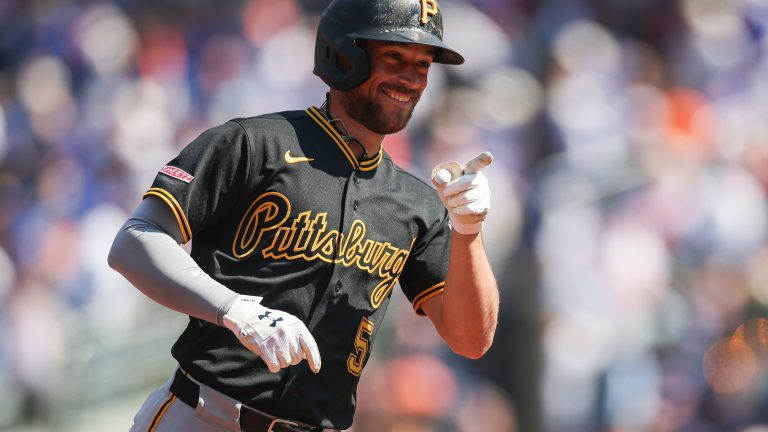
Pittsburgh Pirates: 2B Brandon Lowe
While many teams around the league will be focused on acquiring new talent, the Pirates will be in a much different position. Their best free-agent acquisition will be retaining slugger Brandon Lowe — a must for a team that’s looking to turn the page during the 2027 season.
Lowe’s 2026 season was arguably one of the best offensive campaigns in the club’s history. He crushed the single-season franchise record for homers by a second baseman with 35, finishing the year with a 121 wRC+ and 4.9 fWAR to match. He was a crucial piece in helping the Pirates become the most improved offense in baseball from 2025 to 2026, producing in the heart of the order on a nightly basis.
Not only was Lowe one of the most productive home run threats in the league, but he also underwent a defensive revelation in the Steel City. Prior to becoming a Pirate, Lowe was tied for the lowest OAA in baseball during the 2025 season with -14. However, in 2026, he flipped this narrative on its head, finishing the year as one of 13 players in baseball with 15 or more OAA.
Unlike previous seasons, the Pirates have been more open to the idea of spending money than ever before. Within the past calendar year, they signed Ryan O’Hearn to their first multi-year free-agent deal since Ivan Nova in 2016, and they inked Konnor Griffin to the largest single contract in franchise history.
It seems like a new Pirates generation is here, but this is where ownership will have to put their money where their mouths are. Rather than getting crafty and trying to replace his production, the Pirates should invest in Brandon Lowe’s talents and keep the second baseman with the club long-term.
St. Louis Cardinals: LHP Robbie Ray
Entering this winter, the St. Louis Cardinals find themselves in a peculiar position. On the one hand, they finished the season with a disappointing record of 77-85, but on the other hand, they took a step forward in some areas.
For example, the Cardinals saw the rise of Home Run Derby champion Jordan Walker and JJ Wetherholt’s productive rookie season, as their young core showed flashes of being bright. In fact, they were in the Wild Card hunt longer than most people in the industry expected before ultimately falling by the wayside near the end of the season.
The Cardinals also currently possess one of the strongest and deepest farm systems in the sport, which further emphasizes how bright their future might be. In order to inch closer to that future, the Cardinals still have work to do, and that starts with finding some rotation help on the open market.
Enter veteran lefty Robbie Ray, the perfect innings eater to help anchor their rotation that currently lacks a true identity.
Splitting time between the Giants and Padres during the 2026 season, Ray was a solid left-handed option all year long. He finished the season with a respectable 3.59 ERA and 140 strikeouts over 165.2 innings. In fact, this was the second straight season in which he had recorded an ERA below 3.70 across 165 or more innings.
Given the strength of their future core, the Cardinals certainly don’t have to push all of their chips in and be competitive for some of the best names on the market. Regardless, they should still aim to add a veteran anchor for their rotation, and Ray is the perfect candidate for this role.
By Jay Staph
Perfect Free Agent Fits for Every Team in the NL East
Atlanta Braves: RHP Tyler Mahle
Atlanta’s rotation finished sixth in MLB with a 3.76 ERA in 2026, and Chris Sale had a lot to do with it. The left-hander posted a 2.16 ERA in 162⅔ innings, while the rest of the Braves’ starters combined for a 4.15 ERA. Take out Tyler Mahle’s nine starts as well, and that figure climbs to 4.34.
Grant Holmes gave the Braves 151⅔ innings with a 3.44 ERA, but a look under the hood gives Atlanta reason to be cautious. His 8.3% strikeout-minus-walk rate was the fourth-lowest among starters who threw at least 150 total innings, and his 4.75 FIP and 5.05 xERA point to some regression. Bryce Elder took a step forward with a 4.11 ERA in 149 innings, though he’s best suited to the back of the rotation.
There’s more upside in Spencer Strider and Spencer Schwellenbach, but it’s hard to know how many innings either will give Atlanta. Strider posted a 5.31 ERA across eight starts and didn’t pitch after June 12, while Schwellenbach missed the entire season with an elbow injury that required surgery. Atlanta expects Strider to be ready for the start of 2027, with Schwellenbach on a later timeline.
Then there’s rookie standout Didier Fuentes, who struck out 92 batters in 73⅓ innings with a 2.45 ERA for Atlanta. He made just one major league start and threw a career-high 90 regular-season innings between Atlanta and Triple-A. He’d likely be on an innings limit if he joins the rotation.
Braves president of baseball operations Alex Anthopoulos said the club had to “talk about where we’re going to get our innings for next season.” One answer is to bring back the pitcher who helped fill that gap down the stretch.
Mahle posted a 1.99 ERA, a 3.32 FIP and a 0.96 WHIP after coming over from San Francisco at the trade deadline. He struck out 48 and walked just nine in 54⅓ innings, averaging a little over six innings per start. The Braves trusted him with the ball in an elimination game against the Dodgers, and he gave up just one earned run in 6⅓ innings.
The biggest change was how often Mahle went to his splitter. He’d already started throwing it more in San Francisco, where he posted a 3.79 ERA over his final seven starts. His splitter usage jumped from 25% before the trade to 39% with Atlanta as he cut back on his cutter and slider, and his walk rate fell by more than half.
Even if Mahle pitches closer to his 3.59 xERA than the 1.99 ERA he posted in nine starts for Atlanta, the Braves would gladly take that production. His 149 innings across both clubs were his most since 2021. The question is whether he can handle that workload again after Tommy John surgery and shoulder issues limited him to 125 innings from 2023 through 2025.
Steamer projects Mahle for 154 innings with a 4.10 ERA and 2.1 fWAR, a season that would still help this rotation. He’s said he’d welcome a return, and Just Baseball projects him to land a one- to three-year deal with an AAV between $10 million and $18 million. Atlanta has already seen what Mahle can do with a splitter-heavy approach, and bringing him back would give the Braves another mid-rotation option while they see how much they can get from Strider, Schwellenbach and Fuentes.
Miami Marlins: LHP Alex Vesia
The Marlins took a swing at fixing their bullpen last offseason by signing Pete Fairbanks to a one-year, $13 million deal. The veteran closer saved 19 games, but he posted a 6.31 ERA and gave up eight home runs in just 41⅓ innings.
Miami’s bullpen finished around the middle of the pack with a 4.10 ERA, and the club still has several dependable righties. Calvin Faucher posted a 3.56 ERA and a 2.95 FIP in 68⅓ innings, while Anthony Bender put up a 2.62 ERA in 34⅓ innings. The Marlins also expect to get back Ronny Henriquez, who struck out 98 batters in 73 innings with a 2.22 ERA in 2025 before missing all of 2026.
Their lefties are a different story. Miami’s left-handed relievers posted a 4.61 ERA, ranking 27th in MLB, and finished 24th in strikeout rate and 23rd in whiff rate. The Marlins also released John King in August after manager Clayton McCullough said it had become harder to find spots where King could face mostly lefties, especially with pinch-hitters in play.
Cade Gibson is Miami’s most experienced healthy returning lefty, and even he has just two major league seasons under his belt. His ERA jumped from 2.63 as a rookie to 5.36 in 2026, when he struck out just 19.9% of the batters he faced. With Andrew Nardi expected to miss most or all of 2027 after elbow surgery, Dax Fulton is the only other healthy lefty in Miami’s bullpen picture.
There’s some upside with Fulton. The 6-foot-7 lefty posted a 3.77 ERA and a 23.8% strikeout rate across his first 28⅔ major league innings. Marlins president of baseball operations Peter Bendix said he saw “the stuff tick up, the confidence grow” as Fulton got more work out of the bullpen.
Even with that optimism, Bendix called adding a left-handed reliever “probably among the higher things that we could need.” That’s where Alex Vesia comes in.
Vesia posted a 2.64 ERA in 72 appearances for the Dodgers, and his 33.6% whiff rate would have led Miami relievers with at least 25 innings. His 31.2% strikeout rate was just shy of the 31.8% Fairbanks posted in relief, giving Miami a chance to replace some of the swing-and-miss it will lose with Fairbanks’ departure.
What makes Vesia unique is how he throws. His 70-degree arm angle is the most over-the-top in baseball and about 11 degrees steeper than the next left-hander. His four-seamer averages just 92.1 mph, but its 21.2 inches of induced vertical break led MLB by nearly a full inch.
Put simply, his fastball drops less than hitters expect, so they tend to get underneath it, which helps explain why Vesia ranked in the second percentile in ground-ball rate. Opponents hit just .144 against the pitch. His slider and changeup give him two more ways to put hitters away, with whiff rates of 41.5% and 48.5%, respectively.
Lefties hit just .138 against Vesia, and righties managed a .155 average. McCullough could bring him in against a dangerous lefty and keep him on the mound when a right-handed bat comes up, the kind of flexibility Miami struggled to find with King.
There’s a bit of history here, too. Miami drafted Vesia in the 17th round in 2018 and traded him to the Dodgers for late-inning help in 2021. Now he could come back and fill that role himself.
New York Mets: LHP Tarik Skubal
If you’ve been scrolling through this article wondering where the best free agent on the market would land, you’ve found his spot. Tarik Skubal has been baseball’s best pitcher since 2022 and is poised to receive the largest contract ever handed out to a full-time pitcher.
Skubal would fit into any rotation in baseball, but the stars seem to be aligning for him and the Mets. If Steve Cohen is determined to land the two-time Cy Young Award winner, it’s difficult to envision another team outbidding New York. The two sides have already met this offseason, with the meeting reportedly going well.
Despite acquiring Freddy Peralta and Tobias Myers from Milwaukee last offseason, the Mets’ rotation took a step backward in 2026. New York finished last in the NL East with a 74–88 record, while its starters saw their ERA rise from 4.13 to 4.47, ranking 23rd in MLB.
One of the few bright spots was the emergence of Nolan McLean. The youngster struck out 194 batters in 179⅔ innings across 31 starts, posting a 3.16 ERA in an electric rookie campaign. Take McLean out of the equation, and the rest of the Mets’ rotation combined for a 4.86 ERA.
“There’s no question we’re going to add to that group,” Mets president of baseball operations David Stearns said at the GM Meetings. Stearns also pushed back on the notion that the Mets are unwilling to commit to pitchers on long-term deals. So why not swing for the fences?
Since the start of 2022, Skubal has thrown 744 innings across 124 starts, leading all qualified starting pitchers in ERA, FIP, xFIP and fWAR (24.1).
If there is one concern surrounding Skubal, it’s his elbow. The southpaw underwent a procedure in May to remove loose bodies from his pitching elbow and was back on a major league mound less than six weeks later. He was eventually dealt to the Dodgers at the trade deadline and finished the season with a 2.72 ERA across 158⅔ innings.
While his ERA rose from 2.21 in 2025, his underlying numbers remained elite. His 2.51 FIP and 30.0% strikeout rate were right in line with his Cy Young-winning campaigns. And there’s little evidence that his stuff has taken a step back, with his 117 Stuff+ falling between his marks from 2024 and 2025.
What makes Skubal so difficult to hit is how well his pitches play off one another. He delivers his 96.8 mph four-seamer and 87.7 mph changeup from nearly identical release points, making them difficult for hitters to distinguish. His changeup generated a 46.9% whiff rate and held opposing hitters to a .192 batting average.
Steamer projects Skubal for 191.9 innings, a 2.88 ERA and 5.5 fWAR in 2027. Signing him would give the Mets one of the most exciting rotation duos in baseball alongside McLean while preserving the prospect capital they might otherwise have to part with in a trade for a front-line starter.
Philadelphia Phillies: OF Seiya Suzuki
Bryce Harper and Kyle Schwarber were the only two qualified Phillies hitters to finish with a wRC+ above 110 in 2026. Finding someone to complement those two should be a priority this offseason, especially after Philadelphia’s cleanup hitters combined for a .645 OPS, the second-worst mark in MLB.
The corner outfield is an obvious place to look for an upgrade. Philadelphia got -0.8 fWAR from left field, the second-lowest total in MLB, and primary left fielder Brandon Marsh struggled mightily after the All-Star break. He posted a 31 wRC+ and -1.3 fWAR in the second half.
Philadelphia’s right fielders combined for a 92 wRC+, ranking 20th in MLB. Even that figure was helped considerably by Harper, who posted a 143 wRC+ in his 43 starts in right field. With Harper expected to return to first base in 2027, there’s plenty of room for improvement in both corner outfield spots.
The Phillies have been reluctant to hand out long-term deals to outside free-agent position players in recent years. The last time they did so was in December 2022, when they signed Trea Turner to an 11-year, $300 million contract. Still, president of baseball operations Dave Dombrowski made one thing clear at the GM Meetings: “We have to have an outfielder.”
Seiya Suzuki is coming off arguably the best season of his major league career, putting up 4.5 fWAR, a 134 wRC+ and 26 home runs. Perhaps the biggest surprise was that he was also named a Gold Glove finalist in right field, leading all NL right fielders with 14 DRS and an FRV of +7.
It’s fair to question whether Suzuki suddenly figured things out defensively in his age-31 season after four years of below-average defensive play. If those improvements stick, though, he could provide a significant upgrade to a Phillies outfield that recorded -6 OAA in 2026.
The real appeal of adding Suzuki is his bat. He’s posted a 128 wRC+ across his five major league seasons, hitting at least 20 home runs in each of the past four.
Suzuki’s quality of contact took a step back in 2026, with his hard-hit rate falling to 38.9% after averaging 48.6% over the previous three seasons. He offset some of that decline by improving his contact rate on pitches within the strike zone from 86.0% to 88.6% and posting a career-best 12.8% walk rate.
Suzuki also does a good job of maximizing his power by elevating the baseball, pulling 20.9% of his batted balls in the air in 2026. That ability, paired with his disciplined approach at the plate, has helped him maintain consistent offensive production throughout his major league career.
As a right-handed hitter, Suzuki would slot in nicely behind Harper and Schwarber in Philadelphia’s lineup. He slashed .309/.429/.537 against left-handed pitching last season while still posting a .798 OPS against righties. The Phillies could address two of their biggest offensive needs with one signing.
Washington Nationals: RHP Raisel Iglesias
Put simply, Washington had one of the worst bullpens MLB has seen since 2000. The Nationals’ relievers combined for minus 3.4 fWAR, the third-lowest total in the past 26 seasons, and finished with a 4.99 ERA and a 4.98 FIP. They also blew 42 saves in 84 opportunities, breaking the record of 36 set by the 2024 White Sox.
Washington’s relievers missed bats on just 22.9% of swings, the lowest whiff rate in MLB. They struck out 19.1% of batters, ranking 28th, and walked 10.6%, the eighth-highest rate in the league. Their 8.5% strikeout-minus-walk rate also ranked 28th.
It got worse late in games. From the seventh inning onward, Washington’s pitching staff posted an MLB-worst 5.69 ERA and walked a league-high 244 batters. Brad Lord and Gus Varland were the only two Opening Day relievers still active for the final game of the regular season, and Varland spent about half the season in Triple-A.
The Nationals still need someone they can count on in the ninth, and Raisel Iglesias has been doing that job for years. Since 2020, he’s collected 189 saves and ranks third among relievers with 9.5 fWAR. He’s saved at least 29 games in four straight seasons, including 34 for Atlanta in 2026.
Iglesias would bring more swing-and-miss, too. Orlando Ribalta, one of Washington’s steadier relievers last season, posted a 23.6% strikeout rate, a 26.7% whiff rate and a 36.7% chase rate. Iglesias topped him in all three, with a 26.8% strikeout rate, a 30.0% whiff rate and a 39.0% chase rate.
The changeup is a big reason why. Iglesias threw it 35.8% of the time, and hitters batted just .200 against it while missing on 40.7% of their swings.
Just Baseball projects a one- or two-year deal for Iglesias. That would give Washington a dependable closer on a short commitment and let arms like Ribalta and Lord settle into roles earlier in games.
By Will Houslander
Become a Member of Just Baseball
Subscribe and upgrade to go ad-free!
* Save 25% by subscribing annually.