
Tampa Bay Rays Post-Mortem: What Made This Group Different
Stars and role players worked together to bring the Rays tantalizingly close to the first World Series title in franchise history.
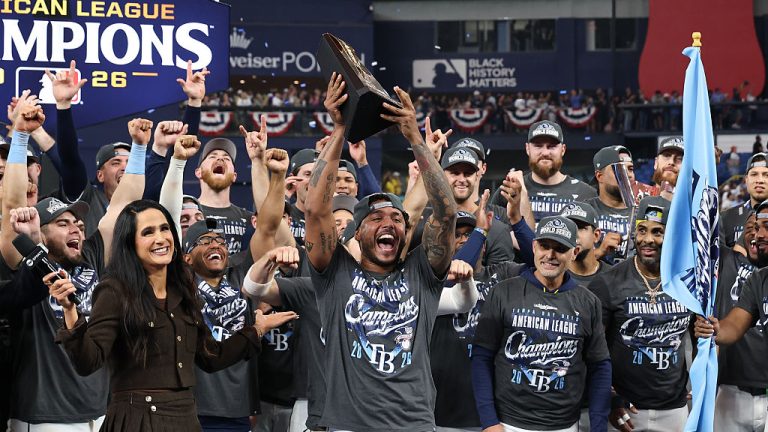
It was only a few short days ago that the Tampa Bay Rays‘ 2026 season came to an end. A Game 5 defeat at Tropicana Field marked the end of what had been a remarkable season for the Rays.
As Rays fans begin to lick their wounds and we turn the calendar to November, the first month of the 2026 offseason, it’s hard not to look back on what this team accomplished. The Rays put together a truly miraculous run, coming just short of capturing the first World Series title in franchise history.
Unfortunately, their journey ended at the hands of a powerhouse Brewers team that simply ran through the competition throughout this year’s playoffs.
While falling just short of the ultimate prize stings, there’s no taking away from what this Rays team accomplished. That’s especially true for a franchise that has enjoyed plenty of success in recent years and is widely regarded as one of the best-run organizations in baseball.
This was a special season in St. Petersburg, one that gave the fanbase plenty to be proud of and is more than worthy of a closer examination by us here at Just Baseball. As we take a deeper look at this team, we’ll explore what made this group different from the Rays teams that came before them and what ultimately brought them so close to a World Series title.
Emergence of Superstars
The Tampa Bay Rays entered the 2026 season with a preseason win total set at 77.5 by BetMGM at the conclusion of Major League Baseball’s spring training in March. They finished the year with 98 wins and reigned supreme in what was unquestionably the best division in the American League: the AL East. Simply put, that kind of success would not have been possible without the emergence of stars across the roster.
The first place fans and analysts often look for stars is the lineup, and undoubtedly the easiest player to single out from the AL champs’ lineup is Tampa Bay’s young third baseman and AL MVP candidate, Junior Caminero.
Entering 2026, Caminero had already established himself as one of the game’s most exciting young power hitters, coming off a 45-home-run campaign in his age-21 season.
There were certainly questions about whether he could replicate that level of production. Some wondered if his breakout had been aided by the Rays temporarily calling Steinbrenner Field home during the 2025 season. Other skeptics seemed concerned that his high groundball rate would potentially bring his numbers back down to earth in 2026.
It turns out, however, Junior had no intention of slowing down at all.
Instead, the All-Star third baseman took another significant step forward. He played all 162 games and improved on his 2025 numbers in OPS, batting average, WAR, and strikeout rate.
It wasn’t simply a case of maintaining his previous level of production, either. Caminero became a more complete player as he blended his raw natural ability with the Tampa Bay Rays’ brand of sound, fundamental baseball.
By the end of the season, Caminero had established himself as not only the face of the Rays franchise but also one of the faces of Major League Baseball. He delivered clutch home run after clutch home run during Tampa Bay’s late-season push toward the playoffs and came through on one of the biggest stages in October.
In Game 6 of the ALCS, Caminero helped put the finishing touches on the Rays’ victory with a massive home run off one of the game’s premier relievers, Cade Smith.
His emergence was about more than just the home runs, though. Caminero had officially arrived as a superstar, and he gave Tampa Bay the kind of middle-of-the-order presence that every championship-caliber team needs.
While the lineup provided its fair share of fireworks, the true catalyst behind the Rays’ World Series run was their pitching staff.
Tampa Bay’s arms were dominant throughout the season, finishing near the top of the league in the majority of major pitching categories related to run and hit prevention. They also issued fewer walks than any other team in baseball during the regular season, further highlighting the sound, fundamentally strong brand of baseball that has become synonymous with this organization.
Despite the overall quality and depth of Tampa Bay’s pitching staff, we would be remiss not to single out the ace and leader of this staff, Drew Rasmussen.
At 30 years old, Rasmussen is experiencing the greatest heights of his career. Throughout his 20s, he was plagued by arm injuries, including multiple UCL surgeries, which limited him to just one 100-inning season in his first five big league campaigns. At times, he was even transitioned into a bullpen role to limit the wear and tear on his right arm and keep him on the mound.
For Rasmussen, talent was never the concern. He had always shown the ability to produce front-of-the-rotation stuff. The lingering question, however, was whether he would ever be able to fully tap into that potential and become a true workhorse for Tampa Bay.
Following a successful 2025 season in which the Rays carefully managed Rasmussen’s innings while still getting excellent results, many wondered if he could take another step forward.
In 2026, that next step finally came. Rasmussen became the workhorse the Rays’ front office envisioned when they acquired him from Milwaukee in 2021. He threw a career-high 200 innings between the regular season and postseason while dominating on the mound with a 2.67 ERA.
Rasmussen’s emergence as an ace proved vital come postseason time.
Not only did Tampa Bay have a frontline starter capable of matching up with the likes of Cam Schlittler and Parker Messick, but he showed he could outpitch them in those high-pressure moments. He gave the Rays a chance to win every time he took the mound, and simply seeing his name listed as the probable starter was enough to strike fear in the hearts of opposing teams and their fans.
When Rasmussen was at his best, he could dominate with the very best the sport had to offer.

Role Players
Although the emergence of stars like Caminero and Rasmussen proved vital to Tampa Bay’s dominant 2026 season, most contenders have their fair share of big names on both sides of the ball. And while having bona fide stars is a massive factor for any team with championship aspirations, what became increasingly apparent as the postseason roared on was that what separated the Rays from the likes of the Yankees, Red Sox, and other American League contenders was the role players they surrounded their stars with.
When the Rays defeated the Cleveland Guardians in Game 6 of the ALCS, president of baseball operations Erik Neander was quoted, champagne-soaked and surrounded by celebrating players, saying, “These guys deserve it. It’s a special group.”
As the architect of this roster, Neander deserves plenty of credit because discussing every key role player would be nearly impossible without this article turning into a novel. Quite simply, there were too many contributors to cover in detail.
The lineup was filled with players who understood their roles and executed them with incredible success. Neander was able to surround his superstar bat in Caminero with wingmen like Jonathan Aranda, Liam Hicks, and Yandy Díaz, all of whom were capable of delivering the big hit while also setting the table for the players further down the order.
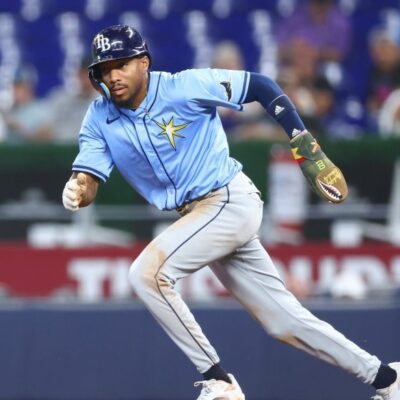
At the other end of the lineup, players like Taylor Walls and Chandler Simpson thrived in their respective roles.
Simpson never seemed interested in swinging for the glory of the right-field bleachers, instead embracing the elements of his game that made him valuable, such as his generational speed. Meanwhile, Walls dedicated himself to becoming one of the most refined defenders in baseball, manning shortstop at a level that more than made up for his lack of production at the plate.
The rest of the lineup was largely made up of platoon players who would often find themselves sitting for consecutive games depending on the matchup or being relegated to pinch-hitting duties. Yet, it never seemed like anyone batted an eye.
Everyone appeared committed to doing what was best for the team and finding whatever way they could to help the franchise win. It made for a remarkable collection of contributors on the offensive side of the ball.
The pitching staff also had more than its fair share of compelling stories worth singing the praises of.
The rotation, outside of Rasmussen, was an ever-changing combination of personnel, with 12 different pitchers starting multiple games for the organization during the regular season.
Rays fans got to witness the much-anticipated return of Shane McClanahan after a two-year absence from the game due to a series of arm injuries. Although he was unable to finish the season because of forearm tightness, his return and solid performance brought smiles to baseball fans who remembered his dominance before the injuries.
Rays fans also had the pleasure of witnessing the resurgence of Freddy Peralta and his return to being a frontline starter after being acquired at the trade deadline from the lowly New York Mets.
Fastball Freddy proved to be a phenomenal Robin to Rasmussen’s Batman come playoff time, matching up with just about any two starters in baseball with the way he was throwing down the stretch.
It would also be impossible not to mention Nick Martinez, the only major league free agent the club signed during the 2025-26 offseason.
Martinez delivered a team-leading 180 innings with a 3.10 ERA and was praised by several teammates for being an excellent addition to the clubhouse. He brought a valuable veteran presence and helped establish the kind of culture that contributed significantly to the team’s success.
Finally, the 2026 Tampa Bay Rays wouldn’t be a Rays team without a dominant bullpen, and the AL champions certainly had one. In All-Star closer Bryan Baker, the bullpen featured one of the more unexpected breakout stories of the season. At 31 years old, Baker put together a season that few saw coming, recording 41 saves and tying Smith for the American League lead.
However, the cast of great characters certainly didn’t end with Baker. Electric arms like Cam Booser and Kevin Kelly did an excellent job setting the table for the ninth inning, with both relievers seemingly emerging from obscurity to lock down important leverage roles for Tampa Bay.
Additionally, by the time the playoffs rolled around, Swiss Army knife Ian Seymour had emerged as a dynamic left-hander whom the team trusted in just about every situation. Time and time again, he delivered with the pressure on.
Ultimately, what made this roster so special wasn’t just the emergence of Rasmussen as an ace or Caminero becoming an MVP candidate. It was also the sheer number of players who stepped into important roles and delivered when their team needed them most.
Simply put, Tampa Bay found contributions from just about everywhere. That level of depth, combined with its star power, separated this group not only from previous Rays teams but from the rest of the American League as well.
Final Thoughts: What Does The Future Hold?
Since the Rays’ inception in 1998, the franchise has experienced several memorable runs of success. 2026 marked the third time Tampa Bay captured the American League pennant, and although the magical runs of 2008 and 2020 will remain seasons that Rays fans look back on fondly for years to come, there’s a strong case to be made that this season was a little different. And it all has to do with what lies ahead for this organization.
In September 2025, the Rays were purchased for $1.7 billion by a group led by Florida businessman Patrick Zalupski, ending Stuart Sternberg’s tenure as the franchise’s longtime owner.
What followed was a noticeable shift in the organization’s approach to spending, highlighted by the signing of Martinez, who was one of the more expensive free agents the team has ever brought in, and a 2026 payroll that was the largest the organization had seen in this decade.
On top of that, the franchise announced in August of this year that it had reached an agreement with the City of Tampa on plans for a much-needed new stadium. The proposed ballpark would be located in Tampa rather than St. Petersburg and is expected to open for the 2029 season.
The change in ownership has seemingly brought about a fundamental shift in the way this organization operates. Combined with the continuity of two-time Manager of the Year Kevin Cash and roster-building mastermind Erik Neander, Tampa Bay now appears to have the perfect blend of leadership from top to bottom.
Beyond the leadership, there’s also plenty to be optimistic about when looking at the personnel on this ballclub. Many of the key contributors mentioned previously from the 2026 roster are still in their 20s, with plenty of team control remaining and, perhaps most importantly, room for further growth and development.
The optimism doesn’t stop at the big league level, either. Tampa Bay also possesses a wildly talented farm system, with several exciting prospects giving Rays fans plenty to dream about.
Players like Theo Gillen, Grady Emerson, Caden Bodine, and others have the potential to become important pieces of the next generation of Rays baseball as they make their way through the minor leagues.
What could ultimately separate this Rays run from the success the franchise has experienced in the past is the possibility that this isn’t the greatest height this wave of Rays players will reach. Instead, it could be the beginning of a new chapter for a franchise with the infrastructure, leadership, and young talent to remain a fixture atop the American League East for years to come.
For a fanbase that has seen its fair share of heartbreak and uncertainty, there’s finally reason to believe that the best days of Rays baseball may still be ahead.
The 2026 season gave Tampa Bay its third American League pennant and came within a few wins of delivering the franchise its first World Series title. But, perhaps its greatest accomplishment was showing everyone what this organization could become. And if the pieces currently in place are any indication, Rays fans may have even brighter days ahead.
Become a Member of Just Baseball
Subscribe and upgrade to go ad-free!
* Save 25% by subscribing annually.

Written by