
The Cubs Need Dansby Swanson To Turn Things Around
Dansby Swanson is having major struggles at the plate, and a scuffling Cubs team needs him to get back to form.
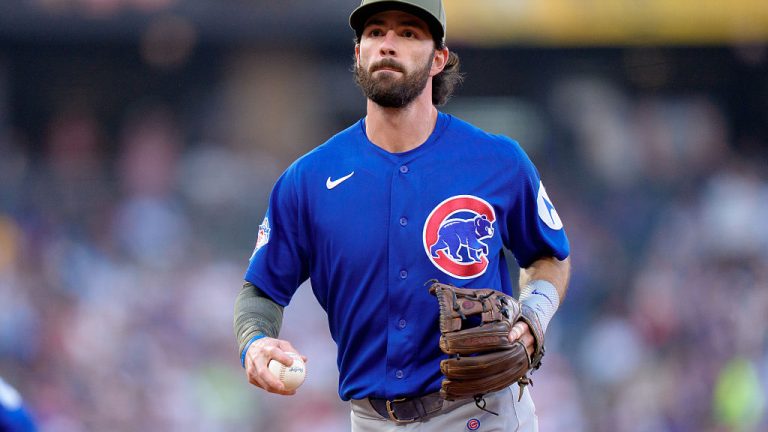
On a Chicago Cubs team that is riding a stretch of seven wins over their last 28 games, plenty has gone wrong. As a group, they have struggled offensively, defensively at times, on the mound, and even on the bases.
This cold streak cannot be pinned on one player alone, though the production of their veteran shortstop has been especially disappointing.
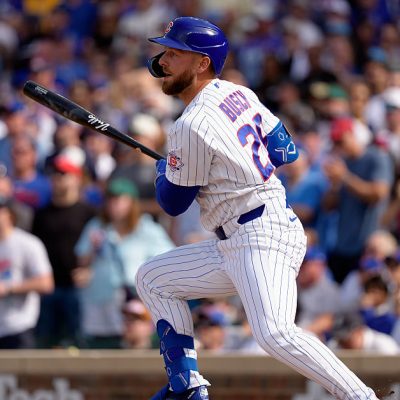
Dansby Swanson, now in year four of his seven-year, $177 million contract, has been among the worst offensive players in baseball through the early portion of the 2026 season. He remains the elite defender he has always been, but that alone is no longer enough to justify his declining offensive production.
His bat has been trending in the wrong direction for a few years now, and this season it appears to have fully caught up with him. With the Cubs attempting to fight through their current slump, Swanson returning to form could be one of the biggest factors in whether this team turns things around.
All stats updated before play on June 10.
Not What the Cubs Signed Up For
Dansby Swanson earned his massive deal with the Cubs after putting up career numbers in his 2022 campaign. In his final season with the Braves, he swatted 25 home runs, posted a 117 wRC+, and accumulated 6.6 fWAR, which was eighth highest among all position players.
He was an offensive weapon, Gold Glove-winning shortstop, and one of the most valuable all-around players in the sport. That is the player the Cubs front office anticipated when they landed Swanson, but it is not the player they’ve consistently seen.
Swanson was solid in his first two seasons with the squad, posting a combined 9.0 fWAR and 101 wRC+. While the offensive production was not quite what the Cubs had likely envisioned, his elite defense still allowed him to provide impressive overall value.
Then, in 2025, his production began to regress. His .717 OPS was slightly above his 2024 mark, but his fWAR dropped down to 3.3. Again, still solid, but not exactly as good as the Cubs had hoped.
Even with that production, you could make the case that he’s still an extremely valuable player. However, his bat has continued to trend downward, putting that claim in legitimate jeopardy.
Through 62 games this season, he is slashing .182/.284/.325 with a 76 wRC+ that is 18th lowest among qualified hitters. His 2.7-fWAR pace would be his lowest mark in a season (excluding 2020) since 2019, though he only played 127 games that year.
His defense likely prevents him from ever becoming a negative value player, but that is not what the Cubs committed $177 million to. They signed Swanson to be an impact player at the dish too. At age 32, the Cubs need him to rediscover at least some form of the hitter he once was.
What Happened to the Offense?
Swanson’s struggles last season were difficult to diagnose. He was a below-league-average hitter according to his 99 wRC+, despite solid metrics and expected stats. The expected slash line was .267/.323/.477 which would have been a terrific season, though actual production didn’t match.
This season, he is having trouble combining quality contact with ideal launch angles. His 26.9% launch-angle sweet-spot rate ranks in the sixth percentile this season. To go with that each of his quality of contact metrics have been below league average.
Swanson’s production boils down to how pitchers have begun attacking him, and his failure to adapt. Among hitters with at least 950 pitches seen this year, Swanson has been thrown the highest rate of breaking balls in baseball. He’s also seen his fair share of offspeed pitches, combining those with breaking pitches, and he’s seen fastballs at the fifth-lowest rate in the game.
In total, he is being thrown either breaking or offspeed pitches 53.3% of the time, 8.2% higher than the rest of his career. He’s always been a fastball hitter with the ability to tread water against other offerings, but his failure to do so this year is proving to be costly. The splits against different pitch types tell a lot of the story:
| VS Fastballs | vs offspeed/breaking pitches | |
| Usage Rate | 46.2% | 53.3% |
| Batting Average | .268 | .083 |
| Slugging Percentage | .473 | .156 |
| wOBA | .380 | .150 |
| Whiff Rate | 23.9% | 36.6% |
| Hard-Hit Rate | 50.0% | 30.8% |
Opposing pitchers will likely continue this trend against Swanson, leaving it up to him to adjust. The ability to damage fastballs is still there, but until he proves he can handle secondary pitches more consistently, opposing pitchers are unlikely to change their approach.
Level of Concern
In terms of whether or not Swanson’s contract with the Cubs turns out to be a failure remains to be seen. He has had good seasons with the club, but with the recent struggles, both him and the coaching staff have to adjust.
Craig Counsell already moved him down to the nine spot in the Cubs’ batting order. While he wasn’t really a top-of-the-lineup bat anyway, he has played his way into the current slot.
However, in terms of outs above average and fielding run value, Swanson is still a top-five defensive shortstop. Even with his brutal offensive output, his 1.1 fWAR still ranks in the top 15 among qualified shortstops.
The Cubs don’t need the 2022 version of Dansby Swanson back, but they need something closer to that than what they’ve been getting. A steady decline in offense was surely accounted for when the contract was offered, so even him getting back to just slightly above league-average production would be a huge win.
The Cubs have a talented roster, but as a veteran and a leader, they need Swanson to play like a version of his former self.
Become a Member of Just Baseball
Subscribe and upgrade to go ad-free!
* Save 25% by subscribing annually.

Written by
Carson Wolf is a writer at Just Baseball covering the Chicago Cubs and MLB, he is the creator of The Wrigley Wire on X. He is…