
The Next Wave of Top Shortstop Prospects Is as Good as it Gets
The old guard is still here. But baseball's next generation of superstar shortstops is already arriving.
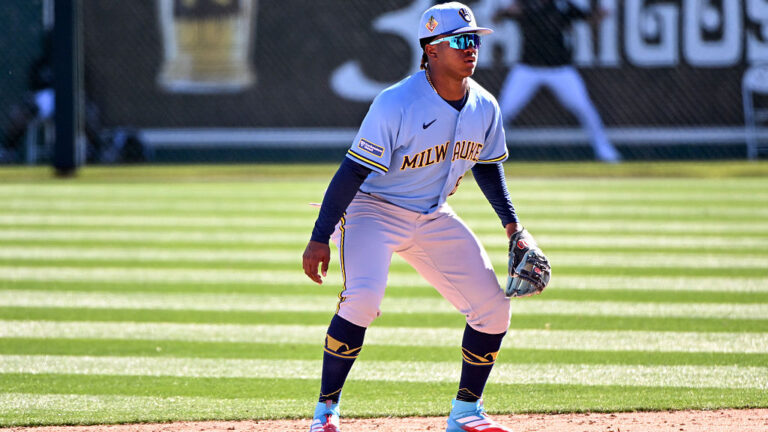
For the better part of the last decade, baseball has been spoiled at shortstop.
Francisco Lindor, Corey Seager, Trea Turner and Mookie Betts helped define an era in which the position became home to some of the best all-around players in the sport. That group is not gone — far from it. But they are beginning to occupy a different stage of their careers than they did when they first took over the position.
Fortunately, shortstop does not appear headed for a talent vacuum.
The next generation is already taking shape in the minor leagues, and it may be every bit as deep as the one that preceded it.
Jesús Made, Leo De Vries and Franklin Arias have separated themselves at the front of the pack, combining enormous ceilings with increasingly impressive performance against advanced competition. Behind them, Eli Willits, Josuar Gonzalez and Roch Cholowsky give the position another wave of young talent with legitimate star potential.
The old guard is still here. But baseball’s next great generation of shortstops is already coming.
Stats update prior to games on August 15.
Who Are the Top Dogs?
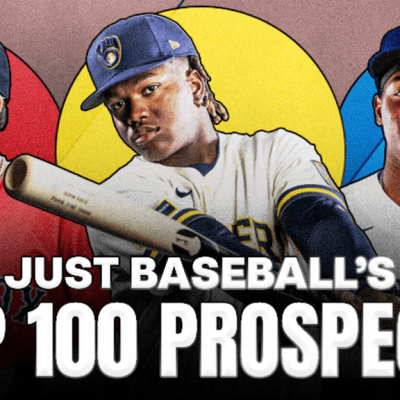
Jesús Made
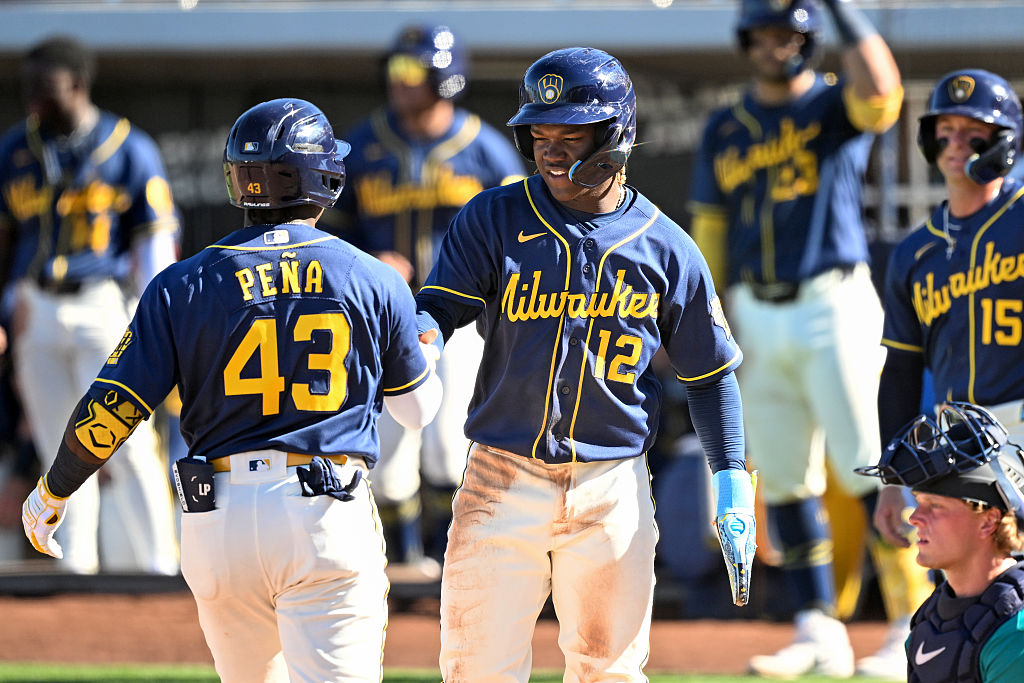
Any discussion of the best shortstop prospects in baseball begins with Jesús Made.
After bursting onto the scene in his first season stateside, Made has continued to check virtually every box while being pushed aggressively through the Brewers’ system. Still just 19 years old, he has spent all of 2026 at Double-A and has more than held his own despite being one of the youngest players at the level.
Through 101 games, the switch-hitter is slashing .282/.361/.453 with 13 home runs, 32 stolen bases and a 114 wRC+. Just as impressive as the production is how he has gotten there: Made owns an 11.0% walk rate against just a 14.2% strikeout rate, an exceptional combination for a teenager facing upper-minors pitching.
The offensive profile is becoming increasingly difficult to poke holes in. Made already had a reputation for advanced bat-to-ball skills and strike-zone control, and his 82% contact rate reinforces just how advanced the hit tool has become. But the impact has continued to arrive as he has matured physically. His isolated power has climbed to .172, while his home run total has more than doubled from six last season to 13.
The result is a hitter who can reach base, create damage and add value with his legs without needing to sell out for any of it.
Perhaps just as importantly, Made has done enough defensively to quiet some of the early industry speculation that his physical development would eventually force him away from shortstop.
At 6-foot-1 and already listed at 221 pounds, he is unusually physical for the position, but that strength has not prevented him from remaining on the dirt. If he can stick at shortstop, the combination of contact, developing power, plate discipline and athleticism gives him one of the most complete profiles anywhere in the minor leagues.
That combination is what separates Made. There are prospects with louder individual tools, but there are very few questions left to ask about how he can impact a baseball game. The comparisons his profile invites can become lofty — and perhaps unfair for a player who will not turn 20 until next May — but there is a reason Made has emerged as the lead dog of this group.
However, is far from the only tantalizing teenager at the position.
Leo De Vries
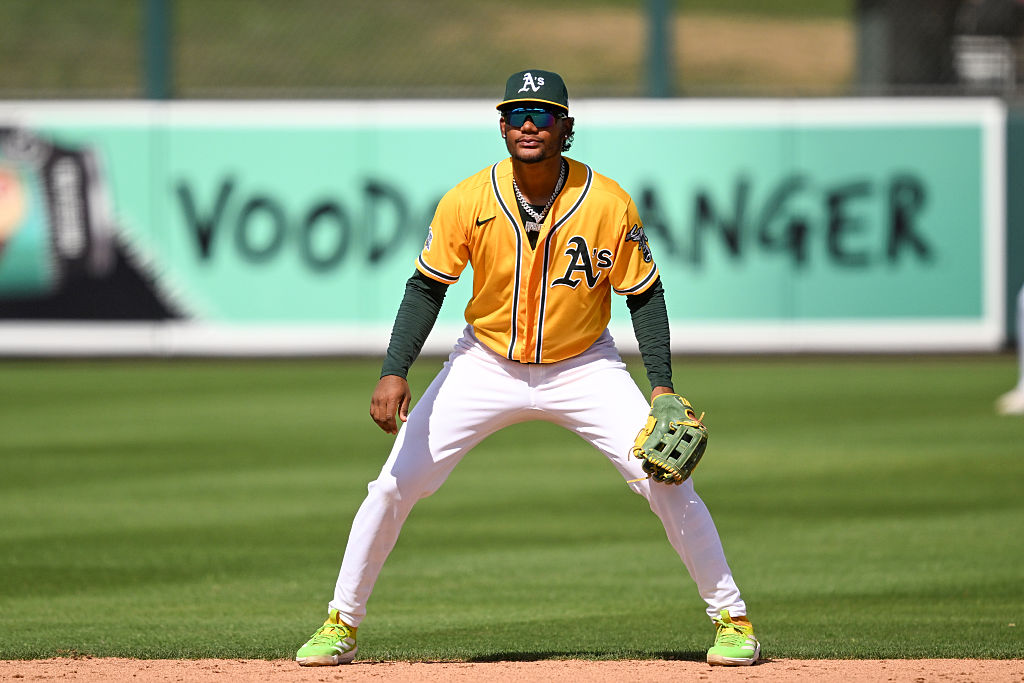
Leo De Vries is spending his age-19 season alongside Made in Double-A and has continued to build on the success he flashed after reaching the level late in 2025. After producing a 144 wRC+ in his first 21 Double-A games last season, De Vries has followed it with a .290/.378/.458 slash line, 13 home runs and a 117 wRC+ across 93 games in 2026.
His offensive appeal starts with a sweet switch-hitting swing geared to create pull-side loft. His current game power may actually be running ahead of the raw impact in his batted-ball profile, but that is part of what makes the projection so enticing.
De Vries remains lean and wiry at six feet and 183 pounds, leaving plenty of room to envision additional strength as he matures. If that added strength translates into greater exit velocity without compromising the swing, his eventual power ceiling could look considerably different from the version already producing against Double-A pitching.
He has also added another dimension to his game in 2026. After stealing just 11 bases in 19 attempts across the minors last season, De Vries has swiped 34 bags in 39 attempts this year. Improved efficiency turns his speed from an athletic trait into another tangible source of offensive value.
The primary question is where De Vries ultimately lands defensively. He does not offer quite the same certainty at shortstop as Made, and third base remains an easy fallback given his offensive projection and arm strength. But he has also been pushed extraordinarily aggressively, reaching Double-A at 18, and there is still time for the defensive consistency to develop along with the rest of his game.
Even if he eventually slides over, the bat projects comfortably at third. If he stays at shortstop, the ceiling becomes considerably more exciting.
Franklin Arias
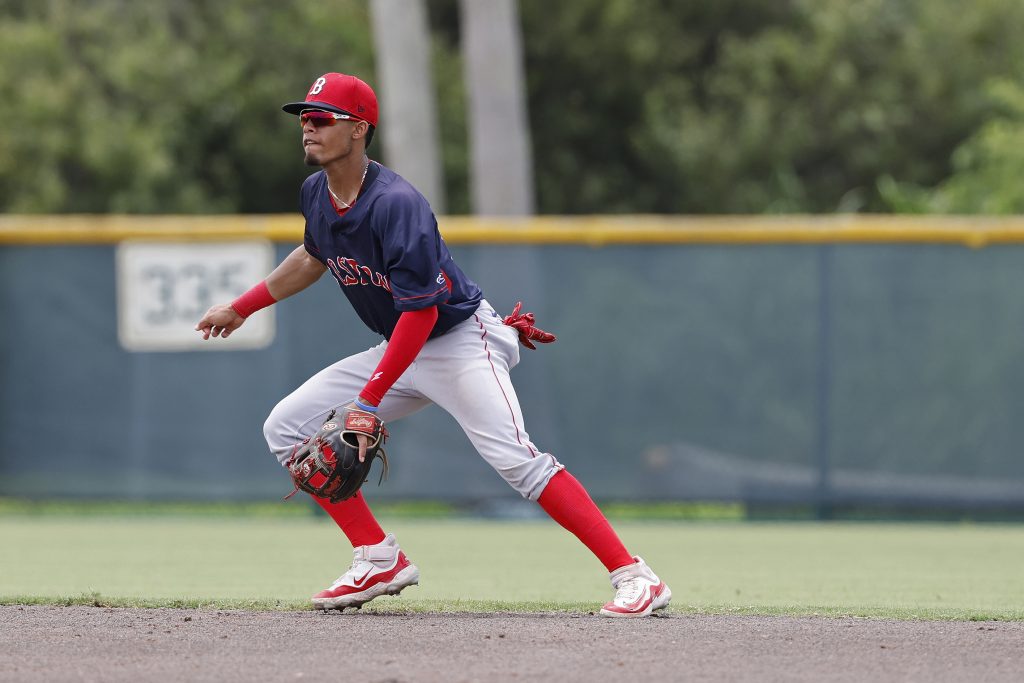
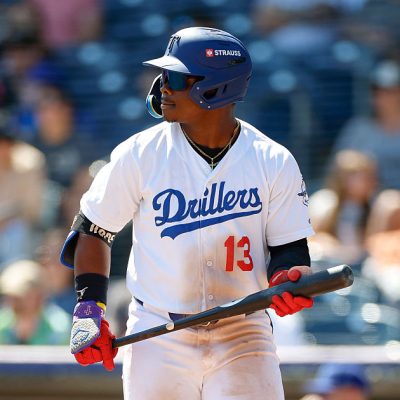
While Made and De Vries entered 2026 as the two headliners of this shortstop class, Franklin Arias has done everything possible to turn it into a three-man conversation.
Arias entered the year with perhaps the easiest profile of the group to understand. His bat-to-ball ability had long been his carrying offensive trait, and his defensive polish gave him a strong chance to remain at shortstop. What separated his profile from those of Made and De Vries was the question about his ability to impact the baseball.
In 2026, Arias has begun providing a very convincing answer to that question.
The 20-year-old demolished Double-A pitching to the tune of a .318/.407/.587 line and a 154 wRC+, launching 19 home runs in just 75 games. That earned him a promotion to Triple-A, where the performance has continued: Arias is hitting .308/.378/.554 with four more home runs and a 134 wRC+ through his first 16 games.
Across the two levels, he owns a .316/.401/.580 line, 23 homers and a 150 wRC+.
More importantly, the newfound power has not come at the expense of the skills that made Arias such an appealing prospect in the first place. His strikeout rate sits at just 14.8% across the minors this season, and the early Triple-A batted-ball data provides further evidence that the impact is real. Arias has produced a 44.2% hard-hit rate with a 107.8 mph maximum exit velocity since reaching Worcester.
That development changes the conversation around his ceiling. Arias no longer looks simply like a polished shortstop whose contact ability can carry the offensive profile. If this level of impact holds, he has a chance to become an impact hitter who also provides premium value on the dirt.
Of the three, Arias may be the safest defensive bet at shortstop, and he is also the closest to the major leagues. With Triple-A already presenting little resistance, there is a legitimate path for him to factor into Boston’s shortstop picture as early as 2027.
For a right-handed hitter whose power has taken a significant step forward, it is not difficult to imagine him playing pepper with the Green Monster sooner rather than later.
Made remains the standard-bearer. De Vries may offer as much offensive projection as anyone at the position. Arias has used a breakout 2026 season to close what once looked like a more meaningful gap between himself and the other two.
Three shortstop prospects this talented would already constitute an exceptional wave.
What is so remarkable is that another group is forming directly behind them.
Who Is Right Behind Them?
Eli Willits
Made, De Vries and Arias represent the cream of the crop at shortstop, but the wave forming directly behind them gives the position a chance to become even deeper.
Eli Willits, the No. 1 overall pick in the 2025 draft, has been just about everything Washington could have hoped for in his first full professional season.
The switch-hitting teenager tore through Low-A with a 145 wRC+ before earning an aggressive promotion to High-A. The tougher assignment has done little to slow him down. Willits has produced a 136 wRC+ at the level while walking roughly eight percentage points more often than he has struck out despite being one of the youngest players in the league.
For an 18-year-old, the offensive foundation is remarkably advanced.
Willits has maintained an 80% contact rate at High-A while keeping the ball off the ground, running a 31.7% ground-ball rate. The latter is particularly encouraging for a player whose primary offensive question has always centered on how much power he will eventually produce.
Willits still has room to add strength and will not turn 19 until December. Even if he ultimately settles in as more of a 45-grade power hitter, there are enough other ways for him to create value that the profile still works comfortably.
Speed is already one of them.
Willits has stolen 52 bases across Low-A and High-A this season while being caught just 13 times. More importantly, the athleticism translates to the other side of the ball. He has made only six errors in 669 innings at shortstop despite being assigned aggressively for his age.
The hands, actions and range give him an excellent chance to remain at the position and develop into a plus defender.
That is what makes the profile so easy to dream on. Willits does not need to grow into 25-homer power to become a star. His combination of age-relative performance, bat-to-ball ability, strike-zone discipline, speed and premium defense already creates an unusually high floor.
If more impact arrives as he physically matures, Washington could have much more than that.
Josuar Gonzalez
Another switch-hitting teenager is beginning to force his way into the conversation in San Francisco.
Josuar Gonzalez entered professional baseball as one of the most coveted players in the 2025 international class. After establishing himself as one of the top position players available, Gonzalez made his stateside debut in 2026 and has done nothing but enhance his stock.
He opened the season by producing a 139 wRC+ at the complex level before earning a promotion to Low-A, where the early results have been even louder. Gonzalez has posted a 156 wRC+ since the promotion, continuing to produce against more advanced competition without sacrificing the traits that made him such an intriguing amateur.
The most advanced aspect of Gonzalez’s offensive game may be his approach.
He has walked north of 16% of the time at both levels, an eye-opening number for a player who will not turn 19 until October. His current bat path remains relatively flat and can produce too many balls on the ground, but the ingredients for considerably more impact are present.
The combination of contact ability and strike-zone awareness gives him an encouraging offensive floor while his physicality and swing continue to evolve. If Gonzalez learns to elevate more consistently, there is another level of production available beyond what an already impressive stat line suggests.
There is also growing optimism that he can remain at shortstop. Gonzalez has the twitch, range, actions and arm strength to project favorably at the position, and sticking there would only raise the ceiling of an already exciting offensive profile.
If Willits represents polish beyond his years, Gonzalez represents just how quickly an international prospect’s ceiling can explode once the underlying tools begin translating to stateside competition.
Roch Cholowsky
The third member of this group arrives with considerably more amateur track record.
Roch Cholowsky entered the 2026 season as one of the most prominent names in the draft class and spent much of the year as the presumptive No. 1 overall pick. After another huge season at UCLA, the White Sox ultimately made that projection a reality by selecting him first overall in July.
Cholowsky’s appeal comes from just how complete his profile became in college.
As a junior, he hit .320/.452/.636 with 21 home runs while posting identical 12.0% walk and strikeout rates, good for a 146 wRC+. That followed an even bigger sophomore campaign in which he hit .353/.480/.710 with 23 home runs and a 164 wRC+.
There simply were not many obvious weaknesses to attack.
Cholowsky showed the ability to handle velocity, control the strike zone and impact the baseball while steadily learning to create more damage in the air. His swing is geared to produce pull-side loft, and evaluators have long seen the potential for plus game power as that offensive approach continues to mature.
Unlike many college bats drafted for their offensive track records, however, Cholowsky also arrived with one of the safest defensive profiles in the class.
Shortstop defense was already his calling card coming out of high school. He possesses plus arm strength, excellent actions and an advanced feel for the position, giving him all the tools to remain a plus defender at the six for a long time.
That combination of offensive completeness and defensive certainty is what made him such an attractive option at the top of the draft.
His professional sample is far too small to draw meaningful conclusions, although he has already provided a glimpse of the impact with an opposite-field home run. The defensive floor has understandably generated comparisons to another polished college shortstop taken No. 1 overall in Dansby Swanson, but Cholowsky offers the possibility of growing into more power than that comparison might initially suggest.
If the bat reaches its upper-end outcome, the White Sox could have an impact offensive player without sacrificing anything at one of the most demanding positions on the diamond.
Willits, Gonzalez and Cholowsky do not yet have the same amount of upper-minors evidence as Made, De Vries and Arias. They have not accumulated the same level of skins on the wall. But they may not need long to start closing that gap.
The Next Wave Is Almost Here
Prospect development is never linear, and no group this young will reach every optimistic outcome. But the top of this class is already getting unusually close to the majors.
Arias is in Triple-A. Made and De Vries are succeeding in Double-A as teenagers. All three could realistically be impacting their organizations at the major league level sometime in 2027. Behind them, Willits, Gonzalez and Cholowsky are already building cases to become the next names pushing toward that conversation.
Lindor, Seager, Turner and Betts are still here. But before one great generation of shortstops has even left the stage, the next one is already arriving.
Become a Member of Just Baseball
Subscribe and upgrade to go ad-free!
* Save 25% by subscribing annually.

Written by