
Which Trade Deadline Deals Are Paying Off the Most One Month Later?
We take a look at the best trade deadline deals of the 2025 season and check out which players are performing the best on their new teams.
 | |
| | 
Once tomorrow rolls around, it will have been a month since the 2025 MLB trade deadline came and went. The deadline is always viewed as one of the most exciting times of year for baseball fans everywhere, and this year’s installment was no different than any other in that regard.
Now that we’ve got just about a month’s worth of sample sizes, let’s take a look around the game and see which players that got moved have gotten off to the best starts on their new clubs.
Before we continue, I’ll note that Rafael Devers didn’t feel like he was qualified to make a list like this since he was moved well before the official deadline. By now he has 63 games under his belt on the San Francisco Giants. If he was able to make this list, he’d be near the top, as he’s hit 12 home runs and sports a 127 wRC+ through just under 274 plate appearances on the Giants.
Instead, we’re going to focus solely on players who were traded at or near the deadline. Let’s dive in and see who’s doing the best in their new uniforms.
All stats updated prior to games on Saturday, August 30
Which Deadline Deals Are Paying Off Most One Month Later?
Position Players
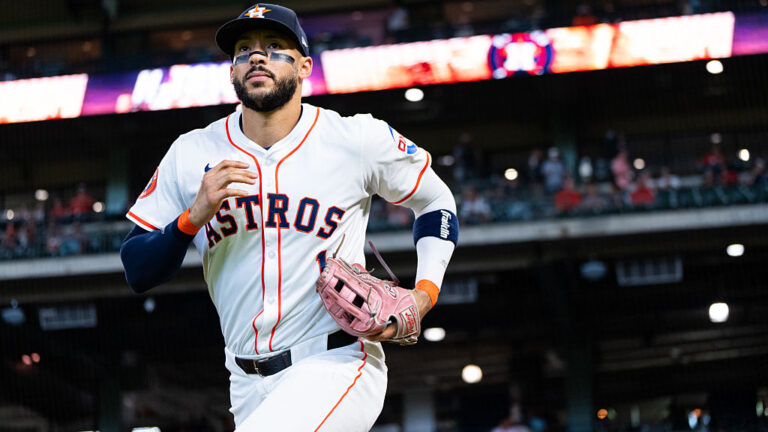
Carlos Correa (MIN to HOU)
Since trade: 25 G, 108 PA, 3 HR, 13 RBI, .320/.389/.443, .832 OPS, 137 wRC+, 0.9 fWAR
Everyone loves a reunion, but there’s nobody that loves Carlos Correa’s reunion with the Houston Astros more than the Astros themselves. Correa, one of the best players to ever wear this organization’s uniform, is back where it all began and he’s been off to a red-hot start.
While the sample size is still growing, Correa has looked like an entirely different player now that he’s back where he belongs in Houston. His 97 wRC+ on the Twins pre-trade had him 3% below league-average at the plate, but he’s up to 137 in his second go-round on the Astros and is starting to look much more like the Correa of old.
Not only is his bat back to where it should be, but the 30-year-old is also learning a brand new position on the fly: third base. So far, he’s logged over 200 innings at the position and he’s got 1 Defensive Run Saved, which is quite the improvement over the -11 DRS he had at shortstop on the Twins earlier this year.
Ramon Laureano (BAL to SDP)
Since trade: 26 G, 104 PA, 6 HR, 20 RBI, .302/.356/.573, .929 OPS, 159 wRC+, 0.6 fWAR
Of all the players moved at this year’s deadline, Ramon Laureano was one of the last ones that felt like he’d catch fire on his new team. That’s not a knock against him as a player, but it’s been a while since he’s put up a full season of above-average offense.
So far, though, Laureano hasn’t missed a single beat since joining the San Diego Padres. If anything, his bat has gotten even better. He’s trimmed his strikeout-percentage by around 3% since switching uniforms, and his triple slash line has improved across the board. The 143 wRC+ he had through 82 games on the Baltimore Orioles was impressive enough, but he’s loving every second of this change of scenery.
Josh Naylor (ARI to SEA)
Since trade: 30 G, 118 PA, 5 HR, 14 RBI, .266/.316/.450, .766 OPS, 118 wRC+, 0.7 fWAR
Known speed demon Josh Naylor has hit the ground running on his new team, and it’s his 11 stolen bases in 29 games for the Seattle Mariners that stick out above all else. That Naylor has come out of nowhere and just decided to be a legitimate stolen base threat is wild, and Joey Peterson of Just Baseball’s editorial staff has spent many sleepless nights pondering how this is even possible. Check out his article on Naylor’s baserunning prowess.
The stolen bases stick out, but they also steal attention from the fact that Naylor’s stayed steady with the bat since joining his new club. In a third of the games he played on the Arizona Diamondbacks pre-trade, he’s already hit roughly half the amount of home runs he had in the desert and put up half the fWAR. He’s immediately become a well-liked figure in the Mariners clubhouse and their fandom, and he’s settled in over in Seattle very nicely.
Ryan O’Hearn (BAL to SDP)
Since trade: 24 G, 83 PA, 3 HR, 10 RBI, .254/.349/.423, .772 OPS, 118 wRC+, 0.3 fWAR
Joining Laureano on the Padres in a mega-deal with the Orioles is O’Hearn, who’s also been swinging a hot stick on his new team. The left-handed slugger is in the midst of a career year and he’s clearly unfazed by being moved at the deadline for the first time in his career.
O’Hearn, 32, is a first-time All-Star this year and has continued to look the part on the Padres. Again, the samples are still small and very much still-growing, but he’s continued to maintain a steady walk rate and power input, and the vast majority of his stats are right in line with where they were before he was dealt.
The Padres made out like bandits at this year’s deadline by bringing in two solid bats in Laureano and O’Hearn. Each of these veterans entered the year as question marks but now their stock is through the roof.
Mike Yastrzemski (SFG to KCR)
Since trade: 25 G, 92 PA, 7 HR, 13 RBI, .282/.370/.654, 1.023 OPS, 170 wRC+, 1.3 fWAR
It was well known that the Kansas City Royals needed help in their outfield, but it was anyone’s guess as to how they planned to address that. Mike Yastrzemski and Randal Grichuk didn’t feel like they’d be enough to stop the bleeding on the surface, but the former has really taken off since coming over from the Giants.
Yastrzemski is in his seventh year in the big leagues and while he’s always been steadily above league-average with the bat, he’s also never quite been a star-caliber player. So with this in mind, it’s been insane to see his level of production since coming over to the Royals. He had eight home runs on the Giants before the trade, and that was in 97 games. In 25 games on the Royals, he’s already up to seven.
No matter which way you slice it, Yastrzemski has been outstanding since the trade went down. His walks are up, his strikeouts are way down, and he’s improved in virtually every single way (including defensively!) on the Royals. He’s a pending free agent, so his stay in Kansas City will likely be short, but he’s doing the best he can to make it a memorable one.
Starting Pitchers
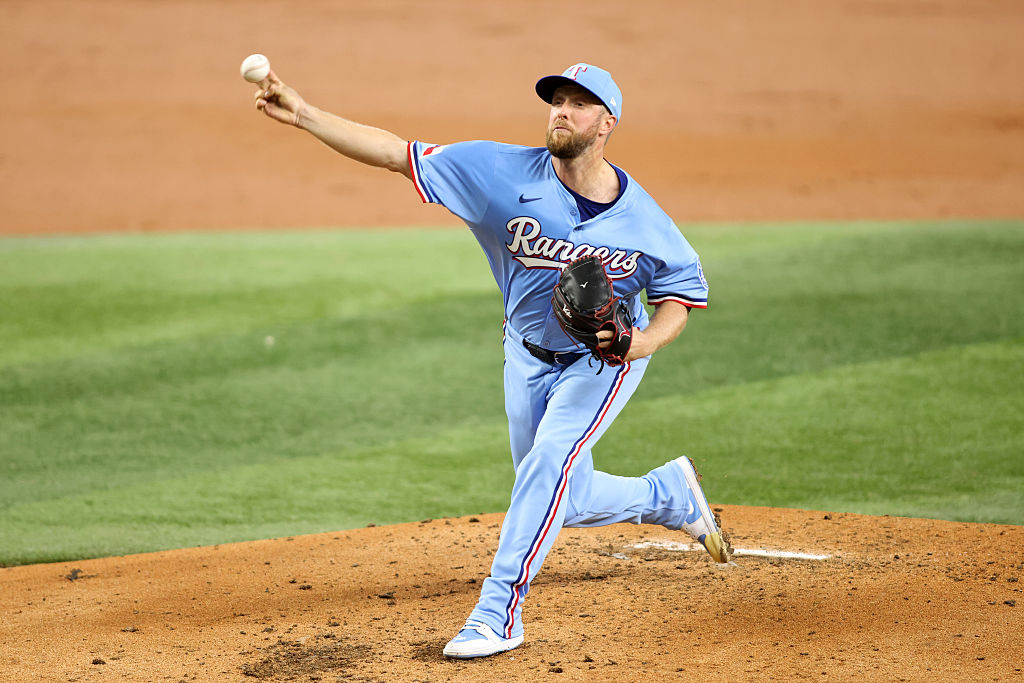
Merrill Kelly (ARI to TEX)
Since trade: 5 GS, 29.0 IP, 1.03 WHIP, 3.10 ERA, 4.50 FIP, 121 ERA+, 0.3 fWAR
You’re forgiven if the Texas Rangers’ acquisition of Merrill Kelly at the deadline didn’t really do much for you. As he closes in on his 37th birthday, Kelly has a reputation of being a durable innings eater, but he’s not exactly a staff ace who can start a do-or-die postseason game.
Even with that in mind, Kelly has remained steady since joining the Rangers and has given their rotation a lift. The staff has been absolutely decimated by injuries this year, and the recent loss of Nathan Eovaldi for the rest of the season is softened a bit by the presence of Kelly.
Kelly is a groundball-heavy right-hander who doesn’t strike many batters out. He’s made this profile work for years, but he turned in an uncharacteristic eight-strikeout performance in his last time out against the Cleveland Guardians. He’s allowed two or less runs in four of his five starts since joining the Rangers and has quietly been exactly what they needed him to be since coming over at the deadline.
Zack Littell (TBR to CIN)
Since trade: 5 GS, 27.2 IP, 1.16 WHIP, 3.90 ERA, 4.13 FIP, 119 ERA+, 0.5 fWAR
It’s wild how the Tampa Bay Rays can routinely turn no-name pitchers into valuable hurlers in the blink of an eye. They’ve been doing this for decades now, and Zack Littell is just one of many that has benefitted from a stint in Tampa Bay.
A long-time relief pitcher who the Rays randomly turned into a solid starting pitcher, Littell had a 3.58 ERA through 22 starts on the Rays before being flipped to the Cincinnati Reds at the deadline. Since then, he’s been money, elevating his strikeout numbers while stepping up in some high-leverage situations and coming out on top.
Charlie Morton (BAL to DET)
Since trade: 5 GS, 27.1 IP, 1.21 WHIP, 4.61 ERA, 3.81 FIP, 91 ERA+, 0.4 fWAR
It’s ben a weird year for Charlie Morton, who’s now one of the oldest players in all of Major League Baseball. He opened the year on the Orioles and struggled mightily with inconsistency. At one point, he was even demoted to the bullpen in Baltimore and it felt like his playing career was coming to a close sooner than expected.
He found his footing as the season marched on, and he’s looked solid in the Detroit Tigers’ rotation, even if that 4.61 ERA doesn’t immediately show it. To date, he’s had a six- and seven-run start bog down his numbers in Detroit, but he’s also turned in three starts of six innings with two or less earned runs in the month of August.
What Morton’s doing better than he has in years is strike batters out. His K/9 on the Tigers is currently 11.85, which is the highest mark of his entire career. Sure, this is in a 27-inning sample size, but he’s struck out seven or more batters in three of his last four starts. The fact that he’s a few months away from his 42nd birthday just makes that even more impressive.
Relief Pitchers
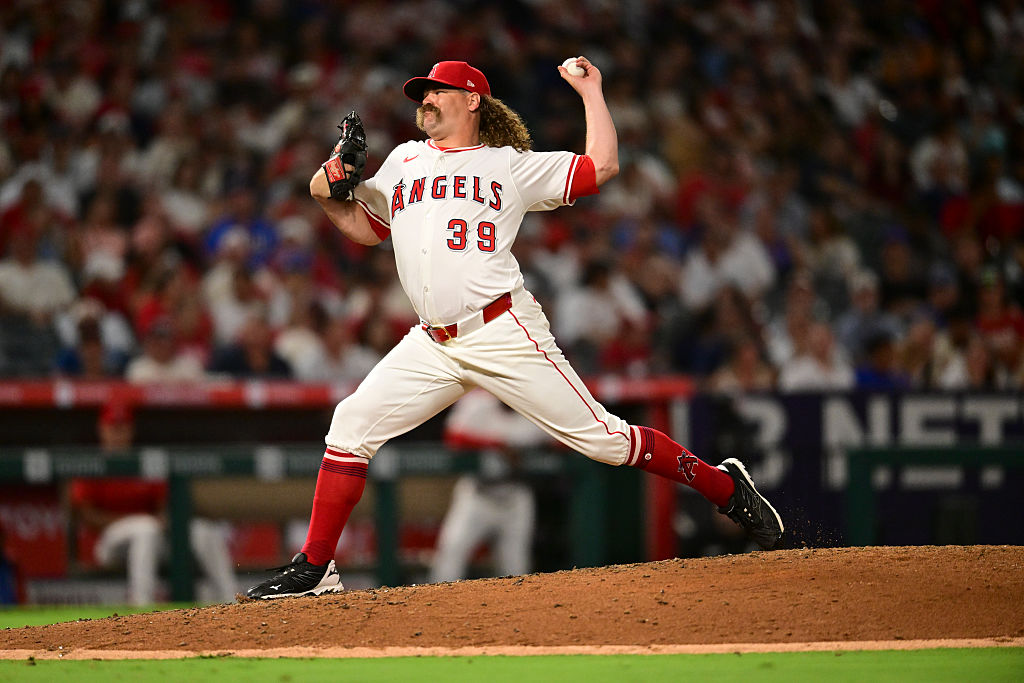
Andrew Chafin (WSH to LAA)
Since trade: 12 G, 9.2 IP, 1.86 ERA, 2.29 FIP, 233 ERA+, 0.2 fWAR
Going from a bad team to another bad team doesn’t really do much to help Andrew Chafin get his name in the headlines, so we’ll give him a bump here. the durable southpaw has bounced around a ton over the past few years, but he remains solid as a rock. This year, he’s been used sparingly in middle-relief innings, but his 2.43 combined ERA between the Washington Nationals and Los Angeles Angels is nothing to scoff at.
Since coming over to the Angels in a strange deal, Chafin has alowed just two runs to score in just under 10 innings of work. You’re not going to find any smaller sample sizes than the ones these relievers have, but just tip your cap to the man for his run prevention this year, will ya?
Jhoan Duran (MIN to PHI)
Since trade: 11 G, 8.2 IP, 8 SV, 2.08 ERA, 0.58 FIP, 223 ERA+, 0.6 fWAR
Not all of Jhoan Duran’s outings with the Philadelphia Phillies have been completely stress-free, but you wouldn’t know that by looking at the numbers. By the numbers, he’s been outstanding. If you remove his August 22 and August 26 outings against the Nationals and Mets, he’s been damn near perfect.
In just under nine innings of work, Duran has yet to walk a batter or allow a single home run. He’s punched out 11 batters in this timeframe and six of his 11 outings on the Phillies have been of the hitless variety. He’s been exactly what the Phillies needed at the back end of their bullpen. Now that Jose Alvarado is back and David Robertson has joined the fray, this unit is looking dangerous with Duran in the closer’s role to slam the door on a nightly basis.
Kyle Finnegan (WSH to DET)
Since trade: 11 G, 13.1 IP, 4 SV, 0.00 ERA, 1.10 FIP, 0.7 fWAR
Kyle Finnegan is actually the inspiration for this story. Making it through 13+ innings without allowing a run got the gears turning for sure. Not to mention the fact that he’s struck out 18 batters and walked only three since joining the Tigers, bumping his K/9 up to 12.2, which is roughly three strikeouts higher than it’s ever been before in his career.
Of course, the strikeout numbers in particular likely aren’t going to be sustainable, but it’s hard to deny that he’s on a wild run right now. The Tigers are 9.5 games above the Royals in the AL Central, so they appear to be sitting pretty. Acquiring a back-end reliever like Finnegan to shore up the ‘pen was a great move by Detroit’s decision makers, and his success in their uniform so far just reinforces that they made the right call.
Tyler Kinley (COL to ATL)
Since trade: 11 G, 10.2 IP, 0.84 ERA, 2.93 FIP, 508 ERA+, 0.2 fWAR
Tyler Kinley has spent the last six years on the Colorado Rockies and gotten shelled in most of them. He had been one of the club’s most oft-used relievers for years prior to his trade to the Atlanta Braves, but nobody could’ve seen the success he’s had in his new uniform coming.
By now I don’t need to keep clarifying that the sample sizes are small and still taking shape, but Kinley’s looked great through his first 10+ innings on the Braves. The right-hander has allowed just one earned run so far and while it’s less than ideal to see him walking over four batters per nine innings, this kind of run prevention is a welcomed sight in the Braves’ bullpen, even if the team as a whole isn’t exactly destined for the playoffs.
Steven Matz (STL to BOS)
Since trade: 10 G, 11.1 IP, 0.79 ERA, 3.65 FIP, 538 ERA+, 0.2 fWAR
Steven Matz has taken on a late-career role change and become a full-time relief pitcher this year. To this point, the left-hander has done a lot to boost his value before he prepares to enter the free agent market again in the coming months.
Matz, 34, has allowed just one earned run since joining the Boston Red Sox at the deadline. The 11-year veteran has recorded more than three outs in three of his outings on the Red Sox, but has thrived in short stints. Teams could always use quality left-handed relievers, so he’s doing everything right this season in search of another payday on the open market.
Mason Miller (ATH to SDP)
Since trade: 10 G, 10.0 IP, 1.80 ERA, 2.32 FIP, 246 ERA+, 0.3 fWAR
In what was arguably the biggest deal at this year’s deadline, Mason Miller was moved from the [REDACTED] Athletics over to the Padres. The right-hander has picked up right where he left off since joining his new club, striking out 18 batters in just 10 innings while allowing just a pair of earned runs.
Miller is one of the most electric relief pitchers in baseball, and the Padres got themselves a good one. He’s under team control for multiple years (not scheduled to hit free agency until after the 2029 season), and could see his role evolve a bit with the Padres. The club could eventually look to move him to a starter’s role, where his stuff could help him turn into a right-handed Garrett Crochet down the line.
Pair Miller with the Padres’ two big offensive acquisitions from above, and it seems like we’ve a got a winner of the trade deadline on our hands.
Written by
Eric Treuden (troy-din) is one of Just Baseball's Managing Editors and Facebook manager. After previous stops at FanSided's news desk, Yardbarker, and Jays Journal, he has…