
The Dodgers Are Proving a Six-Man Rotation Can Work
The Dodgers are dominating with a six-man rotation. Why does it work in Los Angeles and which other teams could do the same?
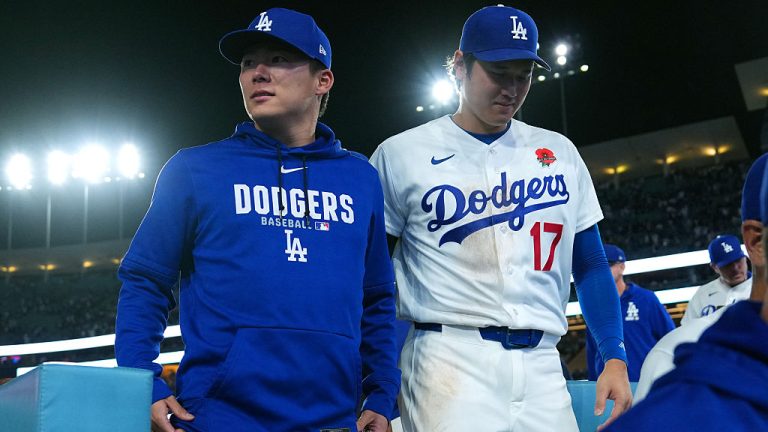
With arm injuries running rampant throughout baseball and the growing pitching depth within MLB organizations, a six-man rotation appears to be a viable option for a majority of teams around the league.
Yet, while other teams are attempting to execute this system, one team stands out above the pack.
At the forefront of the concept and the sole long-term success story, the Los Angeles Dodgers‘ rotation has produced a league-leading 2.91 ERA in the absence of stars Blake Snell and Tyler Glasnow, running out six starting pitchers per week.
While Yoshinobu Yamamoto and Shohei Ohtani are leading the unit, Justin Wrobleski, Emmet Sheehan, and Roki Sasaki have kept the train going, as well as contributions from an unlikely source.
After posting a 6.69 ERA over 36.1 innings with the Blue Jays, Eric Lauer has played a crucial role in keeping the six-man rotation alive, providing length and run prevention, giving up just five runs over his three starts.
More often than not, the idea of a six-man rotation fades as the season progresses for ball clubs, or it is a philosophy that simply doesn’t produce the desired results. But what we are seeing with Los Angeles this season is different. Why is it working for them, and how sustainable is this success?
Stats recorded prior to play on June 11.
Why The Dodgers’ Six-Man Rotation Works
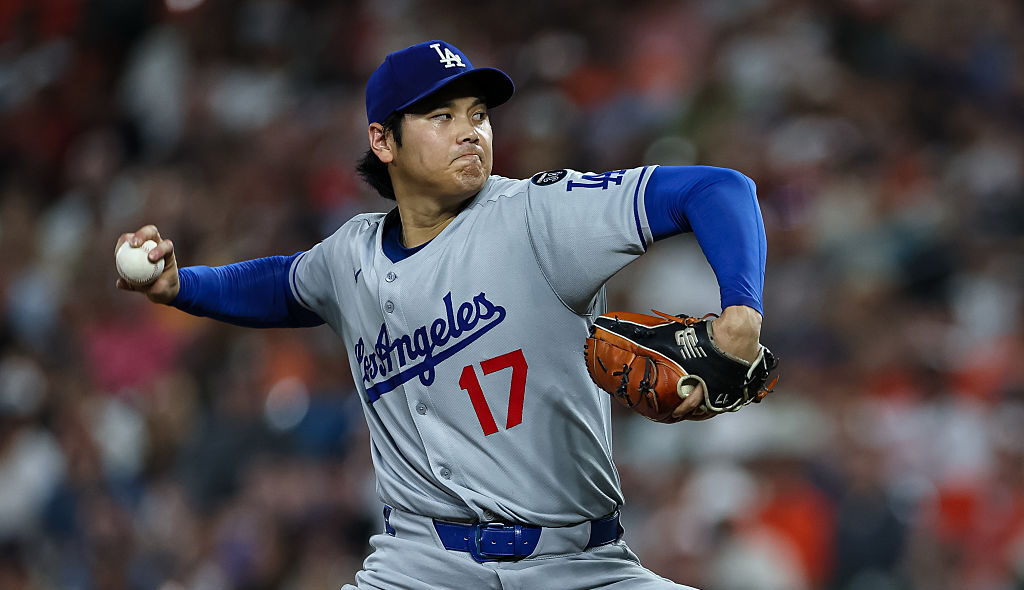
One of the downsides of a six-man rotation is that it shrinks the bullpen from eight to seven arms, and if starters are consistently going five or fewer innings in games, relief arms are going to be heavily taxed.
Ohtani accounts for one of the advantages for the Dodgers, as two-way players don’t count towards the 13-pitcher limit, allowing Los Angeles to carry 14 pitchers as long as Ohtani is on the roster.
Also subtracting from their bullpen mileage is the length their starting pitching has given them thus far. They’re averaging a league-leading 5.7 innings per start (including Will Klein as an opener), with Sheehan as the only rotation arm to not average at least five innings.
| GS | IP/GS | ERA | |
| Yoshinobu Yamamoto | 12 | 6.4 | 2.68 |
| Emmet Sheehan | 12 | 4.9 | 4.70 |
| Roki Sasaki | 11 | 5.3 | 4.03 |
| Shohei Ohtani | 10 | 6.1 | 0.74 |
| Justin Wrobleski | 10 | 6.4 | 2.37 |
| Tyler Glasnow | 7 | 5.6 | 2.72 |
| Eric Lauer | 3 | 5.3 | 2.76 |
There’s also the added wrinkle that Yamamoto, Ohtani, and Sasaki are accustomed to the once-a-week schedule from their time in NPB, though whether that influences their success is a different question.
Consistency was not present for the Dodgers last season, with Yamamoto being the lone full-season starter in the rotation in a season mired in injuries and less-established arms in the stable.
Even apart from the current crop of six, Glasnow and Snell are set to return in the coming months, as are Gavin Stone and River Ryan, which only adds to the Dodgers’ ability to maintain their six-man rotation.
This is the issue with a majority of teams that attempt the six-man rotation — not enough length from their starters and not enough production to sustain it.
Which Other Teams Can Execute It?
Seattle Mariners
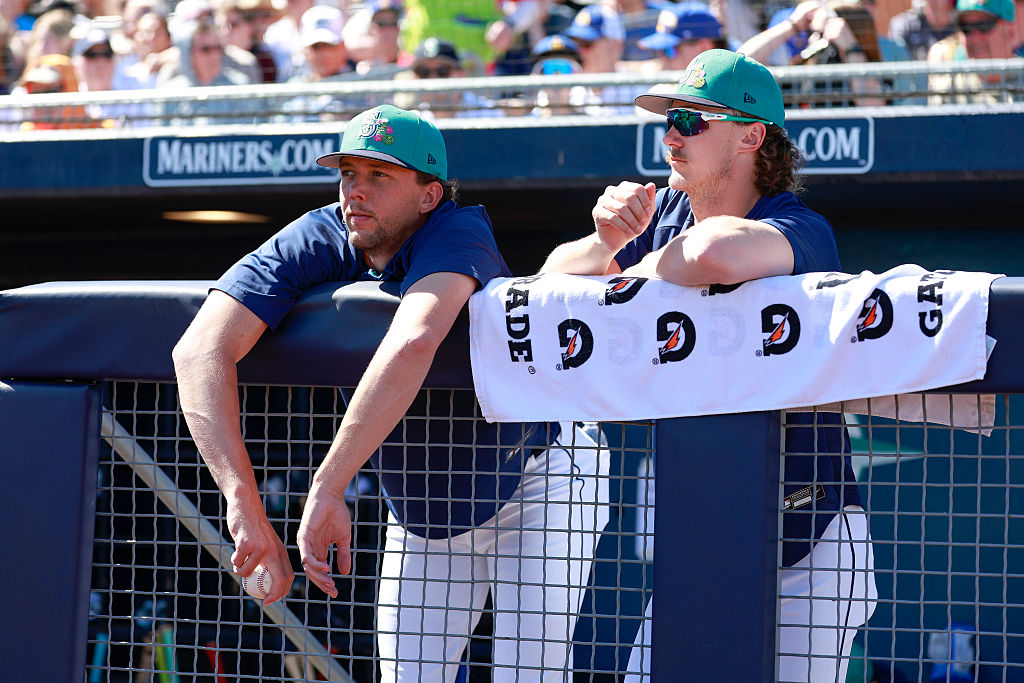
The key to a successful six-man rotation is a group of starters that can pitch deep into games with production to keep them afloat, and there’s no better candidate than the Mariners.
With the return of Bryce Miller, who has looked like one of the best arms in the league since coming back from injury, Seattle attempted a piggyback with Miller and the struggling Luis Castillo, which only caused turmoil within the clubhouse.
Instead, they opted for a six-man rotation on May 29, and it has gone swimmingly. Their 3.64 rotation ERA certainly helps the cause, as does their league-leading 386 innings pitched.
| GS | IP/gs | ERA | |
| logan gilbert | 14 | 5.7 | 3.62 |
| Bryan Woo | 13 | 5.9 | 3.74 |
| George Kirby | 13 | 6 | 4.04 |
| Emerson Hancock | 13 | 5.8 | 2.74 |
| Luis Castillo | 11 | 4.8 | 5.37 |
| Bryce Miller | 4 | 5.5 | 0.82 |
There’s enough depth to cover a full season with two top-100 prospects, Kade Anderson and Ryan Sloan, gunning for debuts as October nears.
St. Louis Cardinals
The Cardinals are a more peculiar case with no clear frontline talent to head the rotation, but the unit has been top 10 by ERA.
Before the addition of Hunter Dobbins returning from injury, St. Louis’ entire Opening Day rotation ate up all 63 of their starts, with Michael McGreevy’s 2.99 ERA leading the way to a 37-28 start and a playoff berth in sight.
It hasn’t been a flashy start for the Cardinals, but they’ve kept steady, and the rotation has kept them in the race.
| GS | IP/GS | ERA | |
| Michael McGreevy | 13 | 5.5 | 2.99 |
| Dustin May | 13 | 5.6 | 4.21 |
| Matthew Liberatore | 13 | 5.1 | 4.48 |
| Andre Pallante | 12 | 5.3 | 3.96 |
| Kyle Leahy | 12 | 4.9 | 4.42 |
| Hunter Dobbins | 1 | 4.1 | 6.23 |
Compared to the Mariners’ rotation, the likelihood of the Cardinals’ rotation lasting is far smaller without many highly-touted performers, though the depth exists to do so over a long span. Brycen Mautz, Richard Fitts, and Quinn Mathews are due for major league time this season.
Future Candidates
Whether it be injury returners or anticipated promotions, there are several teams that have the talent to make the six-man rotation work.
| New York Yankees | Chicago White Sox | Boston Red Sox | Detroit Tigers | Milwaukee Brewers | Atlanta Braves |
| Gerrit Cole | Davis Martin | Garrett Crochet | Tarik Skubal | Jacob Misiorowski | Chris Sale |
| Max Fried | Sean Burke | Sonny Gray | Framber Valdez | Kyle Harrison | Spencer Schwellenbach |
| Carlos Rodon | Anthony Kay | Ranger Suarez | Troy Melton | Brandon Woodruff | Bryce Elder |
| Cam Schlittler | Erick Fedde | Connelly Early | Casey Mize | Logan Henderson | Spencer Strider |
| Ryan Weathers | Noah Schultz | Payton Tolle | Jack Flaherty | Brandon Sproat | Grant Holmes |
| Will Warren | Tanner McDougal | Jake Bennett | Keider Montero | Quinn Priester | Martin Perez |
The Dodgers possess a unique set of circumstances that allows them to successfully sustain a six-man rotation for a long period. The Mariners’ and Cardinals’ success will serve as a test for the league to see whether teams can sustain a six-man rotation, or if that luxury is solely an advantage for the powerhouse in Los Angeles.
Become a Member of Just Baseball
Subscribe and upgrade to go ad-free!
* Save 25% by subscribing annually.

Written by
Landon is a recent high school graduate, currently 17 years old going to study Media at UC Riverside next fall. He excels with data analysis inside…