
Jackson Jobe Proved He Can Still Reach His Top Prospect Ceiling
Detroit is going to need answers in its rotation moving forward, and Jackson Jobe could still be one of them.
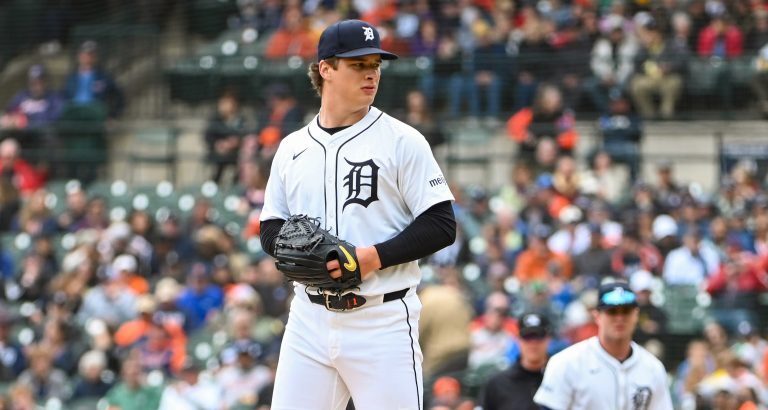
After the departure of Tarik Skubal and Casey Mize, the Detroit Tigers will be looking for a new face of the rotation. A rotation that was once filled with veterans will take on a completely new and younger look with Justin Verlander’s retirement and Jack Flaherty’s impending free agency.
Troy Melton and Keider Montero certainly boosted their resumes this year, with both showing flashes of a higher ceiling than most had ever considered. Productive, poised, and ready to fill a void left by the veterans ahead of them. However, let’s not forget about the third overall pick from 2021.
Jackson Jobe was a top-five prospect in baseball for a reason. A high-90s fastball paired with a lethal breaking ball produced plenty of swing and miss and made him a hot name among prospect evaluators. A so-so first year, followed by injury, slowed his momentum while other arms on the Tigers’ roster diverted attention.
Once Jobe returned near the end of the year, he looked like a better pitcher than we had seen before. For a Tigers team that is going to see a lot of turnover in the rotation, Jobe will have every opportunity to prove he’s still the talent the team envisioned when it drafted him with the third overall pick.
Flashes of Excellence
How much can we really take from nine starts coming off an injury that caused Jobe to miss an entire year? Knocking off the rust and recalibrating to major league hitters is never easy, and some struggles were expected. So were the flashes of excellence.
I’m sure we all remember his first start in early August at San Francisco. Five innings of one-hit, no-run, four-strikeout baseball. It was the welcome-back game we all needed to see. His fastball sat at 98 mph, the command wasn’t too shaky, and most importantly, he produced nine whiffs.
Although Jobe has always had the stuff to strike batters out, he struggled to do so over the last couple of seasons. His strikeout numbers weren’t putrid, but they weren’t nearly what we had come to expect from Jobe. To me, that was my biggest concern about his ability to reach his ceiling. In his five August starts, he struck out four batters four times and three batters once. Then September came.
Jobe made four starts in September, including two against playoff teams, and struck out at least seven batters in each outing. You could tell that Jobe had settled in and started to find his groove again, going at least five innings in each start and finishing his last three outings with at least 15 whiffs. What I liked so much about his September outings was how he was able to mix his pitches and use his full repertoire to get batters out.
This wasn’t just pumping 98 past mediocre players over and over again. What we saw was a mixture of five to six pitches scattered across the strike zone, darting in and out to keep hitters guessing. In my opinion, those last few starts were the best baseball we’ve seen from Jackson Jobe since he was in the lower minors.
You don’t need a bunch of advanced numbers to tell you how good Jobe was. This is one case where your eyes did the work. You could see the movement on each pitch, which simply looked different from what you see from so many other arms.
Let’s look at his last game of the season against the Pirates. He recorded eight total strikeouts, with two coming against the slider, two against the fastball, one on the sinker, and three on his curveball. Of those eight strikeouts, four were looking. Here’s a look at them.
You can see just how fooled these batters are. That’s the result of sequencing your pitches well and locating them while keeping batters on their toes early in the count. Not only are they unsure what’s coming next, but they can’t differentiate between pitches early enough to adjust or even foul them off.
Okay, maybe the Pirates were just too passive. Well, go back to Jobe’s start before Pittsburgh, when the White Sox were swinging at everything. Pitches that started in the zone and quickly darted away from barrels produced plenty of uncomfortable swings and made for a nightmare day for Andrew Benintendi.
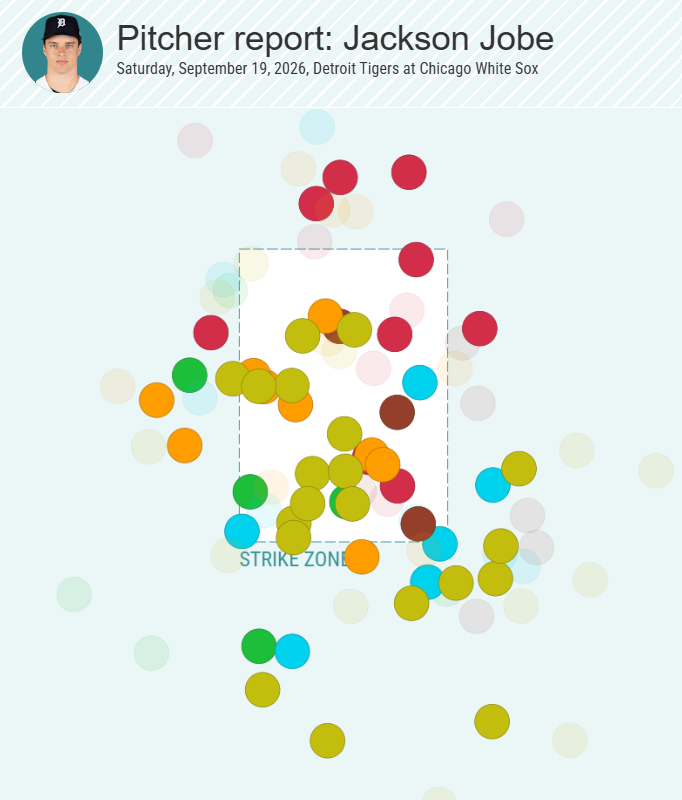
Via Baseball Savant
The pitch plot you see above shows all of the swings the White Sox took. A number of those sliders (yellow) and curveballs (blue) started in the zone before completely dropping out, producing uncomfortable swings. How about the elevated fastball (red)? Pitches at the top of the zone and just above it also led to a strikeout.
I could go game by game and break down each outing to highlight Jobe’s strengths, but I think it’s best to summarize it simply. What we saw in September was batters facing Jobe without enough of a plan. Not because these hitters are bad, but because Jobe’s stuff and command were that good.
Any time you talk about a young pitcher, there’s going to be a learning curve. No one is expecting Jobe to be perfect, but he has shown the ability to pitch at a high level post-surgery. You want to stack a rotation with as many arms as possible that flash the type of talent Jobe has, and his results to end the season only confirm that he can still be a top-tier pitcher given time.
Of course, it wasn’t always sunshine and rainbows. There were growing pains along the way, including outings that were less than ideal.


What’s Next for Jackson Jobe?
As we all know, it takes starting pitchers some time to adjust and settle into facing major league hitters. What works in the minors doesn’t always translate perfectly to the majors, and adjustments on the fly are key to development. How Jobe improves this offseason will be crucial to where he slots into the Tigers’ rotation.
The first thing I’d like to see in 2027 is simply health. I know that seems like a cop-out place to start, but it’s true. We have yet to see Jobe breach 50 innings in a season, which brings into question how many innings he can pitch in 2027. That’s a different discussion for a different day, but I want to see Jobe on the mound consistently every fifth day.
Another step I’d like to see Jobe take is with his secondary offerings. I think his four-seam fastball and slider are going to lead the way, which is rather common, but just how good can his sinker and changeup be? What about his cutter? All three stood out at different points this season.
What separates a good pitcher from a great pitcher is his ability to find outs when he doesn’t have his best stuff. If Jobe isn’t producing on any given day, will he be able to rely on his sinker and changeup to produce more ground balls and find outs? We saw his ground-ball rate tick up from 43% to 47.5% this season, which was due to his sinker playing a larger role. If he can stay above a 45% ground-ball rate without losing any swing and miss, he has the makings of a great pitcher.
His changeup is going to be important when facing lefties. Personally, I love the pitch’s movement and the 10 mph difference from his fastball, but he’s going to have to command it better. There were times when he would lose control of the pitch and leave it uncompetitive. However, a changeup with a 30% whiff rate is something that could elevate his game with a little refinement.
The improved command we saw in 2026, although spotty at times, can help unlock Jobe’s potential. I’d like to see his BB/9 stay around his 3.13 mark from 2026, with a little room to move closer to 3.50 if his 9.98 K/9 still holds true. I don’t think these numbers are lying, but we do need a larger sample size.
One last thing to keep an eye on is Jobe’s arm slot. Throughout his career, he was closer to 44°, but he dropped his arm slot to 38° in 2026. Adjusting an arm angle is fairly common and can lead to different movement on pitches. Perhaps the change has also helped Jobe feel more comfortable post-surgery. Will this continue to change, or is 38° the new mark?
Final Thoughts
Let’s keep in mind that this is a 24-year-old pitcher with only 99 major league innings under his belt. There’s still a ton for Jobe and the organization to learn about what he can ultimately become. I guess you could say the good news is that he has yet to reach his ceiling. How high is that ceiling? I guess we’ll have to wait to find out.
Detroit is going to need answers in its rotation next year and moving forward. From what I saw from Jackson Jobe in 2026, I think he can be a top-three starter in the rotation for years to come. I know that shouldn’t come as much of a surprise, but it’s still great news for a team that needs answers in its rotation.
Become a Member of Just Baseball
Subscribe and upgrade to go ad-free!
* Save 25% by subscribing annually.

Written by