
Why Carson Benge Should Win the NL Rookie of the Year
The Mets outfielder was the NL's top rookie in 2026.
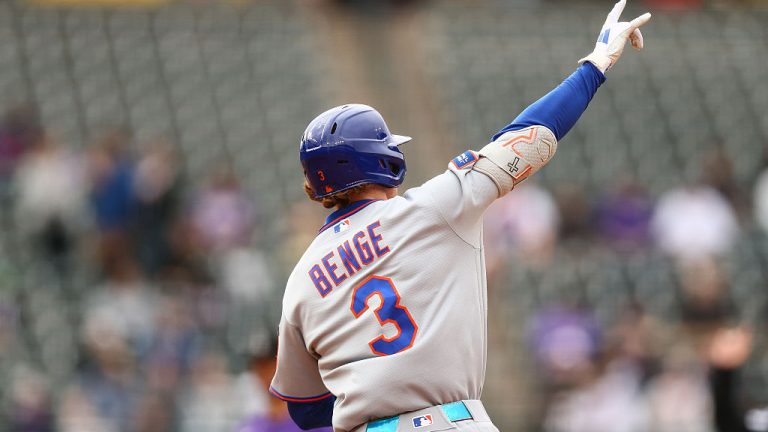
Heading into the second half of the 2026 MLB season, the NL Rookie of the Year race seemed as though it was all but wrapped up. With Sal Stewart crushing 19 homers and driving in 65 runs en route to his first career All-Star selection, it seemed like his competition wouldn’t come close to similar numbers by the end of the season.
However, the second half brought its challenges for Stewart’s Rookie of the Year aspirations.
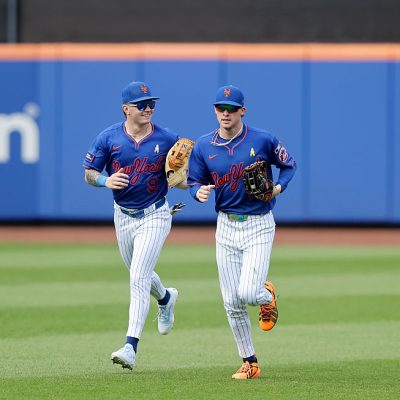
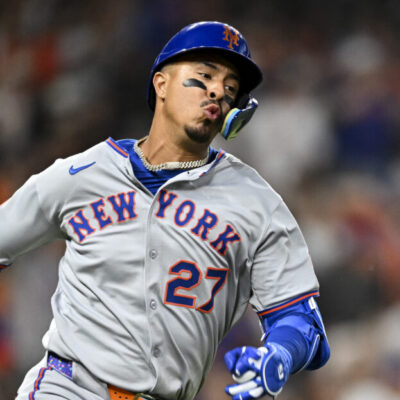
After taking some time to settle in at the major league level, Mets outfielder Carson Benge had fully figured things out by the second half, and he was surging down the stretch. Benge had completely transformed his game and taken his talents to the next level, leading a Mets offense that was a lowlight in 2026, to say the least.
As the calendar continued its push towards October, Benge continued to climb his way to the top of the NL Rookie of the Year race. He finished the season with a red-hot September that saw him post a wRC+ of 147, putting the cap on a tremendous stretch for the 23-year-old.
Given this shift, the discourse surrounding this award race shifted from Stewart being the overwhelming favorite to take home the award to a real conversation regarding how Benge and Stewart stack up against one another.
In fact, when looking at their numbers and factoring in other outside challengers from around the league, Benge doesn’t just have a shot at winning the award: He should be the overwhelming favorite.
Let’s dive in, take a closer look at this race, and explain why Carson Benge is the correct choice for the 2026 National League Rookie of the Year Award.
Breaking Down Benge’s Impressive Rookie Campaign
As mentioned in the introduction, Benge’s 2026 season hasn’t been completely full of sunshine and rainbows. Instead, it’s more of a tale of two halves between the first month of the season and what followed.
Benge opened his major league career with a stretch between March and April where he posted a wRC+ of just 48, with a .189/.247/.278 slash line. It was a rough start for the former top prospect, and this led to plenty of speculation surrounding whether or not the Mets pushed him to the big leagues too soon.
However, as May came around, Benge completely flushed this slow start. From May 1 forward, he slashed .299/.363/.457 with 18 homers (41 XBH) and an impressive 130 wRC+. During that same span, Benge accrued 4.4 fWAR, which was far and away the most by any rookie hitter in the sport, and the 13th most among all position players.
For the season, Benge finished with 20 homers and 22 stolen bases, which made him the first rookie in Mets history to post a 20/20 season. Since 2000, only Juan Soto, Francisco Lindor, Carlos Beltrán, David Wright, and Mike Cameron have accomplished this feat. In other words, Benge is in some pretty elite company.
Across the entire season, only 26 position players in baseball posted an fWAR at or above Benge’s total of 4.3. He was worth more fWAR than Ben Rice, Corbin Carroll, Max Muncy, James Wood, and a plethora of other superstars, which really speaks to the level he played at in 2026.
Ultimately, Benge’s 2026 campaign serves as a masterclass in resilience. While his early struggles tested the patience of the fanbase and front office alike, his historic second-half surge completely reshaped the narrative of his year and the NL Rookie of the Year discussions.
Even if it was challenging for the 23-year-old to begin the year, he settled in quickly and cemented himself as one of the game’s brightest young stars in the process.
Comparing Benge to His Competition
When it comes to Benge’s competition, the discussion can be split mainly between three other top rookie performers: Stewart, Nolan McLean, and JJ Wetherholt. While this group is talented all around, when comparing the numbers, Benge has a pretty good argument to take home the award.
Sal Stewart
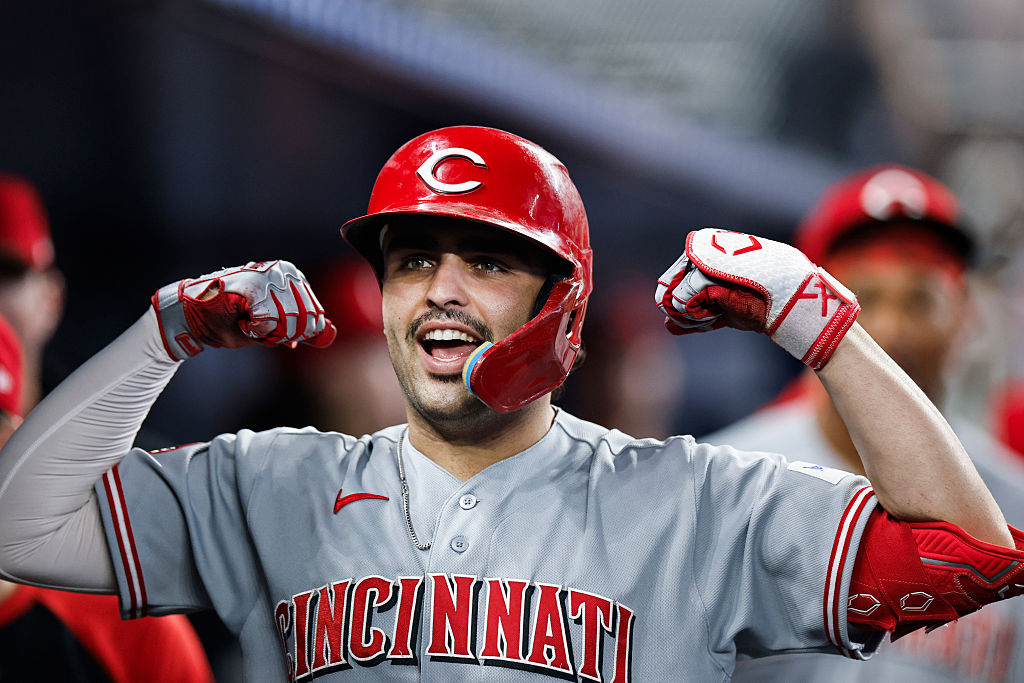
The main conversation surrounding the NL Rookie of the Year Award to this point has been the choice between Sal Stewart and Carson Benge, and it’s for good reason. The margins are extremely thin between these two players, but those same margins are what clearly give Benge the edge over Stewart.
Beginning with Stewart’s strengths, his calling card is his electric power, which allowed him to finish the season with some impressive numbers. He was one of just three rookies to slug 30 or more home runs during the 2026 campaign, and he was the only rookie who did so while driving in 100 or more runs.
No Red since Nick Castellanos in 2021 has achieved this feat, and Stewart is the only rookie in Reds history to reach both milestones.
While Stewart’s season may be historic in terms of his franchise’s history, when comparing him to Benge, slugging is virtually the only place where he has him beat. While he had more homers and RBI, Benge beat his fWAR total by 2.3 wins, which isn’t a small amount whatsoever.
Benge also posted a higher wRC+ (118 vs 112), on-base percentage (.346 vs .330), and batting average (.282 vs .263), which makes his numbers really pop off the page in comparison to Stewart’s. Not to mention, Benge played borderline elite defense in the outfield (+8 fielding run value) while Stewart played a poor first base (-4 fielding run value).
While voters may swing toward Stewart because he has the more eye-appealing counting numbers, don’t let that fool you. Benge edges him out where it matters most, and hopefully, voters kept the full picture in mind.
Nolan McLean
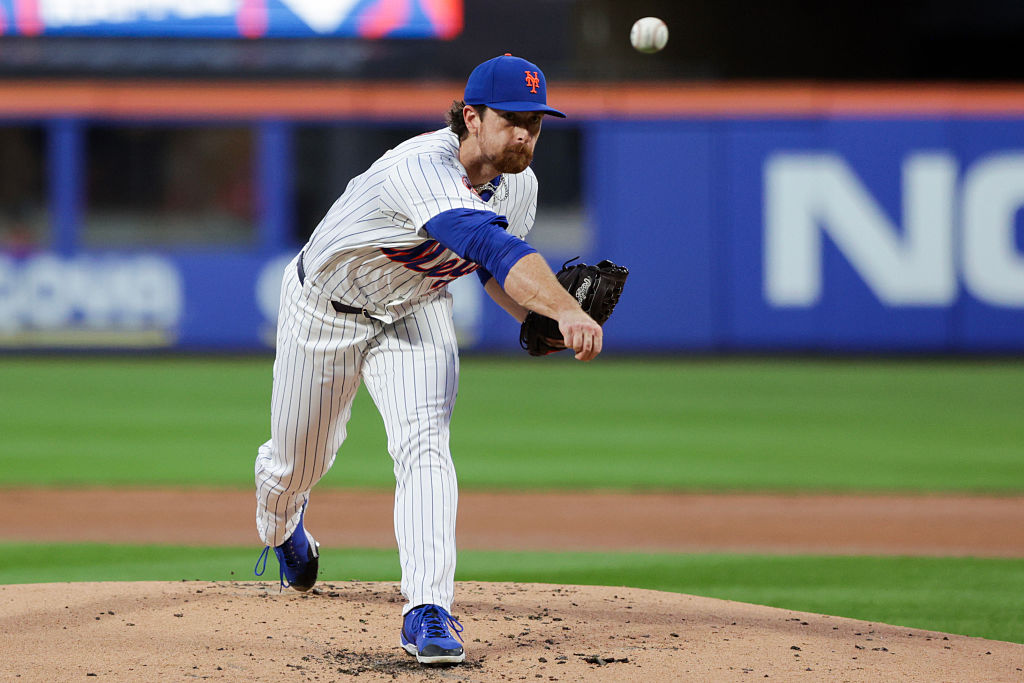
While some of Benge’s biggest challengers come from around the rest of the National League, he’s not unchallenged internally. Right-hander Nolan McLean put up a pretty impressive season in his own right for the Mets, and there’s certainly a world where he could sway some voters as well.
McLean’s rookie season was all the Mets could have hoped for and more. He threw 179.2 innings of 3.16 ERA baseball, while striking out 194 batters along the way. He’s one of three Mets rookie starting pitchers ever to strike out 190 or more batters and post a 3.20 ERA or better.
The other two pitchers in that club? Dwight Gooden and Kodai Senga. In other words, he’s in some pretty good company.
Unlike the rest of Benge’s competition, it’s a lot harder to compare these two players due to the fact that they play vastly different positions. For what it’s worth, McLean was worth 3.5 fWAR, which is a little less than one win below Benge’s total.
For the voters, it will come down to whether or not they prefer Benge’s everyday presence in the lineup or McLean’s electric stuff on the mound every fifth day. While both sides have a good argument, Benge’s everyday play made him more valuable, as reflected by the difference in fWAR between the two players.
JJ Wetherholt
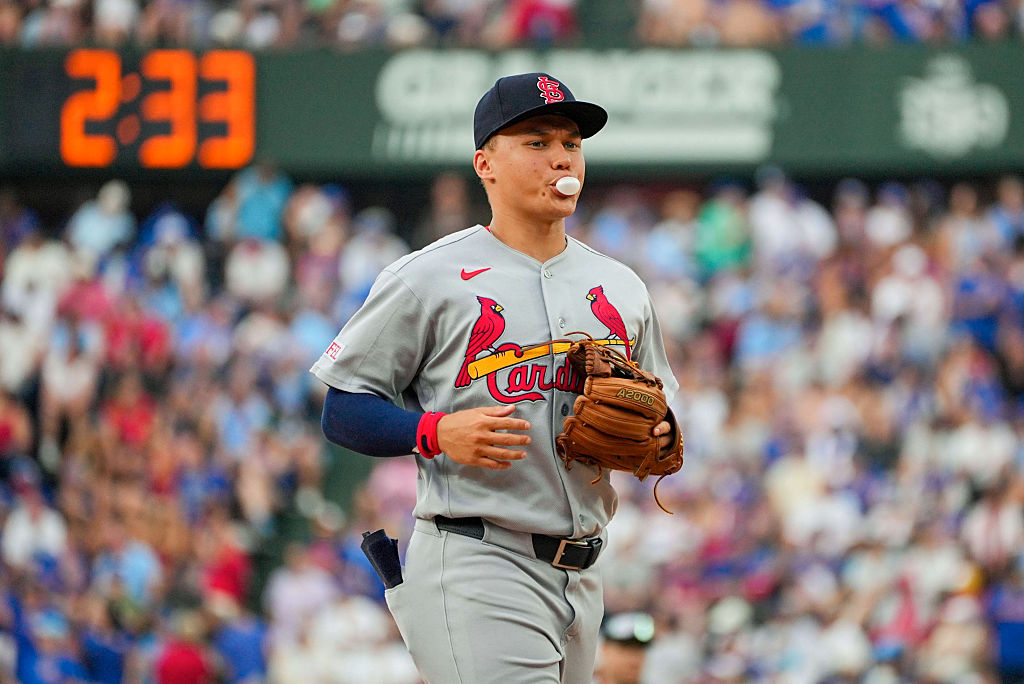
Benge’s third and final competitor is JJ Wetherholt, another former first-round pick back during the 2024 MLB Draft. This battle may be one of the more underrated ones in the Rookie of the Year race, as Wetherholt once looked like the clear frontrunner for the award earlier in the season.
In his rookie campaign, Wetherholt finished with 17 homers, slashing .242/.339/.365 with 14 stolen bases and a 101 wRC+. He also finished with 4.6 fWAR, the second-highest total for any rookie position player in the sport. In fact, he was one of just three rookies who were worth 4.0 fWAR or more in 2026.
On top of his impressive showing at the plate, Wetherholt was a world-class defender at second base. He racked up an eye-popping 25 OAA during his first taste of the big leagues, which ranked second in baseball overall and first among all second basemen.
In fact, he was one of just three players to post more than 20 OAA, joining an elite group that featured Bobby Witt Jr. and Pete Crow-Armstrong — two MVP-caliber talents.
Similar to Benge, Wetherholt’s 2026 season was a tale of two halves — but not in a positive way. During the first half of the season, Wetherholt had a commanding presence at the plate, posting a wRC+ of 114 with a .356 on-base percentage. Unfortunately, the second half brought some real challenges for the 24-year-old, as he saw his wRC+ dip to just 76, while his on-base percentage fell nearly 50 points to .307.
If he had continued at his first-half pace all season long, there’s a very good chance that Wetherholt would’ve been the clear favorite for this award. Especially considering his otherworldly defense, Wetherholt’s value would have been hard to match across a full season,
Despite this, the second-half fall-off was real, and it ended up drawing a significant line between his rookie season and Benge’s. Benge ended up finishing with more homers and stolen bases, while posting better marks in his batting average, on-base percentage, slugging, wOBA, and wRC+.
With this in mind, Benge likely gets the edge here when all is said and done.
Could Benge Actually Win the Award?
Now that we’ve taken a look at how Carson Benge stacks up against his rookie competition, we’re left with one question: Could Benge actually win the award this fall? While there are very tough decisions to be made and real conversations to be had, the answer is yes — and he should.
In my opinion, the only thing that will likely hold this back from being a unanimous decision is that some of Benge’s counting stats fall short of Stewart’s, which could sway some voters. Over 30 homers and 100 RBI is nothing to sneeze at, but when fully examining the caliber of player Benge is, he should get the nod over Stewart when all is said and done.
Starting every day for a Mets team that repeatedly fell short of its lofty goals was no easy task, and Benge handled it like a seasoned veteran. Not many rookies in the sport could succeed as he did in those circumstances, and he deserves hardware for this season, not just high praise from individuals around the game.
Overcoming a brutal spring with a historic second-half explosion, Benge carried a struggling Mets offense, and he cemented himself as an everyday star in the sport. Resilience and all-around excellence should take priority over home run totals when the ballots are finally revealed.
Become a Member of Just Baseball
Subscribe and upgrade to go ad-free!
* Save 25% by subscribing annually.

Written by
Jay Staph, a huge baseball fan and stat nerd, founded and ran his own baseball writing website, BSBWrites, at just 16-years-old. With focal points around prospects,…