
Five Key Takeaways from the Orioles’ 2026 Season
The Orioles had some positive contributions that led to wins in 2026, but ultimately, those were outweighed by numerous letdowns.
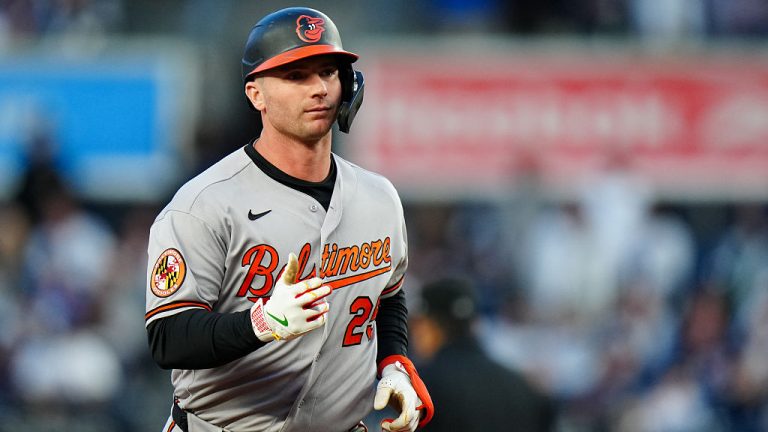
The Baltimore Orioles fell short of the playoffs yet again in 2026, finishing with a record of 79-82. Following three straight seasons with a winning record from 2022-24, the team has now finished under .500 in back-to-back years.
Executive vice president and president of baseball operations Mike Elias assembled a roster that had the highest payroll of any in his eight-year tenure leading the O’s. Ultimately, it wasn’t good enough for the team to achieve anything significant.
“This was a very disappointing season for us,” Elias said at Baltimore’s end of season press conference. “Our expectations were high. The results did not come in that we expected, but I never felt like the fight and effort, or passion, from our players was lacking. So, we really want to thank them for pouring it all out there this season.”
Elias opted for a new voice in the dugout entering the 2026 season, hiring former Cleveland Guardians’ bench coach Craig Albernaz as manager. Albernaz had a respectable first season at the helm, but one that ultimately fell short of the team’s expectations.
“There’s one word that keeps on coming up. Each player I talk to, each coaching staff member,” Albernaz said at the end of season press conference. “Execution is the biggest thing. That’s something we’re going to be diving into and drilling hard this offseason and then looking forward in spring training.”
The Orioles were simply a middle-of-the-pack team this season. They had some positive contributions that led to wins, but ultimately, those were outweighed by numerous letdowns.
Let’s explore some of the most prevalent storylines from Baltimore’s 2026 campaign.
Pete Alonso Kept This Team Relevant
Regardless of their disappointing conclusion to the 2026 season, the biggest story for the Orioles was their big-ticket free agent signing: Pete Alonso.
In year one of a five-year, $155 million contract, Alonso was everything that the Orioles dreamt he could be. The “Polar Bear” set career-highs in wRC+ (148) and fWAR (5.0), slashing .267/.363/.522 with 43 home runs and 113 RBI.
Alonso struggled a bit out of the gate, hitting just four round-trippers with a .198 batting average at the end of April. He’s typically a hot starter, so fans were concerned about the slump initially.
Fortunately for the Orioles, Alonso seemed to get better with each passing month. He posted an OPS of .840 or better in every month from May through September.
The best months for the “Polar Bear” were August and September, when the Orioles were desperately clinging to hopes of earning the final American League wild card spot. If it weren’t for Alonso clubbing 20 homers with a 1.030 OPS over those final two months, Baltimore wouldn’t have been nearly as close to sneaking into the playoffs as they were.
Alonso had many memorable moments this year, but none as notable as his return to Citi Field as a visiting player for the first time. In the Orioles’ mid-September sweep of the New York Mets, Alonso received a standing ovation from the New York fans every plate appearance, and he hit a home run in two of the three games in that series.
While this moment was perhaps more memorable for Mets fans, it still felt special to the Orioles’ faithful. So often they’ve seen their homegrown stars get shipped off to, or sign with bigger market clubs (Manny Machado, Zack Britton, Kevin Gausman, Nick Markakis, and more recently, Adley Rutschman), that seeing their front office pony up for a quality major league player in free agency that meant so much to another organization was a nice change of pace.
Another fun wrinkle of Alonso’s season was how impressive he was against the New York Yankees. In the Orioles’ first series at Yankee Stadium, Alonso was showered with boos when he walked up to the plate. After spending many years with the cross-town rival Mets, Alonso had already become an enemy to Baltimore’s divisional foe.
Wearing orange and black, Alonso went 16-for-49 (.326) with five homers in 13 games against the Bronx Bombers this season.
It’s hard to overstate the importance of Alonso to the Orioles’ present and future. He played every day, was one of the league’s best hitters, and was solid defensively at first. Without Alonso, it’s possible that this season would have been a lost one for Baltimore – given the regression of many of their younger bats.
Alonso was unanimously voted “Most Valuable Oriole” this season by the local media.
The Homegrown Hitting Core Was Largely Disappointing
Following the Orioles’ signing of Alonso, a post on X from ESPN insider Jeff Passan went viral online.
Passan called the Orioles lineup a “wrecking crew,” and only two of the players listed weren’t homegrown Baltimore products: Alonso and Taylor Ward.
It seemed like, on paper, that Baltimore’s lineup was going to be one of baseball’s best. Gunnar Henderson, despite a disappointing second half in 2025, was one of baseball’s best young shortstops. Jordan Westburg and Rutschman had both earned All-Star honors early on in their young careers.
Jackson Holliday was a former number one overall pick. Colton Cowser was a top five draft pick. Samuel Basallo was a consensus top ten prospect in baseball, and he and Dylan Beavers made their debuts in the second half of 2025.
There was so much ascending young talent that folks were wondering how Baltimore could even fit them all into a lineup. But by some cruel twist of fate, all of those players failed to meet expectations for the Orioles this year.
Henderson, who was still a valuable player, had the worst season of his four-year career thus far. He posted 3.6 fWAR and hit 24 home runs but was hardly better than average at the plate. Henderson slashed just .226/.311/.404 (all career-worsts) with a career-worst 102 wRC+ in 702 plate appearances.
Westburg missed 77 games in 2025 due to hamstring and ankle injuries, but it was assumed that he would be healthy entering 2026. At the start of spring training, Elias announced that that Westburg was having elbow pain, and it was later confirmed that he had a partial tear in the UCL of his throwing arm. He tried to rehab the injury for a couple months but succumbed to elbow surgery in mid-May. Westburg did not play in a single game in 2026.
Rutschman, when healthy, was productive for Baltimore. He was the team’s lone representative at this year’s All-Star Game, slashing .253/.327/.436 with eight home runs in the first half over 241 plate appearances. However, Rutschman was placed on the injured list on three separate occasions before ultimately being dealt to Boston at the trade deadline. More on that move to come.
Holliday was expected to take a big leap forward entering 2026, which made it even more disappointing when Elias announced that the infielder had fractured his hamate bone hitting batting practice just before the start of spring training. After missing nearly two months, Holliday was never able to find his groove once healthy. He posted a lackluster 81 wRC+ with just seven home runs in 354 plate appearances this season.
While he’s still young, and hamate fractures are tough to return from, it’s reasonable to wonder if he will ever be a well-above average hitter. Holliday’s extra-base hits came few and far between in 2026.
Basallo had a respectable rookie season, slashing .222/.291/.406 with 18 homers in 399 plate appearances. He appeared as a catcher in 63 games, a number that will hopefully increase in 2027. Basallo wasn’t a bad player when available, but was worth just 0.6 fWAR.
Beavers was nothing special this season. Over 104 games, he posted a .680 OPS and -0.2 fWAR. It’s hard to view him as anything more than a fourth outfielder heading into next year.
Cowser, the 2024 AL Rookie of the Year runner-up, was a decent player but average at best offensively. In 392 plate appearances, Cowser hit 13 homers, stole ten bases, struck out 30.9% of the time, and hit .226. He played solid defense in center field, which allowed him to accumulate 2.1 fWAR despite his inconsistency offensively.
Ironically, one player that was often mentioned in the same breath as all of these guys but was not brought up by Passan, Coby Mayo, was the only one that exceeded expectations this year.
Mayo was the main beneficiary of the playing time vacated by Westburg, and he really took a step forward in the second half of the 2026 campaign. The big right-hander slashed .193/.264/.395 leading up to the All-Star break, but posted a .270/.337/.540 slash to close out the season following the mid-summer classic.
Arguably the best hitter against left-handers in all of the major leagues this past season, Mayo posted a 1.105 OPS and clubbed 16 of his 24 home runs against southpaws. He is sure to have a spot on the Orioles’ 2027 roster following his encouraging finish.
The Rotation is Just Average
The Orioles have had lackluster starting pitching for decades. No front office regime has been able to assemble a pitching staff that is one of baseball’s best, which has mostly been due to its continued absence of a true ace.
Renting Corbin Burnes for a year in 2024 gave the club a taste of having a top-flight starter, but they haven’t been able to develop or acquire a controllable ace since Mike Mussina. This season was no different.
Many thought that Kyle Bradish, who had a 2.83 ERA over 168.2 innings in 2023, would take that step forward in his return from Tommy John surgery. Elias clearly had faith in Bradish being a valuable member of the team, since the club agreed to a five-year, $90 million extension with him this year.
Unfortunately, Bradish performed no greater than a mid-rotation starter. He posted a 4.12 ERA and 1.46 WHIP in 155 innings, recording career-worst strikeout (21.1%) and walk (10.5%) rates. There’s some reason for optimism moving forward; Bradish’s fastball velocity has stayed the same as it was prior to surgery (94.5 mph).
A big swing for pitching that the Orioles took this offseason was trading away five minor leaguers to the Tampa Bay Rays for Shane Baz. While he hadn’t yet performed like an ace, Baz was a former top prospect with some team control. The club later agreed to a five-year $68 million extension with the right-hander to buy out a couple years of free agency.
Baz led the team in innings pitched, covering a career-best 179.2 innings. He posted a 4.11 ERA and 1.35 WHIP, striking out 20% of batters and walking 8.2%. It was an eerily similar season to Bradish, both pitchers didn’t miss a lot of bats and had iffy command, which led to average results.
The Most Valuable Oriole award recipient in 2025, Trevor Rogers, ended up being the team’s best pitcher again this season, per fWAR (4.0). Rogers’ 4.02 ERA was backed by a 3.87 SIERA, and his 16.9% K-BB% was the best of any rotation member. Rogers performed like a low-end number two or high-end number three starter this season.
At the start of the campaign, it certainly didn’t seem like Rogers was going to end up being the Orioles’ best starter. Through the end of May, Rogers had allowed 37 earned runs in 48.2 innings (6.84 ERA), striking out 38 and walking 18. He deserves a lot of credit for making adjustments and allowing just 39 runs over his final 121 innings pitched (2.90 ERA).
One reason why this rotation was just average, and not bad, was the emergence of Brandon Young. The 28-year-old wasn’t expected to be more than a depth piece but ended up leading Oriole starting pitchers in ERA (3.56).
Young’s performance was a huge boost to the starting staff this year, but he was also the beneficiary of some good fortune. It’s hard to expect him to be a top-end starter moving forward, given that he posted a subpar 10.8% K-BB% and 4.53 SIERA this season.
Other starting pitchers that were deployed this season include Chris Bassitt (102 IP, 4.41 ERA), Trey Gibson (39.2 IP, 6.13 ERA), Cade Povich (37 IP, 4.38 ERA), and Dean Kremer (36 IP, 6.50 ERA). The club brought back Zach Eflin this past offseason, but he made just one start before undergoing season-ending elbow surgery.
Overall, the Orioles’ starting rotation was nothing special in 2026, which hindered the team from reaching the playoffs. Baltimore’s starting pitchers finished 17th in the league in ERA (4.24), 22nd in K-BB% (11.8%) and SIERA (4.39), and 14th in Pitching+ (100).
The Bullpen Was Much Better Than Anticipated
Entering the 2026 season, the Orioles’ bullpen was viewed as potentially the weakest aspect of their team. A big reason for that was the absence of closer Felix Bautista, who underwent shoulder surgery in August of 2025.
In an attempt to replace Bautista, Baltimore signed Ryan Helsley to a two-year contract, expecting him to step in as the team’s ninth-inning man. Considering he was limited to just 15 innings pitched due to elbow soreness, it would’ve been reasonable to expect this bullpen to fall off due to lack of talent. However, the unit performed better than most expected.
The Orioles’ bullpen finished 11th in the league in ERA (3.82), fourth in expected ERA (3.61), 13th in K-BB% (13.6%), and sixth in fWAR (5.8) sans Bautista and Helsley.
Rico Garcia led Oriole relievers in innings pitched (67) and was an effective leverage reliever. The right-hander pitched to a 3.09 ERA, 0.97 WHIP, and finished second on the team in saves (10).
Baltimore’s best reliever in terms of ERA (min. 50 IP) was Tyler Wells, who recorded a 2.67 ERA in 54 innings. He was a crucial anchor to the bullpen in the first half, and fetched Baltimore a pitching prospect at the trade deadline.
The bullpen’s leader in fWAR (1.2) was Grant Wolfram, who posted to a 4.30 ERA in 52.1 innings pitched. Operating as the team’s top lefty, Wolfram was deployed in high leverage spots more often than anticipated at the start of the season. ERA estimators, such as SIERA (3.10) and xFIP (3.53) tell us that he was more effective than his surface-level results indicate.
Yennier Cano was again a top set-up man for Baltimore and had a successful season. He threw to a 2.90 ERA in 49.2 innings pitched, earning himself a two-year, $7.5 million extension from the front office.
There wasn’t a defined closer for much of the season, which is why the team’s leader in saves, Andrew Kittredge, is the fifth reliever mentioned in this piece. Kittredge was alright (48.1 IP, 3.54 ERA), but his 18.7% strikeout rate indicates that he shouldn’t be counted on as a closer again next season.
Baltimore also saw some promising young fireballers in Anthony Nunez and Alex Hoppe make their big-league debuts this season.
Nunez, 25, was acquired from the New York Mets in the Cedric Mullins deal last season. The converted infielder threw 59.2 innings with a 4.07 ERA, posting elite chase (36.3%) and whiff (32.8%) rates.
Hoppe, 27, throws a blazing 98-mph fastball. In 14.2 innings since coming over from the Seattle Mariners at this year’s deadline, Hoppe recorded a 1.84 ERA and allowed just two barrels. If he can improve his command (10.4% BB%), he looks like a leverage reliever down the road.
With most of these pitchers back in the fold for the 2027 season, Baltimore can feel good about its foundation for the bullpen. While it wouldn’t hurt to bring in another established leverage reliever, the Orioles have accumulated some enticing arms.
Selling at the Trade Deadline Made Sense
The Orioles’ record on the day of the trade deadline was 54-58, good for fourth place in the AL East and leaving them 12 games behind the division-leading Tampa Bay Rays. However, despite being four games under .500, Baltimore was only 2.5 games back of a playoff spot at the time.
Though the Orioles were still in the mix mathematically, Elias opted to sell off pieces on the major league roster for prospects. While it was a controversial decision at the time, in hindsight, it appears to have been the right call.
Baltimore struggled to gain momentum in the standings all year and hadn’t asserted themselves as a team that looked like it could make a World Series run leading up to the deadline. While that may have changed if Elias decided to buy additional pieces, it certainly wasn’t a guarantee. So, Elias got the most value that he could for players with limited team control.
The biggest piece that the Orioles moved was Rutschman, their former number one overall pick and franchise catcher. Rutschman is a three-time All-Star who was under control for the 2027 season, but the Red Sox surrendered some serious prospect capital to acquire his services, to ultimately get swept in the Wild Card round.
From the trade, Baltimore acquired outfielders Enddy Azocar (Just Baseball’s 49th-ranked prospect) and Harold Rivas, pitchers Anthony Eyanson (JB #63) and Kyson Witherspoon, and catcher Carlos Narvaez in exchange for Rutschman, catcher Jake Rogers, and cash considerations. This was a huge move by the Orioles to bolster their farm system.
Eyanson was the initial headliner, and for good reason. The 22-year-old right-hander threw 99.1 innings between High-A and Double-A this season, recording a 1.54 ERA with 141 strikeouts. The Orioles hope that he can develop into that controllable ace they’ve lacked for so many years.
Our highest-ranked prospect that was moved in the deal was Azocar, who in 110 games between the Low-A and High-A levels hit .295 with 21 home runs, good for an .885 OPS. The 19-year-old outfielder also stole 20 bases and projects to be a solid defender. Azocar is an enticing, high-ceiling young player who likely won’t make his major league debut for a couple of years.
As for the other players that were acquired in the trade, Witherspoon (89.2 IP, 4.22 ERA, 98 K in High-A) was a 2025 first-round pick, Rivas is an 18-year-old who signed for $950,000 in January 2025, and Narvaez caught a lot of innings for the big-league club in the final months.
Elias also traded Ward, Wells, and Kremer, each for exclusively prospect-eligible players.
Ward would be a free agent at season’s end, so moving him made a lot of sense. He hit just .125 with no home runs in 101 plate appearances with Seattle, so any value that the Orioles got for him looks like a steal. Hoppe was likely the biggest piece that came back to Baltimore in the move, but they also acquired two other minor league arms.
Wells and Kremer were both under team control for 2027, but Elias decided to move on from them. Both had respectable tenures with the club, though they were far from untouchable.
The Orioles still have a decent foundation at the big-league level and re-stocked their farm system in a major way between the trade deadline and the draft. It’s time to turn all of that value into some legitimate impact pieces that can raise the ceiling of the team next year.
Elias has been heavily scrutinized for the team’s quick descent following two winless playoff appearances, but he could win back the fanbase’s support by rearranging some pieces and creating a legitimate contender.
Become a Member of Just Baseball
Subscribe and upgrade to go ad-free!
* Save 25% by subscribing annually.

Written by
Daniel Rotter follows the game of baseball with passion. He was the youngest participant in the inaugural year of The Great Fantasy Baseball Invitational, at 17…