
Mets Report Cards: Grading Every Player After the 2026 Season
A deep dive into the performance of every player on the Mets roster in 2026, with grades based on relative expectations.
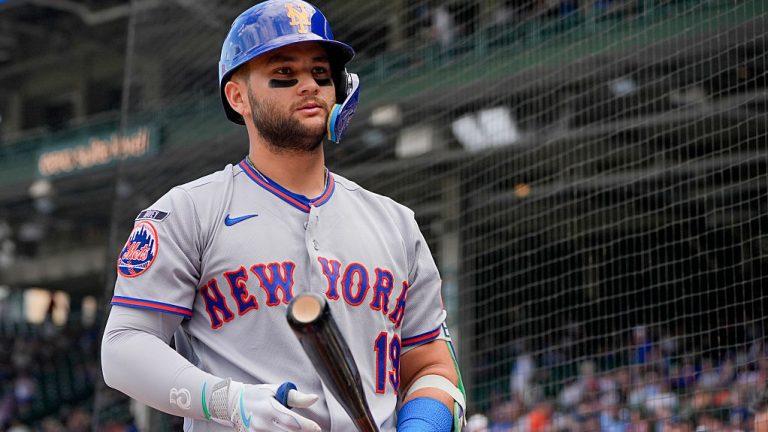
One of the most disappointing seasons in the history of the New York Mets is finally complete. It was a season filled with countless disappointments, underperformance, and dysfunction, all contributing to a last-place finish in the National League East.
Every player who played a large enough hand in this season has been graded below, accompanied by their stats for the season as well as a short reaction to their performance.
I graded every player after the first 81 games of the Mets season, prompting me to create a sequel after the final 81 games of the season were played.
Without further ado, here are your final grades for the 2026 New York Mets.
Note: Players who did not finish the season with New York did not receive grades.
Position Players
Francisco Alvarez: C-
2026 Stats: 113 G, .233/.311/.421, 16 HR, 0 SB, 43 RBI, 99 wRC+, 1.4 fWAR
This year marked Alvarez’s fourth consecutive season as the starting catcher in New York, and still he has yet to take the next step at the dish. He undoubtedly showed flashes, especially when it comes to slug, but his performance still leaves much to be desired.
Defensively, he improved in the second half of the season after a miserable first half, a strong framer who can struggle with blocking balls in the dirt. Despite having ample experience in the show, Alvarez will only be 25 next season. 2027 could be a make-or-break season for the backstop’s future with the Mets.
Luis Torrens: B
2026 Stats: 93 G, .235/.295/.396, 9 HR, 1 SB, 41 RBI, 92 wRC+, 2.1 fWAR
Torrens remained one of the strongest defensive catchers in the game this season while also taking a step forward offensively. The majority of his numbers at the plate were fueled by a post-trade deadline surge, slashing .351/.415/.838 with six homers during the month of August.
The Mets refused to move Torrens in their sell-off at this year’s deadline after signing him to a contract extension earlier in the year. It is hard to find another backup catcher who plays his role as well as Torrens.
Jared Young: B
2026 Stats: 103 G, .266/.330/.429, 9 HR, 3 SB, 39 RBI, 111 wRC+, 1.0 fWAR
In a year filled with ample disappointment for the Mets, Young turned out to be a pleasant surprise. He won the first base job early in the season following Jorge Polanco’s injury and Mark Vientos’ struggles.
The 31-year-old proved that he can be an above-average hitter at the major league level in 2026. He excelled against right-handed pitching, posting a .275/.339/.454 triple slash while blasting all nine of his homers versus opposite-side arms. First base is still an area of need this offseason for New York, but Young’s 2026 is nothing to scoff at.
Mark Vientos: F
2026 Stats: 87 G, .212/.258/.394, 13 HR, 0 SB, 41 RBI, 78 wRC+, -1.1 fWAR
Vientos followed up last season’s disappointing campaign with an even worse effort in 2026. He spent the majority of his time at designated hitter and produced virtually no offensive yield.
The 26-year-old is a non-tender candidate this offseason as New York’s position player group is already crowded before even considering multiple prospects on the cusp of the show. Vientos’ 2024 magical run feels like light-years ago now, despite only being a couple of seasons removed.
Marcus Semien: F
2026 Stats: 139 G, .215/.280/.340, 15 HR, 10 SB, 49 RBI, 74 wRC+, -0.5 fWAR
Another huge reason why the Mets finished in last place this season is Semien’s abysmal performance on both sides of the ball. His age indicated that a major bounce-back at the plate was unlikely, but he regressed even further and fell off a cliff defensively.
Semien was brought over from Texas last November so the Mets could offload Brandon Nimmo’s contract and, in turn, take on his bad deal. He fell way short of the expectation that he would provide a good glove and an average bat. Second base is another position that the Mets will have to sort out before next year, and with two years remaining on his contract, Semien will remain in the mix despite his bad 2026.
Francisco Lindor: C+
2026 Stats: 105 G, .225/.309/.423, 21 HR, 3 SB, 49 RBI, 105 wRC+, 2.2 fWAR
2026 was a lost season for Lindor, who got off to one of his now patented slow starts followed by a lengthy stint on the injured list. He still managed to slug 21 homers in a down year and put together a two-win season.
Two areas where Lindor regressed were defense and base running. However, it’s easy to chalk the regression in both spots to the calf strain that kept him out for two months.
Despite a down season, Lindor is still the face of the franchise and, if healthy, will return to form in 2027.
Bo Bichette: D
2026 Stats: 160 G, .260/.312/.390, 18 HR, 2 SB, 74 RBI, 96 wRC+, 1.9 fWAR
Bichette’s first, and potentially only, season with the Mets was a disappointment. His numbers across the board were hindered by a dreadful start, slashing .219/.275/.308 through the first two months of the season.
Even with a stronger back half, Bichette finished the year with subpar offensive numbers and failed to replace the middle-of-the-order void left behind by Pete Alonso’s departure. It seemed as if he never truly hit a groove at the plate and looked uncomfortable at times.
The 28-year-old can opt back in with the Mets for $42 million or test free agency for a second consecutive winter. His looming decision will provide a clearer picture as to what the Mets will look like in 2027.
Brett Baty: D+
2026 Stats: 143 G, .236/.309/.371, 11 HR, 5 SB, 56 RBI, 91 wRC+, 1.0 fWAR
Coming off a resurgent 2025 season, Baty positioned himself to slot into the lineup every day in a Swiss-army knife type of role. He moved off of third base after Bichette was signed, appearing at every position this season except center field and catcher.
The offensive numbers received a huge boost due to his hot stretch to end the season, slashing .333/.417/.608 in September. Despite the strong finish to the season, Baty’s numbers were still below average and disappointing. He failed to capitalize on a strong 2025 and lock himself in as a part of New York’s core moving forward.
Juan Soto: A
2026 Stats: 111 G, .275/.393/.515, 27 HR, 9 SB, 68 RBI, 147 wRC+, 3.1 fWAR
The only knock you can make on Soto’s season is the fact that he landed on the injured list twice with separate calf injuries. When healthy, the $765 million man lived up to expectations once again, ranking 7th in baseball by wRC+ among hitters with at least 450 plate appearances.
The area where Soto regressed was on the base paths, going from 38 swipes a season ago to just 9 in 2026. It’s easy to chalk that drop-off to the calf injuries, prompting him to be more cautious while nursing the injuries.
Soto projects to see more time at designated hitter next year following the emergence of Carson Benge and A.J. Ewing while still being the driving force for the Mets offense.
A.J. Ewing: B
2026 Stats: 120 G, .252/.324/.376, 11 HR, 25 SB, 43 RBI, 97 wRC+, 2.0 fWAR
Ewing rocketed through the minor leagues to earn himself a major league promotion in May, running with the opportunity from there. He flashed elite defensive potential in center field while putting together quality production at the plate.
His offensive output dipped throughout the season as Ewing shied away from his on-base-heavy approach in favor of more power. In September, he reverted back to the former approach, the one that he used in order to break in at the Major League level. It paid dividends, allowing the neophyte to finish the season strong and build momentum toward 2027.
Nevertheless, at just 22 years old, Ewing is going to be a key piece for the foreseeable future in New York.
Carson Benge: A+
2026 Stats: 156 G, .282/.346/.430, 20 HR, 22 SB, 65 RBI, 118 wRC+, 4.3 fWAR
Benge receives a perfect grade for his rookie campaign as he showcased all-around talent and the makings of a true five-tool player.
The numbers were outstanding despite getting off to a brutal start in April, ending the month with a .504 OPS. After the initial rough patch, Benge was fantastic all summer long and became the first rookie in Mets history to smack 20 longballs and steal 20 bases in a season.
It remains to be seen whether or not Benge will take home National League Rookie of the Year honors for his performance this season. Even if the writers opt to make another pick, nothing will take away what the 23-year-old accomplished this year, cementing himself as a cornerstone for years to come with the Mets.
Jorge Polanco: F
2026 Stats: 37 G, .148/.201/.230, 2 HR, 0 SB, 6 RBI, 20 wRC+, -1.4 fWAR
If you had to point to one move that sunk the Mets season this year, it would be handing Polanco a two-year, $40 million deal in December.
Not only did he only appear in 37 games, but he was also one of the worst players in baseball when he was on the field, accumulating -1.4 fWAR in such a short sample. He played the field the first two games of the season before moving to designated hitter for the next 35 due to a lingering Achilles injury.
Due to the hefty price tag, Polanco is going to be in the mix next year, likely as a primary designated hitter. It would be nearly impossible for him to top the pitiful performance put forth in 2026.
Pitchers
Nolan McLean: A
2026 Stats: 31 GS, 179 2/3 IP, 1.17 WHIP, 3.59 FIP, 9.72 K/9, 3.51 BB/9
McLean lived up to expectations and was the best rookie arm in the National League this season. He failed to miss a start, finishing sixth in strikeouts among National League hurlers with 194 punchouts.
He put together a strong season despite struggling with his high spin sweeper against both sides of the plate. McLean began to shy away from the offering as the season went on, turning to his sinker and curveball to retire hitters instead.
The 25-year-old has already established himself as a frontline starter but, if he wants to develop into an ace, he’ll need to round out his arsenal and improve glove-side effectiveness.
Sean Manaea: C-
2026 Stats: 33 G, 19 GS, 150 2/3 IP, 1.30 WHIP, 4.54 FIP, 8.60 K/9, 2.63 BB/9
Manaea initially scuffled out of the bullpen before joining the starting rotation in mid-July and finding his footing a bit.
He began to see better results when his fastball velocity jumped back up into the mid-90s later in the season. The quality of Manaea’s stuff continues to be a concern because it seems as if he always needs an extended period of time to look sharp on the mound. It took about four months for his velocity to be at its expected level very deep into the season.
Next season is the final year of his three-year contract that he inked prior to 2025. He projects to slot into the back-end of the rotation with the hope that he will serve as an effective innings eater.
Christian Scott: A-
2026 Stats: 23 GS, 110 IP, 1.27 WHIP, 3.61 FIP, 10.96 K/9, 3.85 BB/9
It’s hard to imagine Scott having a more successful season than what he accomplished in 2026 coming off of major elbow surgery in 2024.
He tossed the most innings of his professional career and showed the potential to be a rotation staple for the Mets moving forward. Like the rest of the crop of young pitchers the Mets have, Scott is still developing, especially when it comes to attacking left-handed hitters.
He is far from polished, but 2026 was a major step in the right direction for the 27-year-old rookie.
Zac Thornton: B
2026 Stats: 15 GS, 84.1 2/3 IP, 1.14 WHIP, 4.51 FIP, 6.72 K/9, 1.92 BB/9
Another rookie arm, Thornton, also found success in his half-season worth of starts in 2026.
His game is predicated on strike-throwing and pitching to contact, walking just 5.3% of hitters faced. Under the hood, his stuff does not grade out as top notch and analytics indicated there are signs for regression in year two.
Thornton will be in competition for a rotation spot next season as he looks to assert himself as a rotational staple alongside McLean and Scott.
Kodai Senga: D+
2026 Stats: 31 G, 8 GS, 61 1/3 IP, 1.65 WHIP, 5.82 FIP, 11.01 K/9, 6.02 BB/9
Senga saved himself from an “F” mark due to his resurgence as a closer after the trade deadline in August. He converted eight of his nine save opportunities in the role, fanning 22 batters in 16 2/3 innings of work.
While he found success in the bullpen, his run as a starter was a disaster, compiling an 8.66 ERA in 13 starts. Senga has one year left on a five-year deal that he signed prior to 2023. It remains to be seen if the Mets will try and give him one more chance in the rotation or convert him to a full-time reliever in 2027.
His stuff is capable of being effective in a leverage role out of the bullpen, as he could help create a nice runaway to get the ball to Devin Williams.
Tobias Myers: F
2026 Stats: 32 G, 3 GS, 53 2/3 IP, 1.34 WHIP, 4.65 FIP, 6.88 K/9, 2.68 BB/9
Year one in New York for Myers did not go as planned. He struggled from the very beginning of the season, enduring multiple options back to the minor leagues throughout the year.
The 28-year-old got hit extremely hard in his 53 2/3 innings of work, ranking in the first percentile in average exit velocity against him according to Baseball Savant. He failed to find any effectiveness with secondary offerings, further contributing to his poor performance.
The Mets exhausted all of Myers minor league options, meaning that he would likely have to make the Opening Day roster to remain with the organization beyond 2026.
Jonah Tong: B-
2026 Stats: 7 G, 4 GS, 30 2/3 IP, 1.24 WHIP, 3.30 FIP, 9.98 K/9, 4.11 BB/9
Tong struggled in Triple-A for almost the entire season, but found his footing in the major league rotation in September.
In a small sample size, the 23-year-old generated whiffs 30.2% of the time, fanning 25.4% of hitters faced. Control remains an issue, and he does still need to develop a strong third pitch, but Tong showed flashes down the stretch.
He will be a depth rotational option heading into next season, with the hope that he can develop further and become a staple at one point for New York.
Robert Stock: D+
2026 Stats: 8 G, 7 GS, 30 1/3 IP, 1.75 WHIP, 3.92 FIP, 8.60 K/9, 4.45 BB/9
Stock made seven starts in the second half for New York after the trade deadline and was subpar.
In a season where the Mets were contending, it’s unlikely he would have pitched as much as he did, or at all. However, the nature of the season allowed for Stock to throw north of 30 innings for the first time since 2018.
Devin Williams: C
2026 Stats: 44 G, 40 2/3 IP, 1.57 WHIP, 3.05 FIP, 11.46 K/9, 4.65 BB/9
On the surface, Williams’ numbers are ugly, but with a deeper look, his season looks tremendously more encouraging.
He generated both whiffs and chases at an elite rate, striking out 28.3% of hitters faced while securing 16 saves. The ERA and FIP were inflated by poor performance in non-save situations, scenarios that Williams was no longer placed in after Carlos Mendoza was fired.
Control is the main area that can be pointed to for improvement; issuing free passes in close games late is never a recipe for success. Williams will be the Mets closer in 2027, with the data supporting that he’s due for a bounce-back campaign.
Austin Warren: C
2026 Stats: 41 G, 2 GS, 50 1/3 IP, 1.37 WHIP, 4.07 FIP, 9.83 K/9, 4.29 BB/9
Warren started the season extremely well before scuffling a bit toward the beginning of the summer. Later in the season, news emerged that Warren had been attempting to pitch through injury, which was the driving force for his poor performance during the rough patch.
Warren’s strong suit is his sweeper, which fared well against both sides of the plate this season. He poses as a solid middle-relief option moving forward for the Mets
Jonathan Pintaro: D
2026 Stats: 22 G, 30 2/3 IP, 1.37 WHIP, 5.12 FIP, 8.80 K/9, 4.70 BB/9
After just one appearance in the majors last year, Pintaro made his way into 22 games in 2026 while keeping his rookie status intact.
The results were not strong, he’s another Mets’ reliever that struggled with walks while suffering with suppressing hard contact.
With one minor league option remaining, Pintaro will remain in contention as a bullpen option for New York next year.
Daniel Duarte: A
2026 Stats: 24 G, 29 2/3 IP, 0.81 WHIP, 3.20 FIP, 9.10 K/9, 2.12 BB/9
Duarte was exceptional across his 29 2/3 innings of work and should lock himself in for a bullpen spot on the 2027 Opening Day roster.
Everything under the hood backs up his performance, limiting hard contact and generating whiffs at elite clips, while limiting walks. He also picked up two saves this season, gaining valuable experience in the closer role should he ever have to step into it.
There was an overwhelming amount of bad for the Mets this year; Duarte was a nice outlier from that trend.
Nate Lavender: A
2026 Stats: 21 G, 21 2/3 IP, 0.74 WHIP, 1.85 FIP, 10.80 K/9, 1.66 BB/9
Just like Duarte, Lavender was another pleasant surprise out of New York’s bullpen, putting together a strong debut campaign.
Lavender should also have his roster spot locked in for Opening Day 2027, especially given the fact that he is a left-handed hurler, an area of need for New York’s bullpen. The 26-year-old’s funky delivery and elite extension allow his low-90s fastball to gain deception and miss bats, making him a tough at-bat for hitters.
Jefry Yan: C+
2026 Stats: 18 G, 1 GS, 20 1/3 IP, 1.72 WHIP, 4.82 FIP, 11.51 K/9, 6.64 BB/9
Watching Yan pitch may have been the most entertaining part of New York’s dreadful season as he brought over-the-top celebrations and energy to the mound every time out.
The main takeaway from Yan’s season is that while he throws extremely hard from the left side, he has no sense of control on any of his pitches. Giving way for him to walk a whopping 15.6% of batters faced.
David Stearns supported Yan in his postseason press conference, insinuating the belief that with development Yan could develop into a bullpen piece for the Mets. Only time will tell on that front.
Dedneil Núñez: A-
2026 Stats: 18 G, 19 IP, 0.89 WHIP, 3.73 FIP, 9.47 K/9, 0.00 BB/9
Last but certainly not least, Núñez returned from Tommy John surgery late in the 2026 season and was phenomenal across his 19 innings of work.
He did not walk a single batter while generating swing-and-miss at an elite rate. One of the biggest takeaways for the Mets this year is how strong of a bullpen unit they may have moving forward. After trading away four receivers at the deadline, they maintained a strong unit down the stretch thanks to the likes of Núñez, Lavender, Duarte, and others.
Núñez, 30, is older for a pitcher with such little major league experience, but if he continues to show the signs he did this season, he may stick around with the Mets for the foreseeable future.

Written by
Joe Browne is an aspiring sports journalist and is currently a sophomore at St. John's University. Joe is a lifelong Mets fan who is also passionate…