
Ranking the Top 10 Prospects Dealt at the Trade Deadline
These were the 10 most promising minor leaguers who joined new organizations earlier this month.
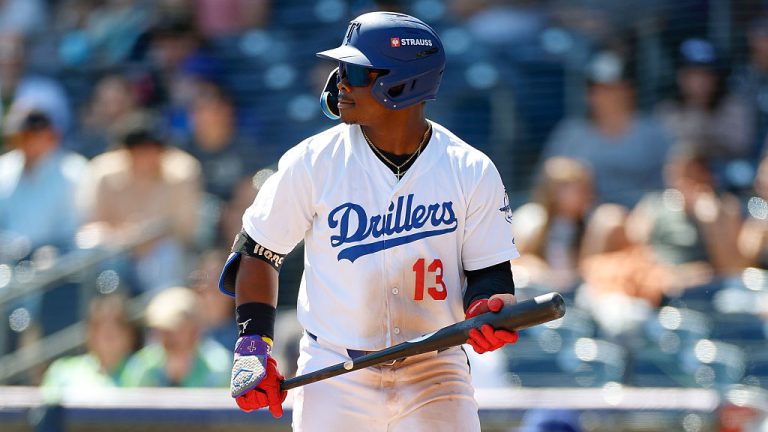
While they don’t often represent the flashy side of the deal, prospect returns are as important as their major league counterparts, signaling a new wave of young talent into a farm system.
The 2026 trade deadline only saw a handful of top-tier major league names switching teams, but mid-season swaps require heftier packages than the talent coming in would otherwise demand. It’s a nice environment for sellers looking to rebuild from the ground up.
There weren’t any Leo De Vries-caliber prospects dealt this time around, but this summer saw its fair share of potential stars of the future migrate to new organizations. Let’s dive into the top 10 prospects dealt at the deadline.
Stats recorded prior to play on August 13
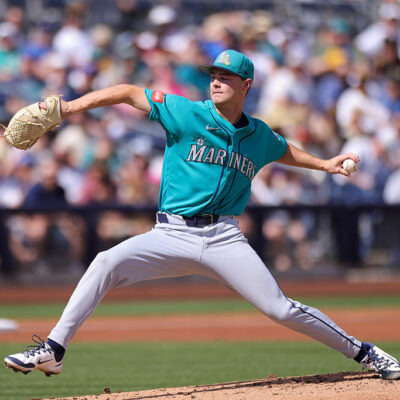
10. RHP Michael Forret, Baltimore Orioles (Tyler Wells Trade)
Just nine months after Forret was dealt as part of the package that sent Shane Baz to Baltimore, he was flipped back to Tampa Bay for Tyler Wells.
Forret was phenomenal in a breakout 2025 campaign across High-A and Double-A, rocking a 1.58 ERA and 32% strikeout rate over 74 innings. He excelled once again, repeating Double-A in Montgomery before earning a promotion to Triple-A.
The 22-year-old right-hander boasts a 2.94 FIP across 10 Triple-A starts and can contribute soon for the big league club.
Forret works a five-pitch mix, leading with a four-seam in the 92-95 mph range that he peppers the top rail with from a lower three-quarters slot, picking up an exorbitant amount of chase and whiff with the offering. He’ll go to a sinker and cutter as well, leaning into the three-fastball approach.
His 80-83 mph sweeper and 84-87 mph changeup both profile as above-average offerings, playing off his plus fastball. Forret has the look of a plug-and-play fourth starter, a stellar return for a reliever.
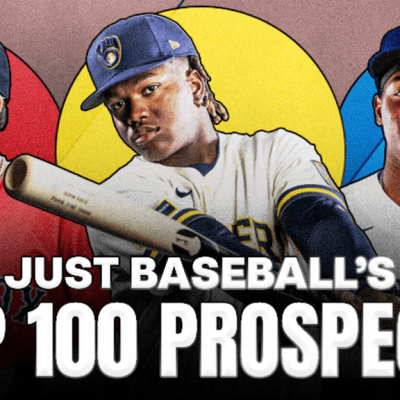
9. SS Jefferson Rojas, New York Mets (Clay Holmes/Tyrone Taylor Trade)
Well-represented on top 100 lists for publications for a few years running, Rojas holds a balanced profile and has the look of a high-probability major leaguer.
Rojas has been two to three years younger than his competition throughout his minor league career thanks to an advanced feel to hit and being pushed aggressively. He struggled upon his first looks at High-A and Double-A, but excelled when repeating the levels.
It’s a rhythmic operation, creating stretch through his load to produce easy bat speed, boasting at least average raw power projection despite his smaller 5-foot-11 frame. Rojas pairs it with above-average contact rates and an ability to pester opposing pitchers.
Rojas will chase at a high clip, disadvantageous to his middling spin recognition, but he’s gotten better at incorporating more consistent impact into his game.
Defensively, Rojas has nice actions on the dirt with average range. There’s potential to stick at the six as a major leaguer at an average level, though that’s not likely with Francisco Lindor on the club through 2031. It’s more likely that he’ll move over to third or second base, where he would project as above average.
8. OF Alexander Frias, St. Louis Cardinals (Dustin May/JoJo Romero Trade)
A meteoric riser after tearing up rookie ball with a .441/.518/.678 slash line in 32 games, Frias holds double-plus power potential at just 18 years old.
It’s a physical 6-foot-2 frame with loud bat speed from the left side. Frias coils and stacks into his back leg through his load, with some noise in his hands, unloading his quick hands with a heavily rotational stroke. He’s already peaked at 116 mph, boasting some of the most raw power in the lower minors.
There’s bound to be hit tool concerns throughout his minor league career with his long swing and loud pre-swing, though he’s handled Low-A pitching at about an average clip. He hasn’t looked overmatched, which is a great sign as an 18-year-old in full-season ball.
Frias’ ground ball rates have climbed north of 50% in his promotion, but his steeper attack angle indicates that he should be able to elevate more consistently as he grows accustomed to the level.
Frias represents the prototypical right fielder: a big, powerful frame with plus arm strength and enough range to track down balls in a corner. He’s gotten the brunt of his run in center, though it’s unlikely he’ll stick there.
7. OF Josiah Ragsdale, St. Louis Cardinals (Dustin May/JoJo Romero Trade)
Ragsdale’s profile took an unexpected leap following his junior year at Boston College, as he transformed into a premier three-true-outcomes bat with plus wheels to go along with it.
Getting the hips open early, Ragsdale generates immense torque through his load, leaving his hands back and allowing them to shoot through the zone with elite velocity. He is incredibly short to the ball, not in a rush to sell out for power, allowing him to do damage to all fields and in any quadrant.
Ragsdale’s raw power grades out as average, maxing out at 111 mph. But his incredibly consistent hard contact and feel to lift the ball have been unmatched in the minor leagues, allowing him to pump out 21 long balls across High-A and Double-A.
The contact rates have dropped as Ragsdale began to incorporate more power into his game, running about average figures in High-A and dipping into fringy territory in Double-A. A patient approach should allow him to bypass most of the hit tool concerns as he climbs. It’s a higher-floor offensive profile, though a 45-grade hit tool and 50-grade raw power cap his ceiling.
A plus burner, Ragsdale is active on the basepaths, swiping 31 bags this season. The speed gives him range in the field, though his routes and reads aren’t there quite yet, profiling as a corner outfielder as a result.

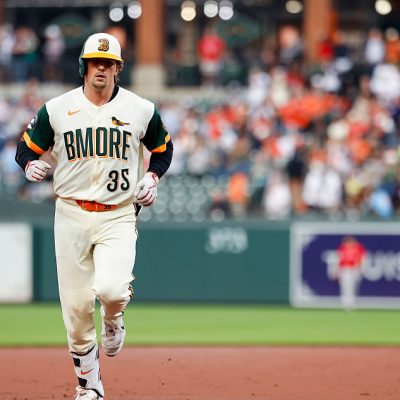
6. OF Enddy Azocar, Baltimore Orioles (Adley Rutschman Trade)
After running a .587 OPS in his full-season debut last season, Azocar has exploded, slashing .290/.343/.545 with 19 home runs through 92 games across Low-A and High-A as a 19-year-old.
The swing really works. Azocar begins in a relaxed stance, stacking his back leg with a high leg kick, bringing his hands back and up through his load. He’s a tight rotator, able to turn and burn, punishing balls to the pull side. He has already peaked at 114 mph, giving him plus power projection.
Azocar runs sustainable contact rates despite the power-hitting profile. Sustainable enough to see a jump in production as he climbed to High-A. He can mash fastballs with his compact swing, but will struggle on secondaries when he expands.
His swing decisions are solid despite an aggressive approach. Azocar pulls the trigger nearly 50% of the time, but keeps his chase to a reasonable clip. Just don’t expect many walks.
Azocar boasts above-average speed and arm strength, having the look of a long-term center fielder. Just as long as he continues to develop without putting on too much weight on his frame.
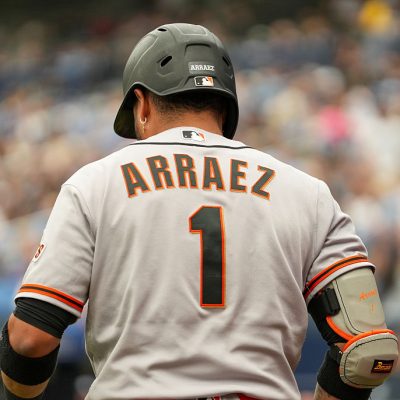
5. RHP Ramon Marquez, San Francisco Giants (Luis Arraez/Caleb Killian Trade)
Marquez has dominated the lower minors with his double-plus changeup, running a 1.91 FIP and 42% strikeout rate across Low-A and High-A.
It’s a wiry 6-foot-2 frame, working quickly with a high leg lift, generating above-average extension. Marquez is extremely rotational, great for generating immense hip-shoulder separation. Typically, those types of arms tend to have trouble repeating their deliveries, especially for a 20-year-old, but Marquez does a phenomenal job finishing through his lead-leg block. It is a higher-effort throw, which may need to be toned down.
Marquez sits in the 94-97 mph range with a run-ride fastball, playing up with a below-average release height and lower slot. While there’s not a true four-seam foundation, it’s an offering that can generate both whiff and ground contact.
The changeup holds a screwball profile, averaging spin rates north of 2,200 rpm in the low-80s. Marquez pronates the offering with violent arm speed, mirroring his fastball out of his hand. An over-10 mph velocity difference with dive off of his fastball has produced absurd whiff rates.
Not a prolific spinner, Marquez’s breaking ball is a gyro cutter that he struggles to get glove-side break on, though it’s played well off his fastball-cambio combo. He zones his changeup at an above-average clip, which sets up his four-seam and cutter for chases, though he’s not a command artist by any means.
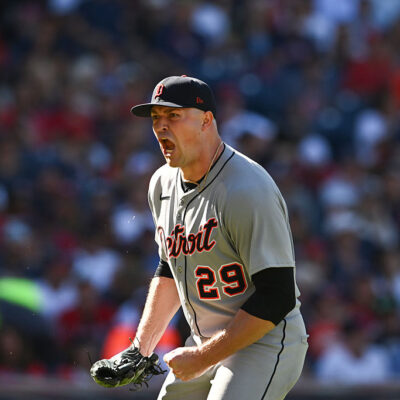
4. RHP River Ryan, Detroit Tigers (Tarik Skubal Trade)
A late starter, once drafted as a two-way prospect, Ryan climbed to Triple-A in his second pro season and debuted the next year. Unfortunately, he blew his UCL in his fourth MLB start, halting what was then a top-five pitching prospect in the sport’s helium.
Now nearly 28 years old, Ryan still finds himself scattered within the top 50 of prospect lists thanks to his premium velocity and advanced six-pitch mix.
Ryan has averaged 97.6 mph with a cut-ride four-seam this season, with a sinker a couple ticks below that. There’s also a mid-90s cutter to complete the fastball trifecta. All three profile as above-average to plus offerings, making the righty as moldable an arm as anyone.
A supinator, Ryan sits in the low-90s with a depthy slider, though it’s been more of a weak-contact inducer than a bat-misser. The four-seam and cutter have been his top putaway offerings. His 82-85 mph two-plane curveball is third on the list of his swing-and-miss offerings. He has feel for a low-90s changeup, but he doesn’t throw it too often.
Ryan could and should contribute for the Tigers in the near future, and would have begun the year with the big-league club if he wasn’t in the Dodgers organization. He has the stuff and command to be a No. 3 starter, which is immensely valuable regardless of his age.
3. RHP Anthony Eyanson, Baltimore Orioles (Adley Rutschman Trade)
A third-round pick out of LSU a summer ago, Eyanson saw a jump in velocity to kick off the season, backing up his improved stuff with stellar play across High-A and Double-A.
The right-hander hasn’t quite held his upper-90s velocity that he flashed in the spring, but he’s settled into the mid-90s with his cut-ride fastball, still up a few ticks more than his college average.
Eyanson gets deep into his scap and back leg to produce easy velocity. He’s a shorter extender with ample trunk tilt to get to a high slot, creating a steeper angle to the plate.
He works an upper-80s gyro slider and low-80s 12-6 curveball off it, both of which tunnel extremely well off his four-seam. All three of his pitches sit close to the zero line of the y-axis, similar to that of Tyler Glasnow or Dylan Cease.
Eyanson will likely need to add an arm-side offering in a sinker or changeup to have sustained success in the rotation. His command is fringy, but his ability to draw chase should keep his walks to a sustainable clip.
2. SS Arjun Nimmala, Los Angeles Angels (José Soriano Trade)
After a couple of years of inconsistent play at the dish, Nimmala has hit his stride, making his way to Double-A with a refined approach and far more consistent contact quality.
The shortstop has long had prolific raw power for his age, comfortably settling into plus in his age-20 season. Getting into a wide base through his load, he unloads an explosive barrel with a whippy finish.
Nimmala had worked on improving his contact rates last season, finding some success, though to the detriment of his impact metrics. He’s paired the two facets this year, working a career-high OPS across four levels.
The well-rounded offensive profile is completed by a patient approach; he’s running an 11% walk rate and a 22% chase rate. It’s not passive, as he’s still remaining aggressive in the zone and getting his pitch often.
Nimmala has worked hard on the defensive side, now having the look of a long-term shortstop with nice actions, range, and arm strength.
1. OF Zyhir Hope, Detroit Tigers (Tarik Skubal Trade)
The Dodgers managed to develop a 5-foot-10 former 11th-round pick into one of the premier power-hitting prospects in baseball.
Hope employs a relaxed, rhythmic stance and a short leg kick, firing the hips with ferocity to create extreme tension through his load. His hands are lightning-quick with a compact and lofty path. Hope can seemingly produce 110+ mph exit velocities with a flick of the wrists.
Mixing elite raw power with an advanced feel to lift the ball in the air, Hope has legitimate double-plus power projection. It would shock nobody if he hit 35+ home runs annually as a big leaguer.
Hope’s contact rates have risen upon his promotion to Double-A, once again flashing the combination of hit and power that he displayed in his first Low-A stint. While it’s unlikely that he’ll end up any higher than a fringe-average hitter, the immense power potential more than makes up for it. Another plus, Hope has even splits from the left side.
A plus runner, Hope is on his way to his second straight 20+ stolen-base season. It’s an extremely explosive and compact frame that should be able to retain speed as he continues to mature. Hope matches his wheels with plus arm strength, though his feel for the outfield is less than ideal. Still, there’s a path to an average or better defender in right field.
Become a Member of Just Baseball
Subscribe and upgrade to go ad-free!
* Save 25% by subscribing annually.

Written by
Landon is a recent high school graduate, currently 17 years old going to study Media at UC Riverside next fall. He excels with data analysis inside…