
Top Prospects Who Could Fuel a Playoff Push
Contenders will be fighting for playoff spots down the stretch. Which teams can get a boost from within their farm system?
With the trade deadline coming up, fans of contenders across the league are clamoring for their favorite teams to acquire new players to bolster their lineups or pitching staffs.
Bidding high on Joe Ryan or Willson Contreras could be enticing, but there’s also the option of looking inward to their top prospects to contribute to a potential playoff run down the stretch. Plus, it would cost nothing.
While it’s rare for a rookie to come up late and immediately produce enough to crack a starting lineup in October, it’s certainly possible, notably Trey Yesavage and Evan Carter in the past three seasons. Yesavage threw in three World Series games, including a seven-inning, 12-strikeout performance, while Carter batted third and hit .300 for the World Series champion Rangers.
So, which teams have the luxury of strengthening their roster from within in the form of a potential future face of the franchise?
For the sake of the exercise, this article will only include non-debuted prospects.
Milwaukee Brewers
Luke Adams, 1B/3B
A 6-foot-4 corner infielder, Adams has performed at every stop of his career, posting a wRC+ north of 130 at every level he’s played. There’s considerable force and bat speed behind his barrel, posting a 106 mph 90th-percentile exit velocity at Triple-A, slugging .571 with 14 home runs.
Despite the look of a traditional home-run-or-bust slugger in the box, Adams has historically run above-average contact rates, particularly against fastballs, but he also handles spin at a nice clip.
There is one major gripe with Adams’ profile, that being his swing decisions. The 13% walk rate and 21% chase rate look appealing on the outside, but he also runs a criminally low zone-swing rate of 50%. Teams can exploit his ultra-passive approach, filling up the zone early and making him pay as he gets into pitchers’ counts. The high amount of disadvantageous counts hurts his overall batted-ball quality, as he doesn’t get his pitch as often as he should.
A right shoulder injury pushed Adams to first base on a regular basis, but he’s played some third base this season and should play passable defense there. His bat could fill the black hole that has been Joey Ortiz’s bat.
Jett Williams, INF/OF (Just Baseball No. 37)
Acquired in the Freddy Peralta deal, Williams looks to be a valuable utility man with intriguing offensive potential if he can put it all together. It’s been an inconsistent first year in the Brewers organization, slashing .234/.341/.385 with nine home runs and 21 stolen bases.
Williams boasts above-average contact metrics with solid swing decisions. He’s gotten more aggressive this season, but he’s still managing to draw walks at a 13% clip. There’s also some thump in Williams’ smaller 5-foot-7 frame, driving the ball in the air to the pull side with consistency, though he doesn’t project to hit any more than 20 home runs annually.
Like Adams, Williams would fill Ortiz’s spot in the lineup and play a better third base than Adams. At the very least, he could be a sparkplug off the bench, providing versatility and plus wheels.
St. Louis Cardinals
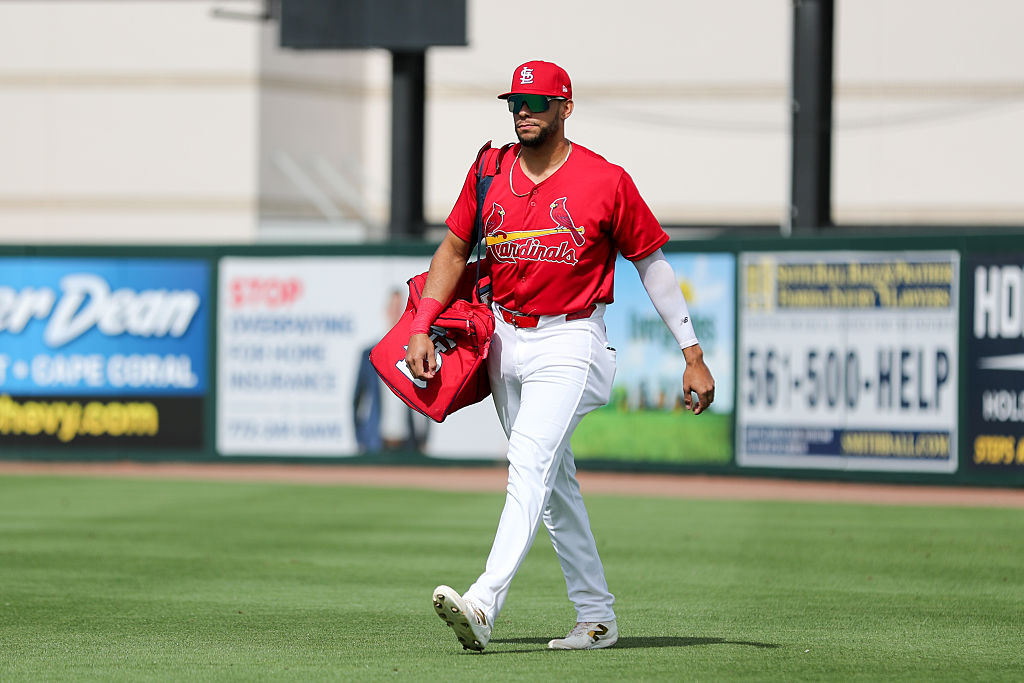
Joshua Baez, OF
The most prolific power-hitter in the minor leagues, Baez has hit a minor league-leading 29 home runs, slugging .578. Baez would stabilize what has been a revolving door of mediocre play in center field.
Baez is a power bat built in a lab: 6-foot-3, 220 pounds, violent bat speed, a 108 mph 90th-percentile exit velocity, and a swing geared to lift. A barrel magnet, Baez runs elite contact quality metrics while consistently pulling balls in the air.
The issue is that Baez’s swing is relatively one-geared, not adjusting well to pitches not in his red zone. Compounding a whiff issue is a free-swinging approach, creating a dreaded combination. Still, he’ll mash anything he can get his barrel on.
A good runner, Baez should be able to play a solid center field, potentially above-par, should he get a runway there.
Quinn Mathews, LHP
Mathews has taken an odd career path. A senior signee out of Stanford, a pitchability lefty known for tossing 156 pitches in a Super Regional game. Then the stuff exploded under the Cardinals organization, rising into top-100 status. His command has faltered ever since his leap to Triple-A, but the strikeout stuff remains.
Sitting 94 mph with a cut-ride four-seam, Mathews comes from a 5-foot-5 release height, creating a flatter approach at the top rail. The shape and velocity are modest, but it’s been good for a 27% miss rate. He’ll go to a sinker as well.
His gyro slider and changeup elicit elite whiff numbers, breaking off a two-plane curveball on occasion. The stuff has played, running a 29.7% strikeout rate and .174 opponent batting average, but he’s rarely in the zone and doesn’t generate a ton of chase. The result has been a 14.7% walk rate.
Mathews’ four-pitch mix is enough to give him mid-rotation upside, and the strikes are steadily improving as the year has gone on, potentially enough to crack the Cardinals’ rotation as October approaches. At the very least, he’ll be able to offer long relief out of the bullpen.
Philadelphia Phillies
Aidan Miller, SS/3B (Just Baseball No. 13)
There was no hotter prospect than Miller in the second half of 2025, but a back injury halted his helium and will keep him sidelined for a couple more weeks. The Phillies’ right-handed hitting troubles have been well-documented, and Miller could help alleviate some of those concerns.
Miller made major strides in his hit tool thanks to a swing adjustment, combining his already plus raw power and swing decisions with above-average contact rates. Miller reached Triple-A for eight games, but he produced immediately, as he figures to do once he returns from injury.
An above-average defender at shortstop, Miller could slot in at third base over Alec Bohm, where his actions would play exceptionally well.
Washtington Nationals
Seaver King, INF (Just Baseball No. 97)
It was a disappointing first full pro ball stint for the former 10th overall pick, but King has found his groove, making his way to Triple-A with a potential MLB debut in sight.
King is a plus athlete with exceptional bat speed and an ability to cover the zone, running above-average exit velocities and contact rates, with his hit and power tools projecting to be around average to slightly above average.
In Double-A, King took on a more patient approach while still getting his swing off often, which was a huge deal for his prospect stock. But the free-swinging approach has made its way back in Triple-A, chasing nearly 40% of the time over 145 plate appearances.
King could run into some of the same issues Brady House did, in that if the bat’s not hot, he’ll provide little-to-no value offensively, but he does have the bat-to-ball to serve as a buffer, as well as the bonus of his plus wheels.
While he isn’t the most sound defender at shortstop, his athleticism would certainly play at second base, where he’s gotten some reps in Triple-A this season. King could take over Nasim Nunez’s spot in the lineup if he ends up earning a promotion.
Jackson Kent, LHP
Maybe the least flashy and recognizable name on this list, Kent has been a steady force in Rochester’s rotation and is gunning to take Miles Mikolas’ spot in the rotation.
A big-framed lefty, Kent sits in the 92-95 range with a cut-ride fastball, generating nearly seven feet of extension on average and getting down to a below-average release height. Opposing batters have trouble tracking the pitch, as Kent hides the ball well through his delivery, running a 31% chase rate, 28% whiff rate, and just a 4% barrel rate on the offering.
He lands his gyro slider often, playing his changeup extremely well off of it. Kent has exceptional command of his changeup, placing it on the low and away corner to right-handers, generating chases and whiffs at 38% and 43%, respectively. His curveball is a solid taste-breaker to complement his trio of average or better offerings.
Seattle Mariners
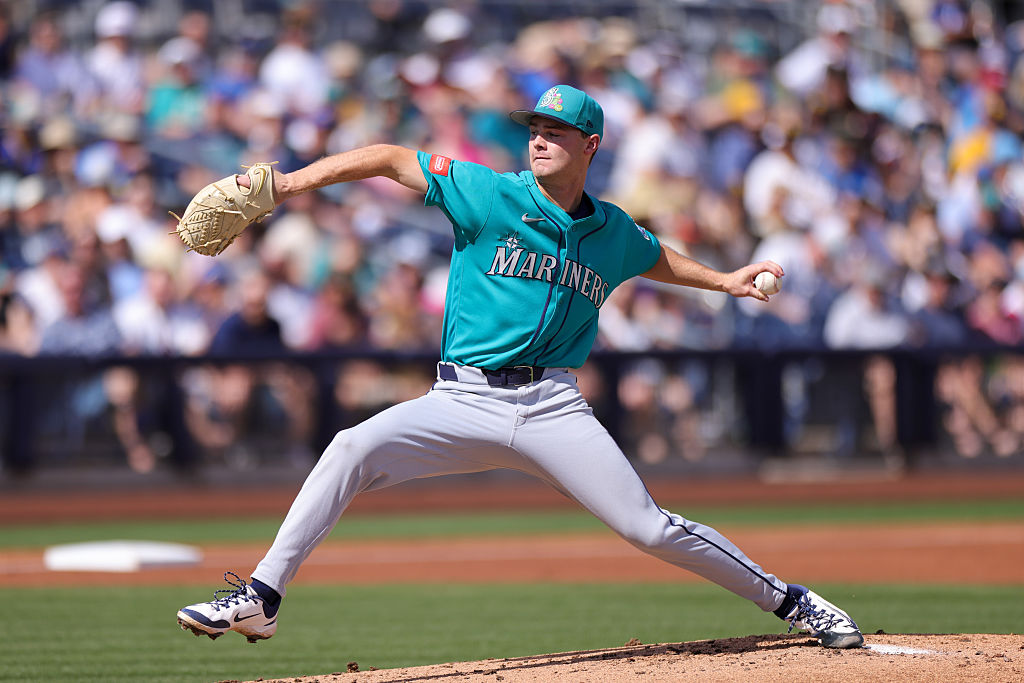
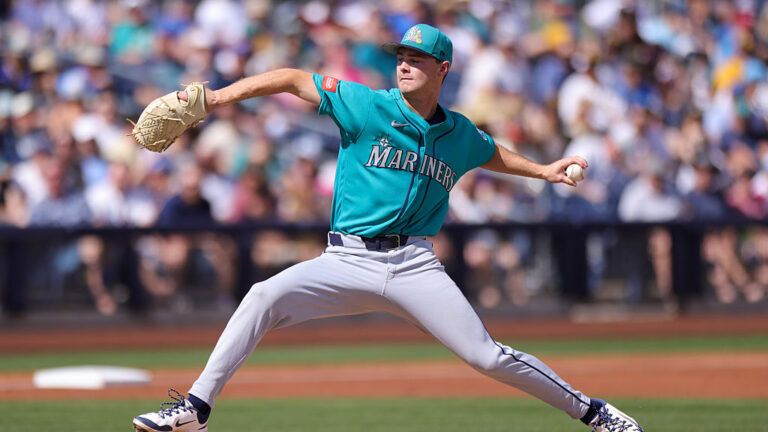
Kade Anderson, LHP (Just Baseball No. 10)
The third overall pick just last summer, Anderson has torn through Double-A to the tune of a 1.36 ERA and 42% strikeout rate over 72.2 innings. A promotion has been long overdue, and Anderson has the stuff and command to be in a big-league rotation right now.
Truthfully, Anderson doesn’t have the electric stuff you’d expect out of a top 10 prospect; he more often overpowers the opposition with his execution. Anderson comes from a stock release profile with modest carry on his fastball in the 92-95 range. He hides the ball well through his delivery and places it at the top rail with consistency, which contributes to its effectiveness.
The secondaries are a notch above the fastball, particularly his mid-80s slider with sharp lateral bite, which he can bury into righties and get lefties to chase. Anderson kills spin effectively with his changeup and flashes nice depth with his 80 mph curveball.
While Anderson is unlikely to crack the Mariners’ rotation this season, there’s a strong chance he can thrive as a long man out of the bullpen in October.
Chicago White Sox
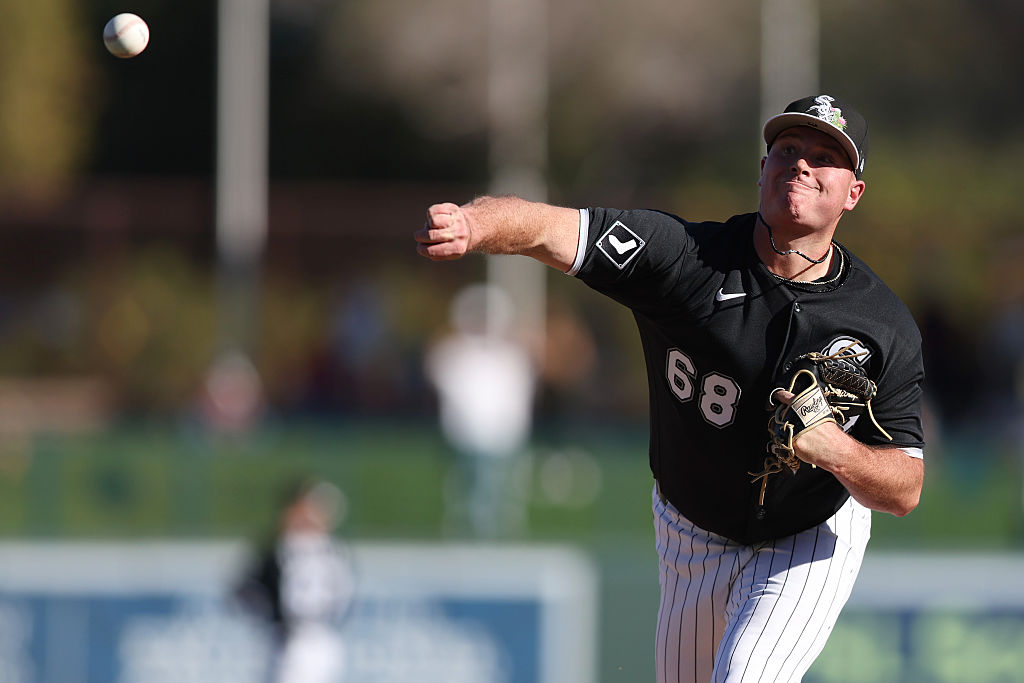
Tanner McDougal, RHP
McDougal wields one of the more exciting mixes in the minor leagues. A forearm injury early in the season has pushed him to bullpen duties for the remainder of the season, where the stuff will surely play in the big leagues.
Sitting 98 as a starter, McDougal should sit a tick higher than that in relief, capable of touching triple digits regularly. It’s a solid shape with run and ride from a higher three-quarters slot that he goes to 60% of the time.
Off that fastball is a Mason Miller-esque slider with depth and sweep in the mid-80s, as well as an 80 mph hammer curveball that averages nearly 17 inches of depth. He’ll also turn over a hard low-90s changeup once in a while, but he won’t need it much in shorter spurts.
Grant Taylor and McDougal would create one of the more electric late-inning crops in the league.
Hagen Smith, LHP
While Smith hasn’t made any relief appearances this season, his 16% walk rate would be a concern in the rotation, though his 34% strikeout rate would play in the bullpen.
The former fifth overall pick hasn’t quite cracked the code for becoming an effective starting pitcher yet, but the stellar stuff hasn’t evaded him. He’ll sit 92-95 with a high-spin four-seam from a low slot, creating a flat approach to the top rail, running a 31% whiff rate with the offering.
His secondary stuff doesn’t light up stuff models, but they stand out results-wise, playing well off his fastball, particularly the cutter he added this season.
Cleveland Guardians
Angel Genao, INF (Just Baseball No. 43)
The next in line of switch-hitting, undersized Cleveland middle infielders, Genao possesses one of the better hit tools in the minor leagues. Genao only got better upon his promotion to Triple-A and looks MLB-ready in Columbus.
Running an in-zone whiff rate south of 10%, Genao also holds around 50-grade raw power, able to pepper the gaps for a flurry of extra-base hits. There’s more thump from the right side, slugging .600 with a majority of his home runs coming against lefties, though he’s on the ground more often than not, capping his game power projection.
Genao is a solid defender at shortstop, though a Bryan Rocchio breakout should keep him off of that spot. Jose Ramirez is set to come back from injury by August, but he and Genao could split third base and designated hitter reps to fit both bats into the lineup.
Minnesota Twins
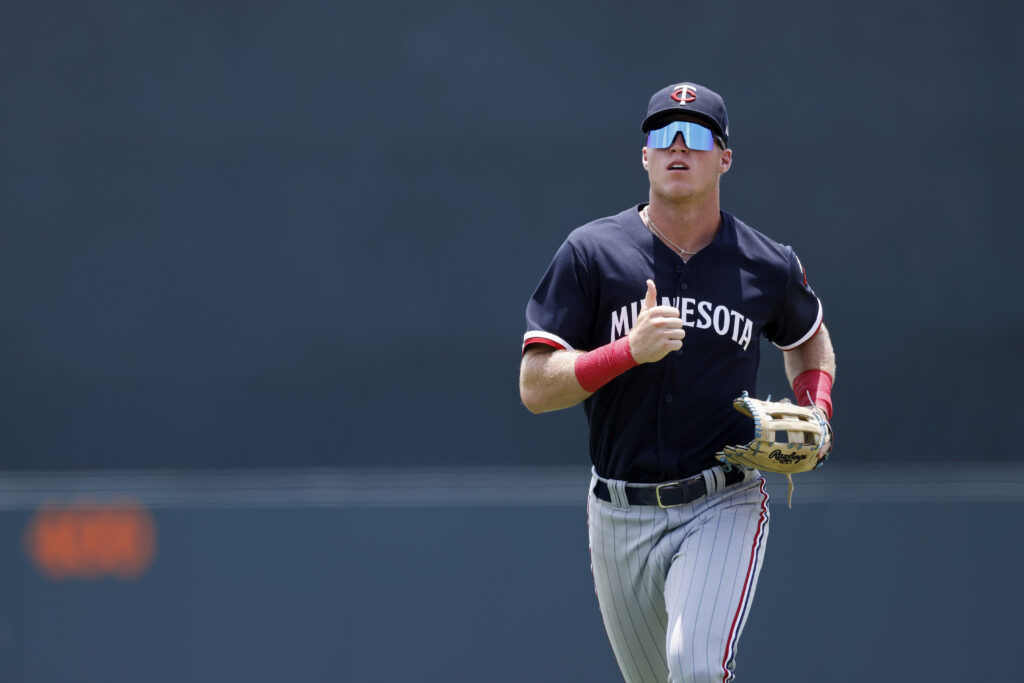
Kaelen Culpepper, SS (Just Baseball No. 61)
One of the more well-rounded prospects in the minor leagues, Culpepper looks to be the next successful big-leaguer from the 2024 draft class.
With a smaller 5-foot-10 frame, Culpepper operates with about average raw power, but he excels at driving balls in the air. There’s comfortably 25-plus home run juice in his bat. Culpepper crushes fastballs, though he can struggle barreling up spin, especially since he’ll expand the zone often.
Minnesota’s shortstop play has been poor since since the Twins shipped off Carlos Correa last summer, and Culpepper could help fix that issue. He provides above-average range, arm strength, and actions.
Walker Jenkins, OF (Just Baseball No. 8)
A former fifth overall pick, Jenkins has long been considered one of the better prospects in the game. Jenkins made it up to Triple-A last season and has looked comfortable in his second stint, running some of the best contact and batted-ball quality metrics at the level.
He has a physical 6-foot-3 frame with plus raw power and elite in-zone contact ability. He pairs the bat with solid swing decisions. There’s too much ground-ball contact to project much power output at the moment, but there’s still above-average to plus projection in his frame if he’s able to maximize his angles.
Jenkins has been often-injured and has gotten more physical as he’s aged, though he’s still a good athlete who should play an above-average corner. Jenkins could split time between right field and designated hitter for the big-league club, though whether they’d call him up would be dependent on how competitive they are in the playoff race. If their chances are fleeting, they could choose to preserve his service time.
Emmanuel Rodriguez, OF (Just Baseball No. 39)
Like Jenkins, Rodriguez has been one of the league’s best prospects for some time now, but he has dealt with a number of injuries, including thumb surgery that will sideline him until mid-August.
Despite a smaller frame, Rodriguez boasts some of the most electric bat speed and raw power in baseball, with 70-grade power projection and the ability to maximize his pull-side power. Rodriguez has peaked north of 118 mph with a 111 mph 90th-percentile exit velocity this season.
Rodriguez does whiff an exorbitant amount of the time, but he offsets the swing-and-miss with some of the better swing decisions in the minor leagues, which has produced a walk rate over 20% over his minor league career. He’s gotten more aggressive in-zone while not sacrificing much chase.
He’s also a good runner and defender, splitting time between right and center field. With Byron Buxton manning center field, he’ll likely play a corner with some designated hitter reps. This call-up will also depend on how competitive the Twins are in the race.
Detroit Tigers
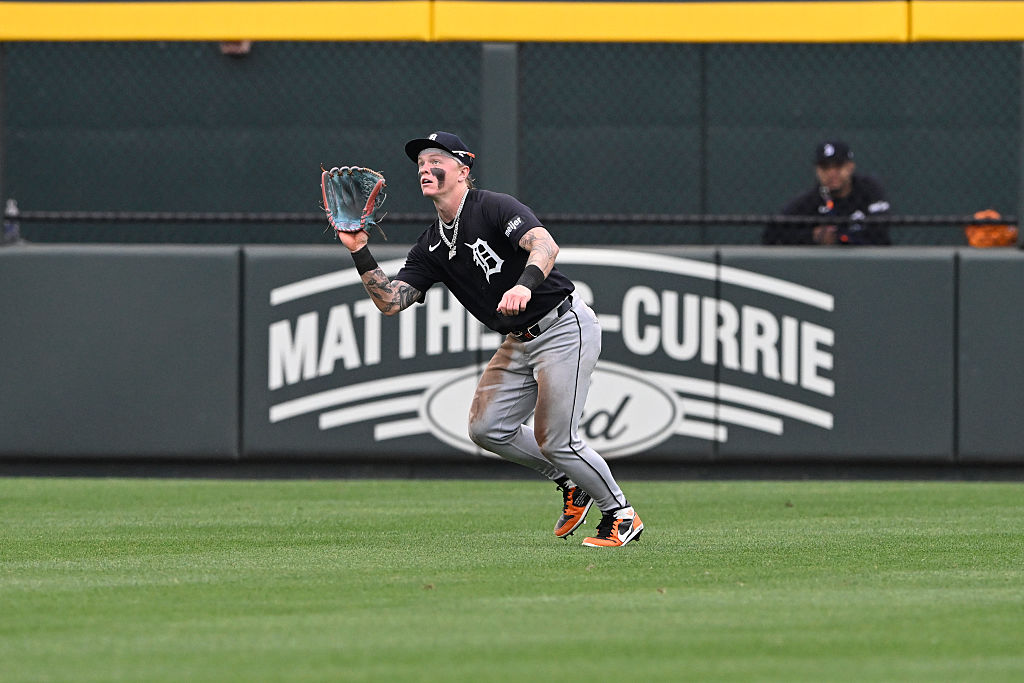
Max Clark, OF (Just Baseball No. 7)
Maybe one of the more unlikely names on the list, Clark could be an option as the Tigers are surging as of late and have had a hole in center field all season.
Clark has spent the whole year at Triple-A and has been heating up, slashing .288/.380/.475 with an even strikeout-to-walk rate. Detroit should look to capitalize on Tarik Skubal’s time with the organization and was aggressive with Kevin McGonigle’s call-up in the spring.
Clark is the ideal table-setter: plus contact rates and a patient approach with double-plus wheels. As a bonus, Clark also boasts above-average raw power, though he hasn’t quite tapped into it at the highest level of the minor leagues.
A true center field profile, Detroit should have no qualms running Clark out to command the outfield every day. He’d certainly be an upgrade over James Outman and Wenceel Perez.
Max Anderson, 2B
Receiving far less notoriety than his teammate Clark, Anderson has quietly been one of the steadiest performers in the minor leagues over the past two seasons. He’s slashing .301/.356/.496 at Triple-A this season.
Anderson has a compact 5-foot-11 frame without a standout tool offensively, but he hits to the right angles and gets the game moving, swinging a staggering 80% of the time in-zone. Anderson has about average raw power and bat-to-ball, but he plays above what his data would imply.
Anderson is a solid defensive infielder. His spot with the big-league club would likely come at second base, where he has gotten a majority of his reps in Toledo.
Tampa Bay Rays
Brody Hopkins, RHP (Just Baseball No. 49)
Hopkins has arguably the best stuff in the minor leagues. The issue is his paltry 55% strike rate and walk rate north of 20%. It’s a mix that will certainly play out of the bullpen, though.
A lanky 6-foot-4 righty, Hopkins extends well and delivers from a low slot, producing a well-below-average release height. It creates a flat-approach fastball that sits 97 mph with 16 inches of IVB.
Off the fastball is a cutter in the 90-94 range, and a depthy 12-6 curveball in the mid-80s, at times veering towards more two-plane shape. There’s also a low-90s changeup and upper-80s sweeper, though he’ll primarily operate with three pitches in shorter spurts.
The vast pitch mix alone gives him potential to start, but the command is ultra-inconsistent. At times, he’ll deliver shutdown performances; at others, he can’t find his stuff.
New York Yankees
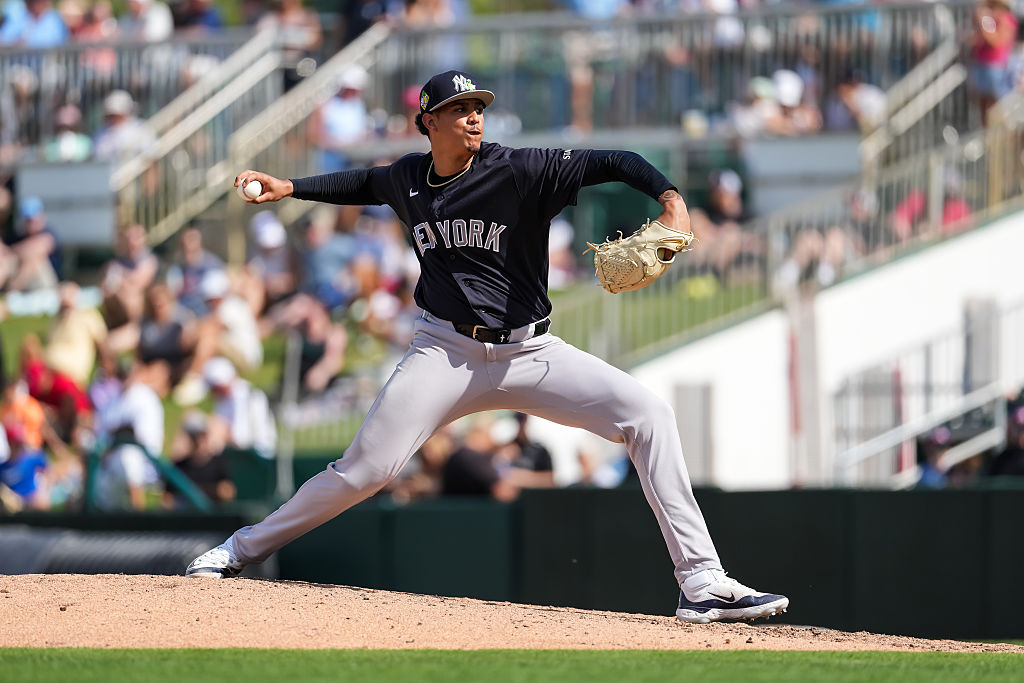
George Lombard Jr., SS (Just Baseball No. 20)
The Yankees’ shortstop play has been mediocre all season, cycling through starts from Anthony Volpe and Jose Caballero. Since June 1, Lombard has posted a 198 wRC+ while playing stellar defense.
A lean, twitchy athlete, Lombard offers average raw juice and feel to lift to the pull side with a projection for 25 or more home runs. Lombard will whiff some, but he plays the angles well with an advanced feel for the strike zone.
Lombard projects as an above-average to plus defender with his range and hands, so there won’t be much or any falloff in defense from him and the current rotation of shortstops. He could also play third base should the Yankees opt to bench Ryan McMahon instead.
Carlos Lagrange, RHP (Just Baseball No. 53)
After making a handful of starts early in the season, Lagrange made the transition to the bullpen, though he’s still operating in multi-inning spurts with inconsistency.
A 6-foot-7, 250-pound mountain of a pitcher, Lagrange sits 99 mph through outings, capable of reaching 103. A short strider who delivers from a steeper angle, Lagrange manages to create a plus four-seam shape unlike most burly flame-throwers. There’s a sinker with 16 inches of horizontal break as well.
While Lagrange isn’t the most prolific spinner of the ball, the velocity alone makes for a plus pitch on his shorter slider and sweeper, sitting in the low-90s and mid-80s, respectively. He’s capable of turning over a quality changeup as well.
He’ll show flashes of having at least 45-grade command, which gives hope in his future starting endeavors, but his effectively wild approach will certainly play well in a bullpen, particularly when he’s full-throttle in an inning.
Become a Member of Just Baseball
Subscribe and upgrade to go ad-free!
* Save 25% by subscribing annually.

Written by
Landon is a recent high school graduate, currently 18 years old, studying Media and Cultural Studies at UC Riverside. He excels with data analysis inside baseball…