
Unconventional Trade Targets for the Atlanta Braves
With plenty of questions surrounding the upcoming trade deadline, let's look at some creative moves Atlanta could make.
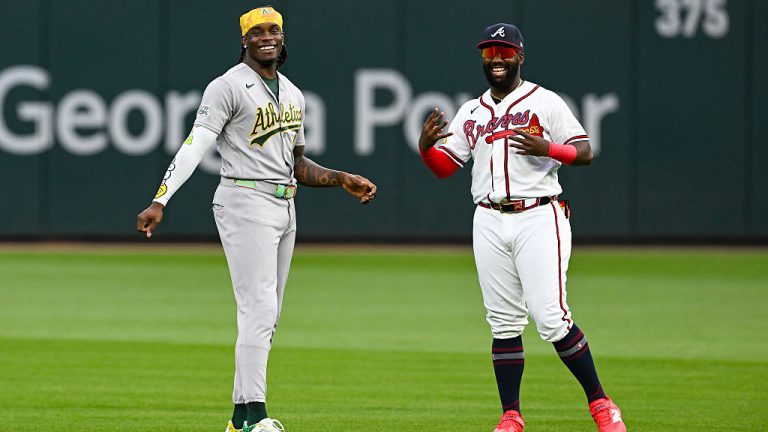
The 2026 Major League Baseball All-Star break has come and gone, which means all attention now shifts to the trade deadline. Front offices finally get a brief pause from draft preparations before turning their full focus toward improving their big league clubs.
This time of year is always fascinating, especially now with the expanded Wild Card format that has changed the landscape. With so many teams still within striking distance of a postseason berth, the market has developed much slower than in previous years.
In the American League, all but three teams sit within six games of the final Wild Card spot. The same is true in the National League. If you’re doing the math at home, that means only six teams across baseball are truly out of the race. Then again, if the Boston Red Sox have proven anything this season, no team is ever completely out of it.
That will make this trade deadline incredibly difficult to navigate.
Remember economics class? When there are far more buyers than sellers, demand rises while supply shrinks. High demand plus low supply creates an extreme seller’s market.
For the Atlanta Braves front office, this creates a real challenge.
Alex Anthopoulos is going to have to work the phones harder than perhaps any other trade deadline during his time in Atlanta. This market is not nearly as straightforward as it has been in recent years, which means it might be time to get creative.
Let’s look at some unconventional options Atlanta should at least check in on.
Stats updated prior to games on July 21.
Popular Targets
Before we get into the fun, I would be remiss if I didn’t mention some of the more popular and realistic trade targets that continue to circulate.
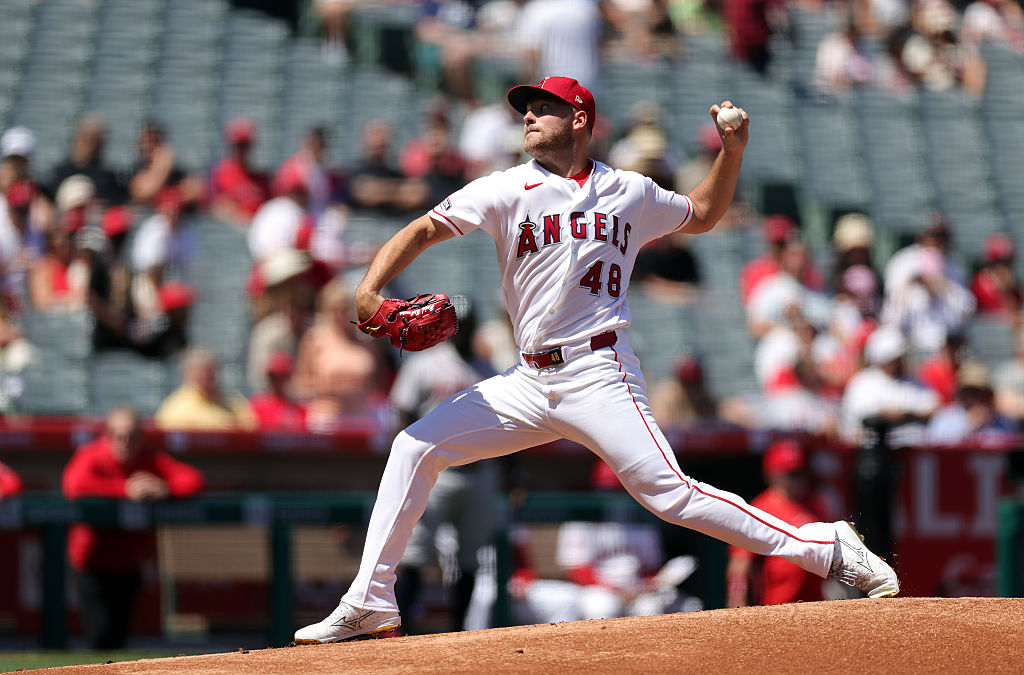
Starting in Los Angeles, the Angels have reportedly signaled they are willing to listen on starting pitchers Reid Detmers and Jose Soriano. Considering starting pitching is arguably Atlanta’s biggest need, the connection makes plenty of sense. Both pitchers remain under team control through the 2028 season. Jo Adell and possibly Zach Neto could also be targets from the Angels.
Robbie Ray in San Francisco has also become a popular name. His 3.33 ERA certainly catches your attention, but there are reasons to question whether he can sustain it. His 4.59 FIP paints a much different picture. A 1.30 WHIP is less than ideal, and let’s just say his Statcast page contains a whole lot of blue.
Dustin May of the Cardinals and former Brave Michael Soroka of the Diamondbacks are two other intriguing possibilities. Both come with injury concerns, and neither has looked like the pitcher they once appeared capable of becoming, but as depth additions I would welcome either one.
Other names that have surfaced include Joe Ryan, Casey Mize, Tarik Skubal, Michael Wacha, Seth Lugo, and Sonny Gray. At the moment, though, most of those clubs either remain in the playoff race or appear reluctant to move those pitchers. A Kevin Gausman reunion could also become realistic if Toronto continues to slide, especially since he will become a free agent after this season.
At the end of the day, the cost of acquisition is going to determine if Alex Anthopoulos makes a move or not, as it should. Now let’s have some fun.
Seattle’s Rotation Logjam
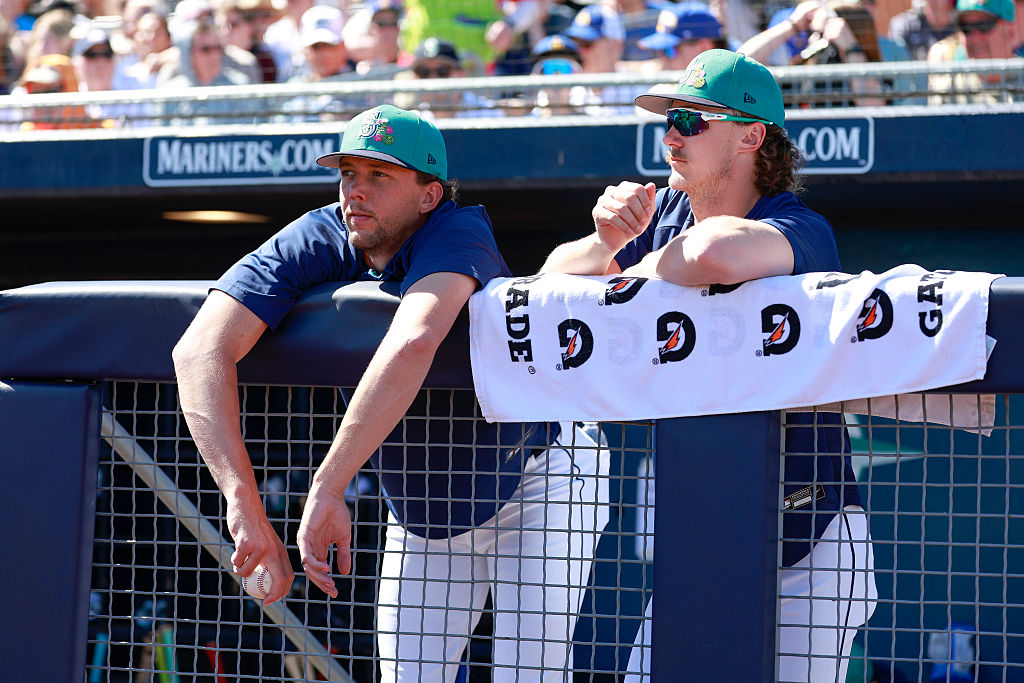
We will begin with what would be a contender-to-contender trade.
Seattle has quietly assembled one of the deepest collections of pitching talent in baseball, combining both its major league roster and farm system. Year after year, they rank near the top of nearly every pitching category.
Bryan Woo and Bryce Miller remain under team control for three more seasons. Emerson Hancock, the Thomasville native and Georgia alum, has finally established himself after a rocky start to his major league career. I would love to see Hancock come home, but given his age and years of control, that feels unlikely. Personally, I want nothing to do with Luis Castillo.
Then there is Kade Anderson, who somehow fell into Seattle’s lap in the 2025 Draft and already looks capable of contributing in the majors.
Ironically, the two biggest names may actually be the most realistic possibilities.
Logan Gilbert has become one of baseball’s most consistently excellent starters. Over five seasons, he owns a 3.55 ERA, 3.50 FIP, and 1.05 WHIP. George Kirby has been every bit as impressive. Since debuting in 2022, he has posted a 3.58 ERA, 3.25 FIP, and 1.14 WHIP. Gilbert strikes out slightly more hitters, but both rank among the very best in baseball at limiting walks and keeping runners off base.
So why would Seattle even consider moving one?
Maybe they won’t. A postseason rotation featuring Gilbert, Kirby, Woo, Miller, Hancock, and potentially Anderson could rival anyone in baseball.
However, Anderson’s emergence also gives Seattle flexibility to address other areas of concern. Gilbert enters his final arbitration season next year, while Kirby is only one year behind. Both will soon become expensive, and eventually both will seek long-term contracts. Seattle may not want or need to pay both.
Meanwhile, the M’s offense remains one of the weakest in baseball. No matter how dominant your pitching is, you cannot consistently win in October without scoring runs.
Cal Raleigh has struggled through his oblique injury. Colt Emerson, Rob Refsnyder, Victor Robles, and Leo Rivas have all underperformed. Josh Naylor, J.P. Crawford, and Cole Young have been roughly just league average, while Julio Rodríguez has not carried the lineup like a superstar is expected to.
Seattle needs offense almost everywhere. Depending on the asking price, Atlanta should absolutely check on both Gilbert and Kirby. Those are the types of arms that can change a postseason rotation.
The Pirates Are Buying, Kind Of
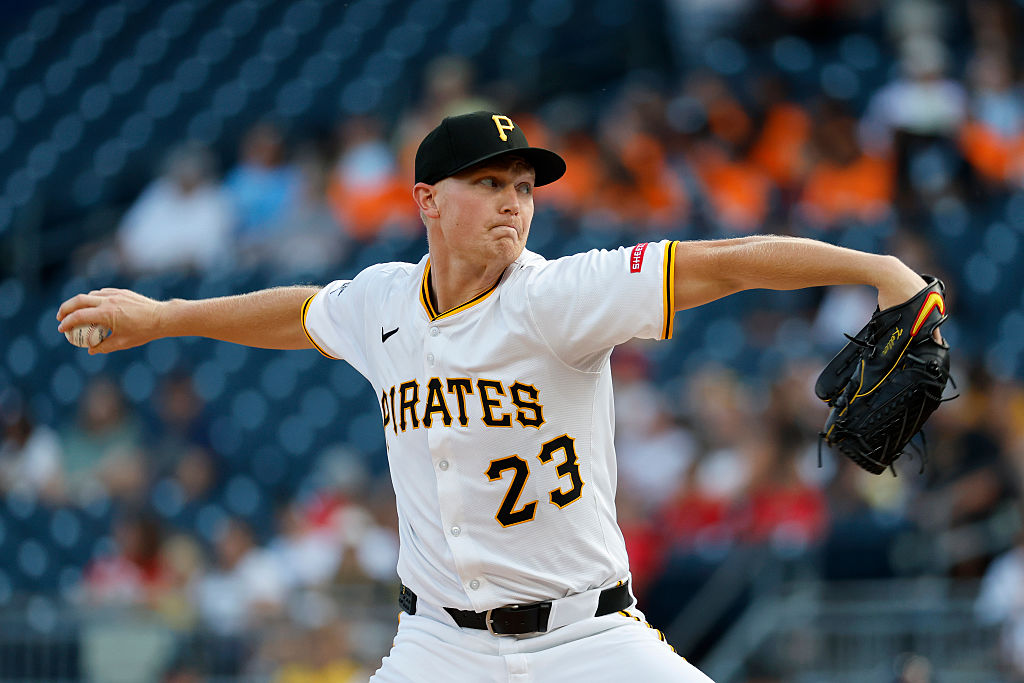
Reports recently surfaced that the Pittsburgh Pirates are planning to approach this deadline as buyers. There is one major catch, though. They reportedly want to improve the roster without increasing payroll. Yes, it is an odd strategy, but that is the reality teams have to work with.
Pittsburgh needs offense, and if they truly want to add it while keeping payroll in check, Atlanta could be an interesting trade partner.
The Pirates have quietly become one of baseball’s premier pitching factories. Their rotation is loaded with young talent, and more arms continue to work their way through the system. Paul Skenes is not going anywhere. Neither are Braxton Ashcraft or Jared Jones. So the question becomes, who might actually be available at the right price?
The easiest name to acquire is probably Mitch Keller.
At 30 years old, Keller is the veteran of Pittsburgh’s young rotation. He has struggled this season, posting a 5.14 ERA, his highest mark since 2021, while his 17.4% strikeout rate is the lowest of his career. He remains under team control for two more seasons, but is owed $18.4 million and $20.4 million over that time.
Keller would provide valuable innings for a Braves rotation that has battled injuries over the past few seasons, though he probably would not be the impact addition many fans are hoping for.
The two pitchers I would be calling about, however, are Bubba Chandler and Hunter Barco.
Chandler admittedly feels like more of a dream than a realistic target, but there is at least some logic behind making the call. For the second straight season, he has struggled to translate his elite stuff into consistent major league success. His ERA has remained north of 4.00, while his WHIP has climbed from 0.93 last season to 1.45 this year.
Throughout the minors, Chandler overwhelmed hitters with triple-digit velocity and strikeout rates consistently above 30%. At the major league level, those strikeout rates have fallen to 25.0% and 20.5% over the past two seasons.
Barco is another fascinating buy-low candidate. The left-hander carved through the minor leagues with swing-and-miss stuff, but he has yet to receive many opportunities in Pittsburgh. Across seven relief appearances over the last two seasons, he has allowed 10 earned runs on 17 hits while walking eight and striking out 11 over 14.2 innings.
Neither Chandler nor Barco has lived up to expectations in the majors, but both still possess the type of upside Atlanta has shown a willingness to bet on.
It also helps that Pittsburgh’s pitching pipeline is far from running dry. Carmen Mlodzinski has already shown he can succeed in the majors. Thomas Harrington has continued to impress throughout the minors. Then there is Seth Hernandez, who might already be the best pitching prospect in baseball. I honestly cannot remember another prep arm climbing through a farm system this quickly.
Would prying one of these young pitchers away be easy? Absolutely not. But if Pittsburgh is serious about improving its offense without adding payroll, there could be a framework that benefits both clubs.
And honestly, why stop at pitching?
I already know plenty of Braves fans are rolling their eyes, but why not at least ask about Oneil Cruz?
The offensive upside is undeniable. Cruz hits the baseball as hard as almost anyone in the sport and remains one of the most dynamic athletes on the bases. Defensively, the transition from shortstop to the outfield has been rough. Some of the mistakes have been difficult to watch. Personally, though, I am far less concerned about where he plays than what he can do in the batter’s box.
Even while missing time with injury, Cruz has produced a .822 OPS with 14 home runs and 21 stolen bases in only 64 games. That is the type of impact bat Atlanta could use.
If Pittsburgh is truly looking to cut future costs, Cruz becomes an interesting name to monitor. He enters his second year of arbitration next season, and that salary is only going to climb over the next two seasons before free agency.
Pittsburgh also has alternatives. Bryan Reynolds remains under contract through 2030. Ryan O’Hearn is signed through 2027. Jake Mangum is still in his pre-arbitration years. Rookie Esmerlyn Valdez has emerged as one of the game’s best young outfielders.
Jhostynxon Garcia has impressed in the minors since arriving from Boston, and Edward Florentino, the organization’s No. 2 prospect, is another potential superstar waiting in the wings.
Whether Atlanta focuses on one of Pittsburgh’s young pitchers or takes a bigger swing for Cruz, there is enough organizational depth here to justify a conversation. The Pirates have done an outstanding job developing young talent over the last several years, and they may finally be in a position where they can use that surplus to address other needs.
The Orioles Could Be This Deadline’s Wild Card
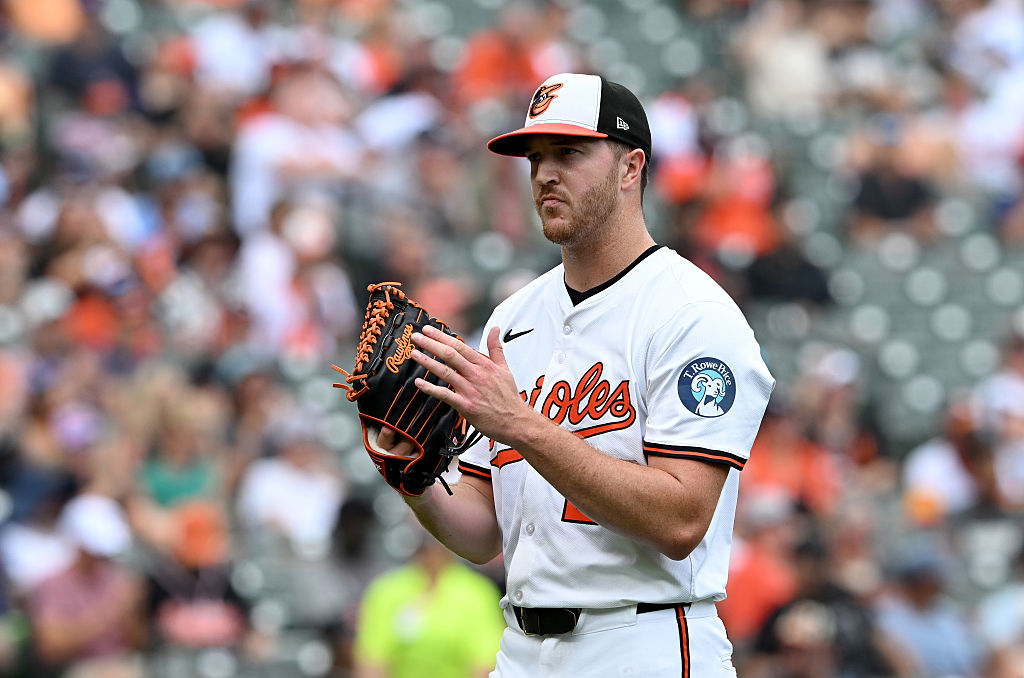
Baltimore finds itself in one of the more fascinating positions leading up to the deadline. Before they lost to the red-hot Red Sox on Monday, the Orioles had ripped off a seven-game winning streak, including sweeps of both the Royals and Astros.
Unfortunately for the O’s, the road ahead does them no favors. Their next stretch features series against the Red Sox, Braves, Tigers, and Phillies.
At the same time, the injuries continue to pile up. Adley Rutschman and Blaze Alexander are both on the 10-day injured list with wrist injuries. Samuel Basallo has been dealing with day-to-day issues, while Chris Bassitt and Ryan Helsley remain on the 60-day IL. Even after the recent surge, Baltimore sits at 49-52 with a -14 run differential.
They are still very much in the playoff picture, but things could unravel quickly if the injuries continue to mount and this upcoming schedule proves too much.
That is why I do not believe Baltimore would have a fire sale. I do, however, think there are a handful of players they should consider moving if they find themselves on the wrong side of the playoff race by the end of July.
Trevor Rogers is at the top of that list.
Since arriving from Miami in 2023, Rogers has quietly been one of Baltimore’s better starters, posting a 3.32 ERA, 3.46 FIP, and 1.15 WHIP. He took a step back from his outstanding 2025 season and struggled early this year, but he has begun to find his footing again.
With only one season of team control remaining after this year, Rogers could become an attractive trade chip for a club looking to continue building around its young core. They have already secured Shane Baz and Kyle Bradish for the long haul.
Taylor Ward is another name worth watching.
After acquiring him from the Angels in exchange for Grayson Rodriguez, the Orioles received exactly what they expected. Ward has been a productive veteran, hitting .251 with a .748 OPS, but he is also headed for free agency after the season.
If Baltimore falls out of contention, moving a pending free agent becomes the logical decision. Ward is 32 years old, brings steady production, and could thrive hitting for a legitimate World Series contender while positioning himself for one more contract this winter.
Now let me dream for a minute.
Gunnar Henderson has been one of baseball’s brightest young stars since making his debut in 2022. He won the American League Rookie of the Year Award in 2023, earned an All-Star selection in 2024, and finished fourth in MVP voting that same season.
Since then, though, something has looked different.
His 2025 numbers were still respectable, batting .274 with a .787 OPS, but he never quite looked like the superstar he had become. This season, the decline has become much more noticeable. Henderson is hitting .224 with a .695 OPS, and nearly every underlying metric has taken a significant step backward.
To be clear, I still believe Henderson is a superstar. But every organization eventually reaches a point where it has to ask difficult questions.
He enters his second year of arbitration next season, and those salaries are only going to increase. Baltimore has also shown very little urgency when it comes to signing young stars before arbitration, only becoming more aggressive after it was already too late to secure favorable long-term deals with players like Henderson and Rutschman.
If there is little confidence that an extension eventually gets done, would Baltimore at least listen? That is where Atlanta becomes interesting.
The Braves have never been afraid to hand out long-term contracts to young stars they believe in. Henderson also grew up in Braves Country and has spoken about following Atlanta while growing up. If there is any club capable of convincing him to sign long term, despite being a Scott Boras client, the Braves should at least explore whether that possibility exists.
Would it take an enormous package? Absolutely. Would Baltimore even entertain the conversation? Maybe not.
Atlanta’s farm system has taken a major step forward over the last two years, giving them prospect capital they simply did not have in previous deadlines. Sometimes, trade deadlines have a funny way of producing deals nobody sees coming.
The Hometown Kid
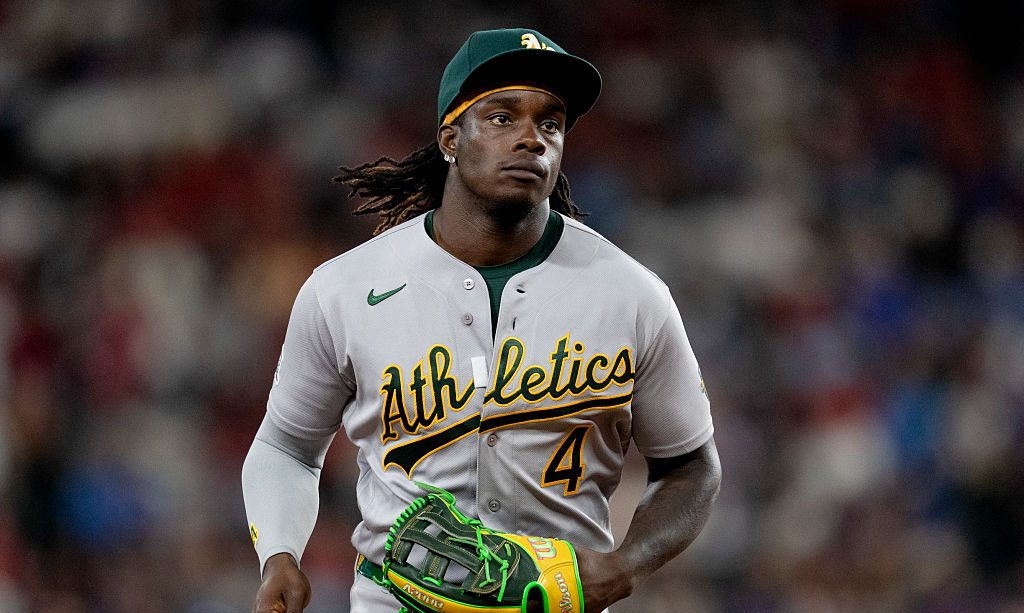
This is probably my favorite trade target for Atlanta, and I will be the first to admit it is not entirely because of what he could provide in 2026.
The Athletics have assembled an impressive amount of young talent over the last few seasons. The expectation around baseball is that by the time they arrive in Las Vegas, they could have one of the more exciting young rosters in the American League. The challenge with building that much young talent, though, is eventually there are simply not enough spots for everyone.
Lawrence Butler could become a victim of that.
Tyler Soderstrom, Henry Bolte, Carlos Cortes, and Colby Thomas are all under team control beyond 2030. Brent Rooker and Denzel Clarke are also signed long term, although both are currently dealing with injuries. Devin Taylor is putting together an outstanding season in Double-A with a .922 OPS, and the Athletics used their most recent first-round pick on yet another outfielder in Drew Burress.
That is a crowded outfield, and more importantly, it is a crowded outfield full of players who will likely make less money than Butler over the coming years.
While Butler was born in New Jersey, he is an Atlanta kid through and through. He graduated from Westlake High School, has the Braves “A” tattooed on his body, and celebrates home runs by flashing the number four to represent Zone 4, a nickname for the southwest side of Atlanta. His best friend is Michael Harris II, and the two continue to train together in Atlanta every offseason. Butler grew up cheering for the Braves.
That is an awful lot of Atlanta connections. Of course, connections alone do not win baseball games.
After breaking out in 2024 with a .807 OPS and 22 home runs, Butler has struggled over the last two seasons. Since the beginning of 2025, he owns a .221/.302/.369 slash line with a .671 OPS and a 28.4% strikeout rate. The production has not been there.
The encouraging part is that some underlying tools still look positive. Butler possesses well above average bat speed, continues to hit the ball hard, rarely expands the strike zone, and still draws his share of walks. Those are traits teams are willing to bet on. To me, Butler feels like the definition of a change-of-scenery candidate.
Get him out of Sacramento, and bring him back home. Let him play in front of family and friends, alongside his best friend, for the organization he grew up dreaming of playing for. Sometimes baseball is not that simple. Sometimes it is.
The Athletics signed Butler to a seven-year, $65.5 million contract before he even reached arbitration. He is owed just $3.7 million next season before his salary gradually increases through 2031, topping out at $16.5 million. The deal also includes a $20 million club option for 2032.
That is a significant financial commitment for a player coming off two disappointing seasons. At the same time, if Butler rediscovers the player he looked like in 2024, that contract suddenly becomes one of the better values in baseball.
Braves fans do not need to be reminded how these reclamation projects can go. Atlanta tried something similar with Jared Kelenic, and the results were far from what anyone hoped for. That alone is enough to make fans hesitant.
Still, this situation feels a little different.
Playing for the team he grew up watching, surrounded by family, with Michael Harris II in the clubhouse every day, it is easy to see why a fresh start could bring out the best version of Lawrence Butler. If that environment cannot help him rediscover the player we saw in 2024, then I would begin to wonder if that version is ever coming back.
What To Expect
One thing we have learned about Alex Anthopoulos over the years is that he leaves no stone unturned.
Every deadline he checks in with virtually every club, asks about players most people never considered available, and more often than not ends up acquiring someone nobody saw coming. He has started making his media rounds over the last week, and his iterated multiple times that not even he knows which teams are ready to buy, sell, or stand pat. No GM does.
Anthopoulos is on the phone every day, checking in on teams and players, putting feelers out, and keeping connections close so he knows when he can try to complete a deal.
Whether any of these names ultimately become Braves is impossible to predict. What I do know is this year’s trade deadline has all the ingredients to be one of the most fascinating of the Alex Anthopoulos era.
Become a Member of Just Baseball
Subscribe and upgrade to go ad-free!
* Save 25% by subscribing annually.

Written by
Taylor is a baseball enthusiast and a writer for Just Baseball. An Atlanta native, he shares his love for the Braves, card collecting, and scouting the…