
Which Teams Have to be Sellers at the Trade Deadline?
Here are the six teams that have to be sellers at this year's trade deadline, and who their best trade assets will be.
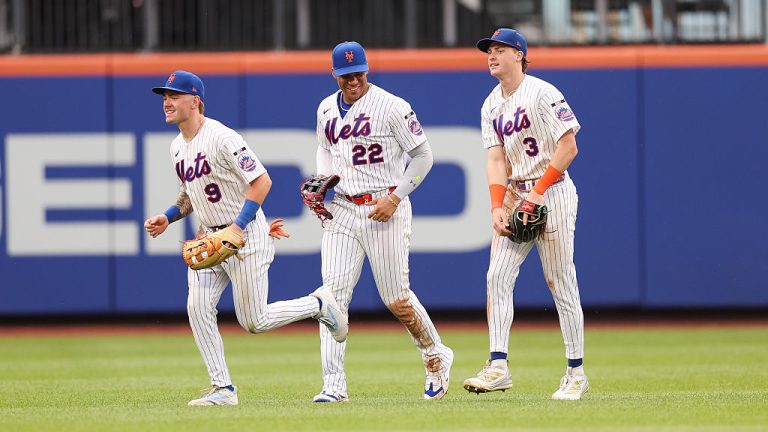
This past week, the world of Major League Baseball dealt with a flurry of excitement, one that seems to come naturally with the All-Star break. We had the pleasure of seeing Jordan Walker beat Kyle Schwarber in an intense Home Run Derby final, as well as the American League pitching staff shutting down the National League All-Stars.
But, somehow, those won’t be the most exciting moments in July. It seems that every year, the most anticipated, dramatic part of each season is the trade deadline. Contenders go all in, looking to make the big splash that puts them over the top. Struggling teams are left with no choice but to sell, hoping they can salvage their future.
We’ve already seen several moves, with the New York Mets sending David Peterson to the Chicago Cubs a couple of weeks back, and the Milwaukee Brewers acquiring Lance McCullers Jr. from the Houston Astros recently.
We’ve yet to see a full-out fire sale, but with six teams almost definitely set to be sellers this year, we aren’t too far away from the madness unfolding.
Given the competitive landscape of the American League this year, most teams are still somewhat in the playoff picture. Only the Kansas City Royals and the Los Angeles Angels are truly out of it by this point.
In the National League, things are already much clearer, with the Mets, Colorado Rockies, San Francisco Giants, and Cincinnati Reds all focused on their future with this season being a wash.
Each of those six teams has several trade assets, all of whom could fetch a worthwhile return on the market. While we may not see all of these players dealt, it’s a good bet there will be a lot of goodbyes and hugs as the month comes to a close.
Without further ado, here are the teams that have to be sellers at this year’s trade deadline, and who their best trade assets may be.
All stats updated prior to games on Monday, July 20
New York Mets
This year, the Mets opened their season with a grandeur of hope. Several promising young prospects were knocking on the door of the Major Leagues, alongside Nolan McLean, already making an impressive impact in his 2025 debut.
Add the acquisitions of stars Bo Bichette, Marcus Semien, and Freddy Peralta, and it seemed like Juan Soto and Francisco Lindor were finally meshing with the right group to bring a World Series trophy back to Queens.
Much to the dismay of the Queens faithful, things couldn’t have gone much worse than they have in 2026 for David Stearns and the Mets, with each of the big three offseason additions struggling mightily. Peralta is in the midst of his worst season since moving back to the starter role in 2021, Bichette has managed an 87 wRC+ to this point, and Semien has been worth -0.6 fWAR.
An abundance of injuries, most notably with Lindor missing a large chunk of May and June and Clay Holmes being sidelined with a fractured right fibula, didn’t make things any easier on Stearns’ squad. Those injuries, plus several others in combination with poor performance, have led the Mets to a 42-58 record in 2026.
On the bright side, Carson Benge, A.J. Ewing, and McLean have all looked exceptional to start their major league careers, and Soto is still just 27 years old. With all hope seemingly lost for 2026, it’s time for the Mets to turn to their future.
There are several players on short-term or expiring contracts who will be without a place on a younger Mets squad next season, and who could net top prospects or major league-ready talent at this year’s trade deadline.
- Luke WeaverSince signing with the Mets this past offseason, Weaver has been one of the best relievers in the sport. An additional year of control past 2026 only makes Weaver all the more enticing this trade deadline, and could net the Mets a bigger return than some rental options on the market.For context, the right-hander has managed a 2.03 ERA through 40 innings pitched thus far in 2026, and ranks 19th among relievers with 1.1 fWAR. His 2.87 xERA ranks in the 91st percentile, largely as a result of his 82nd percentile strikeout rate (27.9%).Weaver is the type of pitcher that supplements the back end of a contender’s bullpen, and will definitely be one of the most coveted assets in the league these next few weeks.
- A.J. MinterThough Minter began his 2026 campaign on the injured list, he’s quickly shown that when healthy, he remains a highly effective reliever. At 32 years old, he’s in the midst of one of his better seasons and is set to become an unrestricted free agent come November.Although he’s pitched just 20 innings, Minter has been highly effective in the majority of his outings, leading to a 1.80 ERA and 3.70 xFIP. The most remarkable part of his performance has been his exceptional command, with the southpaw issuing free passes in just 1.3% of plate appearances.Championship teams often excel at limiting baserunners in October, making Minter a perfect match for several bullpens this season.
- Freddy PeraltaPeralta’s first season in Queens has been nothing short of disastrous. He’s pitched to a 4.66 ERA through 104.1 innings thus far–the highest mark of his career as a starter–while his strikeout rate has decreased to 22.3%–the lowest rate of his career.That being said, Peralta entered 2026 as a bona fide ace. The right-hander has been one of the league’s most consistent pitchers since 2021, while showing flashes of pure dominance. His profile is strikingly similar to Jack Flaherty’s prior to the Dodgers’ acquisition at the deadline in 2024, except Peralta is far less injury prone.Given his track record, as well as his status as a pending free agent, Peralta is a prime candidate for a change of scenery trade. Contenders, especially those short of starting pitching, will almost certainly be willing to take a bet on Peralta finding his footing in the back half of the season.
Other tradeable assets for the Mets include: Tyrone Taylor, Kodai Senga, and Sean Manaea.
Kansas City Royals
Prior to the arrival of Bobby Witt Jr. in Kansas City, the Royals found themselves in the midst of an elongated rebuild phase. They eclipsed 70 wins just once from 2017 through 2023 (with Witt making his debut in 2022), and unsurprisingly accumulated zero playoff berths in that span.
However, since that disastrous 2023 season in which the Royals finished with a 56-106 record, it’s seemed like J.J. Piccolo and the rest of the front office were finding success in building a contending squad around their young star. Things were finally looking up after a playoff berth in 2024 (86-76) and a tight Wild Card race in 2025.
Even with the horizon looking bright, things quickly took a turn for the worse in 2026. The biggest woes have come from the pitching staff, which ranks 28th in MLB with a collective 5.00 ERA.
Noah Cameron (5.27 ERA) regressed tremendously after his excellent 2025 season, and it seems like age has finally caught up to Seth Lugo (4.39 ERA). Cole Ragans, now out for the season, was unable to find his groove after a rotator cuff strain sustained during his 2025 campaign.
The story is the same for the bullpen, with injuries and lackluster performance driving the Royals’ inability to limit opponent scoring.
On the offensive side, Salvador Perez, Vinnie Pasquantino, and Maikel Garcia have all been below-average hitters, with the rest of the lineup barely carrying their weight. Each of the three aforementioned hitters has seen their wRC+ drop by over 30 points from 2025 to this year,
These struggles have led the Royals to a 40-60 record, with little to look forward to for the rest of the way in 2026. Only two teams in the league have a worst win percentage.
Luckily, like the Mets, there are several young stars paving their way with Kansas City despite the squad’s overarching struggles. Jac Caglianone and Carter Jensen are finally hitting their strides, and Bobby Witt Jr. is still just 26 years old.
Here are the Royals’ best trade assets who could net them contributors for the 2027 season and beyond:
- Lane ThomasThomas was coming off a terrible, injury-riddled season in 2025 when he signed a one-year deal with the Royals this past offseason. Since inking that deal, he’s returned to form as one of the most consistently reliable hitters in the game, while also remaining one of the fastest with 92nd percentile sprint speed (29.1 ft/sec).Throughout his career, Thomas has never posted a wRC+ below 98 in any season in which he’s earned over 200 plate appearances. This year, he’s still hovering around that same mark with a 111 wRC+, while slashing .240/.340/.417 through 85 games.Surprisingly, league-average hitters are quite difficult to come by, which makes Thomas all the more appealing this deadline. He’d likely slot into most major league lineups at the moment, or could become one of the most valuable bench contributors this postseason.
- Michael WachaWacha began his Royals career in 2024, where he was a pivotal part of earning their first playoff berth since 2015. He’s since become a staple in Kansas City’s rotation as one of the most durable starters in the league, avoiding long stints on the injured list and consistently turning in 160+ innings pitched.This year, Wacha has recorded a 3.77 ERA through 19 starts and is valued at 1.8 fWAR. Since 2022, his single-season ERA has never risen past 3.86, while his xFIP has hovered around the 4.30 mark. There seems to be no danger of regression for the right-hander, who could easily slot in as a third starter for most contenders.The Royals have made clear they don’t want to part with Wacha, but with his rising age and club control through 2028, this may be their best shot at a big return for the 35-year-old. Several teams have already inquired about his services, and are sure to continue doing so until August third.
- John SchreiberIn a season that’s been marred by poor pitching performance in Kansas City, Schreiber has remained relatively reliable out of their bullpen. The right-hander remains arbitration eligible for another season after 2026, and could be one of the cheaper targets at this year’s deadline.Schreiber has pitched to a 3.38 ERA through 41 appearances thus far, but has actually been worth -0.2 fWAR as a result of his 4.89 FIP. A look at the rest of his underlying metrics will show that he’s been living on the lucky side, but Schreiber’s ability to generate ground balls (77th percentile) still makes him an interesting bullpen choice.With some higher-end arms expected to haul in large prospect packages this year, Schreiber could be a cheap backup option for teams with a need for bullpen help. He’s been largely successful in the past, so with the right pitching coach, who knows what could be unlocked?
Other tradeable assets for the Royals include: Kris Bubic (if healthy) and Alex Lange.
Los Angeles Angels
The Angels have become one of the most frustrating organizations in the league, given their waste of Shohei Ohtani’s and Mike Trout’s contributions over the past decade. Perry Minasian was the latest man at the helm of the ship until he was dismissed in June.
During Minasian’s tenure, which began prior to the 2021 season, the Angels struggled to a 392-500 record and failed to finish a season over .500. All the while, Ohtani finished his 2021 and 2023 campaigns as American League MVP, and finished as the runner-up to Aaron Judge in 2022.
Their struggles have been amplified by an unwillingness to sell time and time again, as well as Minasian’s insistence on rushing players through the minor leagues.
A new era of baseball is upon Los Angeles, though, with longtime Cardinals executive John Mozeliak assuming the role of interim GM.
The front office’s new strategy was on display almost immediately after the Angels used their first-round pick in 2026 to select Jared Grindlinger. That selection broke a seven year streak of straying away from high school talent in the first round; scouting director Tim McIlvaine will now have more freedom to focus on scouting and development without Minasian.
This new strategy offers insights into what the next few years may look like for the Angels, which will likely feature a rebuilding period. They have several controllable major league pieces who could net a large return, including several top-100 Prospects this deadline, in turn allowing the front office to retool for a new contention window.
Here are the Angels’ best trade assets:
- José SorianoIn the midst of another above-average season, Soriano has been one of the brightest spots on a dull Angels team this season. Still just 27 years old, and not set to become a free agent until after the 2029 season, Soriano could be one of the most targeted players on the trade block.Soriano has accumulated 6.4 fWAR since the start of the 2024 season, largely as a result of a high quantity of innings pitched and low FIP numbers. This year has arguably been the best of Soriano’s three seasons as a starter, with the right-hander managing a 3.49 ERA and 3.76 xFIP through 111 innings. His whiff rate has skyrocketed to the 90th percentile (31.8%), and he’s continued to generate tons of ground balls, ranking in the 90th percentile this season (53.1%).Even with several years of control, it seems like dealing Soriano would be the right choice for the Angels, given their larger need for a rebuild. There will be no shortage of suitors for Soriano’s services, and a big prospect return could help accelerate that process for the Angels.
- Jo AdellFormerly the number six overall prospect in baseball back in 2020, Adell’s career has been full of ups and downs. He’s shown immense potential during points of several seasons, especially during 2025, when he finished with a 112 wRC+, but is struggling again during his 2026 campaign.Adell has been below replacement level at -0.3 fWAR this year, as he’s managed just a .665 OPS through 411 plate appearances to this point. His average exit velocity, barrel rate, and hard-hit rate have all declined tremendously after being excellent in 2025, with the Angels still unable to fully tap into the 27-year-old’s potential.Adell is still a serviceable player on the majority of major league rosters and could definitely benefit from a change of scenery. With team control through the 2028 season, there could be several teams interested in adding Adell to their roster and seeing what could be unlocked with a new hitting coach.
- Reid DetmersJust like Adell, Detmers has begun his career with a remarkable degree of inconsistency, while still showing flashes of potential excellence. Now in his sixth major league season, Detmers has only finished with an ERA under 4.00 twice, with one coming during an injury-riddled 2024 season.All the while, Detmers has posted an xFIP of 3.86 or lower in each of the past three years and has accumulated 9.3 fWAR to this point in his career. Since 2024, he’s graded out as above-average in chase, whiff, and strikeout rates, while shutting hitters down with his slider in ’23, ’25, and 2026. With the right coaching development, Detmers could end up as a solid number two starter to many of the aces in MLB right now.The Angels have had more than enough run with the left-hander without being able to break into his potential, which means it might finally be time to make Detmers available on the trade market. They’ll be sure to get a solid return given his value and team control through 2029.
Other tradeable assets for the Angels include: Mike Trout (no-trade clause), Kirby Yates, Jorge Soler, Yusei Kikuchi, and Jose Siri.
Colorado Rockies
The Rockies last found themselves in a playoff race in 2018, and since then, it’s been quite the rocky road. They’d finished under .500 in every season since then, and had failed to adequately rebuild or implement a winning draft strategy under the club’s previous front office leadership.
This offseason, though, Paul DePodesta–famous for his “Moneyball” strategy as an executive with the Oakland Athletics–assumed the role of President of Baseball Operations, and could be ushering in a new era of Colorado baseball.
DePodesta already possesses a strong offensive core, led by Hunter Goodman, Kyle Karros, TJ Rumfield, and Cole Carrigg, all of whom are 26 years old or under. Those four are joined by 28-year-old Mickey Moniak and 29-year-old Troy Johnston as the heart of the Rockies offense, which ranks fifth in MLB with a .747 team OPS.
With a blossoming offense, the priority has quickly become pitching. Given the nature of Coors Field, though, fielding a strong rotation and bullpen is a tall task.
Even so, DePodesta’s track record is one of the most impressive in baseball, and he’s certainly got a knack for talent evaluation.
Here are the Rockies’ best trade assets, whom they’ll be willing to part with to bolster prospect pitching capital:
- Mickey MoniakAlthough his major league career began poorly, Moniak has since developed into an above-average hitter and has been a key part of the Rockies’ lineup. He’s currently in the midst of his best season, his second with Colorado, where he’s been worth 1.1 fWAR with a 122 wRC+.This year, Moniak ranks in the 89th percentile in Batting Run Value with +16, and is currently second on his squad with an .879 OPS. Moniak’s profile is admittedly less appealing under the hood, given his high strikeout and whiff rates (24.7% and 28.6%, respectively), but his absurdly high 29.9% pull-air% helps alleviate concerns about his batted ball data (as pull side hitters tend to “over-perform”).Although he’s under team control through 2028, Moniak has become expendable to the Rockies given the depth of their lineup and poor farm system. A deal centered around the left-hander could help Colorado replenish and supplement their already young core.
- Jake McCarthyJust like Moniak, McCarty has revitalized his career in Colorado and is also in the midst of his best season to date. The 28-year-old has recorded a 120 wRC+ to this point in 2026, and has stolen 17 bases thanks to his 99th percentile sprint speed (29.9 ft/sec).McCarthy remains under team control through 2029, but seems to be a prime regression candidate. The outfielder is performing his xwOBA by 58 points, and ranks in the 50th percentile or higher in just one batted-ball category. The most concerning part of McCarthy’s profile has been low exit-velocity numbers, which don’t make for the greatest combination when coupled with low walk rates.The Rockies may be able to fetch a decent return for McCarthy given that he has performed well, but the package will almost certainly feel like an underpay given the season he’s having. Regardless, the right move for DePodesta will be to sell on McCarthy while his value is at its highest.
- Antonio SenzatelaSenzatela was quietly moved into the Rockies’ bullpen this offseason, after struggling to a 4.42 ERA or higher in his last season as a starter. The 31-year-old has taken advantage of the circumstances, using the opportunity to redefine his career and value as a pitcher.As a former starter, Senzatela has been able to pitch deeper in his relief outings than his peers. He’s accumulated 49 innings pitched in 30 appearances, where he’s managed a 3.31 ERA and has increased his average fastball velocity to 97.0 MPH (previous career high was 95.1 MPH). Senzatela has been successful in limiting opponent barrels—ranking in the 81st percentile—largely as a result of his cutter, which has held opponents to a .246 xwOBA against.Given that the right-hander is in the final season of a five-year contract, he will almost surely be dealt this deadline. In a market dominated by expensive and flashy relievers, Senzatela may very well be the best long relief man available to any contender.
Other tradeable assets for the Rockies include: Willi Castro and Jimmy Herget.
San Francisco Giants
Prior to the 2026 MLB season, Tony Vitello–the former Tennessee Vols head coach–became the first NCAA head coach to transition directly into a managerial position in MLB. He would be tasked with leading an expensive core group of key players, comprised of Rafael Devers, Willy Adames, Matt Chapman, and Jung Hoo Lee, back to the playoffs for the first time since 2021.
Unfortunately for San Francisco, things have been far from smooth sailing in 2026, and we’ve seen plenty of fans turn on President of Baseball Operations Buster Posey. Currently, the Giants stand at 42-57 and are 9.5 games back of the final Wild Card spot.
With the aging and expensive nature of their core and relatively poor farm system, the Giants may have no choice but to sell their biggest contracts this year.
While Logan Webb and budding stars like Casey Schmitt, Heliot Ramos, and Bryce Eldridge will be off limits, Posey and company have expressed a willingness to hear offers on the majority of the major league roster.
While some of the returns may be lessened slightly by the expensive nature of their trade chips, the quantity of assets they’ll make available on the market could serve as a means for the Giants to re-tool for the future and usher in an abundance of prospect talent
Here are the Giants’ best trade assets:
- Luis ArraezThroughout his career, Arraez has been known consistently as one of the best contact hitters in the game, routinely hitting around the .300 mark. He’s finished every year of his career with a 104 wRC+ or higher, and is up to 127 this season. However, even with his strong hit tool, Arraez was often valued lower, given his one-tool approach.His short stint with the Giants has quickly flipped the script, as he’s become one of the best defensive second basemen in the league. The development came after Arraez spent time working with Ron Washington, and it has helped him blossom into one of the most valuable players available for trade this season. So far, he’s accumulated 9 Outs Above Average, which ranks in the 98th percentile.Arraez’s bat alone is enough to warrant a decent prospect package at the deadline, but with added defensive prowess, he’s risen to the top of many contenders’ wish lists. Given he’s set to become a free agent at season’s end, the Giants have all the more incentive to field offers on the 29-year-old.
- Robbie RayIn the final season of a five-year contract originally signed with Seattle, Ray might soon see his time as a Giant come to an end. The 34-year-old is presently in his third year with the club, where he owns a 3.33 ERA in 110.2 innings pitched.Although his ERA is impressive on paper, a look at the underlying numbers raises concern for Ray’s longevity. His 7.81 K/9 is the lowest he’s managed since debuting in 2014, while his 4.83 xFIP is the highest in any season where he’s pitched over 52 innings. Ray ranks around the 50th percentile or lower in just about everything, and is a strong regression candidate the rest of the way.Given his poor metrics, Ray might fetch a lesser return than some of his peers available on the trade market. For contenders in need of another starter but unwilling to part with significant prospect capital, the southpaw will be one of the most appealing targets.
- Any of the expensive contracts
With the Giants’ present struggles, and each of their top-100 prospects under the age of 20, it’s almost a no brainer for them to deal some of their expensive contracts. While we may not see all four dealt at this deadline, and the Giants don’t necessarily need to trade any of the contracts immediately, it would be shocking to see all four players remain in San Francisco after August third.
– Jung Hoo Lee (6 yr, $113M, UFA 2030, can opt out after 2027)
.303/.335/.426, 111 wRC+, -4 OAA
– Rafael Devers (10 yr, $313.5M, UFA 2034)
.243/.311/.472, 113 wRC+, -1 OAA
– Matt Chapman (6 yr, $151M, UFA 2031)
.235/.324/.368, 96 wRC+, +4 OAA
– Willy Adames (7 yr, $182M, UFA 2032)
.228/.280/.428, 94 wRC+, -12 OAA
Other tradeable assets for the Giants include: Jason Foley and JT Brubaker.
Cincinnati Reds
Fresh off a Wild Card berth in 2025, their first playoff appearance during the Elly De La Cruz era, things were finally looking up for the Reds. Their young core was blossoming with several top prospects still on the way, and a new era of ownership with Phil Castellini who had succeeded his father, Bob Castellini.
President of Baseball Operations Nick Krall and company wasted no time during the offseason, quickly addressing the team’s needs. They signed a much-needed power bat in Eugenio Suárez, expanded position player depth with the additions of Nathaniel Lowe and JJ Bleday, and aided the bullpen with the acquisitions of Pierce Johnson, Brock Burke, and Caleb Ferguson.
The majority of those offseason additions paid off handsomely, with all but Suarez and Johnson performing well above expectations to this point in 2026. Returning-player regression, coupled with injuries, was what devastated Cincinnati’s squad the most.
TJ Friedl, Tyler Stephenson, and Matt McLain have all fallen well below-average offensively, posting a 42, 95, and 71 wRC+, respectively. Suárez, although not returning, has been disastrous as well and has performed nowhere near the player Krall expected to be getting this offseason.
Even with their offensive woes, it’s somehow been the Reds pitching staff that is largely responsible for their 45-53 record. Currently, Chase Burns is the only starting pitcher on the roster with an ERA under 4.00. Andrew Abbott is cashing in on the worst season of his career, Rhett Lowder and Nick Lodolo have struggled since returning from injury, and the bullpen is an absolute disaster.
With a young core focused around De La Cruz, Sal Stewart, and Chase Burns, plus strong prospect capital, it makes sense for the Reds to sell their expiring contracts and build a stronger and younger squad for 2027.
Here are the Reds’ best trade assets, plus several others who could realistically be dealt:
- Caleb FergusonThe Reds acquired the services of Ferguson in the form of a one-year contract this offseason, in hopes that he’d be able to boost their floundering bullpen. While he has been successful in that task, it hasn’t been enough for the Reds to stay afloat, and Ferguson’s abilities are a great fit for many contenders.The left-hander has managed a 3.20 ERA this season, albeit his time has been limited to just 19.2 innings after he returned from an oblique strain in May. Ferguson has excelled at limiting hard contact, with opponents struggling to an 85.7 MPH average exit velocity against and barreling the baseball just 3.4% of the time. He’s also inducing ground balls 52.6% if the time, while recording a 3.71 xFIP.As a result of his limited playing time, Ferguson may fetch a smaller package than some other relievers on the market. Still, his talents will be highly sought after as a late-inning arm that could help push a contending bullpen over the edge.
- Nathaniel LoweLowe joined the Reds this offseason on a minor league deal, marking Cincinnati as his fourth team in three years. He quickly earned a spot on the major league roster, where he’s been one of the Reds’ most productive hitters this season.Since 2021, Lowe has recorded a wRC+ of 114 or higher in each season except 2025, in which the left-hander hitter’s quality of contact metrics plummeted. Lowe quickly bounced back in 2026, ranking in the 77th percentile in barrel rate, 89th percentile in LA sweet-spot%, and 79th percentile in xwOBA. He’s also earned a walk in 11.3% of plate appearances, which ranks in the 74th percentile.Lowe will be under team control for another season after this year, which will bump up the Reds’ asking price. Their current logjam of infielders has made Lowe expendable, and he could potentially haul in one of their best returns at this year’s deadline.
- Eugenio SuárezFresh off a stretch in which he hit 30+ homers in four of the last five seasons, Suárez was expected to be a much-needed power addition to Cincinnati’s lineup. Instead, he’s posted a .680 OPS, the lowest mark of his career since his debut season in 2014. In the simplest terms, that signing has been a failure for the Reds.Luckily for Nick Krall, Suárez has shown signs over his past few weeks of play, recording a 115 wRC+ and .500 slugging in July. He’s hit line drives at a far greater rate this month than the previous three, and is also reaching base at the highest clip he has all season.There’s not much going for Suárez at the moment, but his recent performance might be enough for a fringe contender to take a shot, given his career track record. Though the swap may be small, the Reds may still be able to salvage something out of this disaster of a signing.
Other tradeable assets for the Reds include: Nick Lodolo (placed on the 10-day injured list on July 12), Tyler Stephenson, Pierce Johnson, and Emilio Pagán.
Become a Member of Just Baseball
Subscribe and upgrade to go ad-free!
* Save 25% by subscribing annually.

Written by
Mason Linken first began writing about baseball after founding FBC Reports, and contributing to SABR's book "Henry Aaron". At Just Baseball, Mason is responsible for covering…