
Is It Time To Worry About Dylan Crews?
Dylan Crews has gotten off to a slower start in his MLB career than many anticipated. While there are concerns, there are also plenty of reasons to believe better days are ahead.
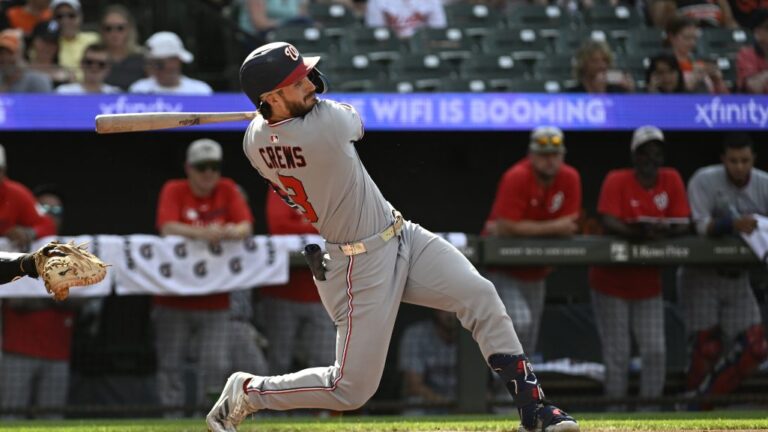
When the 2023 MLB draft rolled around, two LSU teammates were the main focus.
Pitcher Paul Skenes was the high-upside arm in the draft, while the rest of the top five was hitter focused. Leading the way amongst that group was Dylan Crews.
Crews was coming off a season where he hit .426 with 18 home runs and was seen as a clear can’t-miss prospect.
After Pittsburgh selected Skenes, Crews was taken by the Washington Nationals — a team that had traded away Juan Soto the year prior, netting James Wood, CJ Abrams, and others—and now had a right-handed bat to balance out the pair of lefties, giving Nationals fans an exciting young core to dream on.
That dream is still waiting to come true. Since reaching the majors in 2024, Crews has yet to establish himself as part of the Nationals’ young core. Heck, he’s yet to establish himself as a major leaguer.
As a 24-year-old with less than a season’s worth of MLB games under his belt, there’s still time for Crews to correct his course. While I’m far from ready to label him a bust, there are legitimate concerns about what kind of player Crews can ultimately become.
Stats were taken prior to play on June 24.
What’s Gone Wrong?
Crews was always seen as an advanced hitter who should move quickly through the minors. The Nationals tested that early on, shooting him through the lower minors before spending only 49 games at Triple-A before his debut in the majors.
There, he slashed .218/.288/.353 across a 31-game sample in 2024. Not great numbers, but there was enough promise under the hood heading into 2025.
In his sophomore campaign, Crews dealt with an injury which limited him to 85 games with the Nationals and 13 games in Triple-A. Once again, his subpar numbers were concerning, but an oblique injury can be tricky. It gave fans an excuse to not read too much into Crews’ struggles.
This year was always going to be a pivotal one for Crews. Now healthy, Crews had to start the season back in the minors in hopes of finding his footing and impact that made him the second-overall pick just a few short seasons prior.
A chance to, hopefully, take advantage of a situation, build confidence, and get back to Washington where he could prove his worth.
Well, his .258/.345/.432 slash line and five home runs, 24.9% strikeout rate, and 102 wRC+ in Triple-A did not exactly place him on breakout watch. However, we still saw raw the tools.
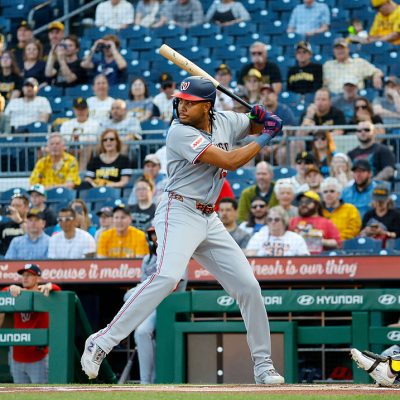

The speed was still elite, and a 94.7 mph average exit velocity showed his impact with the bat. The issue was — and has been — the quality of that loud contact.
One of the biggest concerns with Crews has been his high ground-ball rate. In 2025, he posted a 51% ground-ball rate, which carried over to a 44.5% rate in Triple-A this season. His first stint in the majors showed an alarming 57% ground-ball rate, but the sample size was small enough to write it off.
For Crews to be at his best, he needs to turn that hard contact into line drives and fly balls. His speed will allow for extra bases, and his raw power can translate into home runs. But lifting the ball with authority is step one.
Since he has return to the majors, Crews has shown improvements in this department, as his ground-ball rate sits at 38.9%. It’s a necessary step in the right direction. Now, he will need to start pulling the ball more.
Through his first 30 games, only 14.4% of his fly balls have been to the pull side, while 30% have been to center — the deepest part of the field.
With time, I think this issue will be corrected. Players need time on task to get comfortable with big-league pitching to adjust their timing. But, the bigger issue that could hold everything else back has been Crews’ pitch recognition.
Crews is currently sporting a 37.6% chase rate and a 25.2% whiff rate, and he is only walking 1.7% of the time. A hitter that was so advanced coming out of college is quickly turning into a free-swinger. While the sample is still small, it is a trend we saw last season and throughout the minors.
In order for Crews to do the most damage, he will need to get into hitter’s counts, and that becomes difficult when the pitcher isn’t given a reason to throw strikes. A 40% whiff rate on breaking balls and 37% whiff rate on off-speed pitches, which tracks with last year’s numbers along with his stint in the minors this season, is concerning.
In the 23 instances where Crews has gotten to a hitter’s count, he is slashing .348/.444/.739. In the 43 instances where the pitcher has the advantage, those numbers tank to .116/.116/.186. That’s beyond just bad — it’s borderline sound-the-alarms bad. Last season was a similar story: 1.001 OPS when ahead in counts, .417 OPS when behind.
Free-swinging when behind in counts won’t allow Crews to see many, if any, pitches he can drive. The margin for error becomes incredibly slim when the splits are this drastic. If Crews is going to make meaningful strides, it will start with improving his plate discipline.
What’s Crews Doing Well?
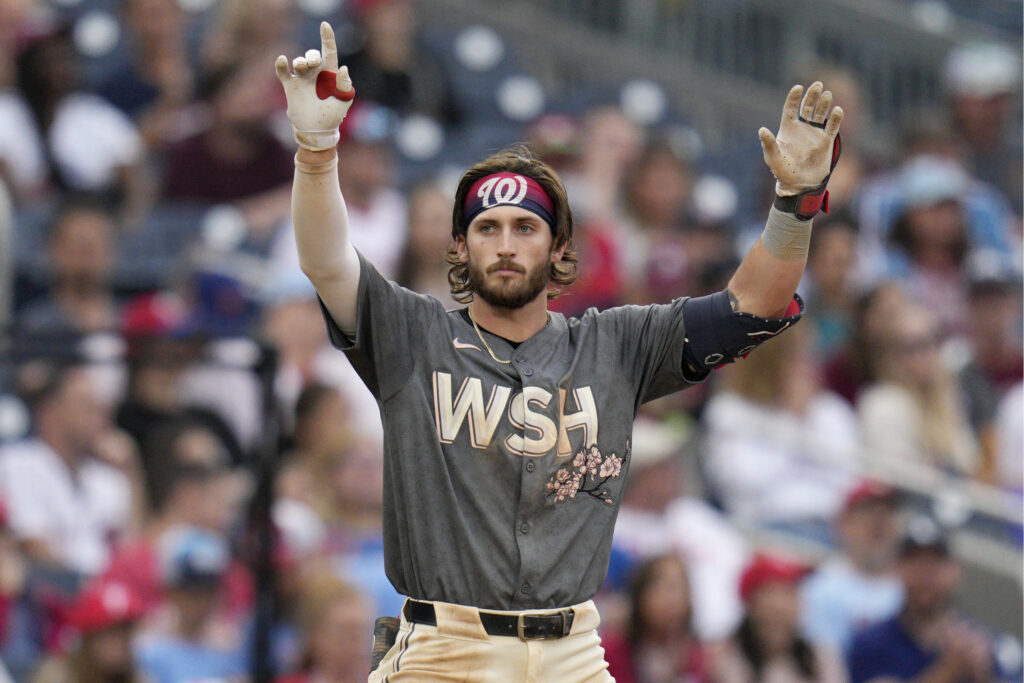
We briefly touched on this before, but it is important to emphasis the raw contact Crews is making. A 91.3 mph average exit velocity, a 10% barrel rate, and a 73.8 mph average bat speed are a strong foundation for more impact at the plate moving forward.
What we do know is that Crews has the ability to impact the baseball. What we don’t know is whether he’ll make the necessary adjustments to see more pitches he can drive and put that ability on display.
Another promising sign has been Crews’ zone-contact rate. I already explained why Crews needs to do damage on pitches in the zone, and the fact that he is not swinging through strikes does offer a bit of relief. His 85.9% zone-contact rate this season is roughly three percent above league average, eliminating one of the bigger holes you see with hitters who are struggling at their first taste of the major leagues.
So, you can check that box.
Think about how different Crews would be as a hitter if he saw more strikes. He’s already making hard contact, there’s no reason to be worried about his in-zone whiff, and he is starting to lift the ball more.
The one part of the equation that needs correcting is his pitch recognition against breaking balls. Letting those pitches go for balls and forcing pitchers to put the ball in the zone would make a world of difference.
Although Crews is only hitting .216 with a .378 slugging percentage off fastballs this season, he is posting a 93.1 mph average exit velocity and 17.7% whiff rate on velocity. Over time, I think those numbers would translate to more success if Crews became more comfortable recognizing breaking balls and could start hunting fastballs more often.
In 10 games during May (43 plate appearances), Crews posted a .573 OPS. Since the calendar has turned to June (20 games, 77 plate appearances), that number has jumped to a .684. Still well-below average, but it’s progress.
His improvement has been more in the power department with four home runs and seven extras-base hits compared to one home run and two extra-base hits, but you take improvement anywhere you can get it.
Luckily for Crews, he brings value beyond the batter’s box. Prospects who are overly reliant on one tool—whether it’s power at the plate or defense in the field—often face shorter leashes, but Crews isn’t that type of player.
Crews adds value in the field and on the basepaths. He has already collected +3 outs above average (OAA) in his short stint, matching his total from last year. Having him in right allows for James Wood to fill in as the designated hitter or play in left field more often.
Crews’ 31 stolen bases across 146 career games would be a strong total, but it doesn’t tell the full story. He’s one of the faster players in the game, and if he can make the necessary improvements to get on base more often, that stolen base total should skyrocket.
Being able to provide value beyond just his bat should allow Crews a longer runway and more opportunities to make adjustments. Now, it comes down to whether he can make those adjustments.
Final Thoughts
So, to answer the question at the top of the article: no, I don’t think it’s time to worry about Dylan Crews. Sure, those who are concerned have evidence to support their case, but I believe Crews is one or two adjustments away from becoming a significantly more impactful player.
We’ve seen him produce without chase issues in college. The competition was drastically different, but it at least provides a data point suggesting it’s possible. Some players never manage to escape those chase tendencies, and we often see them derail talented hitters. But I don’t believe Crews is one of those players.
Become a Member of Just Baseball
Subscribe and upgrade to go ad-free!
* Save 25% by subscribing annually.

Written by