
2026 MLB Breakout Prospects For All 30 Teams
 | |
| | 
Each year, I highlight prospects who appear primed for a breakout heading into the season. This year, I am expanding it from a handful of my favorite breakout prospect candidates to one for each team.
Given that each team gets a representative, not every breakout candidate is created equal, meaning there are some players I have more confidence in than others.
My 10 favorite picks will be in italics. One other note, I avoided any first-round picks as well as any prospects who have or will rank in the top five in their system.
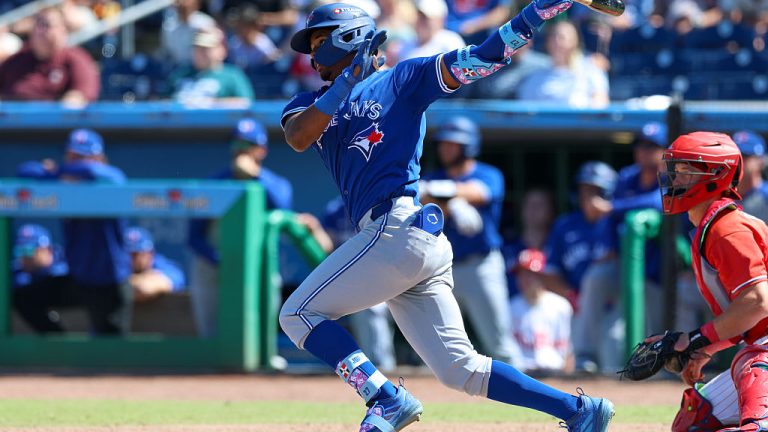
Blue Jays: Juan Sanchez – 3B
One of the best players in the DSL last season, Sanchez feels like a bit of a lower-hanging fruit selection. That said, I think he’s a top 100 prospect by season’s end, which is a relatively sizable leap from where he is generally perceived by the industry heading into 2026.
Still set to be just 18 years old for the entirety of the season, Sanchez looked really impressive in my live looks this spring. The bat-to-ball skills and feel for the strike zone were what helped Sanchez stand out in the DSL, but in an environment where hitters see fastballs at nearly a 70% clip and defenses are poor, mature players can outperform their peripherals
In my live-looks this spring, the infielder looks both more physical and his above average bat speed and bat-to-ball paired with a smooth operation should result in him piling up plenty of extra base hits. The big hurdle for Sanchez and any player who quickly moves from the DSL to potentially Low-A is the adjustment to seeing significantly more spin and better spin.
The offensive ingredients point towards continued success through the Florida Complex League and potentially Low-A in Sanchez’s age 18 season as he continues to grow into his exciting hit and power upside.
Orioles: Joseph Dzierwa – LHP
A second round selection by the Orioles in the 2025 draft, Dzierwa sat mostly 91-93 MPH for Michigan State, but from a unique angle with plenty of projection within his 6-foot-8 frame.
Dzierwa dropped his release point some, flowing down the mound more athletically while adding some strength.
The result has been a fastball that has sat closer to the mid 90s in shorter spurts this spring, with run and ride that plays up from a deceptive release. He comes set with his back facing the hitter and hiding the ball well through his delivery. That helps his best pitch–the changeup–play up with hitters really struggling to pick it up.
The fastball/changeup combo leading the way makes Dzierwa a reverse splits candidate, and he hammered that home by striking out eight right-handed hitters in three innings of work in the Orioles Spring Breakout matchup against the Red Sox.
The development of a breaking ball is the key for Dzierwa’s long-term outlook and even turning in the best 2026 season that he can. Early returns show improved shape on Dzierwa’s, getting more vertical separation from his fastball and sitting closer to a true gyro shape.
Yankees: Thatcher Hurd – RHP
A third-round pick by the Yankees in 2024, Hurd has yet to make his pro debut after undergoing Tommy John surgery ahead of the 2025 season. This pick is, of course, dependent on when Hurd returns, and the Yankees drive me mad with how infrequently they provide injury updates on their prospects.
Assuming Hurd is available for the majority of 2026, even with his workload limited, he has the upside to really burst onto the scene this season.
The Yankees’ ability to transform or maximize recently drafted pitching prospects through their pre-debut program has been quite impressive in recent years and Hurd looks like a prime candidate to reap the rewards of their pitching lab.
Hurd generates plenty of vert from his short arm delivery, with a sharp slider in the mid 80s and a two plane curveball at 78-81 MPH. He also flashed a cutter in the upper 80s that can potentially be an effective bridge pitch.
Given his ability to both tunnel and spin the baseball with the foundation of a mid 90s fastball that has good carry, Hurd looks like the exact template the Yankees love to work with.
Rays: Nathan Flewelling – C
Prep catchers are not always the most enticing archetype, but Flewelling has some unique ingredients from a young backstop. Flewelling’s plus arm stands out, as does his patience in the box, running a chase rate below 20% in his pro debut as an 18-year-old at Low-A.
Already a physical 6-foot-2, 200 pounds, Flewelling ran an average exit velocity of 88.4 MPH in his age 18 season, but sat at 91 MPH against fastballs. He has some moving parts to his swing, which affected his quality of contact against breaking balls, as well as the fact that he was getting his first dose of professional spin.
As Flewelling learns to maintain his posture and more consistently get his A swing off against secondaries, there’s even more of a quality of contact floor that should solidify.
The Rays rave about Flewelling’s makeup and with above-average raw power to pair with a good approach and catch and throw skills that translated into a 27% caught stealing rate in 2025, Flewelling could solidify himself as one of the more intriguing catchers at the lower levels in 2026.
Red Sox: Anthony Eyanson – RHP
I would also qualify Eyanson as low-hanging fruit because anyone within 20 miles of the Red Sox Spring Training Complex in Fort Myers could feel the Anthony Eyanson buzz. Eyanson’s pitchability was a key quality that made him a candidate to go in the first several rounds, but the Red Sox saw an opportunity to unlock more, taking him in the third round of the 2025 Draft.
Eyanson aggressively pursued velocity and bought into the plan the Red Sox had for him once the ink dried and the proof was in the pudding on the backfields, leading to a standout Spring Breakout performance.
After averaging around 93 MPH on his fastball in his draft year, the right-hander was routinely sitting in the upper 90s throughout the Spring, touching triple digits. The entire arsenal ticked up with the curveball looking more the part of a power curve and his gyro slider pushing closer to the 88-90 MPH range.
Now, it will remain to be seen if Eyanson can maintain these velocity gains over a larger sample, but even if he scales back to the mid 90s over longer outings, the improved velocity as a right-hander with above average feel to pitch and the tunnel he creates with a cut-ride heater, gyro slider and downer curveball form an over-the-top delivery should make him an effective arm from the jump.
Guardians: Joey Oakie – RHP
I picked Joey Oakie in last year’s breakout prospects, and we are going to lean into the “not wrong, just early” idea here because Oakie showed some really impressive flashes. It was a rough start to his pro career, as Oakie battled command issues in the Arizona Complex League, pitching to a 7.46 ERA in 35 innings, handing out 23 free passes.
The tides started to turn when the 19-year-old reached Low-A, showing improvements through his first four starts at the level before sprinting through the finish line. Oakie struck out 32 over his final four starts of the season while allowing just six hits and six earned runs.
It’s a unique release as Oakie works down the mound well from a low-three-quarters slot that results in a 5.2-foot release height paired with above-average extension. Hitters do not often see mid-to-upper 90s velocity from such a low release height, especially with the way Oakie is able to maintain vertical life on the fastball and extend.
He’s still working to find more consistency, shape, and command with his slider, but it flashes plus frequently with the horizontal action and tunneling effect playing up from his slot. He sparingly mixed in a changeup that flashed good arm-side run as well.
Oakie’s combination of a plus fastball and slider gives him a strong chance of continuing to miss lower-level bats at a high clip, even with just 40-grade command. If Oakie can push his in-zone rate up from 45% to north of 50% in 2026, there’s a good chance things look more like they did at the end of 2025, even if the long term outlook may still come with plenty of reliever risk.
Royals: Warren Calcaño – SS
Looks have been limited at Calcaño as he has managed a shoulder injury that dates back to before he signed for $1,847,500 and limited him to just nine games in the DSL. Health will be the big variable here, but the switch-hitting shortstop has good carrying tools and intriguing upside.
The glove stood out to Royals observers, citing his arm strength and actions at shortstop, giving him a chance to be an impact defender at the position. He’s a good athlete and plus runner who grabbed seven bags in those nine games before going down with the aforementioned injury.
His swing from both sides of the plate is compact with little wasted movement, and in limited action, he showcased a good feel for the strike zone, even against some of the liveliest arms the DSL has to offer. If Calcaño is healthy, his advanced nature at the plate and well-rounded game could make him one of the buzzier names in the Arizona Complex League.
Tigers: John Peck – INF
Peck quickly provided intrigue in the Tigers’ system as a sound, versatile infield defender with some underlying pop, but his poor batted ball angles limited him prior to 2025.
While the swing path was still somewhat flat last season, Peck raised his average launch angle by nearly three degrees, helping him slug a career-best .433.
There’s still more meat on the bone for Peck, who struggled to slug the same way in 25 Double-A games after torching High-A West Michigan for 95 games last season. Peck has put up strong numbers against both velocity and breaking balls, and while he was historically a patient hitter, he was more aggressive as he succeeded at High-A last season.
Presuming Peck is a bit more selective as he gets his second taste of Double-A with even just a hair more loft in his swing, his above-average raw power and good feel for the barrel should yield strong results. An above-average runner who can play a good shortstop or a very good third and second base, Peck could shift his outlook from utility infielder to potential regular with a couple of attainable, but key improvements in 2026.
Twins: Santiago Castellanos – RHP
Signed for just shy of $250,000 by the Twins in the winter of 2025, Castellanos immediately impressed in his pro debut in the DSL, at just 16 years old, showcasing a much more complete pitch mix than most of his peers.
Castellanos went to five different pitches in his pro debut with a 93-95 MPH fastball with above-average carry leading the way. His sweeper looks like it can be a plus pitch with more refinement, along with a changeup that he already has a decent feel for. He even showed a bridge cutter in the upper 80s that could give him a solid fourth look as well.
He does have a moderate frame, standing at 5-foot-10, but Castellanos is an impressive athlete and could potentially become more physical as he matures, given the fact that he will be 17 years old for the majority of the 2026 season.
Given his advanced arsenal, athleticism and solid feel to pitch, Castellanos should handle the Florida Complex League well with the chance to be the youngest arm at the Low-A level, where I think he could continue to succeed.
White Sox: Mathias LaCombe – RHP
Born in France, signed out of an Arizona JuCo near the Mexico border, LaCombe’s path is as fascinating as they come. It’s not only LaCombe’s story that is unique, but he also throws from a low three-quarters, short-arm delivery.
His sinker, sweeper combination from his horizontal slot creates a difficult look for hitters, with the sinker hovering around 95-97 MPH.
He commands both pitches well, considering the nearly 30 inches of horizontal separation they average and despite the two pitches dominating his usage, he had success against hitters of both handedness between the Arizona Complex League and Low-A in 2025.
LaCombe started to mix in both a splitter and a cutter more frequently down the stretch of the season, which could give him the third look he needs to pitch deeper into games with success. He has swing and miss stuff, paired with deception and signs of a potential third offering that could help him settle into High-A.
Health is a question for LaCombe, but if he can stay healthy, he could be a fun name to watch in the White Sox system for 2026.
Astros: Ethan Frey – OF
A third-round pick by the Astros in the 2025 Draft out of LSU, Frey immediately stood out at Low-A, mashing to a .904 OPS in 26 games with eye-popping peripherals. In the small sample, Frey barreled everything, and it was more of the same this Spring.
In 77 balls in play during his pro debut, Frey ran an average exit velocity of 94.7 MPH and Hard Hit rate of 54%. Yes, he was an SEC bat playing at Low-A, but Frey has a simple operation to pair with the raw power and effectively recognized and laid off of spin.
To reach closer to his ceiling and convert his plus raw power, Frey could improve his batted ball angles somewhat by hitting the ball in the air and to the pull side more frequently. Frey’s simple operation helped him produce stronger contact rates than anticipated for a hitter of his archetype, especially the further removed he was from a bit of a checkered injury history.
Athletics: Edgar Montero – SS
After a disappointing first year in the DSL, Montero repeated the level, returning far more physical and the results followed. Montero increased his OPS from .773 to 1.063 while tripling his home run total, but it was the numbers beneath the hood that stood out.
A switch hitter, Montero ran an average exit velocity north of 90 MPH from both sides of the plate, with a combined hard hit rate of 50% and ideal batted ball angles. He’s extremely patient, running a chase rate right around 15% against all pitch types.
Montero may ultimately slide over to third base, but there’s high power and OBP upside from the switch-hitter that make him an exciting candidate to turn heads in his first season stateside at 19 years old.
Angels: Hayden Alvarez – OF
A contact-oriented hitter with plenty of room for strength, Alvarez turned in a disappointing pro debut in the DSL in 2024 before coming into his own in 2025 by performing well in the Arizona Complex League and keeping things rolling into Low-A, where he looked sharp for 20 games.
Alvarez is an advanced hitter for his age with a good feel for the barrel and low chase. He is an above-average runner with long strides that chew up plenty of ground in center field, which allowed him to steal 33 bags on 42 tries in 2025.
The key for Alvarez’s breakout will be converting his 6-foot-3, 190-pound frame into more present strength and game power. His average exit velocity of 84 MPH left a bit to be desired, and it came with a ground ball rate that climbed as he faced more challenging pitching.
If Alvarez is a bit more physical with better batted ball angles, he can quickly become one of the more intriguing prospects in the Angels system.
Mariners: Nick Becker – SS
The Mariners second round pick in 2025, Becker, has exciting upside, albeit with some whiff concerns.
“He’s really wiry, big, strong, physical. You can see why our scouts loved him so much with just his athleticism and how he moves,” Toole said in a sit-down for our Mariners prospect notes.
Becker fits the bill of what the Mariners like to attack in the draft as a hard worker with plus makeup who immediately encouraged them with his buy-in. The swing is still relatively raw, very predicated on the aforementioned twitch and strength, but as Becker learns to utilize his lower half more effectively, there could be exciting power potential to unlock.
He should immediately be a factor on the base paths and has a shot to stick at shortstop. There could be some growing pains for Becker in 2026 as he learns to curtail the swing and miss, but his tools, projection, and makeup could help him burst onto the scene quicker than anticipated.
Rangers: Izack Tiger – RHP
A seventh-rounder in 2023, Tiger stood out in 2024, pitching to a 2.93 ERA in 46 innings across the complex, Low-A, and High-A. Tiger’s season was unfortunately cut short due to Tommy John surgery and a setback in his recovery last season resulted delayed his return to the mound.
When healthy, Tiger boasts an exciting three pitch mix, headlined by a mid 90s fastball with plus ride. He commands his 85-88 MPH gyro slider well, with a 72% strike rate and 40% whiff rate in that 46 inning sample, while also flashing an interesting splitter.
It will be a matter of health for Tiger in 2026, but if he’s available and looks anything like he did in 2024, the right-hander should enjoy plenty of helium.
Braves: John Gil – SS
A speedster with solid contact skills and power that should develop, Gil turned in a decent age 19 season, posting a 118 wRC+ at Low-A while walking nearly as much as he struck out. Gil is a patient hitter as well, getting on base at a good clip to be able to unleash his easy plus wheels, stealing 54 bags in 2025.
Gil has flashed some sneaky pop to the pull side, but it’s a more handsy swing predicated on getting bat to ball rather than doing major damage. When you watch Gil, he moves around like he’s one of the best players on the field, even if the numbers have not yet completely hammered that home.
Already one of the more fascinating position player prospects in the Braves system, Gil is likely a priority for the Braves to continue to develop, alongside Diego Tornes and the team’s first and second round picks last year, Tate Southesine and Alex Lodise.
Marlins: Luis Cova – OF
Another player who repeated the DSL and made significant strides, Cova increased his average exit velocity by nearly six MPH as well as his average launch angle by more than 10 degrees.
It was a total overhaul, both body and swing-wise, evidenced by a 20% gain in Hard Hit rate and a leap from a measly 4% air pull rate to 38%.
Cova turned in above-average run times as well, which translated into 35 stolen bases on 41 tries. Now working out of the Marlins Complex in his first year stateside, Cova has a chance to keep the momentum from his massive leap rolling with the Marlins overhauled hitting development infrastructure that has yielded positive results over the last year and change.
Mets: Jonathan Santucci – LHP
This is somewhat of a chalky pick because Santucci already had a good season last year, but after what I saw from him this spring, I think the left-hander will pitch his way onto top 100 prospect lists by mid-season.
Stuff has never really been a question, boasting a 93-96 MPH fastball from the left side with life and good extension with a short, hard slider in the upper 80s that is extremely difficult to differentiate out of his hand.
Santucci started to find my comfort with a depthy curveball that also benefits from the tunnel he creates and the way that he is able to hide the ball, staying closed for a long time with his glove hand flying high at the hitter first.
With his strides command-wise that date back to the end of the 2025 season, Santucci could easily be the most intriguing left-handed pitching prospect who did not make Just Baseball’s Preseason Top 100 Prospect List.
Nationals: Devin Fitz-Gerald – INF
Acquired by the Nationals as part of the Mackenzie Gore return, Fitz-Gerald was anything but a throw-in. A fifth-round pick out of Marjory Stoneman Douglas in South Florida, where his father Todd coached players like Roman Anthony, Jesus Luzardo and Coby Mayo.
Fitz-Gerald looks the part of a baseball baby. He plays the game like he grew up around it, getting the most of his average or better tools across the board.
The switch-hitting infielder may have been on the cusp of his breakout last year, mashing his way off of the Arizona Complex League and continuing his positive trend 10 games into his Low-A promotion before injuring his shoulder laying out for a ball in the hole at shortstop, ending his season at the start of July.
The offensive profile is already incredibly well-rounded in addition to the fact that Fitz-Gerald is a switch-hitter. He ran an 82% contact rate, above average exit velocities, and kept the chase rate around 20%.
Fitz-Gerald may slide over to second base, but the bat will be what thrusts him into top 100 prospect consideration by the end of the year.
Phillies: Matthew Fisher – RHP
A two-sport athlete, Fisher excelled on the football field, but it was his improvements on the mound that earned him a payday, signing with the Phillies for $1.25 million, the second-largest bonus of the 2025 class for the Phillies.
Fisher can really spin the baseball, throwing a cut-ride fastball that misses bats at the top of the zone from a below-average release height at 92-94 MPH. He will rip sweepers that flash plus and can flirt with 3,000 RPM, while the curveball is more of a work in progress, but flashes as well.
A third pitch will be key for Fisher, but his fastball is somewhat of a unique look with the cut ride it offers from a lower release, and Fisher’s feel to spin it should be an asset from the jump. His solid feel to pitch as well should point towards solid results in 2026 as a name that could quickly become one of the more intriguing arms in the Phillies system.
Brewers: Brailyn Antuñez – OF
This may be the deepest of cuts in the article. Signed for $900,000 in 2025, Antuñez turned in a sub-par pro debut, slugging just .282 on his way to a .635 OPS. The 18-year-old looked like a different hitter in camp, looking much stronger with a big leap in bat speed.
After launching just one homer in 55 games in his pro debut, Antuñez launched six in backfield games and has been turning heads around the Brewers organization.
Cubs: Kane Kepley – OF
A second-round pick by the Cubs in the 2025 Draft, Kepley spent his first two collegiate seasons at Liberty before transferring to UNC, where he continued to showcase his bat-to-ball skills and speed, walking twice as much as he struck out with 45 stolen bases.
Kepley’s pro debut at Low-A was more of the same, posting a .914 OPS in 28 games, buoyed by a .481 OBP. He leverages his 5-foot-8 frame well, with an extremely selective approach (15% chase in pro debut) and packs more of a punch than you may expect.
A menace on the base paths and an impressive defender in centerfield, Kepley is a high-floor prospect who could torch the lower levels.
Cardinals: Ryan Mitchell – OF
A well-rounded player and impressive athlete who already flashes plus bat speed, Mitchell really stood out on the back fields in Jupiter with the way he already handles his at-bats and harnesses his athleticism.
It’s a small sample, but I saw him succeed in left-on-left matchups and against more advanced arms. He already utilizes his lower half well with quick hands that allow him to get into it pull side, but also spray line drives the other way. Time will tell as to what Mitchell’s long-term defensive home is, but the kid can hit.
Reds: Stharlin Torres – RHP
A strike thrower who has turned in solid numbers at both the DSL and Arizona Complex League, Torres pounds the zone with a fastball at 92-94 MPH that flashes plus carry and a trio of secondaries off of it.
Torres’ best secondary pitch is his changeup, averaging 13 inches of vertical separation from his fastball. His slider looks the part of at least an average pitch, and he will mix in a cutter as well.
There’s likely room for more velocity as Torres heads into his age 19/20 season and with his solid fastball shape, feel to fill up the zone, and pair of viable secondaries. The right-hander appears equipped to handle his first taste of full-season ball in 2026.
Pirates: Khristian Curtis – RHP
A 12th-round pick out of Texas A&M in 2023, Curtis has had a tumultuous path to professional baseball. A surgical mishap during Tommy John surgery left Curtis with nerve damage in his arm, with questions as to whether he could pitch again. He has put those questions to bed, however, flashing good stuff through his first two professional seasons while piling up a 110 2/3 inning workload in 2025.
Curtis boasts a high spin fastball with exploding life through the zone, along with a pair of nasty breaking balls with sharp, late bite that held opponents to a combined .080 batting average in 2025. Curtis will also go to his 89-91 MPH cutter plenty as an effective bridge pitch between his heater and breaking balls.
While the surface-level numbers have been good, not great, Curtis has the stuff to turn in great numbers in 2026 with more consistent execution. It is probably not far-fetched to say that the pitchability side can continue to improve the further removed he is from the nerve damage and two elbow surgeries.
Diamondbacks: Ashton Izzi – RHP
Acquired by the Diamondbacks in the Josh Naylor deal at the 2025 trade deadline, Izzi has better stuff than his 4.80 ERA would imply at the High-A level. Izzi works down the mound well, getting above average extension from a slightly below average release height, with his fastball sitting in the mid 90s. He will also mix in a two seamer with six or so inches of vertical separation and seven inches of horizontal.
Izzi has a mid 80s gyro slider and a sweeper three ticks slower, with the latter generating a bit more whiff in 2025, averaging north of 16 inches of horizontal. His changeup shape implies better results than it yielded last season as well.
Put simply, Izzi’s stuff looks too good for him to put up an ERA north of four again and if he can put it all together this season, he could easily become one of the most exciting arms in the Diamondbacks system.
Dodgers: Landyn Vidourek – OF
An under-slot third-round pick by the Dodgers in the 2025 Draft, Vidourek has massive raw power that he finally started to tap into in his draft year at the University of Cincinnati.
There’s a significant whiff concern, holding Vidourek back from being a more highly regarded draft prospect, but he continued to showcase his huge power potential in his brief pro debut, producing five batted balls north of 110 MPH in his 16 games, including a max of 114 MPH.
The tools beyond the potentially 70-grade raw power, boasting plus run times and a plus arm in the outfield. Even if the hit tool can be near 40 grade, Vidourek has the upside to be the latest toolsy prospect out of the Dodgers system.
Giants: Trevor Cohen – OF
A third-round pick in last year’s draft, Cohen’s bat-to-ball ability, speed, and defense in centerfield gave him a high floor that the Giants were eager to pounce on after forfeiting their second-round pick as compensation for the Willy Adames signing.
Cohen ran a zone-contact rate north of 90% in his walk year at Rutgers and maintained that figure in his 28-game pro debut at Low-A.
While contact and speed are the name of Cohen’s game, he’s not a total slash and dash hitter, flashing some pop with a 108 MPH homer in his brief pro debut with a Hard Hit rate of 40% in the small sample.
He worked to tap into a little bit more impact this offseason, and if Cohen is able to get the ball in the air with a little bit more consistency, the blend of hit, speed, and enough EVs should result in a strong first full pro season.
Rockies: Wilder Dalis – SS
A 2023 IFA signing, Dalis spent the first two years of his professional career in the DSL, really struggling the first year, then turning in a much better second DSL campaign. Dalis took that momentum into a strong showing in the Arizona Complex League in 2025, earning a 31-game look at Low-A where he held his own.
A switch-hitter with good hand-eye, Dalis is more advanced and powerful from the left side, offering the potential for a solid blend of hit and power. If Dalis can close the gap from the right-side some, it will raise his overall numbers, and there was clearly an adjustment period against higher quality spin.
An above-average runner as well, Dalis offers an intriguing sum of parts as he looks to continue his upward trajectory in his first full season campaign.
Padres: Jorge Quintana – SS
Acquired by the Padres in exchange for Brandon Lockridge, Quintana was an underrated name to watch in the Brewers system, showing flashes in the Arizona Complex League. After the trade, the Padres, of course, immediately promoted Quintana to Low-A, where he understandably struggled.
A switch hitter with room for more strength and already above average raw pop for his age, Quintana offers above average bat speed, but really struggled with spin. Quintana looks like he has a strong chance to stick at shortstop to pair with above-average power potential and a good enough bat to ball to get into it.
Already with a pretty good feel for the zone, Quintana has the ingredients and projection to be one of the most exciting prospects in a thin Padres system if he is not already.
Become a Member of Just Baseball
Subscribe and upgrade to go ad-free!
* Save 25% by subscribing annually.
Written by
Aram Leighton is the Co-Founder and Executive Editor for Just Baseball. A Syracuse University grad, Aram is one of the hosts of the Just Baseball Show…