
The Minnesota Twins Can’t Miss the Boat on Trading Joe Ryan
Controllable starting pitchers are at a premium this trade deadline. The Twins can't pass up on shipping off Joe Ryan this time around.
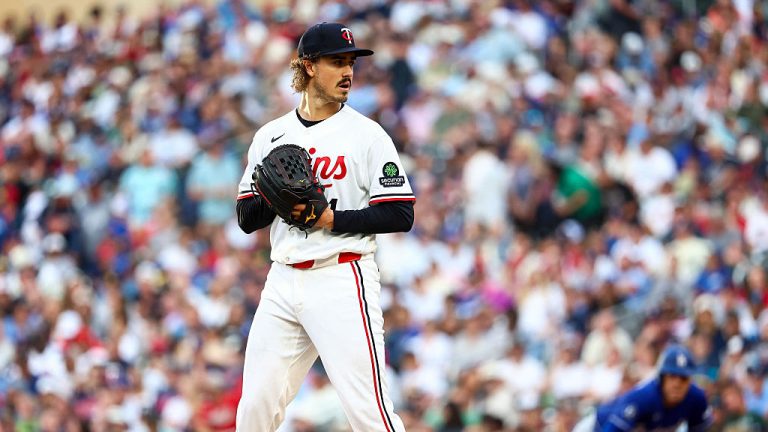
Tarik Skubal remains in the headlines, and for good reason. But teams unwilling to shell out the farm for half a season of Skubal should have Joe Ryan circled as a priority acquisition.
Ace-caliber arms are rarely available at the trade deadline, especially those with team control remaining. Reid Detmers represents the other notable cost-controlled arm available. He looks to garner a substantial package despite a limited track record.
Ryan has the track record and has the talent to front a playoff rotation.
Amongst starting pitchers with at least 280 innings pitched over the past two years, Ryan owns the fifth-best K-BB% and the eighth-best ERA, being named an All-Star in both seasons.
While the Minnesota Twins have stuck in the race thanks to the weak AL Central, the personnel isn’t suited for a deep playoff run. Or even a late playoff push, for that matter.
Delaying the contention window a year wouldn’t be disadvantageous for Minnesota. They’re set up quite well for the near future. Top-100 prospects Walker Jenkins (JB No. 8), Emmanuel Rodriguez (JB No. 39), and Kaelen Culpepper (JB No. 61) set to debut within the fiscal year.
While that may be an argument to keep Ryan around to front the staff going into 2027, shelling out a nine-figure contract to a will-be 31-year-old may not be in the organization’s best interest.
Here’s a dive into five mock trades the Just Baseball staff conjured up for contenders to attain Ryan’s services over the next two seasons.
Tampa Bay Rays
- Rays Receive: Joe Ryan
- Twins Receive: Nathan Flewelling (JB No. 54), Taitn Gray (JB No. 75), Anderson Brito
While starting pitching isn’t necessarily a pressing need for the Rays, their rotation is one filled with its fair share of uncertainty.
Shane McClanahan has returned to stellar results following a layoff of more than two years due to dual elbow injuries. Griffin Jax and Ian Seymour are both converted relief pitchers. It’s not as solidified a group as the current one-seeded Rays would like.
The Rays are surely going all-in. They’ve been tied to Tarik Skubal, Freddy Peralta, and Zach Neto this deadline cycle, and a reunion with Ryan (who they drafted in 2018) wouldn’t come as a surprise should the Twins make him available.
Alongside McClanahan, Nick Martinez, and Drew Rasmussen, all of whom have an ERA south of 3.10, Ryan’s addition would create a formidable postseason rotation.
The Return
In this mock trade, Ryan earns Minnesota two surging top-100 prospects from the Rays, Flewelling and Gray.
Following a slow pro debut last season, Flewelling has been one of the better bats in the South Atlantic League as a 19-year-old. It’s a compact swing geared to lift, excelling at pummeling balls in the air. While he whiffs a good amount, he hedges the hit tool with a patient approach.
Flewelling has the ingredients to stick behind the dish long-term. There are receiving and blocking chops with a plus arm and transfer.
It may seem redundant to add a catcher having just drafted Vahn Lackey and Carson Tinney with their first two picks, but the goal is to add as much talent as possible and worry about the fit later. Plus, having a quality catching tandem is valuable in itself.
Still 18 years old, Gray is a switch-hitting power hitter who has flashed above-average contact rates in Low-A. It’s a physical 6-foot-4 frame, utilizing a big leg kick and lofty, violent stroke from both sides of the plate.
Gray peaks north of 113 mph, though he hasn’t lifted consistently quite yet. It’s a relatively polished stroke from both sides, without much more swing-and-miss on the horizon to project. Gray has been patient as well, willing to draw his walks.
A catcher and outfielder as a prep, Gray has transitioned to first base, where his athleticism plays.
Acquired in a three-team deal in the offseason, Brito carries an unconventional look for a starting pitcher. Just 5-foot-10, Brito can touch triple digits, creating a demonic flat-approach offering. He’ll play an upper-80s slider and curveball off it.
Command can be inconsistent, and it’s not a frame befitting a big-league starter, but the stuff is stellar. Brito has dominated the lower minor leagues thus far.
Chicago Cubs
- Cubs Receive: Joe Ryan
- Twins Receive: Jaxon Wiggins (JB No. 95), Matt Shaw, Kade Snell
The Cubs have reached 60 wins despite horrid injury luck on the pitching front.
Justin Steele has been out since April of last year and looks to return in short spurts in September. Cade Horton underwent Tommy John surgery after two starts.
Matthew Boyd missed time this season, and Edward Cabrera and Ben Brown are currently on the injured list. Their quickly thinning pitching depth already forced a trade for David Peterson, who has a 5.06 ERA in five starts in Chicago.
Their starting pitcher unit has been bottom-third in the league by park-adjusted ERA-, with Shota Imanaga as the lone rotation mainstay through the season.
Ryan would immediately become the best pitcher on the staff, certainly worthy of a push from Chicago.
The Return

A 6-foot-7 righty, Wiggins remains on our top 100 despite dealing with elbow inflammation and command troubles. He is an athletic mover, dialling his fastball up to triple digits with above-average extension and a steeper release.
Wiggins sits in the 94-96 range with a run-ride four-seam, playing a gyro cutter and steep downer curveball off it. He’ll go to a changeup against lefties that tunnels extremely well off his fastball from his high slot.
Wiggins is still somewhat far off, needing to rein in the command to start at the major league level. Minnesota has become a nice destination for pitchers in recent years, though.
A former top-20 prospect, Shaw hasn’t captured much success in the big leagues, playing irregularly and handling a utility role. Labeled with above-average power projection as a minor leaguer, Shaw hasn’t tapped into much of his raw power, generating poor contact quality.
His hit tool hasn’t translated either, running middling contact rates as a rookie. They have taken a leap in his second year, but he still doesn’t look like the plus hitter he was made out to be. There’s certainly still intrigue, which makes him an interesting trade chip. He’d likely handle third base duties in Minnesota, though he’s looked good in right field.
Snell was a senior signee out of Alabama in 2023 following a transcendent final season of college ball. The results haven’t quite translated yet. But at his best, he provides contact ability, sound swing decisions, and sneaky raw power.
Atlanta Braves
- Braves Receive: Joe Ryan
- Twins Receive: Briggs McKenzie, Alex Lodise, Ethan Bagwell
While apart from Chris Sale, the Braves don’t have much name recognition in their rotation, they’re one of nine units to run an ERA south of 4.00, aided by consistency from Martín Pérez, Grant Holmes, and Bryce Elder.
But Atlanta’s rotation also holds the largest discrepancy between ERA and FIP, suggesting that the unit wouldn’t hold as one of the top 10 staffs in the league.
Spencer Strider hit the injured list in June with elbow inflammation. A return from Spencer Schwellenbach is uncertain, while AJ Smith-Shawver has begun his rehab assignment.
The Braves would be doing themselves a disservice by entering October with Pérez, Holmes, and Elder behind Sale. Adding Ryan behind Sale would create one of the better one-two punches in baseball.
The Return
Admittedly, Atlanta doesn’t have as much to offer as the other teams vying for Ryan, unless they’d be willing to ship off Eric Hartman or Troy Southisene, which is unlikely.
McKenzie signed for $3 million in the fourth round last summer, more than Southisene’s first-round bonus. Starting in rookie ball, he has climbed all the way up to High-A, striking out 28.7% of batters along the way.
Sitting in the 92-94 mph range, McKenzie gets around the ball extremely well, cutting his fastball slightly and spinning his curveball upwards of 3,000 rpm. The breaker takes on slurve shape, generating plus sweep and some depth in the low-80s. He’ll throw a changeup with conviction, showing an ability to kill spin.
McKenzie is a premium mover with a wiry frame. He’s an arm that looks to be able to sit 95 mph as he continues to mature. Strikes have been less consistent as he reached High-A, but there’s above-average command in the tank. McKenzie has a case to be a more coveted prospect than his teammate Cam Caminiti.
A Golden Spikes finalist, Lodise slashed .394/.462/.705 as a junior at Florida State, earning him a second-round selection. He found himself in High-A late last season, but was assigned to Low-A to start 2026. He was promoted on July 28 after mashing 21 home runs in 94 games.
His Low-A stint wasn’t as smooth sailing as expected, working on a more patient approach after chasing north of 30% of the time in college. He whiffed a decent amount, but the power output was potent. Lodise is a near-lock to stick at the six.
Bagwell holds a workhorse 6-foot-4, 230-pound frame, working 89.1 innings to a 2.72 ERA across Low-A and High-A. He moves well and gets down to a lower release height, working a fastball, sweeper, and changeup. Bagwell will get up to 96, holding 92-94 through games, with a tick or two more likely still left in the tank.
Milwaukee Brewers
- Brewers Receive: Joe Ryan
- Twins Receive: Braylon Payne, Bishop Letson, Blake Burke
After years of apparent retooling at the deadline, even when in contention, Milwaukee appears set to push all the chips on the table for a deep playoff run.
The Brewers are said to be in on Tarik Skubal and Freddy Peralta, and likely Ryan, should he be made available.
Behind Cy Young frontrunner Jacob Misiorowski and the currently injured Kyle Harrison, the rotation hasn’t been all that consistent. Adding Ryan to the playoff rotation would create a formidable trio, with Logan Henderson and Shane Drohan vying for the fourth spot.
The Return
Milwaukee has no shortage of names to offer up in trade discussions.
Payne was a surprise pick at 17th overall, profiling as a mid-day one talent. Exceptionally twitchy with some projectable power as a prep, he still managed to shock evaluators with his potent raw juice in his first full pro season. He’s peaked north of 115 mph, practically just throwing the barrel at the ball with thunderous bat speed.
It’s an unconventional swing, struggling to stay with softer stuff and whiffing at a high rate, but his ability to do damage on his B-swings is impressive. Payne is up to 18 home runs on the year, along with 21 stolen bases thanks to his double-plus wheels.
An extremely loose and athletic arm, Letson boasts one of the better fastballs in the minor leagues. Extending north of seven feet with a low release height, Letson sits 94 mph, up to 97 with his hellacious low-launch four-seam.
Letson is a one-trick pony as of now, unable to create great breaking ball shapes. His cutter and sweeper are fringy, though he’ll turn over a quality changeup now and then. The command is another question mark, but the projection and ceiling are massive.
Drafted alongside Payne, Burke is a pure masher. A stout 6-foot-3, 236-pound frame, Burke produces power to all fields, consistently in the air and north of 110 mph. He’ll chase and whiff at a high clip, but the output has been 26 home runs, including a three-homer night.
Philadelphia Phillies
- Phillies Get: Joe Ryan
- Twins Get: Gage Wood, Dante Nori, Matthew Fisher
Philadelphia arguably owns the best frontline trio in the league with Zack Wheeler, Cristopher Sánchez, and Jesús Luzardo, but the team lacks a quality fourth starter.
Aaron Nola is rocking a 5.61 ERA, with opponents slugging north of .700 against his duo of fastballs. Andrew Painter’s debut was disastrous, and they’ve yet to find a viable replacement.
Ryan may be a touch rich for Philadelphia. It’s a steeper price tag, but adding him would create a playoff rotation that competes with that of the Dodgers.
The Return
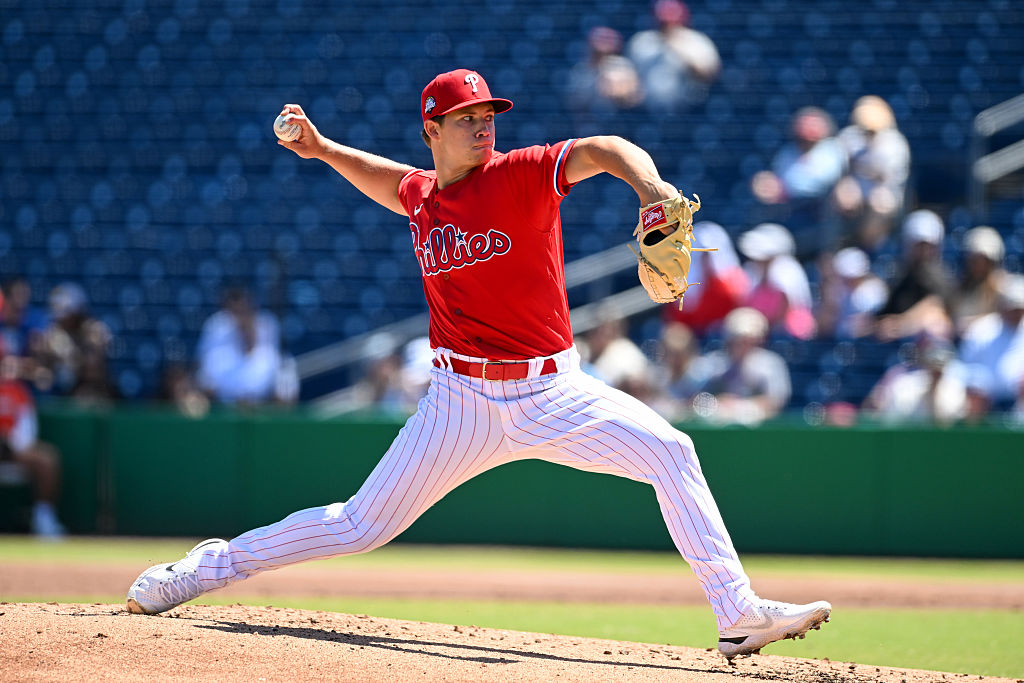
Rising into the first round following excellent performances at the tail end of his junior year, including a 19-strikeout perfect game in Omaha, Wood profiles as a quick riser with a stellar three-pitch mix.
Garnering a 70 grade on his fastball, Wood sits 96 mph with ride from a 5-foot-4 release height and nearly seven feet of extension, creating a flat-approach monster. Off it, he’ll go to an 85-88 mph slider with depth and a low-80s curveball that can generate up to -20 inches of vert. The slider is ahead presently, but the curveball flashes double-plus, able to creep into the 84-86 mph range.
Wood could thrive out of a big-league bullpen today, and should debut early in 2027. It would be a stellar return for Minnesota to nab him for Ryan.
A surprise first-round pick in 2024, Nori boasted one of the higher floor profiles in his prep class. Nori started for Team Italy in the World Baseball Classic thanks to his high-level bat-to-ball ability and defensive prowess in center field. The slug hasn’t quite come in Double-A, not helped by his aggressive approach, but his speed and defense make him a high-probability big leaguer.
Philadelphia under-slotted early last summer to sign Fisher for $1.25 million on day two. Fisher moves well from a physical 6-foot-3 frame, working an extremely vertical east-west arsenal. His velocity has been down at 91 mph, but he sat 92-94 as a prep with his cutting four-seam. His sweeper averages nine inches of vert with north of 10 inches of sweep. He works a cutter and changeup as well. Fisher hardly gives up free passes.
Become a Member of Just Baseball
Subscribe and upgrade to go ad-free!
* Save 25% by subscribing annually.

Written by
Landon is a recent high school graduate, currently 17 years old going to study Media at UC Riverside next fall. He excels with data analysis inside…