
Stock Watch: Biggest Risers and Fallers in MLB (June 4 Update)
With summer on the horizon, here are players who've seen their stock rise the most as well as others who have seen it fall.
In a couple of weeks, baseball and its fans will officially enter the summer months of the season. With that comes the time of year where sample sizes aren’t quite as small anymore and both fast and slow starts for players start feeling a little more real.
It doesn’t necessarily mean that teams are going to start panicking and finding replacements for players who have started off slow, or fully committing to high-performing players for that matter. But it may have them thinking about what adjustments to make to still be competitive by season’s end.
As player performances rise and fall, so does their stock in the eyes of fans and evaluators. Let’s take a look at the following group of players and who come in as some of the biggest risers and fallers across the league.
Stats are from game results prior to play on June 4
Stock Up
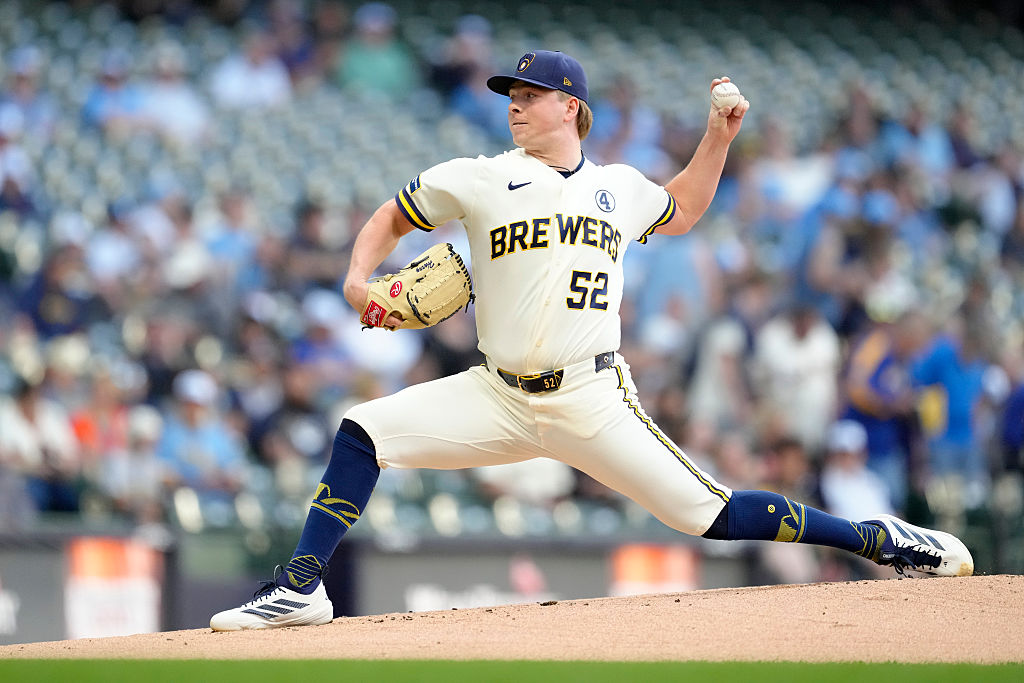
Kyle Harrison
Right before the start of the 2026 season, the Boston Red Sox traded left-handed pitcher Kyle Harrison, Shane Drohan, and infielder David Hamilton to the Milwaukee Brewers. In exchange, Boston received infielders Caleb Durbin, Andruw Monasterio, Anthony Seigler, and a 2026 Competitive Balance Round B Draft pick.
Safe to say, the Brewers are laughing all the way to the bank.
Harrison is putting together one of the best starts with a franchise by any pitcher in baseball history. He has joined an elite, legendary list of lefties, including Randy Johnson (Astros), CC Sabathia (Brewers), and Fernando Valenzuela (Dodgers), to record 70 or more strikeouts and an ERA under 2.00 in their first 11 starts with a team.
Through 57.1 innings pitched, Harrison has generated a miniscule 1.57 ERA, a 1.03 WHIP, and an excellent 2.7 bWAR. He has been completely dominant against right-handed hitters, holding them to a .192 average and a tiny .565 OPS. His splits stay elite under pressure, holding opposing hitters to a .150 average with runners in scoring position.
In his most recent outing, Harrison haunted his former club. Facing the San Francisco Giants, who traded him to Boston last June in the Rafael Devers blockbuster, Harrison racked up 12 strikeouts over 5.2 innings, allowing just a solo shot to Willy Adames in an 8-3 victory. He has now given up just one earned run over his last 23.2 innings of work.
Statcast loves the profile. His 95 mph four-seam fastball sits in the 95th percentile in Run Value, inducing a mere .328 slugging percentage from opponents. Meanwhile, his primary breaking ball, a filthy slurve thrown 29% of the time, ranks in the 96th percentile with a .115 batting average against. Harrison misses barrels, avoids hard-hit balls (94th percentile, 28.5%), and piles up whiffs while maintaining a 31.9% strikeout rate.
Casey Schmitt
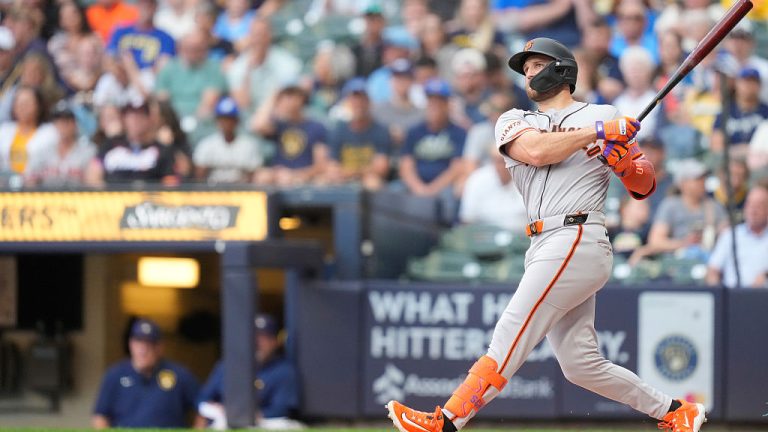
San Francisco Giants designated hitter and utility man Casey Schmitt has spent his 2026 season transforming his approach at the plate, and the visual results are turning heads. The 27-year-old is suddenly a professional at barreling up baseballs, already matching his career high in home runs (12) in just 225 at-bats, a mark that he achieved in 348 at-bats last season.
Schmitt finished the month of May with a .288 average and an .870 OPS. While he has encountered a minor 1-for-14 speed bump against elite Milwaukee Brewers pitching this week, his overall metrics show real adjustments.
Schmitt has fully embraced “first-pitch ambush mode,” collecting 12 hits on 29 balls in play when swinging at the opening pitch, including four of his home runs.
While he hasn’t handled standard fastballs particularly well this season (-4 Run Value), he is absolutely annihilating offspeed and breaking stuff. Schmitt is pummeling changeups to the tune of a .471 batting average and a slugging percentage north of 1.000, while also hammering sweepers and cutters.
His underlying stat card validates the breakout. Schmitt ranks in the 88th percentile in expected slugging (.509) and 89th in barrel rate (14.5%). He is also hitting lefties out of the park, carrying a .365 average and a .972 OPS against southpaws.
Whether hitting leadoff or anchoring the middle of the order, Schmitt’s improved bat placement has made him a fixture in the Giants’ lineup.
JJ Bleday
The Cincinnati Reds took a chance on former fourth overall pick JJ Bleday, and Great American Ball Park has proven to be the ultimate elixir for the 28-year-old outfielder. After finishing the 2025 campaign with a negative WAR and a sub-.700 OPS, Bleday has orchestrated a masterpiece of a turnaround in 2026.
Bleday exploded in the month of May, hitting .302 with a staggering 1.175 OPS. While he doesn’t bring much value on the basepaths or defensively, outside of his arm strength, his bat is carrying elite metrics. He boasts a .399 xwOBA (96th percentile), a .535 expected slugging percentage (93rd percentile), and a launch angle sweet-spot percentage that sits in the 98th percentile (44.7%).
Bleday has given right-handed pitchers nightmares all year, launching eight home runs against them while posting an OPS above 1.000. Surprisingly, he hasn’t been a liability against southpaws either, holding his own with a .303 average.
The Reds have utilized him everywhere from the two-hole to the five-hole, and Bleday has delivered regardless of the situation, showing identical dominance whether the bases are empty or packed with runners in scoring position.
He is hunting fastballs, sliders, and curves with violent efficiency. If he can figure out how to hit a changeup, Bleday could emerge as a legitimate breakout star in 2026.
Stock Down
Trea Turner
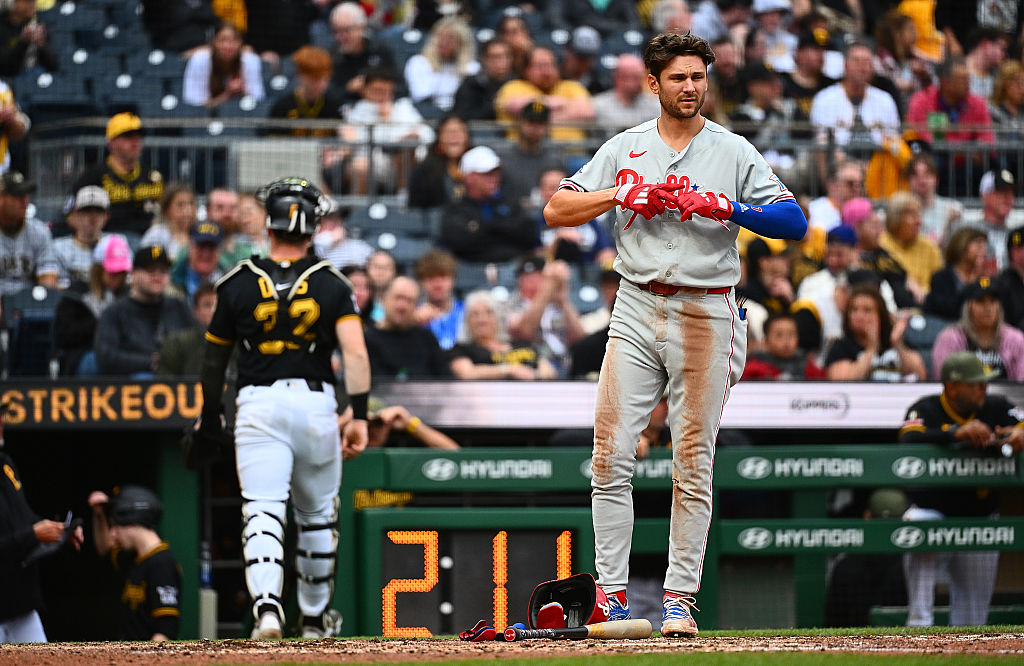
After a vintage 2025 campaign where he hit .304 and posted a 5.5 bWAR, Philadelphia Phillies shortstop Trea Turner has run into a roadblock in 2026. Through 60 games played, the 32-year-old star looks completely out of sync, slashing just .228/.277/.350 with a meager .627 OPS.
Turner’s signature ability to hit left-handed pitching has evaporated. A career-long lefty killer who typically hits near .300 against southpaws, Turner is hitting .183 against lefties this season. The road has provided zero comfort either, as evidenced by his weak .204 away average.
Turner’s struggles reached a low point in May, where he scraped together a weak .189 average and a .529 OPS.
The structural metrics point to a severe vulnerability to offspeed and breaking pitches. Turner is hitting well below .200 against anything that isn’t a fastball, and opposing sliders have given him massive fits. Once he gets into deep counts like 1-2 or 2-2, his batting average plummets below the .100 line.
While his sprint speed remains elite (99th percentile), his Batting Run Value has bottomed out into the 11th percentile. With his strikeout rate spiking up to 22% and his barrel rate sinking to the 25th percentile, fans are beginning to wonder if we are witnessing the first structural signs of an age-related decline for the dynamic shortstop.
Steven Kwan
Steven Kwan’s sudden inability to hit baseballs is easily one of the most perplexing storylines of the 2026 season. The Cleveland Guardians are flying high, sitting nine games over .500 and leading the AL Central, yet their foundational leadoff hitter has struggled so mightily that he was recently demoted to the bottom third of the batting order.
Kwan is slashing a puzzling .209/.326/.259 with just one home run and a career-low .585 OPS. While he still possesses elite eyes and control at the plate (34 walks to 25 strikeouts), nothing is dropping for him when the ball is put in play. He managed a brutal .188 average throughout May, a trend that actually began showing its face during the tail end of 2025.
Kwan’s Statcast profile is a total paradox. He ranks in the 100th percentile for both squared-up percentage (41.6%) and lowest whiff rate (8.1%), yet his average exit velocity (82.4 mph), bat speed (62.7 mph), and hard-hit rate (8.9%) all sit in the dead-last 1st percentile of Major League Baseball.
The defining issue is his launch angle sweet-spot percentage. A metric that routinely ranked in the 85th to 93rd percentile from 2023 to 2025 has fallen off to the 61st percentile.
Kwan built his career on exposing sinkers, curves, and changeups; this year, he isn’t generating Run Value against any pitch.
Jack Flaherty
Detroit Tigers right-hander Jack Flaherty did manage to secure his first victory of the 2026 season recently, turning in a gutsy five-inning shutout performance with six strikeouts against the AL-best Tampa Bay Rays. However, while that performance might provide a temporary psychological boost, the overall body of work remains incredibly alarming.
Flaherty sits with a 1-7 record, a bloated 5.31 ERA, and a 1.60 WHIP. Comerica Park is widely recognized as a pitcher-friendly environment, yet Flaherty has inexplicably pitched to an even worse 5.64 ERA when taking the mound in front of his home fans. May was an absolute disaster for the 30-year-old vet, as he logged a 6.26 ERA while failing to finish four innings in three separate starts.
Flaherty’s primary issue has been an inability to prevent traffic and baserunners early in counts. He has been exposed when pitching with clean paths, surrendering a .819 OPS to opposing batters with nobody on base.
His underlying analytics are covered in red flags. Flaherty’s hard-hit percentage allowed resides in the bottom 6th percentile (48.2%), his Pitching Run Value sits in the 5th percentile, and his groundball rate has plummeted to the 12th percentile (33.5%).
Opposing hitters are simply teeing off on his breaking stuff (-7 Run Value), preventing the veteran from finding any sustainable rhythm in the Tigers’ rotation.
Become a Member of Just Baseball
Subscribe and upgrade to go ad-free!
* Save 25% by subscribing annually.

Written by