
Stock Watch: Biggest Risers and Fallers in MLB for the First Week of May
While some players are seeing their value rise, others are seeing their stock fall through the first week of May.
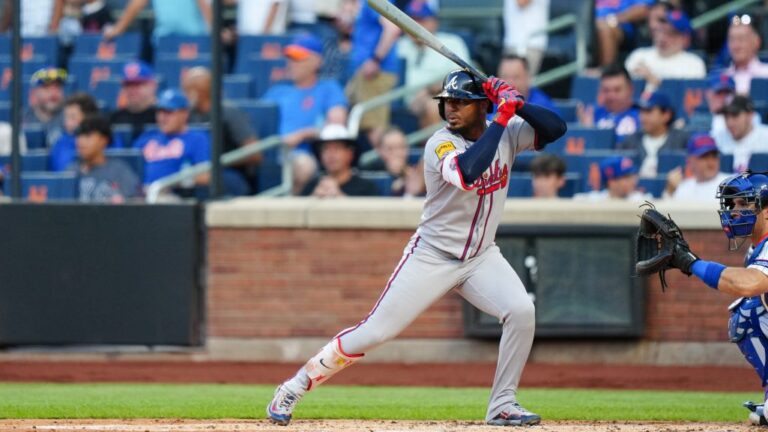
If there’s one storyline that remains true during every single MLB season, it’s that small sample sizes can make early performances tough to gauge. While this may be true, as the season continues to progress and the sample size increases, we get a better look at the type of output these players will actually produce over a full season.
Now that we’re officially in the first week of May, it’s beginning to become easier to analyze these performances. While some players’ stock is naturally falling due to regression to the mean, an equal number of players are proving that their early successes are more than a fluke.
Let’s meet this week’s edition of Just Baseball’s biggest risers and fallers for the first week of May, examining whether or not these current paces are sustainable, or if they’ll flip the other direction in the near future.
Stats were taken prior to play on May 6.
Stock Up
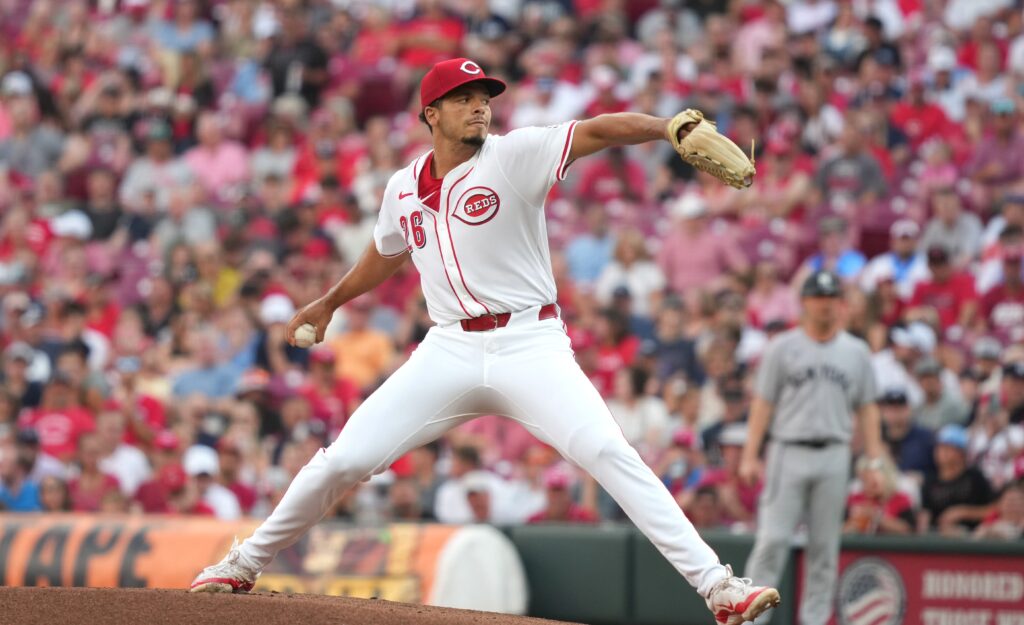
Chase Burns
Dating back to his time at Wake Forest, righty Chase Burns has had one of the more electric arsenals around the sport and a fiery attitude on the mound to match it. Currently, we’re seeing this massively translate to the big leagues, as Burns has quietly looked like one of the better young arms in the game.
Through his first 41 innings of the season, Burns has pitched to a 2.20 ERA, recorded a WHIP of 1.02, and struck out 46 batters to just 13 walks. Not only this, but Burns has already almost matched his total fWAR from 2025 in nearly the same number of innings.
A big part of Burns’ sudden success is his ability to keep the ball on the ground, something he struggled with quite a bit in 2025. His ground-ball rate has gone from 37.1% in 2025 to almost 50% in 2026, which is a huge development.
Considering that Burns plays in Great American Ballpark, a stadium widely regarded as one of the most hitter-friendly environments around the league, keeping the ball on the ground is very important. This will help eliminate serious damage caused by homers and other hard-hit balls.
Another change Burns has made that’s benefited him quite a bit is his adjustment in how he’s using his arsenal. Last year, Burns relied on his exciting heater nearly 60% of the time, but this year, he’s been less afraid to mix in his slider, and the results have been tremendous.
As it currently stands, opponents are hitting just .145 with a .183 wOBA against his slider. Not only this, but opponents have whiffed at the pitch nearly half of the time, which is a noticeable increase from last season.
Overall, the beginning of the season has gone as planned for Chase Burns. With his reworked arsenal producing better results and his uptick in ground balls limiting damage, he’s got a very real chance to continue climbing all season long.
Mickey Moniak
Although we’re not even 40 games into the 2026 MLB season, one of the best stories around the league has been the success of former first-overall pick Mickey Monaik. After struggling, being traded, and even being released, he’s finally found a home with the Colorado Rockies, and Monaik has looked incredible.
Through his first 28 games of the season, Monaik has slashed .333/.378/.745 with 11 homers, 21 RBI, a 192 wRC+, and 1.4 fWAR. For the 28-year-old, this stretch has been long-awaited, as he’s looking like the player he was once expected to be as an amateur.
As it currently stands, Monaik’s ridiculous 192 wRC+ is the fourth-highest mark in the sport for hitters with at least 100 plate appearances. For reference, only four players around the league have reached the 190 threshold, which is even a higher number than Aaron Judge currently possesses.
Part of Monaik’s early success is due to his impressive batted-ball numbers. He’s posted a 14.5% barrel rate so far this season, in addition to a respectable average exit velocity a few points above 90 mph.
Monaik’s performance against multiple pitch types have improved as well, which has been important for him. For example, Moniak struggled mightily against sliders in 2025 (.262 xwOBA, 35.6% whiff rate), and he’s shown small signs of growth against them in 2026 (.364 xwOBA, 33.3% whiff rate).
He’s even done this while still being a tremendous fastball hitter. So far this season, Moniak has posted an xwOBA of .402 against heaters and a 20.2% whiff rate, which are both improvements from 2025.
While there is still some valid concern around his chase rates (40.8%) and whiff rates (28.8%), this is arguably the best Monaik has looked on an MLB field up until this point.
Ozzie Albies
To put it plainly, switch-hitting second baseman Ozzie Albies has been a very confusing hitter throughout his major league career. He hasn’t posted a wRC+ above 100 during a full season since 2023, but he’s looking to end that drought in 2026.
Through 37 games thus far, Albies has slashed .329/.377/.552 with eight homers, a 157 wRC+, and a 1.6 fWAR. He’s already matched his fWAR total in each of the last two seasons (1.3 in both 2024 and 2025), and this same number is within the five-best single-season marks of his career.
When looking through his numbers, the first major improvement that jumps out is that his strikeout numbers have continued to improve. He was already among the best in the sport at limiting punchouts, but his current strikeout rate of 11.6% ranks among the top six percent of the league in 2026.
Another noticeable improvement is that Albies is performing far better as a left-handed hitter than he has in recent memory. Last year, Albies posted an OBP of .310 with an 85 wRC+ as a lefty, and this year, he’s improved these numbers dramatically. Now, his OBP has checked in at .371 while his wRC+ has risen to 139.
If there’s one remaining cause for concern in his game, though, it’s his batted-ball numbers. His barrel rate currently sits under five percent, and his average exit velocity of 87.1 MPH is actually lower than his mark in 2025.
However, this hasn’t caught up to him just yet, as he looks like the best version of himself we’ve seen in years.
Stock Down
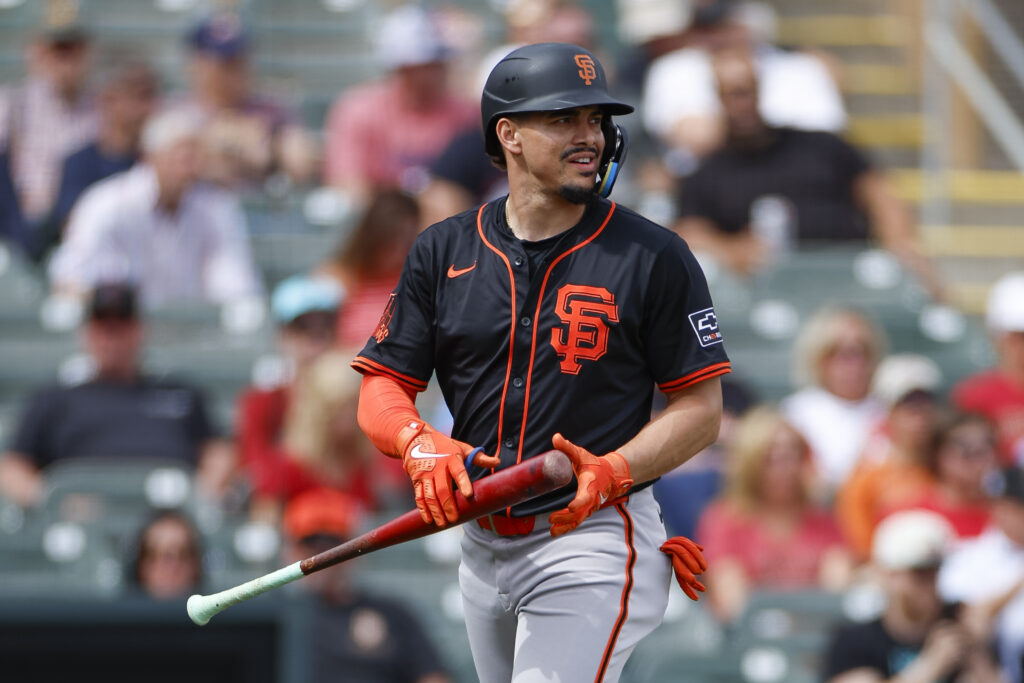
Willy Adames
When the San Francisco Giants inked shortstop Willy Adames to the largest contract in franchise history, they expected him to be a consistent run producer in the middle of their order. However, Adames’ start to the 2026 season has been quite the opposite, as he’s been one of the worst hitters in the sport.
Through his first 35 games of the season, Adames is slashing .199/.236/.340 with three homers, a 60 wRC+, and a -0.5 fWAR. If this pace holds, Adames is on pace to finish with a negative fWAR for the first season in his career, and the lowest total he’s posted since the COVID-shortened 2020 campaign.
On top of the concerning metrics on the surface, the underlying metrics don’t exactly inspire confidence, either. His plate discipline has completely fallen apart, as his walk rate has decreased 7.5% to just 4.1%, and his strikeout rate has ballooned over 30% for the first time since 2020.
Considering that Adames held one of the highest walk rates in baseball last season, this sudden drop-off is an extreme cause for concern.
His struggles go further than that, too. Adames went from hammering four seamers (.397 xwOBA, 53% hard-hit rate) to performing extremely poorly against them in 2026 (.239 xwOBA, 37.5% hard hit rate).
In the past, when Adames went through slumps like this, he always had elite defense to fall back on. This is no longer the case, as his OAA of -5 is tied for the second-worst mark among all shortstops in the league.
To sum things up, Adames’ start to the season has been nothing shy of concerning, and there aren’t many encouraging underlying metrics to fall back on. He needs to turn things around and fast before it’s too late.
Lawrence Butler
After a very encouraging 2024 season, the Athletics inked Lawrence Butler to a seven-year deal in hopes of eventually having him blossom into a franchise player. Just two years later, this contract hasn’t gone as planned, as Butler is off to a very rough start offensively.
Through 32 games so far in 2026, Butler is slashing .180/.286/.290 with three homers, a 53 wRC+, and a -0.4 fWAR. This has been a nightmare start to the season for the 25-year-old, and the underlying metrics are pretty confusing to match.
For example, Butler hasn’t seen any major differences in his quality of contact. While his barrel rate has fallen somewhat, his average exit velocity and hard hit rate virtually match his 2025 numbers in both areas. His xwOBA follows the same trend, as it’s only decreased by .001.
Interestingly enough, Butler is also performing better against fastballs than he has in recent memory. For example, his hard-hit rate against four seamers currently sits at nearly 60%, a number over 10% higher than his hard-hit rate in 2025.
These improvements extend to his performance against changeups, as they were a weak point for him in the past. However, he’s posted a better hard-hit rate, whiff rate, and strikeout rate against them in 2026.
While these metrics aren’t exactly encouraging or good, per se, they aren’t far off his 2025 metrics. Even though he may not return to his 2024 offensive pace anytime soon, there’s a good chance he begins to play similarly to his 2025 offensive profile sooner rather than later.
Brayan Bello
For multiple seasons now, Brayan Bello has been a peculiar right-handed pitcher. At times, he’s flashed the potential to be a front-of-the-rotation arm, but at his lowest points, he’s looked like he could barely hang with major league hitters. In 2026, we’ve seen more of the latter, as it’s been a disastrous start for the 27-year-old.
Through his first 32.2 innings, Bello has posted an abysmal ERA of 7.44, a WHIP of 1.93, and 24 strikeouts to 16 walks. In every sense of the meaning, Bello is getting hammered by opposing offenses right now, and the path to future success looks tricky.
For starters, Bello’s go-to offering, his sinker, has performed extremely poorly so far this season after being a very reliable pitch in the past. Opponents are currently hitting .369 against it with a .418 wOBA. Also, the pitch has produced a hard-hit rate of 50.0%, a number over 10% higher than last season.
Bello’s location with this pitch could be partially to blame. His heat map indicates that he doesn’t have a great feel for the pitch at all right now.
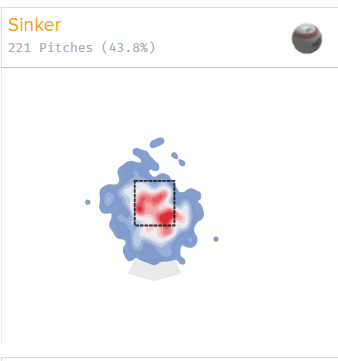
Not only is he throwing a lot of dead-zone sinkers when he throws it for strikes, but he’s struggling to even get it over the plate. He went from throwing it for strikes over 65% of the time to now recording a strike rate of just 61.4% with the pitch, which isn’t a good sign whatsoever.
Bello’s cutter is in a very similar place as well. Although he’s throwing it for strikes more (72.1% strike rate), he’s leaving it right over the heart of the plate, and it’s been hit well as a result.
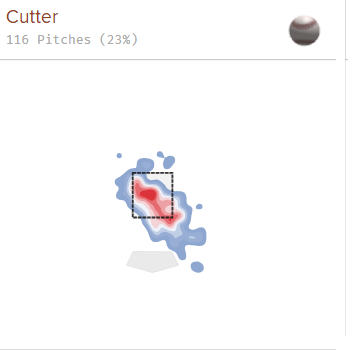
Between his sinker and cutter, these two pitches make up for nearly two-thirds of his pitch usage, and without either of these being reliable for him, he’s in a very tough spot to succeed. For Bello, he needs to avoid the heart of the plate at all costs, or else he risks this trend becoming even worse in little time.
Become a Member of Just Baseball
Subscribe and upgrade to go ad-free!
* Save 25% by subscribing annually.

Written by
Jay Staph, a huge baseball fan and stat nerd, founded and ran his own baseball writing website, BSBWrites, at just 16-years-old. With focal points around prospects,…