
Stock Watch: Biggest Risers and Fallers in MLB to Start 2026
Here are three players whose stock has soared to begin the 2026 season and three players who have struggled out of the gate.
The beginning of the MLB season is always full of small-sample surprises. Some fizzle out, like the hot start of Yermin Mercedes. Others are early signs of breakouts for the game’s brightest young stars.
It’s hard to know for sure whether these breakouts are made to stay, but at the very least, it’s a fun task to analyze. But that’s what this article is here for. I’m here to dive into the underlying numbers and get a peek behind the curtain.
But there are two sides to the small-sample coin, with some players not living up to their previous track record. These players have their stock dropping, but how much do the numbers back up this data?
Stats were taken prior to play on April 26.
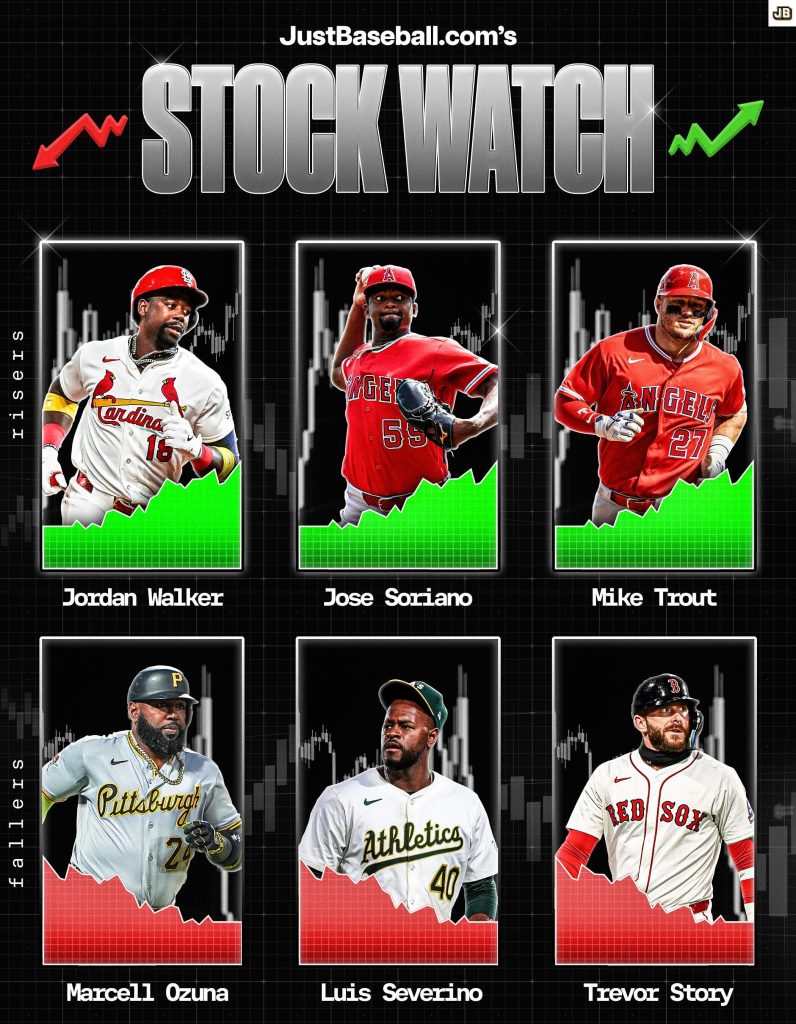
Stock Up
Here are a handful of players whose stock is up or down, and how much weight fans should put into the surface-level numbers.
Jordan Walker
What a tumultuous journey Jordan Walker has had as he tries to establish himself as a player who can hang in the big leagues. Walker was scattered across the top five of nearly every prospect ranking at the start of the 2023 season.
And in 2023? He wasn’t half bad. Sure, he wasn’t at the level of an NL Rookie of the Year award winner like Corbin Carroll, but a .787 OPS in 117 games is very respectable production for a rookie on the offensive end.
However, two problems emerged for Walker: his defense and his hitting regression. Walker struggled to the tune of a negative WAR in 2024 and 2025, hitting well below league average while toggling between the major and minor leagues. Over those three seasons, Walker produced a -22 OAA.
Alas, Walker is in the stock-up section for a reason, as he’s produced some compelling numbers in 2026. Across 25 games, Walker has an OPS over .900. So, what’s changed?
Walker completely reinvented his batting stance, going from a wide-legged, 43-degree open stance, which at the time was the second largest in the league, to a stance that’s just 10 degrees open.
Ironically, this hasn’t improved his ability to hit outside pitches, which is often a major benefit of closing a player’s stance. In a small sample, Walker’s whiff rate on pitches outside the zone has actually increased.
In 2025, Walker had a 70% whiff rate on pitches low and outside the strike zone. In 2026, it’s up to 91%. Pitches in the low and outside part of the strike zone saw a 15% increase in Walker’s whiff rate, from 35 to 50%.
That being said, Walker has been receiving fewer outside pitches with this stance change, and it’s resulted in some underlying numbers that back up the breakout. One look at the hitting chart on Walker’s Baseball Savant page, and it’s covered in red.
Walker is in the 94th percentile or higher in average exit velocity, barrel percentage, hard hit percentage, and bat speed. Additionally, on the defensive end, Walker’s range is still subpar, but his arm strength is in the 99th percentile, with his sprint speed being in the 93rd.
With better outfield reads, he could go from a liability to a reliable outfielder.
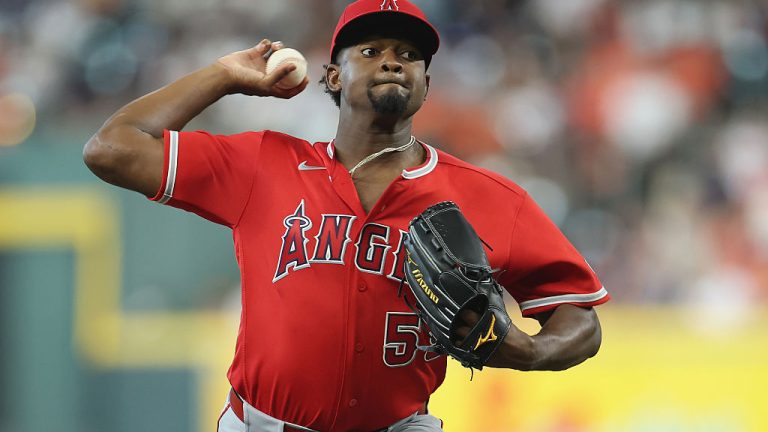
José Soriano
If you asked me preseason to guess which player would set the MLB record for lowest ERA through the first six starts of the season (min. 30 IP), I would be hard throw in a José Soriano guess.
In 2025, Soriano’s stats were about par for the course. He had an ERA in the mid-4.00s, but more importantly, his underlying metrics showed that he was getting shelled by the competition.
His hard-hit percentage and average exit velocity were in the fourth percentile, with his opponents managing hard hits nearly half the time they made contact.
Alas, Soriano needs credit for the way he has completely reinvented his face-value and peripheral stats this season in Anaheim. At 27 years old, Soriano has given up one earned run in 37.2 innings. This means his 0.24 ERA is nearly a run better than second-place Seth Lugo (1.15 ERA).
The other major difference is the peripherals. Soriano’s hard-hit rates have soared, or rather, for his opponents, shrunk. What was once a 48.2% hard hit rate is now down to 29.8%.
Mike Trout
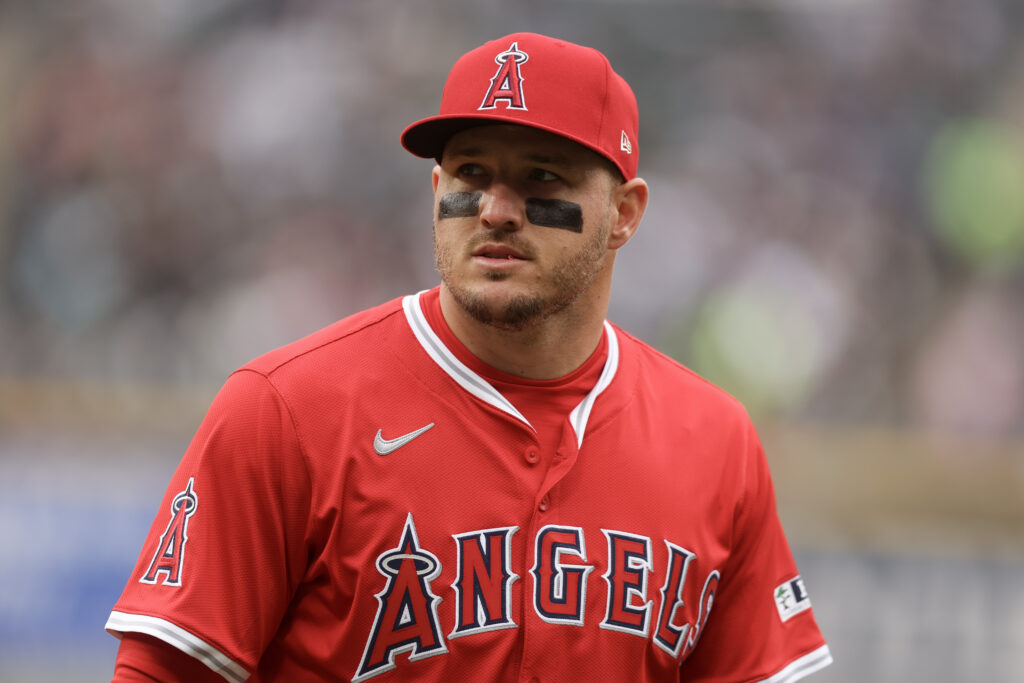
After dealing with countless injuries and a down season in his 2025 return, it seems like the Mike Trout of old may be back.
Through the first 27 games of the season, Trout is slashing .234/.419/.532. And the underlying numbers back this up as well, with Trout being in the 100th percentile in xwOBA and xSLG, showing that this display of power is no fluke.
But the bat wasn’t the only thing that made Trout’s prime one of the greatest this century; it was his other tools, too.
The outfield defense in a small sample this season has not been the Mike Trout of old, but on the basepaths, it’s clear that Father Time has not caught up to the 34-year-old Trout just yet, as his sprint speed is in the 87th percentile.
Fans have seen flashes of this over the injured years as well. In 2021, Trout managed to earn an All-Star nod while only playing 36 games.
Stock Down
Marcell Ozuna
Just two years removed from a fourth-place finish in NL MVP voting, it’s hard to justify keeping Marcell Ozuna in the Braves’ starting lineup. This isn’t unusual for Ozuna, per se, who’s had a roller coaster of a career.
From 2021-22, Ozuna posted an 83 OPS+ and -1.0 bWAR over 172 games. Then, in a surprising turnaround, Ozuna posted a 148 OPS+ and 7.8 bWAR across 306 games from 2023-24. However, just as quickly as Ozuna rose back to success, he has once again fallen.
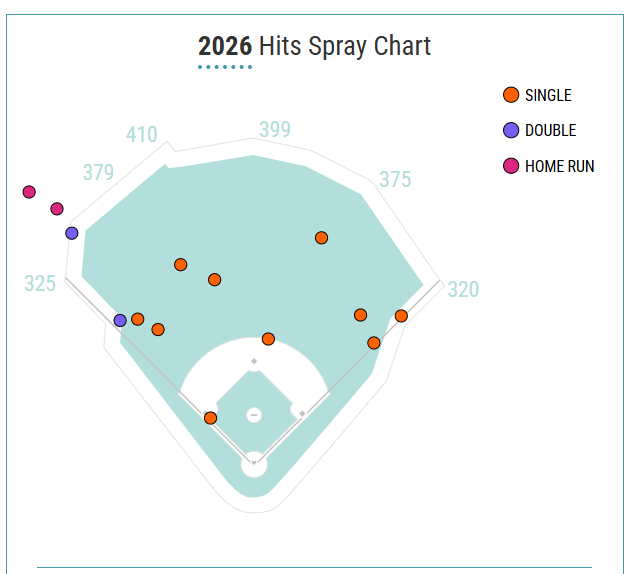
In his first 20 games of the season, Ozuna has an OPS of just .516. The biggest change, however, is the complete disappearance of Ozuna’s slugging prowess. In 93 plate appearances, Ozuna is slugging just .259 with four extra-base hits.
There may be more to the notion that his power is disappearing. Each of Ozuna’s extra-base hits were to the extreme pull side. That being said, he has begun to improve over the course of the season, with his xwOBA climbing to a point where it is now league average. His xSLG is in the 59th percentile as well.
The pull-side power may begin to explain the numbers underperforming his underlying stats as well. If teams are aware of his limited power to the opposite field, then the outfielders can better shift to accommodate his spray chart. Doubles may turn into flyouts should these power trends continue.
Luis Severino
Luis Severino shares many similarities with Ozuna in terms of his up-and-down career. At his peak, Severino’s 2017 season with the Yankees earned him a third-place nod in AL Cy Young voting. At his worst, he had an ERA north of six in the Bronx in 2023.
After a comeback season with the Mets that netted him a three-year, $67 million deal with the Athletics, Severino had an average first season in Sacramento, posting a 98 ERA+. In 2026, however, his numbers have suffered, with the root largely coming from a lack of control over his pitches.
There were signs of this in 2025. Severino’s walk rate was serviceable, but he led the league in hit batters. Now, in 2026, he leads the league in walks, with 21 in 31.1 innings. This means that Severino’s walk percentage is higher than any of his other seasons by a considerable margin.
There is reason for hope in Sacramento, as Severino’s latest outing could be the start of a comeback. Not only did he go 6.2 innings, but most importantly, he allowed just one walk. This is his first start of the season where he has allowed fewer than three walks.
The metrics suggest that Severino’s fastball is the pitch holding him back. While he averages 96.5 mph, this pitch lands him in the first percentile of fastball run value. Should Severino invest more time into throwing breaking pitches, his numbers could improve significantly, with his offspeed run value landing him in the 73rd percentile.
Trevor Story
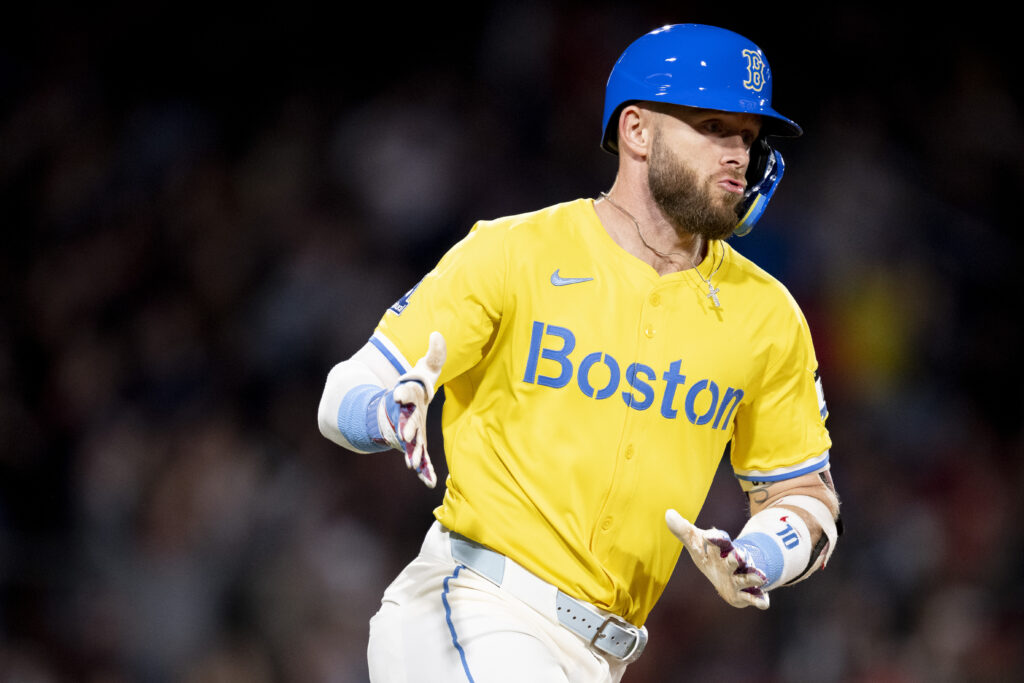
The second and third years of Trevor Story’s six-year contract in Boston were riddled with injuries and underperformance when Story managed to get on the field. Last season, in year four, he began to look like the Trevor Story of old, finishing with 25 home runs and a career-high 31 stolen bases.
Story’s 2026 campaign is looking less and less like last season’s, with the Red Sox shortstop struggling to the tune of 50 OPS+ in 119 plate appearances. A big aspect of Story’s success in 2025 was that Story cut down on his strikeout rate by 4.2%. In 2026, that number has once again boomed.
Underlying metrics back this up, too, with Story’s expected stats all being below average. These numbers don’t help to justify his K/BB ratio either, with Story’s chase rate being in the third percentile. Story has simply been too trigger-happy at the plate, and patience is required to repair his stock.
The other issue is that, like with Trout earlier, Story’s success came from being a toolsy player, able to swipe a bag or make a difficult defensive play. These numbers have also been down for Story in 2026, posting an 13th-percentile OAA. He still has a 73rd-percentile sprint speed, which is notable for a guy in his age-33 season.
While Story’s speed is likely to decrease as he gets older, he is still largely in control of both his bat and his defense. These will be necessary turnarounds for Story with just two years remaining on his contract.
Become a Member of Just Baseball
Subscribe and upgrade to go ad-free!
* Save 25% by subscribing annually.

Written by
Gabe Shumway is a prospect writer for Just Baseball. He is a student at Northwestern University studying Journalism and Environmental Policy, and can be seen or…