
3 Mock Trades That Would Make for a Perfect White Sox Deadline
These mock trades would help the White Sox capitalize on their strong 2026 season and build for the future at the same time.
 | |
| | 
The 2026 season has gone better than just about anyone could have expected for the Chicago White Sox.
While that does not necessarily mean that the organization is going to push all their chips in for the sake of the 2026 season, they’re in a position to add to a young core that has taken a huge step forward.
Chicago currently leads the AL Central while withstanding a few clear roster deficiencies that can be addressed this week.
The looming question is whether the Sox will simply buy in the form of rentals to finish this year strong, but keep eyes set on 2027, or mobilize legit prospect capital to add a piece or two to the long-term picture of the White Sox.
These trade packages offer a combination of those routes, stabilizing the White Sox rotation and catching position for this year with a key piece of the future added in the process.
Stats are current through July 31. All proposed trades are hypothetical.
Trade One: White Sox Acquire a Controllable Rotation Anchor
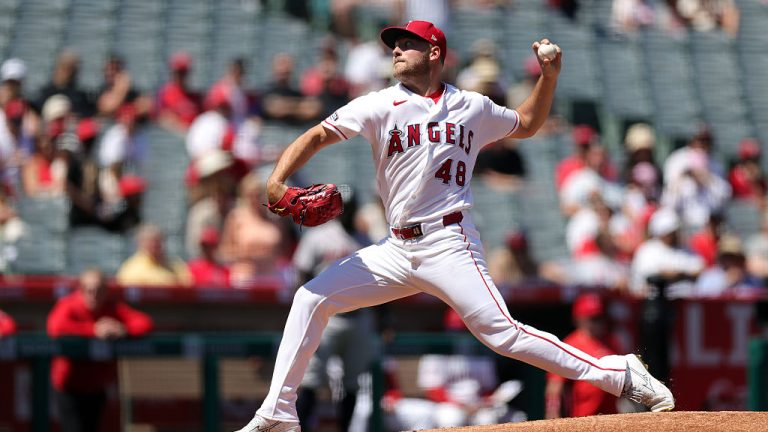
- White Sox Get: LHP Reid Detmers
- Angels Get: SS Billy Carlson (No. 3 White Sox prospect, per FutureSox), RHP David Sandlin (No. 9), OF George Wolkow (No. 14)
Why Reid Detmers Fits the White Sox
Chicago needs more length from its rotation. Sean Burke has been the only starter consistently working into the sixth inning. Davis Martin has helped keep the club in first place, but workloads are building, and the group still needs another dependable arm.
Reid Detmers has emerged as the controllable target.
Jeff Passan described the White Sox as searching for a rotation anchor to join Martin and Burke. He identified Detmers as Chicago’s best fit because of his ceiling and remaining control. Russell Dorsey later reported that the White Sox and Cubs have shown interest in the Angels left-hander.
Detmers cannot reach free agency until after the 2028 season. Chicago would be acquiring a starter for the window it is trying to open rather than borrowing one for two months.
Los Angeles has already opened its deadline by sending Logan O’Hoppe and Chase Silseth to Texas. Rival clubs expect at least one of Detmers, José Soriano and Zach Neto to be dealt, and possibly two. The two pitchers are considered more likely to move than Neto.
Detmers and Soriano are controlled through 2028, so the Angels do not need to force a deal. General Manager John Mozeliak can wait for a return that materially improves the organization.
Detmers would give Chicago the left-handed swing-and-miss starter it lacks while easing the workload pressure on younger pitchers.
What Reid Detmers Would Add
Detmers has made 22 starts and thrown 125 innings. His 4.03 ERA trails a 3.38 expected ERA and 3.35 FIP. He has 145 strikeouts against 38 walks, good for a 28.3% strikeout rate and career-low 7.4% walk rate.
Opponents have produced a .220 expected batting average and .286 expected wOBA against him.
Detmers throws his slider roughly a third of the time, and the pitch has been worth 13 runs. Opponents are batting .179 with a .256 slugging percentage against it. Its 35.4% whiff rate gives him a putaway pitch against hitters from both sides.
The curveball adds another way to miss bats. Hitters have batted .176 against it and whiffed on 39% of their swings. Those two pitches drive his strikeout production.
His fastball is less dominant. The four-seamer averages a little more than 94 mph and has been worth one run below average. Opponents have slugged .432 against it. The changeup has also been hit hard when Detmers has left it in the zone.
The fastball explains much of the gap between Detmers’ results and his ceiling. He has enough velocity to challenge hitters, but poor locations can turn into home runs because of his fly-ball tendencies.
His final start before the deadline showed both sides of the profile. Detmers held Houston to four hits and two runs over five innings on July 28. He struck out nine of the 20 hitters he faced and issued one walk. Both runs came on solo home runs.
Chicago would be betting that its pitching group can improve the fastball plan without taking away from the breaking balls. Even modest progress could make Detmers the best starter on the staff. Passan pointed to an eight-inning start against Texas earlier this month as the clearest example. Detmers allowed one hit, walked nobody and struck out 14.
Detmers would become the staff’s best swing-and-miss starter while Martin and Burke continue handling meaningful innings.
Why the Price Would Be Significant
The Angels have little reason to accept a modest return. Detmers is 26 years old, inexpensive and controlled through 2028. Los Angeles can trade him now, revisit the market during the offseason or keep him near the top of its rotation.
Bonemer is now a consensus top-100 prospect and one of the few players Chicago should protect. Including him would set the price at the highest end of the controllable starter market despite the fastball and home-run risk that remains in Detmers’ profile.
The White Sox can justify one premium prospect package at this deadline. They cannot pay that price again for Stephenson or Holmes without weakening the balance of the plan.
Detroit’s handling of Tarik Skubal could strengthen Los Angeles’ position. Clubs that miss on the deadline’s best starter may pivot quickly to Detmers.
Lance Brozdowski recently used a public surplus-value model to estimate Detmers at roughly $32 million. A package built around Billy Carlson and Christian Oppor came much closer to that figure than one involving Bonemer and David Sandlin. The latter represented a clear White Sox overpay.
Deadline urgency and individual evaluations can move the return in either direction. The O’Hoppe and Silseth deal offered an early example. Mozeliak said newly acquired shortstop Angel Arredondo belongs much higher in the Angels system than public rankings suggest.
Bonemer should remain out of the deal. If Los Angeles insists on that tier, Getz should redirect the package elsewhere.
What the Angels Would Receive
The Angels’ return for Detmers would start with 2025 first-round pick Billy Carlson, who has held his own in his first professional season and comes with significant upside.
Known for his 70-grade defense at shortstop, Carlson has a stable floor but should have more offensive upside to tap into as he develops. With plenty of room to fill out his frame and refine his mechanics, Carlson would instantly become the second-best prospect in the Los Angeles system.
David Sandlin debuted this season after being dealt from Boston to Chicago, showcasing the upside of a legit MLB starter right away in his MLB debut. He’s still a work in progress with two successful outings at the big league level and two rough ones. Currently in Triple-A, Sandlin could slot right into the Angels’ rotation to develop further at the highest level.
Rounding out this package heading to Los Angeles is George Wolkow, an overslot prep pick from the 2023 draft class who was selected at just 17 years old as a long-term project. The 6’7″ outfielder has elite power upside, but has a questionable hit tool that has taken time to develop.
This season has been a step in the right direction for Wolkow, who has slowly but surely refined his approach to allow him to tap into power. While far from a finished project, he provides the Angels with significant offensive upside along with Carlson.
Other Starting Pitching Routes
Detmers remains the preferred outcome, but Chicago has enough alternatives to walk away from an inflated price.
Yahoo Sports reported that Shane Bieber and Trevor Rogers are on the White Sox radar. Chicago also had representatives at Rogers’ latest start in Detroit. Rogers has a 1.85 ERA with 41 strikeouts over his past seven starts. Bieber carries more uncertainty after posting a 5.74 ERA in seven starts, though both pitchers would come at rental prices.
Freddy Peralta offers more upside than most rentals. Michael Marino reported that Chicago and New York discussed a package involving George Wolkow, Boston Smith and additional pieces before talks stalled. The Mets scratched Peralta on Friday once the market became active enough to make another start an unnecessary risk.
The Cubs and Rays were among the clubs most recently linked to Peralta. Chicago should value the pitcher he has been this season rather than assume a quick return to his Milwaukee form.
San Francisco has indicated a willingness to cover part of the money remaining on Robbie Ray’s contract, but the White Sox could absorb more salary and push for a lighter return. Ray has a 4.06 road ERA, though one nine-run start accounts for much of that split.
Kevin Gausman may offer the strongest postseason confidence among the rentals. Toronto is prepared to move veterans, but Gausman can block a trade to the White Sox. Any agreement would require his approval.
Seattle could move any of George Kirby, Emerson Hancock, or Luis Castillo. José Soriano may cost nearly as much as Detmers, and Atlanta is among the clubs believed to like the Angels right-hander.
Brady Singer and Tyler Mahle remain conventional rental alternatives. Foster Griffin has a 3.06 ERA through 129 1/3 innings, though Washington must decide whether a trade return outweighs the value of keeping him.
The White Sox do not need a perfect substitute for Detmers, but they do need enough credible alternatives to walk away if Los Angeles pushes the price into Bonemer/Carlson+ territory.
Trade Two: White Sox Address Their Catching Need
- White Sox Get: C Tyler Stephenson
- Reds Get: INF Colby Shelton (No. 21 White Sox prospect, per FutureSox) and RHP Duncan Davitt
Why Catcher Became a Deadline Priority
Kyle Teel’s ankle injury changed the White Sox deadline checklist.
Chicago added Eric Haase, another veteran depth option, but he does not solve the need for a catcher capable of regular work. Drew Romo and Edgar Quero are still working to establish themselves in the majors, and a division race leaves less room for the usual development process behind the plate.
The White Sox are searching for a catcher while continuing to pursue another starter. The target should be able to carry regular work now without blocking Teel once he returns.
Tyler Stephenson fits that timeline because he can reach free agency after the season. Chicago would be acquiring an experienced catcher for the stretch run rather than reshaping the long-term depth chart.
Adding a catcher this late requires an immediate adjustment to a new staff. Stephenson’s nearly 4,000 major-league innings would not eliminate that challenge, but they should shorten it.
Stephenson’s experience would give Chicago more certainty until Teel returns and another catcher it can trust in a postseason series.
What Tyler Stephenson Would Add
Stephenson enters Saturday batting .252/.338/.401 with eight home runs and a 100 wRC+. That would still represent a clear offensive upgrade for Chicago.
Statcast remains more optimistic than the traditional line. Stephenson has a .326 expected wOBA and .456 expected slugging percentage. His average exit velocity is 91 mph, and 45.2% of his batted balls have been hit hard.
His swing decisions support that projection. Stephenson has chased 22.1% of pitches outside the strike zone and walked in 11.4% of his plate appearances.
The strikeouts remain the concern. He has gone down on strikes 25.4% of the time, and his whiff rate is slightly worse than league average.
Stephenson has been much better over the past month. He enters Saturday batting .320/.389/.495 over his last 30 games.
Stephenson has been one of baseball’s strongest blockers this season. His average pop time to second base is 2.00 seconds.
Stephenson would improve the offensive floor without providing a clear defensive upgrade. Chicago would gain an experienced hitter while accepting one of the league’s weakest framing profiles.
Framing still matters on every pitch that goes unchallenged, but Stephenson has handled reviews better than any regular catcher this season. He has overturned 70 calls in 98 challenges, a 71.4% success rate.
His role would change after Teel returns. Stephenson could continue receiving a meaningful share of the starts while Chicago manages Teel’s workload. The designated-hitter spot could keep both bats available on selected days or split into a platoon.
Stephenson would give Chicago a credible major-league bat at a position weakened by injury.
Why Cincinnati Could Move Him
Cincinnati enters the deadline in last place in the National League Central. Stephenson is one of several Reds veterans who can reach free agency after the season, along with Brady Singer, Eugenio Suárez and Nathaniel Lowe.
The Reds can keep Stephenson through the season and consider a qualifying offer, but a trade would guarantee a prospect return without adding another commitment to the 2027 payroll. Their younger core gives the organization a reasonable path toward retooling for next year rather than extending every expiring player.
Cincinnati’s rentals are unlikely to produce significant returns. The catching market has thinned since then, which may improve the Reds’ leverage without turning him into a premium asset.
Shea Langeliers is out for the season. Ryan Jeffers appears increasingly likely to stay with Minnesota. Adley Rutschman is injured, while Colorado has placed a prohibitive price on Hunter Goodman. Several contenders still need catching help.
That market gives Cincinnati more leverage than a typical rental catcher would carry. Stephenson’s defensive limitations and expiring contract should still keep the return palatable.
Chicago should be willing to move useful middle-system talent. It should not allow an injury-created need to pull one of its better prospects into the deal.
Cincinnati could also package Stephenson with Brady Singer. Both are impending free agents and fit immediate White Sox needs. Combining them would let the Reds pursue a stronger return while giving Chicago a catcher and another starter in one transaction.
What the Reds Would Receive
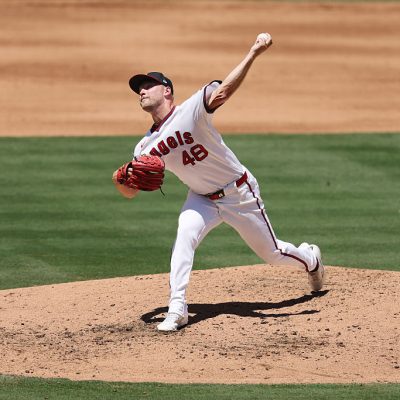
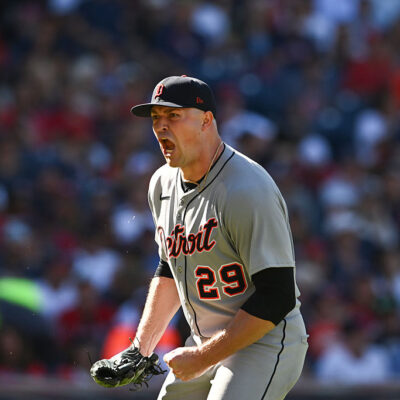
The market for catchers right now could potentially drive this price up, but it’s ultimately a rental catcher with 0.8 fWAR through 80+ games this season in Cincinnati.
Colby Shelton, a sixth-round pick last year out of the University of Florida, is the key get for the Reds. He mashed his way through High-A with one of the best Aprils in MiLB before struggling once he got to Double-A Birmingham.
After that tough adjustment period, Shelton has settled in at the Double-A level and put together a huge July with a 157 wRC+ through 22 games. He’s up to 19 homers this season while playing all three infield positions.
The second piece in this deal would be Duncan Davitt, who briefly debuted for the White Sox this season but has spent the majority of his season in Triple-A. The 26-year-old right-hander showed promise at lower levels, but has struggled to string together quality stretches in Triple-A.
He may be best suited as a reliever, but Cincinnati could test him out in various roles to see if he can fill a big league role.
Other Catchers Who Fit
Luis Torrens would provide the best defensive alternative. The White Sox have “engaged” with the Mets, but New York appears reluctant to move a catcher it values highly. Torrens would improve Chicago’s throwing and receiving while offering much less with the bat.
Liam Hicks presents the most interesting long-term fit. Miami is open to trading him, and his ability to move between catcher and first base would limit the overlap with Teel. Hicks rarely strikes out and has shown more power this season, though his underlying contact quality raises questions about how much of it will last. Control through 2030 would make him far more expensive than Stephenson.
Minnesota’s additions of A.J. Minter and Dean Kremer reinforce that it is buying. Ryan Jeffers is increasingly unlikely to move.
Bo Naylor is also off the board after Cleveland traded him to Milwaukee. The deal removes one catcher and one buyer from the market.
St. Louis is willing to listen on Iván Herrera and Pedro Pagés, though rival executives say the asking prices are high. Herrera offers the best bat, but the Cardinals prefer to limit his catching workload, and evaluators question his long-term fit behind the plate.
José Trevino remains a lower-cost defensive option. Carson Kelly also appears available.
Stephenson offers the cleanest balance between immediate help and acquisition cost. His expiring contract limits the long-term value for Cincinnati, but it is part of what makes the fit work for Chicago.
Trade Three: White Sox Add an October-Caliber Hybrid Arm
- White Sox Get: RHP Clay Holmes
- Mets Get: RHP Gabe Davis (No. 12 White Sox prospect, per FutureSox), UTIL Ryan Burrowes (Top 30 Just Missed List, per FutureSox)
Why Clay Holmes Completes the Deadline
Clay Holmes would give Will Venable another starting option without locking him into one role.
The White Sox are considering Hagen Smith, Tanner McDougal and Mason Adams as bullpen reinforcements. They could also acquire a conventional starter and shift Erick Fedde or Anthony Kay into relief. Those possibilities expand the staff’s options without removing the need for another reliable arm.
Holmes could start through August and September while Chicago manages rotation workloads. In October, he could remain in that role or return to the multi-inning relief work he handled for the Yankees.
Clay Holmes Before the Injury
Holmes was one of the Mets’ most effective starters before fracturing his right fibula in May. He posted a 2.39 ERA over 52.2 innings and nine starts. His 3.21 FIP supported much of the performance, although a 3.91 expected ERA suggests the run prevention was somewhat better than the quality of contact. FanGraphs credited him with 1.2 WAR.
Holmes still used his sinker on roughly half of his pitches, but the Mets gave him enough secondary options to face a lineup multiple times.
The sinker averaged 93.7 mph before the injury and has been worth seven runs. Holmes used it to produce a 56% ground-ball rate while allowing only three home runs.
His sweeper supplied the missing swing-and-miss pitch. Opponents hit .143 against it without an extra-base hit. They missed on 35.9% of their swings.
The changeup gave Holmes another option against left-handed hitters. His curveball also produced positive results in limited use. The cutter was the lone pitch to finish clearly below average.
Holmes’ 20.9% strikeout rate sits near the league average, and he issued 18 walks in nine starts. The profile depended on avoiding damaging contact and keeping the ball on the ground.
That approach carries some risk for Chicago. A ground-ball pitcher depends on the defense behind him.
The benefit is that Holmes can escape traffic without relying on a strikeout. His sinker creates double-play opportunities and could help a rotation that has struggled to work deep into games.
What the Rehab Starts Showed
Holmes made his first rehab start for Triple-A Syracuse on July 24. He allowed three hits and two earned runs across 2.1 innings. He walked two, struck out two and threw 28 of 51 pitches for strikes.
His second appearance was cleaner. Holmes completed four scoreless innings for Single-A St. Lucie while allowing two hits. He again walked two and struck out three. He threw 37 of 59 pitches for strikes.
The strike rate improved from 54.9% to 62.7%. Holmes finished the outing with a strikeout and two ground balls. His sinker reached 94.1 mph, and he used his full pitch mix.
The White Sox were among several clubs with scouts in attendance. Two executives who watched the appearance told The Athletic that Holmes “looked big-league ready.”
The attendance adds another reference point to Chicago’s interest, but it does not establish advanced negotiations. The White Sox were one of several teams evaluating him.
Holmes remains short of a normal starter’s workload. He has thrown 110 pitches across the two rehab appearances with 65 strikes, and four walks in 6.1 innings leave command as the main concern.
Holmes threw a side session Friday and is preparing to pitch Sunday. The Mets have not decided whether that appearance will come in the majors or in another minor-league rehab start. The plan could also change as trade talks develop.
Chicago would not need seven innings immediately. José Urquidy could provide length behind him, and scheduled off days would help manage the rotation while Holmes continues building.
The outings suggest the leg is no longer the main concern. The larger question is whether his command will return as the workload increases.
The Postseason Value
Holmes’ October value comes from his ability to change roles.
A postseason rotation could include Detmers, Martin and Burke. Holmes could take a fourth start when needed or shift to multi-inning relief when the schedule allows Chicago to rely on three starters.
He owns a 1.35 ERA across 20 postseason relief innings with 20 strikeouts and a 59.1% ground-ball rate. That history would allow Venable to use him before the ninth inning, particularly against the middle of an opposing lineup.
His sinker would also give the bullpen a different look from Chicago’s power relievers. The opponent and series schedule could determine his assignment.
Why the Mets Should Move Him
Holmes signed a three-year contract with New York before the 2025 season, but the structure allows him to leave after 2026. His player option for next year is worth $12 million, and a healthy finish would make opting out the likely outcome.
That makes him function like a rental in trade discussions.
Extension talks between Holmes and the Mets have gained little traction. He expects to be traded and has named both Chicago clubs among the logical destinations.
Holmes is not viewed as the same trade certainty as Peralta. New York could retain him and consider a qualifying offer if he opts out, though a deal remains the likelier outcome.
New York has already begun its sell-off by sending A.J. Minter to Minnesota for infield prospects Billy Amick and Bruin Agbayani.
Holmes and Peralta remain the Mets’ strongest rotation assets. Peralta was scratched Friday as his market intensified, while Luke Weaver, Brooks Raley and Huascar Brazobán continue to draw bullpen interest. Passan named the White Sox among the teams interested in that group.
Chicago has also engaged the Mets on Luis Torrens. One transaction could address both pitching and catching, although no report has linked Holmes and Torrens in the same proposal.
New York has shown reluctance to move Torrens, so the combined price could exceed the cost of acquiring either player alone.
Minter’s return provides a recent reference point for the Mets’ rental market. Holmes should command more because he can start and has already handled postseason relief work.
His recent fracture and likely opt-out should still keep the price below the controllable-starter tier. Chicago would be paying for role flexibility rather than several guaranteed seasons.

What the Mets Would Receive
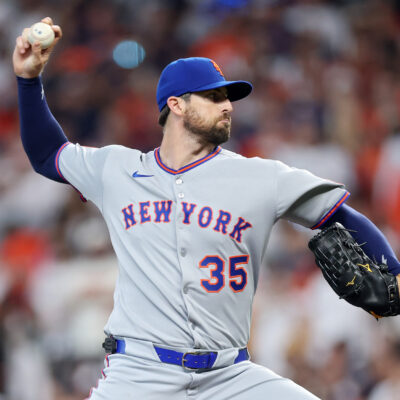
The Mets would bring back a pair of interesting pieces from Chicago, headlined by an arm who had some serious helium earlier this season before hitting somewhat of a wall at Double-A in his first pro season.
Gabe Davis was a fifth-round selection by the White Sox last season, and the 6’9″ right-hander has the upside of a legit starter if things click.
Despite never having much success at Oklahoma State, Davis is a specimen with stuff to back it. He breezed through High-A to start his career this season, posting a 2.63 ERA in eight starts with better-than-anticipated control.
Upon a quick promotion to Double-A, Davis has struggled mightily but has maintained strong whiff numbers and has upside that would entice New York.
The secondary piece going to New York is 21-year-old infielder Ryan Burrowes, who was highly-regarded just a few short years ago by the White Sox after signing out of Panama.
While the past few seasons have been tough, Burrowes has taken a step forward this season with a 114 wRC+ and a career-high nine homers in High-A before a promotion to Double-A this past week. He profiles as a likely utilityman with some upside to add more impact.
Other Leverage Options
With Minter off the board, the Mets still offer several alternatives. Weaver is under control through 2027 and may be the most expensive reliever available if San Diego keeps Mason Miller. The Pirates and Brewers are among the clubs showing strong interest.
Raley would add a left-handed option. Brazobán offers a lower-cost right-hander.
Adrián Morejón is the more realistic Padres target. San Diego is expected to keep Miller unless it receives an overwhelming package, and Chicago should not redirect a Detmers-level return toward a reliever. Morejón could become the best reliever moved if Miller stays.
Jeff Hoffman remains available with Toronto selling. Anthony Bender could also fit if Miami decides to move another power arm.
Chicago can turn to Smith, McDougal or Adams in relief. That allows Getz to prioritize the best starter available rather than force a separate bullpen trade.
If the Mets’ price on Holmes climbs too high, the White Sox can separate the jobs. They can add another starter and use a smaller package on a conventional reliever.
Total Prospect Cost
The three trades must be priced as one deadline plan. Detmers warrants the premium package because he is controlled through 2028. Stephenson is an expiring catcher, while Holmes carries injury and opt-out risk. Their returns should come from the middle of the system.
The reported Peralta framework provides a useful marker. Chicago discussed moving Wolkow, Boston Smith and additional pieces for a high-end rental, but there is no indication Bonemer entered the conversation. Getz can move real prospect depth without immediately reaching the top of the system.
Payroll gives Chicago another way to manage the market. If the price of control becomes unreasonable, the White Sox can absorb money for Ray, Gausman or Castillo and preserve premium talent.
The best version of this deadline spends premium talent once. Chicago can use rentals and payroll to fill the remaining holes while preserving enough depth to keep building around its young core.
Become a Member of Just Baseball
Subscribe and upgrade to go ad-free!
* Save 25% by subscribing annually.