
The Twins Spent a Decade Waiting for This Byron Buxton. Now What?
The Twins have long wondered what Buxton's talent might look like over a sustained period of health, and they are finally getting the answer.
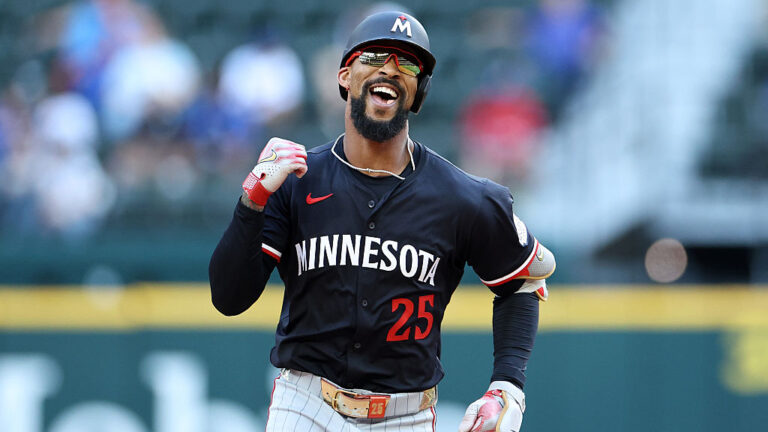
Nothing encapsulates the brilliance and the cruel tension of Byron Buxton’s career more completely than the catch he made on June 5.
Carter Jensen drove a ball toward the deepest part of straightaway center field at Target Field, the type of contact that ordinarily forces an outfielder to turn toward the wall and watch. Buxton did what he has done for more than a decade.
He tracked the ball at full speed, closed a distance few center fielders could cover and made a leaping backhanded catch before crashing face-first into the padding.
The play was extraordinary. It was also difficult to watch.
Buxton initially remained in the game, but he was replaced before his next plate appearance with a right shoulder contusion. Once again, one of baseball’s most gifted athletes had transformed a moment of brilliance into a moment of concern. Once again, the trait that made the play possible was inseparable from the reason Minnesota Twins fans held their breath afterward.
There has always been something mythological about Buxton.
The Mythology of Byron Buxton
Some of that mythology comes from his tools. Even at age 32, after more than a decade of accumulated injuries, he remains one of the fastest players in baseball. His combination of speed, power and defensive range has always felt slightly exaggerated, as though an evaluator designing the ideal center fielder had refused to make any compromises.
But the mythology also comes from the way Buxton plays.
He has never approached the outfield wall cautiously. He plays center field like a wide receiver unafraid to run a route across the middle of the field, knowing a collision may be waiting as soon as the ball arrives. The difference is that Buxton often reaches those collisions near full speed.
His fearlessness has created some of the defining highlights of his career. It has also contributed to the injuries that repeatedly interrupted it.
The cycle began before he reached the major leagues. The Twins selected Buxton second overall in the 2012 draft, and by the end of his first full professional season he had justified every ambitious projection. As a 19-year-old in 2013, he hit .334/.424/.520 with 55 stolen bases across two levels and established himself as one of the most compelling prospects in baseball.
The following season provided an early preview of the complications ahead. Buxton injured his wrist diving for a ball in spring training, aggravated it after returning and later suffered a concussion in an outfield collision shortly after reaching Double-A.
The tools were obvious. So was the cost of accessing them.
That tension followed him to Minnesota. Buxton’s career has rarely lacked evidence of greatness. It has lacked continuity.
In 2021, he produced 4.1 fWAR in only 61 games while hitting .306/.358/.647 with 19 home runs. One year later, he hit 28 home runs in 92 games and generated another 3.4 fWAR. Those seasons offered glimpses of a player capable of changing the shape of a lineup and the geometry of an outfield at the same time.
They also reinforced the enduring frustration: the Twins could see the superstar clearly, but they could rarely keep him on the field long enough to build around him.
That finally began to change in 2025.
For the first time since 2017, Buxton appeared in more than 120 games. He responded with the most complete offensive season of his career, hitting 35 home runs, stealing 24 bases and producing 5.0 fWAR across 126 games.
It was not the fully intact season fans and evaluators had spent years imagining. Buxton still required scheduled maintenance and missed time. It was something more meaningful: proof that an older, slightly diminished version of Buxton could still be one of the most valuable players in baseball.
He has carried that form into 2026.
Through his first 55 games, Buxton has already hit 18 home runs and produced 2.1 fWAR. A 40-homer season is within reach if his body permits it. Across 181 games between 2025 and the opening months of 2026, he has hit 53 home runs and stolen 29 bases.
After a decade of wondering what an extended stretch of healthy Byron Buxton might look like, the Twins have effectively received one.
This is not the same defender who once towered over the center-field leaderboards. In 2017, Buxton produced 27 Outs Above Average. That version of Buxton may be gone. Years of injuries and collisions eventually extract a price from even the most exceptional athletes.
The current version remains valuable in center field. He has produced three Outs Above Average this season, and his sprint speed remains in the 98th percentile. His bat is now impactful enough that he could help a lineup even if a team decided the best way to preserve him was to reduce his time in center and rotate him through designated hitter more frequently.
That evolution is part of what makes the current moment so compelling. Buxton is no longer valuable solely because of the possibility that he might one day become the player evaluators imagined. He is valuable because, at age 32, he has found a sustainable version of stardom.
Across the first decade of his major-league career, the most persistent question surrounding Byron Buxton was always the same: what might happen if he could simply stay healthy?
Over the last two seasons, the Twins have finally started to receive an answer.
The uncomfortable question is whether the organization is in a position to do anything meaningful with it.
Stuck in the Middle in Minnesota
Buxton’s resurgence has not coincided with much forward momentum for the Twins.
Minnesota entered 2025 with the possibility of an ownership change hanging over the organization. After years of frustration surrounding payroll and the direction of the franchise, a sale offered the possibility of a new era.
That change never arrived.
The Pohlad family ultimately retained principal ownership of the team, adding limited partners rather than completing a full sale. By the time that decision became official, the major-league roster had already been stripped down at the trade deadline.
What began as a season with playoff expectations ended with one of the more jarring midseason sell-offs in recent memory.
The Twins did not merely move expiring contracts around the margins. In less than a week, they traded Carlos Correa, Chris Paddack, Jhoan Duran, Griffin Jax, Brock Stewart, Danny Coulombe, Louis Varland, Harrison Bader, Willi Castro and Ty France.
The heart of the bullpen disappeared almost overnight.
Trading veteran relievers can be a rational decision when a club is trying to reset its payroll, replenish its system and extend its competitive runway.
The problem is what Minnesota chose not to become afterward.
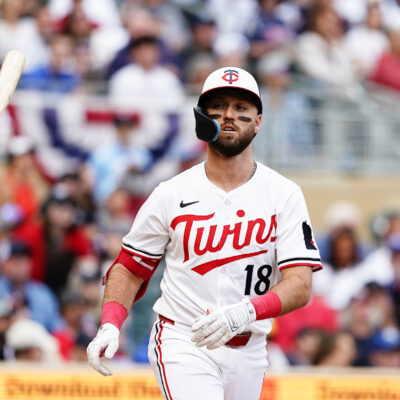
The Twins did not fully rebuild. They held onto Joe Ryan, their most valuable controllable starting pitcher. They kept Buxton, the franchise icon whose contract and no-trade protection made any potential deal complicated. They retained enough talent to avoid bottoming out but not enough to clearly project as a playoff-caliber team.
That is how a franchise ends up in the middle.
The 2026 Twins have reflected that tension.
They are not without bright spots. Ryan has again been excellent at the front of the rotation. Bradley, one of the pieces from last summer’s deadline sell-off, has provided exactly the type of controllable starting-pitching value the Twins needed. Rookie Connor Prielipp has quickly emerged as one of the most interesting arms on the roster, accumulating 1.0 fWAR in just 43⅔ innings.
That starting-pitching performance has mattered even more because Pablo López was lost before the season could begin. A team already trying to thread a narrow path back toward relevance lost one of its highest-end starters to Tommy John surgery, yet the rotation has still held together better than reasonably expected.
The rest of the roster has not provided the same stability.
Offensively, the Twins have been too reliant on a small group of productive hitters. Buxton has carried the lineup with another star-level season. Ryan Jeffers has been excellent when available. Trevor Larnach and Kody Clemens have offered support.
But too many regular plate appearances have gone to hitters producing below league average, leaving Minnesota without the lineup depth necessary to consistently support its pitching staff.
That imbalance is especially damaging because the bullpen, gutted last July, has become one of the clearest weaknesses on the roster.
The departures of Duran, Jax, Stewart, Coulombe and Varland removed the type of late-inning infrastructure that protects a flawed offensive team. When a lineup is deep and explosive, bullpen volatility is easier to absorb. When an offense is leaning heavily on a handful of bats, every late lead feels fragile.
That has been the shape of Minnesota’s season: enough starting pitching to remain competitive, enough Buxton brilliance to make the roster interesting, but not enough offensive depth or late-inning reliability to create real separation.
At 30-37 as of June 9, the Twins remain on the fringes of the American League Wild Card race. They are close enough for the standings to suggest possibility, but that says as much about the state of the American League as it does about Minnesota’s quality.
A flawed team can remain within striking distance of a playoff spot in June. That does not make it a contender. It makes it a team with a decision coming.
The uncomfortable part is that Buxton’s individual resurgence makes that decision harder, not easier.
If he were declining, the Twins could simply keep him as a franchise fixture and allow the next core to arrive around him. If Minnesota were clearly contending, the organization could justify building around the remaining years of his contract.
Instead, the Twins are stuck between timelines.
Buxton is playing like a player capable of changing a postseason series. The Twins are playing like a club still trying to determine whether it belongs in the race at all.
That is the fork in the road approaching the deadline.
Minnesota can squint at the Wild Card standings, hold onto its best players and hope the bullpen stabilizes, the lineup deepens and the league remains soft enough to leave the door open.
Or the Twins can acknowledge a harder truth: this version of Byron Buxton may be more valuable to a team prepared to win in October than to a franchise still searching for its next clear direction.
A Thought Exercise: Who Could Use Byron Buxton?

Any discussion of a Byron Buxton trade must begin with Buxton himself.
The Twins cannot move their franchise center fielder simply because the standings make a trade logical. Buxton has full no-trade protection through the end of the 2026 season. He is not leaving Minnesota unless he decides that he wants to leave Minnesota.
That distinction matters.
Buxton has spent his entire professional career with the Twins. He is a fan favorite and has repeatedly expressed his affinity for Minnesota, even as injuries, ownership frustration and the deterioration of the roster have complicated the latter stages of his prime.
He has not demanded a trade. He has not publicly asked the Twins to send him elsewhere.
But the door no longer appears to be completely closed.
Reporting during the offseason indicated that Buxton would consider waiving his no-trade clause for the right opportunity, and not exclusively for a return to his native Georgia. That does not mean he is eager to leave. It means the competitive circumstances surrounding him have changed enough to make the question worth asking.
If the Twins reach July still hovering around the fringes of the Wild Card race, could they approach Buxton with an uncomfortable reality? Could they acknowledge that the current roster is not positioned to maximize the remaining years of his career and offer him an opportunity to pursue a championship elsewhere?
A trade would not be a conventional rental acquisition.
Buxton is under contract through 2028 at roughly $15 million annually, an affordable figure for a player performing at an All-Star level. Any team acquiring him near the deadline would receive approximately two and a half seasons of control. The buyer would need to accept one of the widest health-risk ranges in baseball, but it would also be adding a rare combination of power, speed and defensive value without paying the premium associated with free agency.
Nearly every contender could find room for a player with Buxton’s skill set. Far fewer have the combination of roster need, prospect capital and competitive runway to justify paying for his remaining value.
Four clubs stand out.
Philadelphia Phillies
Philadelphia is an easy place to begin.
The phone lines between the two front offices already work. At last season’s deadline, the Phillies acquired Jhoan Duran and Harrison Bader from the Twins in separate deals. Duran was the significant addition, a late-inning force capable of changing the complexion of a postseason bullpen. Bader was the complementary move, adding another credible outfielder to a club attempting to win a World Series.
Buxton would be a much larger swing.
The Phillies entered 2026 with an aging core and a clear objective: extract another deep postseason run from the remaining overlap between Bryce Harper, Kyle Schwarber, Zack Wheeler and the rest of a veteran roster.
Their lineup has not held up its end of the bargain.
Schwarber, Harper and Brandon Marsh have performed, but too many everyday plate appearances have produced too little offense. Buxton would not merely patch a hole. He would alter the ceiling of the lineup.
He could provide right-handed power, improve the outfield defense and give Philadelphia another player capable of changing a game without requiring a string of hits. He could play center field when needed, rotate through designated hitter and receive enough scheduled rest to maximize the likelihood that he remains available in October.
The more difficult question is price.
Andrew Painter and Justin Crawford entered the year as two of Philadelphia’s most intriguing young players. Both have reached the majors, and both have experienced uneven introductions to the highest level.
Their early struggles do not make them disposable. Painter still carries significant upside as a potential rotation cornerstone. Crawford remains a young, athletic center fielder with years of club control.
A serious negotiation would likely begin with Minnesota asking whether one of those players is available. If Philadelphia is unwilling to discuss either one, Gage Wood offers an alternative prospect centerpiece. The right-hander, selected in the first round of the 2025 draft, has already moved quickly through the system.
Those should be treated as alternative constructions rather than a cumulative demand. A realistic framework could center on Crawford or Painter. A different version could begin with Wood and require meaningful additional value behind him.
A Buxton trade would require Dave Dombrowski to make another aggressive bet on the present.
His front office has rarely been afraid of that type of wager.
Milwaukee Brewers
The Brewers may be the cleanest baseball fit.
Milwaukee has reached a point in its competitive cycle where merely operating efficiently is no longer enough. The Brewers have built a sustainable contender through pitching development, defensive value and a steady supply of young talent.
The larger question is whether that model can produce a roster capable of surviving a postseason series against the Dodgers and the other financial powers of the National League.
Their pitching gives them a chance. Their shortage of power creates a ceiling.
Buxton would address that weakness immediately.
He would introduce a middle-of-the-order threat into a lineup that desperately needs one without forcing Milwaukee to abandon the principles that have made the organization successful. His salary is meaningful but manageable. His remaining control extends beyond a single playoff chase. His athleticism would add another dimension to a team that has consistently squeezed value out of versatility and run prevention.
The Brewers also possess the prospect capital to make a serious offer.
Their farm system is unusually deep, particularly in the infield. Jesús Made should be treated as close to untouchable, but Milwaukee could build a compelling package around one of the premium players in the next tier of its system while retaining the foundation of its future.
That is what makes the fit so intriguing.
A Twins ask could begin with one of Milwaukee’s coveted young infielders below Made, such as Jett Williams, Luis Peña, Cooper Pratt or Andrew Fischer, and require a secondary piece behind him. The precise construction would depend on which players Milwaukee is willing to discuss and how aggressively the Brewers value the additional years of control.
This would be an unusually bold move for Milwaukee, but it would not be reckless.
It would be an acknowledgment that the purpose of accumulating prospect depth is eventually to convert some of it into the type of player who can alter a postseason series.
Tampa Bay Rays
Tampa Bay is the least conventional destination, which is precisely why it should not be dismissed.
The Rays have a compelling offensive foundation built around Junior Caminero, Yandy Díaz and Jonathan Aranda. They possess enough pitching to remain relevant, enough prospect depth to pursue a meaningful addition and a clear reason to seek another impact bat.
The stereotype is that Tampa Bay would never surrender meaningful future value for a 32-year-old player.
The organization’s recent history is more complicated.
When the Rays believe they have a credible opportunity to win, they have demonstrated a willingness to move prospect capital. Minnesota knows that better than most organizations. In 2021, Tampa Bay traded Joe Ryan to acquire Nelson Cruz for a playoff push.
Buxton would be a larger commitment. He would also arrive with substantially more control.
His annual salary is modest enough for the Rays to absorb. His presence would add power to the lineup and give Tampa Bay another viable center-field option. His athleticism fits the Rays’ preference for players who can create value in multiple ways.
The system is deep enough to make the thought exercise interesting.
Theo Gillen is the type of prospect who could headline a serious conversation. If Tampa Bay is unwilling to include its most coveted upper-tier pieces, Minnesota could seek a deeper package built around younger risers such as Cooper Flemming or Taitn Gray with additional value layered behind them.
The obstacle may not be prospect capital or payroll.
It may be Buxton.
Would Tampa Bay be a destination he finds compelling enough to waive his no-trade protection, particularly if more conventional contenders are involved? The Rays can construct a rational baseball argument. Buxton would need to decide whether that argument aligns with what he wants from the remaining years of his career.
Pittsburgh Pirates
The Pirates are the dark horse.
Pittsburgh is experiencing meaningful baseball again after years of waiting for its young pitching to mature. Paul Skenes gives the organization the type of rotation anchor capable of changing the shape of a postseason series. Konnor Griffin has emerged as a young cornerstone. The front office supplemented the lineup over the offseason, adding established major-league offense rather than simply waiting for the next wave of prospects to arrive.
The Pirates are no longer operating like an organization content to treat contention as a distant possibility.
Buxton would test how serious that shift has become.
His addition would not be an attempt to rescue a broken lineup. Pittsburgh has already improved offensively. It would be an effort to sharpen the roster for October.
Buxton would add another legitimate power threat while dramatically improving the defense in center field. His presence would allow the Pirates to move Oneil Cruz into a corner-outfield role more regularly, reducing the pressure on Cruz defensively while preserving his impact bat in the lineup.
The fit becomes especially compelling when viewed beyond one season.
This would not be a rental. Pittsburgh would be acquiring Buxton for three potential playoff pushes, a timeline that aligns with the years in which Skenes and the young core should be capable of making the Pirates dangerous in October.
The Pirates have more immediate needs. Catcher and the bullpen may be the most obvious areas for reinforcement. That is what makes a Buxton pursuit ambitious rather than inevitable.
A conservative front office would address the weaknesses at the margins. An aggressive one would consider whether adding a player with Buxton’s October skill set changes the ceiling of the entire team.
The system offers enough depth to begin the conversation.
Seth Hernandez should be treated as functionally untouchable. Edward Florentino is the more realistic jewel for Minnesota to pursue. The athletic young outfielder could headline a package, with Pittsburgh adding an upper-level arm or another meaningful secondary piece to bridge the gap.
That would be a painful price.
It would also represent a different kind of Pirates transaction: a deliberate attempt to maximize a window rather than merely preserve it.
For an organization built around a pitcher as exceptional as Skenes, that distinction matters.
The Price of Moving an Icon
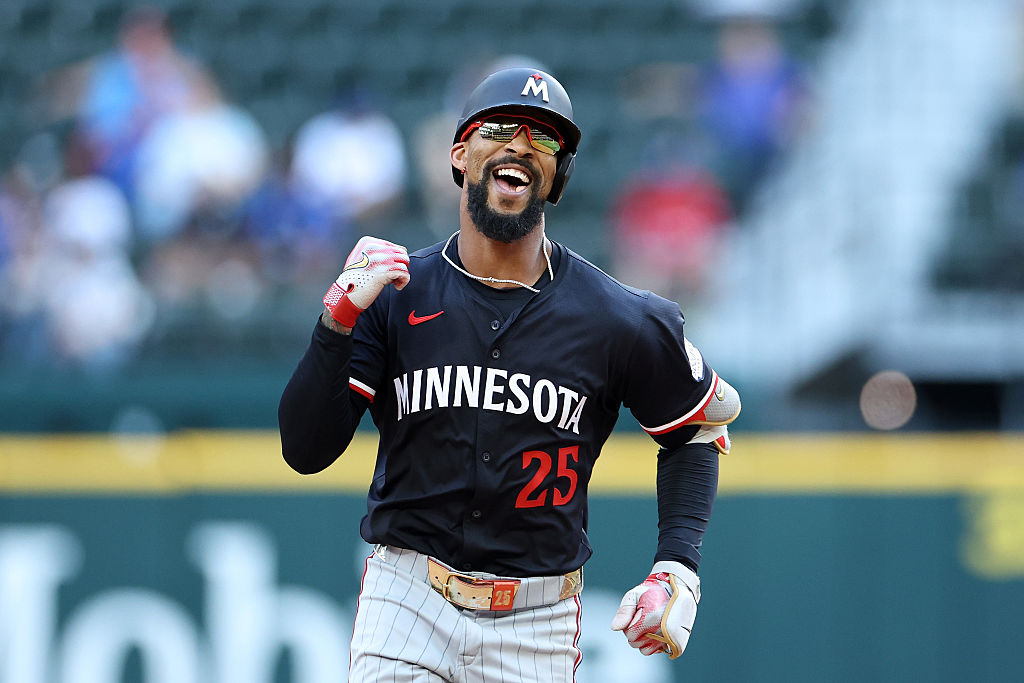
The Twins should not trade Byron Buxton merely because another organization is willing to absorb his salary.
They should not move him for organizational volume or a collection of useful but replaceable prospects. His contract is too team-friendly. His current production is too meaningful. His place in franchise history is too significant.
A trade only makes sense if Minnesota receives a player capable of becoming part of its next competitive core.
That creates a difficult negotiation.
Buyers will point to Buxton’s age and injury history. They will note that every projection of his future requires a caveat about availability. The Twins will point to his present production, his affordable salary and the reality that very few available players possess his ability to alter a game in multiple ways.
Both sides would be right.
Keeping Buxton is defensible. He remains a beloved player, an elite athlete and the face of the franchise. The Twins are not obligated to reduce his value to an expected-return calculation simply because their roster construction has placed them in an uncomfortable position.
But holding onto Buxton is also a decision.
It is a decision to believe that Minnesota can build a credible contender around him before the remaining years of his contract disappear. It is a decision to accept the risk that an opportunity to convert his resurgence into long-term talent may never return. It is a decision to continue asking one of the most electrifying players of his generation to spend the final stages of his prime on a roster searching for direction.
For most of Buxton’s career, the Twins were forced to wonder what his talent might look like over a sustained period of health.
Now they know.
The question is whether the final value of that resurgence will come in Minnesota or whether the most meaningful conclusion to Buxton’s winding Twins tenure would be an opportunity to chase October elsewhere while helping the organization build its next competitive team.
Become a Member of Just Baseball
Subscribe and upgrade to go ad-free!
* Save 25% by subscribing annually.

Written by