
What To Make of the Royals Trying Daniel Lynch IV as a Starter Again
The Royals have been ravaged by starting pitching injuries, resulting in them moving Lynch out of the bullpen. Was it the right move?
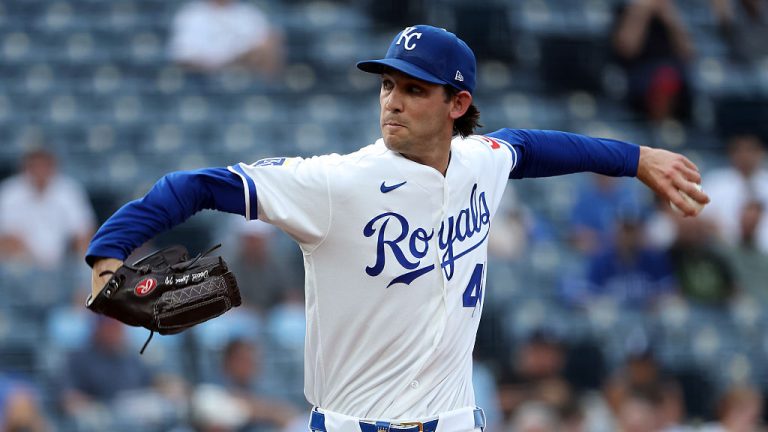
There are likely few MLB teams that have experienced as much injury turmoil as the Kansas City Royals in 2026. It’s been an endless cycle of injured list stints and periods of riding the pine due to ailments for many key cogs on the roster. No place has felt it more than the pitching staff, and the starting rotation in particular.
In the early going, the Royals lost two key members of their 40-man depth in Ryan Bergert and Ben Kudrna to season-ending Tommy John surgery. It then only took a few months before their ace Cole Ragans underwent the same procedure. He was followed not long after by the likes of Stephen Kolek and Luinder Avila at the beginning of August.
That’s five names that all but likely find themselves on the injured list to start 2027. When you pair that with the recent exit of Kris Bubic at the trade deadline, Kansas City’s starting staff is beyond bare-bones right now.
The Royals may not be playing for anything as one of the worst teams in baseball right now, but they still have games to be played in which innings need to be eaten up somehow.
This led them to fill their vacant five-man rotation spot with Daniel Lynch IV this month. Lynch, who was previously a starter coming up through the Royals system at the start of his pro career, had been in the midst of a career-revitalizing year in the bullpen.
As a reliever, Lynch was sporting All-Star-worthy numbers with a 1.96 ERA, 0.93 WHIP and .185 BAA in 46 innings of work. With all the closing turmoil the team has faced, thanks in large part to Carlos Estévez’s injury and dip in velocity, as well as Lucas Erceg’s ugly plummet from grace, Lynch profiled as a real solution there this season as the best statistical arm in the Royals’ bullpen.
However, Kansas City’s brain trust opted to address their starting need first. As he is somewhat of a Swiss Army knife, it made plenty of sense as to why it was Lynch that got the call to change roles.
But was it the right decision?
Very Few Pros to the Royals Moving Daniel Lynch IV Out of the Bullpen
Now, as good as Lynch’s numbers were as a reliever this season, he wasn’t exactly blowing hitters away like traditional closers Cade Smith, Mason Miller and Jhoan Duran. He was only striking out 6.85 hitters per nine innings out of the bullpen. His fastball velocity was average at best, and his stuff had induced a mediocre chase rate.
However, what he did manage to do was counter that with respectable metrics elsewhere. He limited opponents to just 2.35 BB/9, he demonstrated favorable quality of contact rates (including above-average hard-hit and barrel rates), and he kept the ball on the ground to boot, inducing grounders on more than half his batted balls.
As a reliever, Lynch was the prime example of using his diverse arsenal to his strengths. Three of his five pitches boast a sub-.200 BAA, two of which are offerings he throws more than 20% of the time: his sinker and his slider. And those two pitches also each boast sub-.300 SLG marks.
He may not fit the stereotypical profile of a big league closer. However, there have been plenty of successful relievers in major league history that have thrived without blow-away stuff. And considering the alternatives in the Royals’ bottom-feeding bullpen, he couldn’t have been worse than any other option they’d regularly thrown out there in the ninth.
Apart from a rise in strikeout rate in his first two outings as a starter, he’s left a lot to be desired. He pitched a combined 4.0 innings over his first two starts, surrendering six earned runs and seven in total. He gave up as many homers as he did in all of his bullpen outings combined this season. His latest start was his most successful effort (4.0 IP, 1 ER), but he only struck out one of the 15 batters he faced.


The logic behind the Royals’ decision made sense in the moment. Daniel Lynch IV had been a starter and was even called upon to spot-start in previous seasons. And they didn’t have quality depth in Triple-A Omaha to call up on a moment’s notice after losing a starter like Avila.
However, the fact this appears to be an open-ended and indefinite assignment makes little to no sense. They are simply patching one issue by taking away the only bright spot from another area.
Should Lynch be their long-term closing option? No. However, moving him to the rotation seems to be undoing all the work they’d done to make him any bit worthy of his first-round draft status all those years ago.
Become a Member of Just Baseball
Subscribe and upgrade to go ad-free!
* Save 25% by subscribing annually.

Written by
Caleb Moody is a contributing writer for Just Baseball and has been covering topics across Major League Baseball with them since he started as an intern…