
2026 MLB Draft Recap: Storylines, Favorite Draft Classes, Picks, and More
The 2026 MLB Draft was full of surprises. From the biggest storylines to the best draft hauls and favorite selections, here are the highlights from this year's draft.
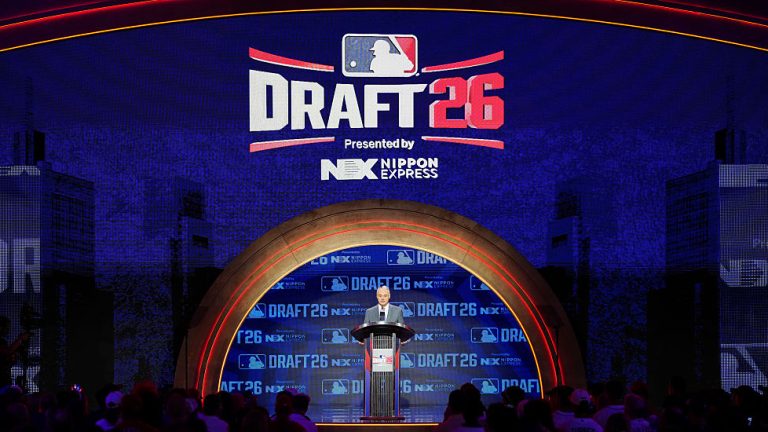
The 2026 MLB Draft is in the books, and it was a creatively weird draft. Roch Cholowsky (pronounced chill-OW-skee) became the third collegiate shortstop ever taken first overall, joining Bill Almon (1974) and Dansby Swanson (2015). He’s the second first-rounder in his family, as his dad, Dan, was a first-round pick in 1991.
The NIL and portal landscape in college baseball has altered the draft landscape, forcing teams to get inventive with their draft strategies. As a result, there were a lot of picks and draft classes that made me happy, while some others left me scratching my head.
Of course, it’ll take years to figure out how these players pan out, but admittedly, I’m impatient. If these post-draft assumptions turn out to be wrong, I’m not afraid to admit it. With that said, let’s dive into standout storylines, picks, and much more as we close the book on this draft class.
Teams Buy High On Safer Hit Tools
Fans probably had intrigued looks when teams began selecting hit-first players in the first round, and it became a common theme very early in the draft.
It was prevalent among the top three players in the class, though the Pirates’ and Royals’ grabs solidified that trend. Prominent prospects who were ranked highly saw falls on the first day of the draft, including the following names:
SS Jacob Lombard: Ranked 7th, Drafted 14th (Marlins)
C Ryder Helfrick: Ranked 9th, Drafted 15th (Diamondbacks)
OF Sawyer Strosnider: Ranked 10th, Drafted 66th (Brewers)
1B/3B Ace Reese: Ranked 18th, Drafted 24th (Mariners)
C/OF Daniel Jackson: Ranked 24th, Drafted 37th (Rockies)
OF Caden Sorrell: Ranked 40th, Drafted 62nd (Cubs)
OF Aiden Robbins: Ranked 44th, Drafted 92nd (Mets)
Conversely, here are names that went from lower rankings to first-round selections:
OF Derek Curiel: Ranked 11th, Drafted 5th (Pirates)
OF Zion Rose: Ranked 26th, Drafted 6th (Royals)
SS Jack Schaffner: Ranked 65th, Drafted 20th (Red Sox)
SS Trey Ebel: Ranked 72nd, Drafted 25th (Brewers)
OF Carter Beck: Ranked 56th, Drafted 26th (Braves)
Those who had contact questions wound up falling out of favor for bats with at least average hit tool grades. It makes sense in the aggregate, though in an era where the ball flies out of the park, it’s a bit of a surprise, especially when you look back at previous drafts.
Last year, Ethan Holliday and Aiva Arquette had question marks, but both went in the top ten. In 2024, Charlie Condon, Jac Caglianone, and Konnor Griffin did the same thing despite contact concerns.
Is it a trend that will continue, or is it just a flash in the pan? Time will tell, though admittedly, the players listed above that dropped did have major whiff concerns. On the summer circuit, Lombard had a K% just south of 30%. The remaining players all boasted contact rates of 75% or worse, including some below the 70% mark.
It’s a justifiable concern, and teams used safer hitters to get more value out of their draft classes later on. As we look ahead to 2027, there are plenty of corner profiles with similar hit tool questions, so don’t rule out another episode of this next July.
Draft Philosophy Changes That Stood Out
There were a few philosophical changes throughout the draft that sent me and several others for a loop this weekend.
In recent years, the Los Angeles Angels have gone after college profiles in the early rounds a ton, though they typically prefer to take arms after the first round. In 2026, they threw a curveball by taking two-way standout Jared Grindlinger, one of the top high school prospects in the class. For reference, this is the first time the Angels have taken a prepster in the first round since Jordyn Adams in 2018.
It did not stop there, as the Halos pivoted from college arms to college bats in the succeeding rounds, a welcome sight from a new regime. Remember, the team sacked Perry Minasian a few weeks before the draft and appointed new general manager John Mozeliak. Most of Mozeliak’s drafts with St. Louis were college-heavy. The trio of hitters in Jarren Advincula, Rylan Lujo, and Jaxon Willits was a great fit for the club, and they managed to get a sneaky high school selection in Jacob Sammis from Georgia in the 12th round.
The Detroit Tigers shifted away from their high school prowess, drafting three straight college players before selecting their first prepster, Dominic Pellegrin. That said, Pellegrin is a right-handed bat, something that Scott Harris has not targeted heavily with his prep picks. They did not take a left-handed prep bat until the eighth round with Canadian Robert Omidi, and they added another in Alabama’s Will Adams, who should sign for over-slot.
Lastly, the Texas Rangers went big game hunting. They’re not typically a savvy draft team, but they took massive swings on upside in this draft, and I welcome it. Gio Rojas has the most upside of any prep pitcher, Connor Comeau is a huge projection play with significant upside, and Brody Bumila has an elite fastball that has touched triple digits, even though his injury history is filled with red flags.
NIL Changes Draft as a Whole
With the NIL era putting a stranglehold on the college stage, we’ve seen the opportunities for high school players decrease in recent years.
While the portal is rampant, high school recruiting still plays a role in NIL, though the opportunities present in the college landscape are enticing to prepsters. They have leverage, and as much as slot values continue to rise, so does NIL.
Baseball America’s Carlos Collazo paints the picture perfectly in the post below:
The high school draft rate has stagnated since the COVID draft, with JUCO rates dropping to a record low and the college rate rising to a record high. It’s very clear that there’s been a dynamic shift in draft strategies in recent years, though it’s not without cause.
With clear opportunities not only to earn money more quickly but also to earn more than what can be provided in the draft, high school kids are leaning into the college realm.
Of course, things could change if there are regulations placed on NIL and the portal. However, that’s not likely to come anytime soon. The new five-for-five model alleviates some concerns, but it doesn’t solve the issue entirely.
There’s a chance this is entirely irrelevant if the present proposal to eliminate high school draftees becomes reality, but I doubt we’ll see that happen. The 2027 high school ranks look enticing at this stage, and we’ll have to watch them closely given recent trends.
Favorite Draft Classes
Chicago White Sox: When you have nearly $20.5 million to spend without overage penalties, it’s hard to mess up a draft. They didn’t overthink it at first overall, selecting the top prospect in the class, and took big swings with their prep selection, looking for offensive upside. Landon Thome, Cole Prosek, Alex Weingartner, and Kyle Casteel are an impressive haul, plus they found some intriguing arms and power bats in the middle rounds. It’s a fun class.
St. Louis Cardinals: The Redbirds had seven Day 1 selections, and I’d be lying if I said they didn’t nail them. Trevor Condon was one of my favorite prep bats in the cycle, and they followed that selection up with Tegan Kuhns, who had true first-round upside. Rocco Maniscalco is one of the safest gloves in the class, and they took two solid collegiate performers, Andrew Williamson and Dawson Montesa, not long after. Caden Ferraro, Dee Kennedy, and Cal Randall were great value picks, as well, and Ferraro might be the most underrated bat in this class.
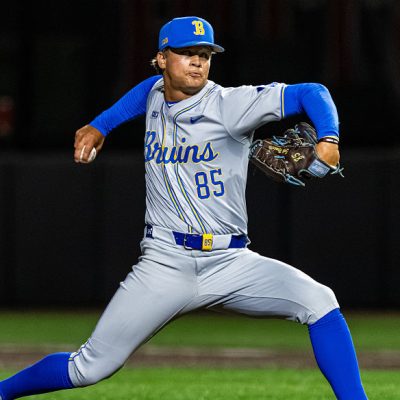
Tampa Bay Rays: The Rays took some big swings in this draft, and I like the upside that they added to an already impressive farm system. Of course, Grady Emerson will take much of the spotlight, but the rest of their prep haul (Taj Marchand, Gavin Giese, Collin Bland, AJ Rice, Griffin Long, and Logan Georges) was one of my favorites in the entire draft. Athleticism was a huge focal point of this haul. Ben Blair was a fantastic pick in the second round, as well.
Colorado Rockies: The Rockies added significant firepower to their farm system, even if you could consider them taking the safe route. Tyler Bell, Daniel Jackson, and Jack Natili all possess above-average or better juice, which fits the atmosphere in Coors Field perfectly. However, I was impressed by the arms taken. Logan Reddemann and Ben Davis have the makings of quick movers, while Tyler Putnam and Gavin Swartz are highly projectable prospects who have already touched the mid-90s with budding secondaries.
Atlanta Braves: As much as the beginning of the Braves draft was interesting, they had a legitimate plan. They targeted high schoolers heavily after the first round, selecting Kaiden McCarthy, Jensen Hirschkorn, and Cole Dennis on Day 1. On Day 2, they took chances on Tyson Grulkowski, Jack Brenner, and Ryne Barker, all of whom were on our Top 313 list last week. It’s a big swing on the upside, and it will require a ton of money to pull off, but it looks as though they’ll make it happen with significant under-slot signings from AJ Gracia and Carter Beck.
Head-Scratching Draft Classes
Philadelphia Phillies: The Phillies’ draft was, admittedly, confusing to me. They took on risk, which is fine, but there are serious question marks surrounding the bats selected. Tyler Spangler missed the spring with an injury (among other things), Caden Bogenpohl has significant hit tool concerns, and Deven Sheerin and Jaxon Jelkin are expected to be relievers. They made decent picks here and there (Macon Winslow, Ruger Riojas, and Patrick Clemmey), but I am curious as to the plan for their class.
New York Mets: While they had one of the smallest bonus pools in the class, their moves did leave me scratching my head. Carson Wiggins is by no means a bad pitcher, but I do have a tough time seeing him as the focal point of their draft class, given that he has 14 collegiate innings to his name. Like the Phillies, they took on significant risk in their hitters, as Aiden Robbins and Kuhio Aloy have subpar hit tools, and their pitching selections have plenty of relief risk. Admittedly, it’s not a class that’s for me.
Chicago Cubs: The Cubs prioritized two things heavily in this class: power and loud stuff. That said, I’m not a huge fan of their class. Caden Sorrell and Myles Bailey have massive left-handed pop, but both bats posted sub-70% contact rates throughout their collegiate careers. A lot of their pitching selections carry significant relief risk as well, though they did select arms with upside. It’s the bats that worry me in this draft class.
Favorite Picks In Each Round
First Round: Drew Burress (A’s, 8th overall), Bo Lowrance (Dodgers, 40th overall)
Second Round: Ben Blair (Rays, 49th overall), Sean Duncan (Yankees, 63rd overall)
Third Round: Jensen Hirschkorn (Braves, 84th overall), Brody Bumila (Rangers, 89th overall)
Fourth Round: Cooper Harris (Nationals, 106th overall), Will Brick (Blue Jays, 131st overall)
Fifth Round: Ryan Marohn (Pirates, 140th overall), Lucas Moore (Guardians, 155th overall)
Sixth Round: Ryan Oshinskie (Brewers, 192nd overall)
Seventh Round: Dylan Vigue (Royals, 209th overall)
Eighth Round: Griffin Long (Rays, 233rd overall), Robert Omidi (Tigers, 246th overall)
Ninth Round: Martin Shelar (Red Sox, 274th overall)
Tenth Round: Nate Isler (Mets, 300th overall)
Eleventh Round: Will Adams (Tigers, 336th overall)
Twelfth Round: Gavin Van Kempen (Dodgers, 373rd overall)
Thirteenth Round: Jack Beck (Astros, 391st overall)
Fourteenth Round: Tyler Kapa (Marlins, 415th overall)
Fifteenth Round: James Tronstein (Astros, 451st overall)*
Sixteenth Round: Grant Govel (Pirates, 468th overall)
Seventeenth Round: Denton Lord (Padres, 515th overall)*
Eighteenth Round: Blake Bowen (Rockies, 524th overall)*
Nineteenth Round: Hudson DeVaughan (Royals, 569th overall)
Twentieth Round: Kollin Ritchie (Cardinals, 594th overall)*
*Unlikely to sign
Best Talent Going To Campus
Collegiate Freshman
1. SS/RHP Archer Horn (Stanford)
2. OF Blake Bowen (Oregon State)*
3. SS/OF James Clark (Duke)
4. RHP Joseph Contreras (Vanderbilt)
5. 1B/OF Dominic Santarelli (Louisiana State)*
6. OF Noah Wilson (Vanderbilt)
7. 3B/RHP Cole Koeninger (Tennessee)
8. SS Ethan Bass (Wake Forest)
9. RHP Cooper Sides (Louisiana State)
10. RHP Jake Carbaugh (Mississippi State)
11. OF Malachi Washington (Louisiana State)*
12. RHP Bryce Hill (Stanford)
13. RHP Brady Snow (Florida)
14. 2B/3B Gunner Skelton (Vanderbilt)
15. LHP Bo Holloway (Vanderbilt)
*Drafted, but unlikely to sign
Returning College Players
1. OF/3B Kollin Ritchie (Oklahoma State)*
2. 2B Gavin Gallaher (North Carolina)
3. LHP Jake McCoy (Tennessee)*
4. RHP Clayton Freshcorn (Texas A&M)*
5. RHP John Abraham (Florida State)
6. RHP Ethan Sutton (South Carolina)*
7. 1B/RHP Caden McDonald (Florida)
8. SS/OF Brandon McCraine (Auburn)
9. 1B Erik Paulsen (North Carolina)
10. OF/1B AJ Evasco (Arkansas)
*Drafted, but unlikely to sign
Brief 2027 Mock Draft
We can’t miss out on an opportunity to mock next year’s class, so here’s a quick 15-pick mock draft utilizing lottery odds from Tankathon.
1. Los Angeles Angels: SS Dylan Seward, Norco HS
2. Kansas City Royals: SS Brendan Lawson, Florida
3. Colorado Rockies: LHP Tomas Valincius, Mississippi State
4. New York Mets: OF Landon Hairston, Arizona State
5. Athletics: SS Carter Hadnot, Aquinas HS
6. Cincinnati Reds: C/2B Gavin Kelly, West Virginia
7. Detroit Tigers: RHP George Ferguson, Abilene HS
8. Toronto Blue Jays: RHP Dax Whitney, Oregon State
9. Baltimore Orioles: SS Malachi Butler, McEachern HS
10. San Francisco Giants: 3B/RHP Chase Fuller, Lincoln HS
11. Houston Astros: RHP Chris Levonas, Wake Forest
12. Boston Red Sox: LHP Dylan Volantis, Texas
13. Washington Nationals: SS Graham Houston, Venice HS
14. Minnesota Twins: OF Jacob Seamon, Metrolina Christian Academy
15. San Diego Padres: C Jimmy Janicki, Troy
Become a Member of Just Baseball
Subscribe and upgrade to go ad-free!
* Save 25% by subscribing annually.

Written by