
Top Landing Spots for Free Agent Trevor Rogers
Rogers is one of the top starting pitchers on the market. Where could he end up?
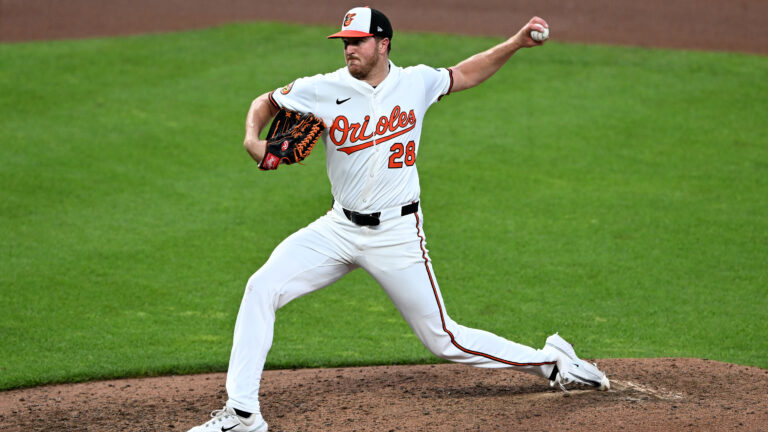
From the moment the Miami Marlins drafted left-hander Trevor Rogers with the 13th overall pick in the 2017 draft, out of Carlsbad High School in New Mexico, the talent was always present. However, he’s shown to be inconsistent thus far in his career.
Rogers, 28, debuted in the majors with the Marlins during the shortened 2020 season, where he put up an underwhelming 6.11 ERA and 1.61 WHIP across a small sample size of seven starts spanning 28 innings.
He came back the following year in 2021, putting up an incredibly good second season with the Marlins. Over 25 starts, accumulating 133 innings of work, Rogers pitched to an excellent 2.64 ERA and 1.15 WHIP.
All across the board, Rogers dominated.
His stuff proved to be very effective, hence his averaging 10.6 strikeouts per nine innings, while limiting home runs to an excellent 0.4 per nine rate. Rogers’ 17 pitching run value ranked in the 89th percentile, and he was worth what is still a career-best 4.3 fWAR.
Good enough to make his first and only All-Star roster to date thus far in his seven-year career.
After Rogers’ 2021 campaign came to a close, it looked as if the Marlins had a near-ace on their hands.
Unfortunately for Rogers, things started to unravel quickly after his superior 2021 campaign, in part due to injuries.
From a stretch spanning the 2022-2024 seasons, Rogers’ performance began to slip drastically, and his numbers took a turn for the worse. He wasn’t looking at all like his 2021 self.
However, his 2023 season was limited to just 18 innings, as he first dealt with a left biceps strain before encountering a right lat strain during his initial rehab assignment midway through the season.
At the 2024 trade deadline, the Marlins organization decided it was time to move on from Rogers’ services, dealing him to the Baltimore Orioles in exchange for Connor Norby and Kyle Stowers.
Remarkably, after facing adversity for a period of three years, he bounced back in 2025 and gave Baltimore a taste of what he’s capable of bringing to the table.
Rogers made 18 starts in 2025, logging 109.2 innings, returning to his 2021 self by posting a 1.81 ERA and 0.90 WHIP. A season worth 3.3 fWAR.
This past season, Rogers entered his first contract season, knowing he’d be able to test the waters of free agency for the first time in his career over the offseason.
He didn’t disappoint, putting together the most complete season of his career so far.
Even though his 4.03 ERA didn’t look spectacular, his FIP sat at a much better 3.45 mark, largely because he only issued an average of 2.07 walks per nine innings — a career-best clip.
Rogers’ 2026 campaign was also worth 4.0 fWAR, meaning he is theoretically coming off his best season since his stellar 2021 showing.
A great place to be heading into free agency for the first time in his career.
Free Agent Profile: Trevor Rogers
- Age in 2027: 29
- 2026 Stats: 30 G (30 GS), 4.03 ERA, 3.45 FIP, 169.2 IP, 4.0 fWAR
- 2026 Salary: $6.2 million
Contract Projection
- Contract Length Expectation: 3-6 years
- Expected AAV: $17-23 million
Rogers enters the offseason as one of the best free agent starting pitching options, alongside the likes of Tarik Skubal, Michael King, Freddy Peralta, and Sonny Gray.
Due to the fact that he’s a southpaw, his value could be increasingly high, and he could serve as the backup plan to Skubal for many clubs. Don’t just view Rogers as a backup to Skubal, though, because he’s shown to be a very good arm.
No matter what team ends up landing Rogers when it’s all said and done, they will be getting a potential All-Star caliber arm.
Keep in mind that the Baltimore Orioles did, in fact, extend a qualifying offer to Rogers, and if he were to decline it and sign with a new team, that respected team would have to forfeit a draft pick and potential international bonus pool money in doing so.
So, what teams could potentially be interested in Rogers’ services as we move along in the offseason?
Free Agent Landing Spots for Trevor Rogers
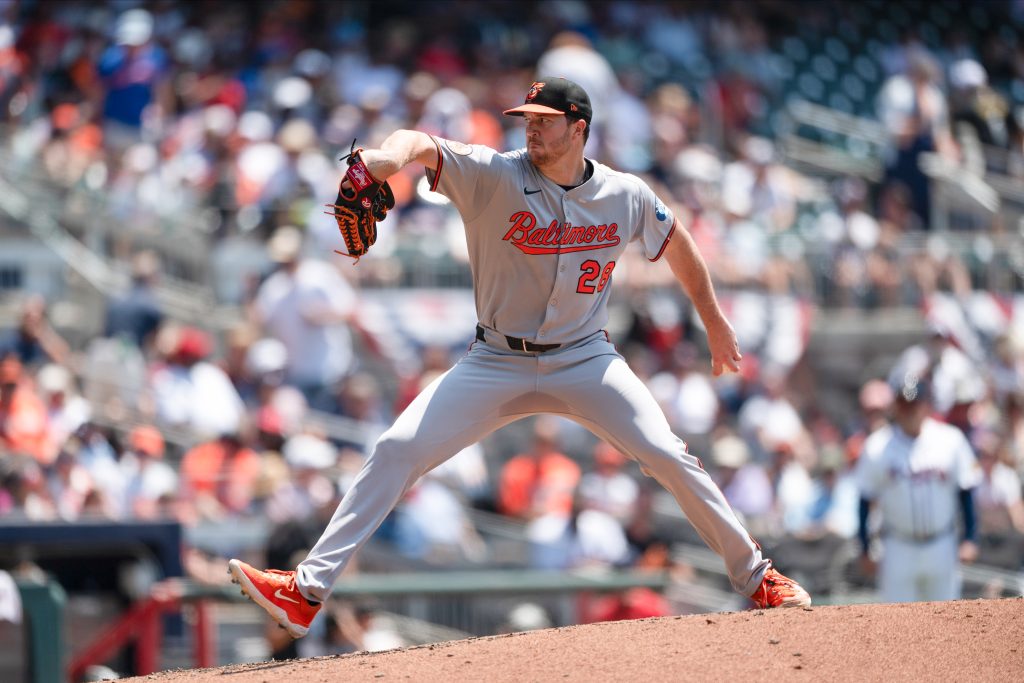
Baltimore Orioles
Before getting into potential new destinations for Rogers, let’s first establish what a return to Baltimore would look like.
Rogers has until the November 17 deadline to decide if he wants to accept the qualifying offer from the Orioles or not.
This year’s qualifying offer is set at a value of $23.15 million, which is right around the expected AAV range of $17-23 million that we project Rogers to receive this offseason.
However, Rogers is undoubtedly one of the best left-handed starting pitchers on the open market, and he’ll almost certainly be demanding a multi-year contract that significantly exceeds the total dollar amount of the qualifying offer.
Rogers certainly deserves to land a good-sized contract, whether that be in Baltimore or elsewhere.
Now, let’s establish the case for the Orioles to re-sign Rogers.
As things currently stand, Kyle Bradish and Shane Baz are the most established starters in the rotation and are virtually guaranteed a starting role in 2027.
Brandon Young had himself a season in 2026, owning a 3.56 ERA and 1.35 WHIP over 156.2 innings, further asserting himself as a reliable rotation option moving forward. A bit out of the blue after he had a 6.24 ERA across 12 starts in 2025.
With Bradish, Baz, and Young in great positions to return to the starting staff in 2027, that means any likely rotation upgrades would bump one or both of Cade Povich or Trey Young from the rotation.
The Orioles are one of those teams as of late that are always in contention but never seem to put everything together when it matters most.
Most recently, they appeared in the postseason in back-to-back years during the 2023 and 2024 seasons but didn’t manage to walk away with a win in either try.
They have a lot of good, young assets, but are looking to upgrade multiple parts of the roster to take them to the next level.
All things considered, the Orioles are expected to add at least one to two starting pitchers over the offseason, via free agency or trade.
Houston Astros
Although the Astros saw respectable numbers from their offense this past season, that barely helped propel them into the postseason. Their starting pitchers ultimately didn’t get the job done.
Joe Espada’s rotation was in shambles throughout the season, losing key arms to injuries, including Hunter Brown, Mike Burrows, Hayden Wesneski, Christian Javier, and Tatsuya Imai.
In part due to injuries, the Astros saw 19 different pitchers make a start in 2026, further showing that their rotation was never able to get into a consistent rhythm this past season.
Shockingly, only two starting pitchers surpassed the 100-inning mark this year. Peter Lambert was a workhorse, logging 155.2 innings, while Brown barely cracked the century mark himself, logging a total of 107.1 innings.
On a positive note, Lambert deserves more props for what he was able to accomplish this year. He single-handedly anchored the Astros rotation all season, while others either fought injuries or flat-out struggled to deliver quality results.
Heading into 2027, the Astros rotation is currently projected to consist of five right-handers: Brown, Wesneski, Javier, Lambert, and Imai.
In order to create some balance and deception in the rotation, an offseason addition of Rogers or any other left-hander could be the perfect puzzle piece in Houston.
Even though the Astros found themselves in the postseason for the 10th time since 2015, the 2026 season didn’t prove to be a smooth ride in Space City.
You could actually make an argument that the Astros’ competitive window could be coming to a close. Jeremy Peña finds himself a prime trade candidate this winter, while players like Jose Altuve and Carlos Correa are in the later ends of their careers.
It’ll be interesting to see what the Astros decide to do this winter, but a rotation upgrade certainly wouldn’t hurt.
San Diego Padres
There aren’t too many ways to say this, but the Padres desperately need to add starting pitching over the winter if they plan on competing next year.
Pretty much the entirety of the Padres’ rotation is now on the open market, with Michael King, Casey Mize, Walker Buehler, Nick Pivetta, Robbie Ray, Griffin Canning, Lucas Giolito, and Germán Márquez all recently hitting free agency.
The only serviceable starting arms remaining under contract are Joe Musgrove and Randy Vásquez.
Even still, issues remain with the duo who are still under contract. Musgrove has been battling injuries for the past few seasons, while Vásquez wasn’t great in general or under the hood this past season.
All that being said, A.J. Preller will likely need to add at least three major league starting pitchers in the next few months, if they don’t want to roll with JP Sears, Jhony Brito, or Kyle Hart.
When it’s all said and done, don’t be surprised if they end up adding more than three starting pitchers this winter. That’s how much of a conundrum they have stumbled upon. Also don’t rule out a reunion with King.
Despite the Padres losing eight starting pitchers to free agency this offseason, that group didn’t exactly prove to be very effective during their time in San Diego.
This year, the Padres rotation as a staff sat towards the bottom of the barrel in multiple different categories. They put up a combined 4.42 ERA, which was good enough for 21st in the majors, while their 1.33 WHIP ranked 23rd.
Specifically, they struggled to generate strikeouts at a lousy 7.23 per nine rate, which ranked 28th, while issuing an average of 3.5 walks per nine innings, placing 24th.
Additionally, the Padres’ starting pitchers were prone to the home run, giving up an average of 1.32 per nine frames, ranking 25th.
As previously mentioned, starting pitching should be the Padres’ number one priority over the offseason, and adding any decent arm would help.
They don’t need to go after Skubal, but they do need to find some quality arms with proven track records in order to rebuild a collapsed starting rotation. Rogers is one such arm.
Chicago White Sox
If you didn’t happen to notice, the White Sox were one of the most entertaining teams to watch this past season. It’s safe to say that winning baseball has returned on the South Side.
They kicked off their first postseason appearance since 2021 by sweeping the Astros on the road in the Wild Card round. Then they took the Cleveland Guardians to game five of the ALDS before ultimately getting eliminated.
Entering the offseason, Erick Fedde is the only rotation arm that the White Sox lost to free agency, meaning they currently feature a rotation of Sean Burke, Davis Martin, Anthony Kay, Luis Castillo, and Hagen Smith.
Burke is going to be a mainstay moving forward, and he was tremendous this past season, posting a 3.34 ERA and 1.20 WHIP across 27 starts and 172.1 innings of work.
The White Sox also saw Martin put up a really good first half, pitching to a 3.41 ERA, but things went downhill after the All-Star break, as his ERA climbed up to a startling 5.12 mark. Still, he finished the year with a respectable 3.95 ERA and 1.32 WHIP.
Smith, the former top prospect, also got his first taste of big league action, putting up some pretty exciting numbers over his first 28 innings of work in the majors. He flashed elite stuff, which led to an excellent 1.29 ERA and 0.96 WHIP.
Expect Smith to be a big factor in the White Sox’ success moving forward.
Burke and Smith are likely the only duo to have a spot reserved next year in the rotation. Martin has a really good chance to factor into the rotation plans as well.
That being said, Kay and Castillo’s status moving forward is in doubt, making them most likely to lose their spots in the rotation if the White Sox decide to add some starting pitching over the winter.
After the White Sox’ excellent 2026 campaign, it’d make sense for the front office to make a few splashes in free agency. Further bolstering the team while letting the rest of the league and fanbase know they are here to compete.
Their competitive window is open, and they need to take full advantage of it.
Atlanta Braves
Doesn’t it seem like the Braves are always on the prowl for starting pitching upgrades?
That’s why they find themselves on this list.
This past season, Chris Sale continued to do what he does best: mow down opponents. In his 16th major league season, he was still able to manage an excellent 2.16 ERA and 0.98 WHIP, pleading his case for National League Cy Young honors.
The trio of Grant Holmes, Bryce Elder, and Martín Pérez were all solid this past season and put up respectable numbers themselves.
At the trade deadline, the front office went out and acquired Tyler Mahle from the San Francisco Giants, hoping to give their rotation a boost in the second half. He delivered big time, posting a 1.99 ERA and 0.96 WHIP over nine games with the team.
Due to free agency, Pérez and Mahle are no longer on the payroll, meaning the Braves will be seeking starting pitching help as previously mentioned.
Another big reason as to why the Braves should pursue starting pitchers this winter is because they have a lot of players still recovering or returning from injuries.
Spencer Strider has battled injuries all throughout his career and had to deal with both a left oblique strain and right elbow inflammation in 2026. He’s already had Tommy John surgery and an internal brace procedure, which has made him very injury-prone and hard to rely upon.
Furthermore, Spencer Schwellenbach missed the entire 2026 campaign due to multiple issues in his throwing elbow, and it was recently announced that he’d have to undergo surgery, putting his 2027 Opening Day status in jeopardy.
Steering towards 2027, Sale, Holmes, and Elder are looking to be the only three rotation locks as of right now, meaning they could definitely use some rotation reinforcements.
They technically could move forward with internal options to the likes of Strider, Reynaldo Lápez, JR Ritchie, or AJ Smith-Shawver, but instead of gambling on young or injury-prone arms, they should go out and grab another elite arm this winter.
Become a Member of Just Baseball
Subscribe and upgrade to go ad-free!
* Save 25% by subscribing annually.

Written by
Cade Lalim is a student at Irvine Valley College. He's currently a writer at Just Baseball, covering the Los Angeles Angels along with various other MLB…