
Which Shortstops Could Be Traded This Offseason?
With a lack of big-name free agent shortstops, teams looking for an upgrade at the position will likely turn to the trade market. Here's what they'll find.
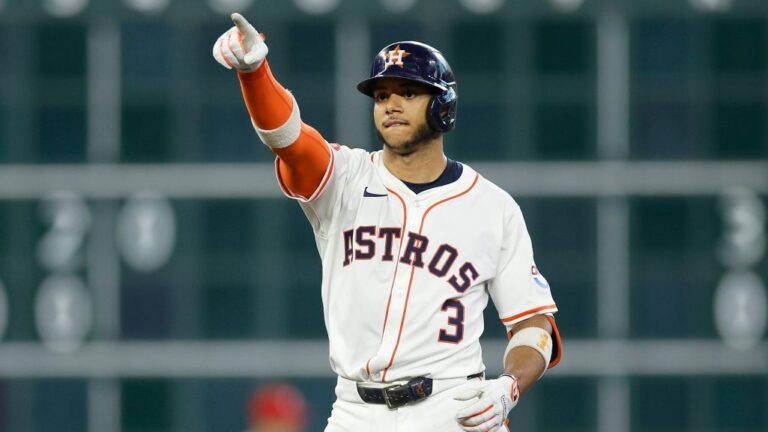
Every MLB team wants to begin a new season feeling good about their starting shortstop. It’s one of baseball’s most valuable positions, and the compensation for baseball’s best shortstops is evidence of that notion.
The free agent market for shortstops is weak this offseason. The most valuable available shortstops by 2026 fWAR are Mauricio Dubón (2.4), J.P. Crawford (1.2), and Isiah Kiner-Falefa (1.1). Not an awe-inspiring group for contending teams looking for an infield anchor.
Due to the lack of enticing free agent shortstops, clubs looking for an upgrade at the position will likely be more inclined to scour the trade market. There are plenty of talented shortstops around the league, but the price to acquire one could be steep.
Given the uncertainty of the ongoing collective bargaining agreement negotiations, it remains to be seen whether there will be significant change to how front offices assemble their payroll. In the event that a salary cap is established, teams that are rostering multiple players on large contracts may be more inclined to dump one of them onto a smaller market or rebuilding team.
If a salary floor is instituted, those smaller market and rebuilding teams may suddenly be looking to buy expensive players, to better set themselves up for the future. It’s hard to gauge the value of players on long-term contractual commitments without knowing the rules that front offices will have to abide by yet. That’s why I have doubts that any big-name veterans on long contracts get moved before the likely lockout.
In this piece, I’ll summarize the trade value of six shortstops that have been generating some degree of trade buzz and predict whether or not they will be moved this offseason. I don’t have any insider information, these predictions are strictly vibes-based.
Jeremy Peña
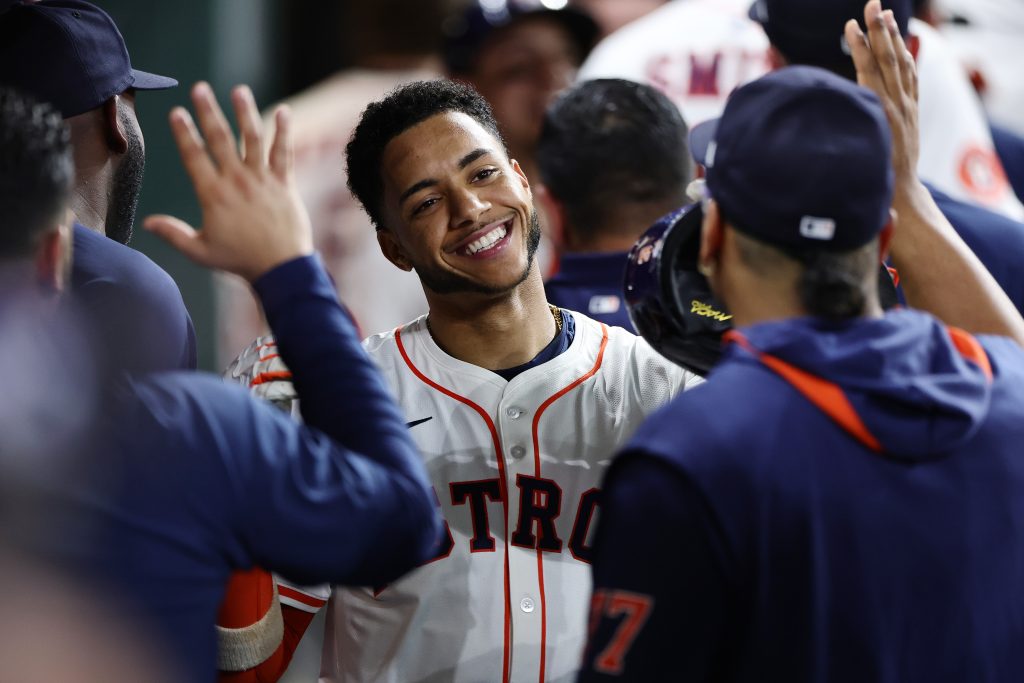
Peña is likely to be an attractive trade piece this winter because he’s set to be a free agent at the conclusion of the 2027 campaign.
The 29-year-old has played a big part in slowing the Houston Astros’ decline following their span of postseason dominance between 2017 and 2023. Many of the team’s core offensive pieces have gradually moved on since then, but Peña has helped to keep Houston relevant in spite of those departures.
The Astros are coming off of an 81-81 season and have a lot of uncertainty moving forward. It could be a good idea for them to get value for expiring assets, like they did by trading Kyle Tucker a couple of seasons ago.
However, it can’t be assumed that Houston will follow the same pattern. There is a new regime leading their front office this offseason, so whether they will compete, rebuild, or thread the needle is unclear this early on.
Peña has been an above-average shortstop offensively since his debut in 2022, and he’s been at his best over the past two seasons. His career year was in 2025, when he slashed .304/.363/.477 with 17 home runs, 20 stolen bases, and a 136 wRC+.
This past season, Peña posted a .277/.325/.477 slash with 22 homers, 12 steals, and a 124 wRC+ in 483 plate appearances. He hit the ball well despite missing 50 games, primarily due to hamstring and calf strains.
Defensively, Peña has generally been solid. Last season was his worst in terms of outs above average (-6), but it’s reasonable to wonder if those two lower-body injuries that he sustained were the cause of his regression. He doesn’t have a strong arm (82.1 mph throw velocity), so teams may not be convinced that Peña is a shortstop into his 30s.
Unless a team is interested in giving Peña a big extension, they shouldn’t have to worry about his long-term defensive home when acquiring him this offseason. He can function as a one-year stopgap shortstop for a team with title aspirations and shouldn’t be too expensive to acquire.
Prediction: Peña is traded. Moves like this can help prevent teams from undergoing full rebuilds if they identify the right return. Peña is a solid player who is not a key part of Houston’s long-term vision, given his status as an impending free agent in 2027.
CJ Abrams
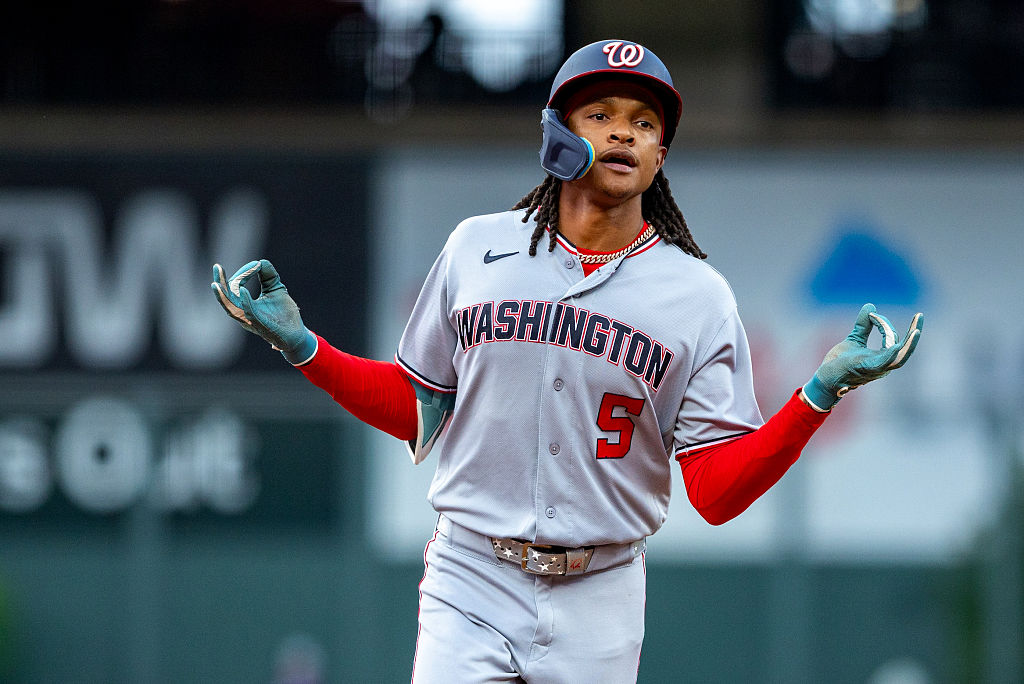
Coming off of a career year, Abrams is sure to generate a lot of trade interest for the rebuilding Washington Nationals. Given that Washington is unlikely to contend in the immediate future, trading Abrams at his peak value likely nets them the best possible return.
Abrams is a controllable asset; he won’t reach free agency until the conclusion of the 2028 season. The Nationals could feasibly hold him until the trade deadline, or next offseason, if they don’t match up with a trade partner on this potential blockbuster deal this offseason.
At 25 years of age, Abrams posted a 30/30 season last year. He has stolen at least 30 bases in each of the past four campaigns. His .261/.336/.497 slash (all career-bests) in 2026 contributed to career-highs in wRC+ (124) and fWAR (3.7).
While he’s likely to remain an impactful player for years to come, there are reasonable concerns about whether that level of production is sustainable moving forward.
Abrams’ power output relies entirely on his ability to pull the ball in the air. Being able to pull the ball in the air effectively is a great skill, one that allows players to reach peak statistical production. Even without incredible physical strength, players that pull the ball in the air consistently can post power numbers similar to those that swing the bat very hard.
His bat speed (73.0 mph) and barrel rate (10.6%) are both above average, but also not among the game’s elite. Just one of his 33 home runs last year landed to the left of dead center field, indicating that he has good, but not great, power potential moving forward.
If Abrams could improve in those areas, he could become a similar hitter to NL MVP winner Pete Crow-Armstrong. “PCA” hit just three of his 45 homers in 2026 the other way. However, Crow-Armstrong’s bat speed (75.1 mph) and barrel rate (13.3%) were significantly better than Abrams’.
Without elite bat speed, it’s hard to project Abrams to be a consistent 30-home run hitter for years to come. It’s probably more reasonable to expect him to hit around 25 homers per season with his current physical abilities – which is still productive. I just don’t think that Washington will be able to convince any teams that they should be paying for an MVP finalist in 2027.
Another reason why Abrams is unlikely to ascend to MVP candidacy next season is that he isn’t a good defensive shortstop. Over the past three years combined, Abrams has recorded -46 outs above average. Shortstop is regarded as the most difficult position to defend that doesn’t require protective gear, so there is still hope that Abrams’ athleticism could render him a positive defender elsewhere on the diamond.
Towards the conclusion of the 2026 season, Washington decided to give Abrams some reps at second base. In 14 appearances at the keystone, Abrams recorded 0 OAA, which is an improvement over his previous negative contribution at shortstop.
Though Abrams has played most of his career at shortstop, any team that acquires him would be wise to play him elsewhere. Perhaps he could be successful at second base, third base, or maybe even the outfield. The bat is good enough to play at any position.
Prediction: Abrams is not traded this offseason. The Nationals try to price him as a franchise cornerstone, but teams are unwilling to pay that cost. Washington then moves him at the trade deadline for what will still be a valuable haul.
Corey Seager

There has been no shortage of trade buzz this offseason surrounding the 32-year-old Texas Rangers shortstop. Texas is reportedly looking to shed a big contract this offseason to free up payroll, and Seager is owed $157.5 million over the next five seasons.
When healthy, Seager still hits the ball hard. Though his 71.5-mph bat speed was below average, he posted an elite barrel rate (14.8%) and a strong average exit velocity mark (91.7 mph) in 2026. Seager has hit at least 20 home runs in each of his five seasons in Texas.
The downside is, Seager rarely plays a full season. He missed 60 games this past season due to back inflammation and a concussion. He also missed 60 games in 2025 due to hamstring injuries, as well as an appendectomy. While some of those injuries were fluky and unlucky, he has missed games due to muscular injuries most seasons recently.
In fact, Seager has only appeared in 125 games once since the COVID-shortened 2020 season. In 2022, he played 151 games but has since struggled to stay on the field consistently.
The two-time World Series MVP is still holding his own at shortstop defensively (1 OAA in 2026), but it remains to be seen how much longer he can hold up at one of the game’s toughest defensive positions. Between his injury history and the natural progression of aging, a bigger guy like Seager is likely ticketed for some time at third base or first base by the end of his contract in 2031.
It’s not going to be easy to move this gigantic contract. The Rangers may have to attach an enticing prospect just for a team to even take him, and the team acquiring Seager likely wouldn’t have to part with anything major. It’s a burden for a team to take on a five-year deal at $31.5 million per season for a player on the wrong side of 30.
Perhaps if a salary floor is put into place, the Rangers will have more motivated buyers in smaller market teams that are looking to increase their payroll. If not, they’re going to have to settle for getting an underwhelming return for a household name, unless they’re willing to pay some of his salary.
Prediction: Seager is not traded this offseason. This contract is too big of a commitment for a contending team to take on, especially if a salary cap is instituted. They’d have better luck trading Jacob deGrom or Nathan Eovaldi, accomplished starting pitchers on shorter-term deals.
Zach Neto
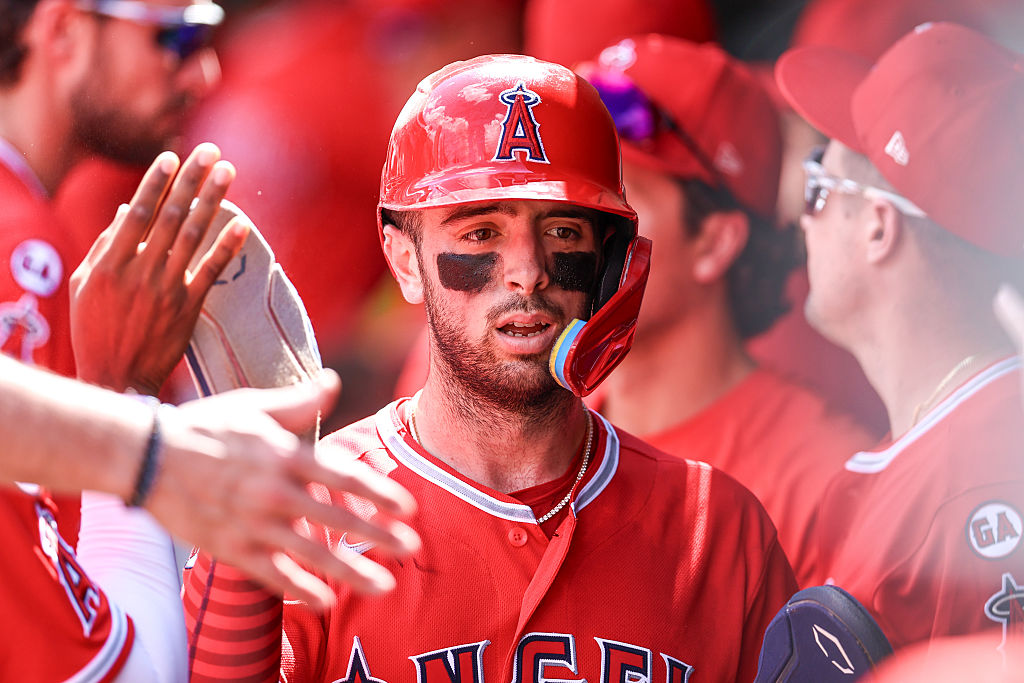
Since Neto burst onto the scene with a breakout season in 2024, he has been a consistent provider of power and speed for the Los Angeles Angels. Given that the Angels are unlikely to compete in 2027, teams may inquire about the price for a shortstop with three years of team control remaining.
Neto, 25, set career highs in home runs (27), walk rate (9.9%), and fWAR (3.9) this past season. However, he also endured career-worst marks for a full season in strikeout rate (30.5%), batting average (.239), and slugging percentage (.436).
While he’s found success with this approach, there’s no doubt that there is a lot of swing-and-miss in Neto’s game. A 30% strikeout rate demonstrates that he’s missing out on putting balls in play at a worrisome rate. Neto’s whiff (32.6%) and chase (36.9%) rates are also towards the bottom of the league as well.
Though he’s a bit over-aggressive, Neto does love to pull the ball. As noted with Abrams, pulling the ball in the air gives the batter an opportunity to maximize his power production even with subpar bat speed. For a smaller guy (5’11”, 180 lbs.) Neto has had no issue slugging in the big leagues with this approach.
He wasn’t a great defender last season (-6 OAA), but Neto has a strong arm (89.6-mph average throw velocity). If he can’t handle the pressure of shortstop for the indefinite future, he could still profile well at other infield positions.
Acquiring a near-four-win player with three years of team control remaining would be very costly. The Angels have no reason to move Neto yet, as they could likely hold out for a similar return next offseason. They would have to be blown away by an offer to be willing to part with one of their best players so soon.
Prediction: Neto is not traded this offseason. The Angels have no reason to move him yet. If he refines his approach and cuts down on the strikeouts in 2027, they’d be in line for a massive haul next offseason for an All-Star-caliber player.
Trea Turner
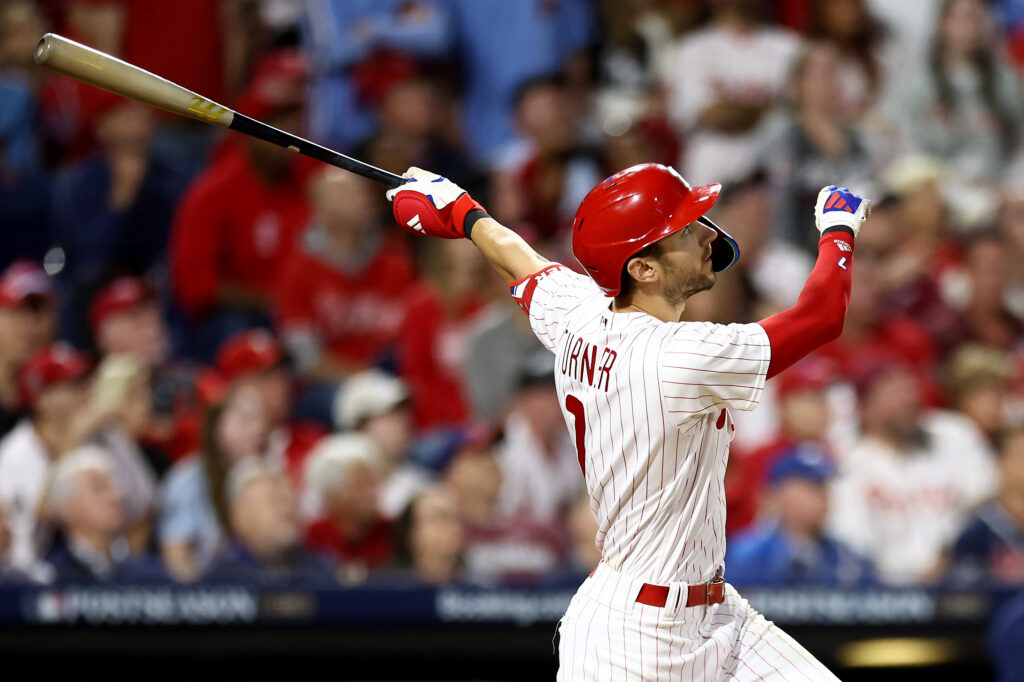
One of the game’s most exciting players over the past decade, Turner’s production took a massive hit this season. After being swept in the Wild Card round this postseason, Philadelphia is reportedly motivated to move the speedy veteran shortstop.
In 2026, Turner posted career worsts in batting average (.242), on-base percentage (.297), and slugging (.378), as well as wRC+ (83) and fWAR (1.1). It was a disastrous season, unlike any we’ve seen from him up to this point in his career.
He’s not hitting the ball hard often enough (6.0% barrel rate), and he’s not playing good defense (-10 OAA). Despite still having good speed (29.9 ft/sec sprint speed), the 33-year-old only managed to earn 21 stolen bases last year. Overall, Turner looked like a worse baseball player.
Based on this description, surely some team might be interested in acquiring a bounce-back player, right? Well, we haven’t yet factored in that Turner is still owed $27.3 million per year for the next seven seasons.
This is an incredibly difficult contract to move, and frankly I have no idea how they’d manage to do so without agreeing to pay a lot of his salary or settling for practically no return (or both). Turner, given his contract situation, is essentially one of the least valuable players in the league to acquire via trade.
Prediction: I agree with Peter here – Turner is not traded. I can’t imagine any team voluntarily taking on that gigantic contract for a player whose production cratered so suddenly. Sorry, Phillies, you made your bed; now you have to lay in it.
Gunnar Henderson
Henderson, a former Rookie of the Year and MVP finalist, is set to become a free agent at the conclusion of the 2028 campaign. Following back-to-back losing seasons, the Baltimore Orioles are reportedly looking to shake things up and will listen on trade offers for nearly their entire roster.
The Orioles do have a great deal of infielders: Henderson, Jackson Holliday, Jordan Westburg, Coby Mayo, Blaze Alexander, and Christian Encarnacion-Strand are all major league players vying for time between three positions (and designated hitter, when unoccupied by Samuel Basallo). It would make sense to move one of these players to address a need elsewhere.
If Baltimore really is looking to shake things up, trading Henderson would net them the greatest return. In a disappointing 2026 season, the 25-year-old still clubbed 24 home runs and posted a 3.6 fWAR. He’s a tooled-out, valuable player that has struggled to hit the ball in the air as frequently over the past two seasons.
Contending teams are sure to call about Henderson – he’s nearing free agency, and the Orioles just traded Adley Rutschman at this past trade deadline. Clearly, the front office has shown a willingness to listen to offers.
However, given that Baltimore just signed Pete Alonso to a five-year contract last offseason and they extended two starting pitchers (Kyle Bradish, Shane Baz), it doesn’t make much sense for them to sell off one of their best players. Unless a potential suitor is dangling an immediate-impact starting pitcher to acquire Henderson, the Orioles would likely rather trade an infielder with less notoriety in an attempt to contend in 2027.
It’s understandable why Henderson is garnering trade buzz, since the O’s aren’t a leading contender in the American League. However, I don’t see them pulling the trigger on this move yet.
Prediction: Henderson is not traded this offseason. However, if the Orioles are not in playoff position at the trade deadline, we could see them try to maximize value and move Henderson with a year and a half of control, as they just did with Rutschman.
Become a Member of Just Baseball
Subscribe and upgrade to go ad-free!
* Save 25% by subscribing annually.

Written by
Daniel Rotter follows the game of baseball with passion. He was the youngest participant in the inaugural year of The Great Fantasy Baseball Invitational, at 17…