
Colson Montgomery Is a Statistical Anomaly
Montgomery is putting his unusual combination of skills to work for the White Sox in his first full season.
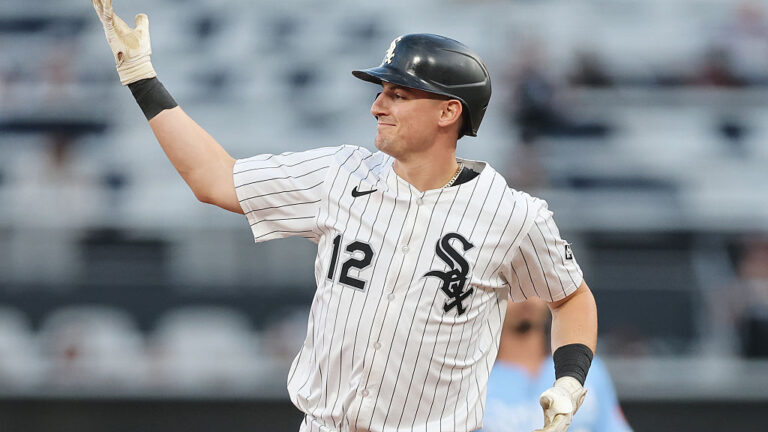
Colson Montgomery’s weekend against Minnesota could double as a summary of his season.
He hit his 30th home run Friday. One night later, Montgomery went deep again to set a Chicago White Sox single-season home run record for a player who primarily plays shortstop. He followed that with four strikeouts Sunday.
Montgomery entered Monday’s off day with 31 home runs in 135 games. He also leads the American League with 197 strikeouts while hitting .212/.292/.437 with a .729 OPS.
Only Adam Dunn in 2012 and Yoán Moncada in 2018 have struck out more in a single season for the White Sox. On the National League side, Kyle Schwarber leads MLB in both home runs (43) and strikeouts (200). Few hitters combine that much power with that much swing-and-miss.
Montgomery’s profile is just as unusual defensively. Metrically, he presents another contradiction, grading as one of baseball’s better range defenders despite below-average speed.
The White Sox have already seen what Montgomery can do when he gets to his best pitches. His long-term value will depend on whether he can reach that power often enough as the league keeps attacking the holes in his swing.
Power Only Tells Part of the Story
Montgomery’s record-setting homer came off a Taj Bradley cutter that left his bat at 112.3 mph.
He joined Miguel Vargas and Munetaka Murakami as the third White Sox hitter to reach 30 this season. It is only the fourth season in franchise history with at least three 30-home-run hitters and the first since 2008.
Baseball Savant credits him with 31.1 adjusted expected home runs, essentially matching his actual total of 31. The unusual part is how he got there.
Several of Montgomery’s quality-of-contact metrics have moved backward from his rookie season. His barrel rate has dropped from 14.5% to 12.8%, while his hard-hit rate has fallen from 44.5% to 42%. His expected slugging has also declined from .501 to .418.
Montgomery has still hit 10 more home runs than he did as a rookie, but he has also played nearly twice as many games and put more of his contact in the air.
His average launch angle has climbed from 18 degrees to 23.5. His groundball rate has fallen from 36.4% to 30.8%.
The added lift has also produced more popups. Montgomery’s popup rate has risen from 9.8% to 14.6%, while Statcast classifies 32.1% of his batted balls as contact underneath the baseball. That number was 26% last season.
That helps explain how Montgomery can rank near the top of the league in home runs without the rest of his offensive line following.
Pitchers Keep Testing the Same Weakness
The league has spent Montgomery’s first full season learning where his swing can be attacked.
James Fegan detailed that process for Sox Machine in August. White Sox hitting director Ryan Fuller identified fastballs above Montgomery’s barrel as a recurring problem. Montgomery explained that he cannot prepare for every fastball shape and instead has to choose the one he is best equipped to damage.
Four-seamers have become the clearest problem, accounting for 36% of the pitches Montgomery has seen this season. He is hitting .163 and slugging .337 against them with a 34.5% whiff rate.
Sinkers have produced a much different result. Montgomery is hitting .289 and slugging .530 against that pitch. The difference fits the shape of his swing. He creates natural lift, and sinkers that move into that path give him a chance to get his best swing off. Four-seamers with enough ride can stay above his barrel.
Montgomery knows he needs to adjust, but that cannot mean trying to cover everything. He told Fegan that he was not going to overhaul his upward swing. Instead, he described thinking above the baseball against certain fastballs as a way to keep the barrel from arriving underneath them.
Fuller framed the goal similarly. The White Sox are trying to help Montgomery turn the swings that become fouls or popups into hard line drives and home runs without taking away the path responsible for so much of his power.
That work also extended to the torpedo bat Montgomery adopted as a rookie. The White Sox used contact-location data to move more mass toward where he typically struck the ball, while Fuller believed the redistributed weight could encourage a more compact swing path.
The torpedo bat design can also change the quality of imperfect contact, performing better closer to the hands while sacrificing some performance toward the end of the bat.
Pitch selection has compounded Montgomery’s problems. His zone rate has fallen from 50.9% last season to 47.1%. His chase rate has increased from 30.5% to 32.6%.
His contact outside the zone has dropped even more sharply. Montgomery connected on 40.7% of his chase swings as a rookie. That figure is down to 32.8% this season. His overall whiff rate has climbed from 31.5% to 36.9%, putting him in the first percentile among major league hitters.
Montgomery has put much of that responsibility on himself.
“I’ve been having really bad decisions at the plate,” he told the Chicago Sun-Times in August, describing the issue as approach-based rather than mechanical or physical. He also talked about simplifying his plan and doing more pitch-decision work.
Defense Adds Another Wrinkle
A similar contradiction shows up in Montgomery’s numbers at shortstop.
Statcast credits him with 10 Outs Above Average this season. Eight have come at shortstop, where his range ranks in the 96th percentile.
That is an unusual result for a player whose sprint speed sits in the 29th percentile. Montgomery averages 26.6 feet per second and has stolen one base across two major league seasons, yet he has covered enough ground to produce strong range numbers at shortstop. His size has also become less of a concern than it was during his climb through the minors.
Not every defensive metric agrees. Defensive Runs Saved has Montgomery at -5 at shortstop this season, while Statcast has him at +8 Outs Above Average there. Both systems viewed him favorably as a rookie, when he finished with +7 DRS and +6 OAA at shortstop.
The split reflects some of the differences between the two metrics. OAA is built around the difficulty of converting individual opportunities into outs, while DRS evaluates a broader collection of defensive outcomes on a run-based scale.
Could Third Base Be Next?
Montgomery has done enough defensively to remain at shortstop, but Chicago now has more infield talent behind him than it did when he first reached the majors.
Roch Cholowsky, the first overall pick in the 2026 MLB Draft, is the No. 1 prospect in the White Sox system.
Caleb Bonemer sits directly behind him in the organizational rankings. Bonemer has already reached Double-A and is now getting work in center field in addition to third base and shortstop. Billy Carlson is another highly regarded shortstop further down the system.
None creates an immediate need to move Montgomery. Cholowsky has played only a handful of professional games, while Bonemer’s versatility could eventually take him somewhere other than shortstop. The difference is that Chicago now has options it did not have when Montgomery debuted.
Third base remains the most obvious alternative if Montgomery eventually leaves shortstop. Scouting reports throughout his minor league career projected enough arm and defensive ability for the position, and he gained experience there in the Arizona Fall League before reaching Chicago.
There is evidence the move could suit him defensively. Statcast has already credited Montgomery with three Outs Above Average at third base in limited major league work. A Statcast-informed preseason projection had him at 7.1 runs above average over a full season at third, third-highest among the players listed and ahead of Matt Chapman.
The tradeoff would come offensively. Thirty-home run power carries uncommon value from a capable shortstop. At third base, Montgomery’s offensive issues would carry more weight.
Chicago does not need to make that decision now. However, the development of Cholowsky, Bonemer and more young players in the system could make the question more relevant as soon as 2027.

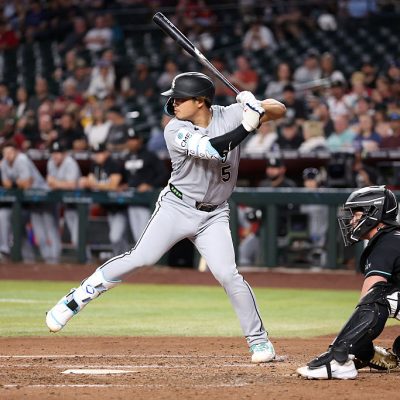
Better Decisions Remain the Key
Montgomery’s first two major league seasons have made his issues pretty clear.
When his timing and pitch selection line up, his power can change a game. When pitchers stay above his barrel or get him to expand, the at-bats can unravel quickly.
White Sox hitting coach Derek Shomon recently described Chicago’s offense as being built around decisions and damage while acknowledging that some of its swing-and-miss may only improve at the margins. Montgomery may be the clearest example of that tradeoff.
He does not need to become a high-contact hitter. What he needs are more at-bats that end on his terms. Handling four-seamers better and giving away fewer swings outside the zone would give him more chances to attack the pitches he can drive.
Montgomery is still only 24. Through 206 major league games, he already has 52 home runs and has shown he can handle shortstop.
The power is not in question. The challenge is creating more opportunities to use it without compromising the swing that produces it.
Where Montgomery eventually plays is secondary. More important is whether he can control enough at-bats to force pitchers into the parts of the zone he can punish.
Become a Member of Just Baseball
Subscribe and upgrade to go ad-free!
* Save 25% by subscribing annually.

Written by
Adrian White covers the Chicago White Sox for Just Baseball and FutureSox. He studies sports management at Florida Atlantic University and focuses on player development and…