
Top 20 Right-Handed Pitching Prospects in Baseball Right Now
Headlined by Seattle Mariners' top prospect Ryan Sloan, here are our rankings of the top right-handed pitching prospects in baseball.
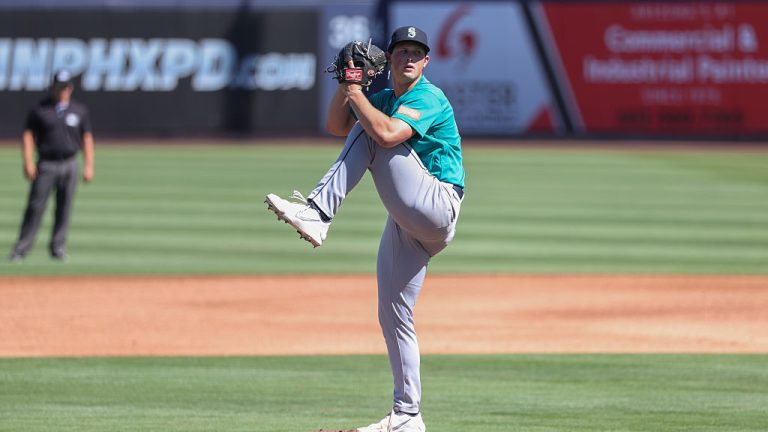
The following ranking of the top right-handed pitching prospects in baseball comes directly from our top 100, where we had exactly 20 right-handed arms made the list.


|
Rank
|
Player
|
Team
|
School
|
Age
|
Level
|
Position
|
ETA
|
FV
|
|
|---|---|---|---|---|---|---|---|---|---|
| 1 | Ryan Sloan | Seattle Mariners | 20 | AA | RHP | 2027 | 60 | ||
| 2 | Seth Hernandez | Pittsburgh Pirates | 20 | A+ | RHP | 2028 | 60 | ||
| 3 | Jackson Flora | San Francisco Giants | 21 | CPX | RHP | 2028 | 50+ | ||
| 4 | Christian Zazueta | Los Angeles Dodgers | 22 | AA | RHP | 2027 | 50+ | ||
| 5 | Gage Wood | Philadelphia Phillies | 22 | AA | RHP | 2027 | 50+ | ||
| 6 | Jarlin Susana | Washington Nationals | 22 | A+ | RHP | 2027 | 50+ | ||
| 7 | Braylon Doughty | Cleveland Guardians | 20 | AA | RHP | 2027 | 50+ | ||
| 8 | River Ryan | Detroit Tigers | 28 | AAA | RHP | 2024 | 50+ | ||
| 9 | Kendry Chourio | Kansas City Royals | 19 | A+ | RHP | 2028 | 50+ | ||
| 10 | George Klassen | Los Angeles Angels | 24 | AAA | RHP | 2026 | 50 | ||
| 11 | Anthony Eyanson | Baltimore Orioles | 22 | AA | RHP | 2027 | 50+ | ||
| 12 | Nolan Perry | Toronto Blue Jays | 23 | AA | RHP | 2027 | 50 | ||
| 13 | Karson Milbrandt | Miami Marlins | 22 | AAA | RHP | 2026 | 50 | ||
| 14 | Caden Scarborough | Texas Rangers | 21 | A+ | RHP | 2027 | 50 | ||
| 15 | Ramon Marquez | San Francisco Giants | 21 | A+ | RHP | 2028 | 50 | ||
| 16 | Tyler Bremner | Los Angeles Angels | 22 | AA | RHP | 2027 | 50 | ||
| 17 | Travis Sykora | Washington Nationals | 22 | AA | RHP | 2028 | 50 | ||
1. Ryan Sloan – RHP – Seattle Mariners
Height/Weight: 6’4″, 220 | Bat/Throw: R/R | 2nd Round (55), 2024 (SEA) | ETA: 2027
| FASTBALL | Sweeper | Splitter | Cutter | COMMAND | FV |
| 60/60 | 60/70 | 50/60 | 45/50 | 50/60 | 60 |
Sloan was a first round consideration for several teams, but it was the Mariners who were able to reel in the prep right-hander with a $3 million bonus (29th pick value) in the second round. The arrow pointed upwards for Sloan as the draft approached, touching the upper 90s with a pair of intriguing secondaries.
Arsenal
Sloan is a big, powerful right hander with a strong lower half, helping him produce mid 90s velocity without major effort. He works down on the mound well, throwing from a high three-quarters release with slightly above average extension and a 5.6 foot release height. This creates a unique angle for hitters from his 6-foot-4 frame.
It can be difficult for Sloan to maintain vert on his fastball from that angle, causing the heater to flatten out some at times, but averaging 95.5 MPH in his age 19 season while touching 99 MPH with relatively light effort makes it easy to dream on the fastball. He also added a sinker heading into the 2026 season which has insulated his four seamer some while helping him pick up ground balls, especially against righties.
Sloan has a good feel for his trio of secondaries, with the sweeper and splitter standing out. His mid 80s sweeper already looks the part of a plus pitch, with sharp bite that dominates right-handed hitters, but features enough teeth to bury beneath the hands of lefties.
His preferred weapon to neutralize left-handed hitters is an upper 80s splitter that he already has a decent feel for. For it to play closer to the plus territory it flashes, Sloan will likely need to find more velocity and shape separation. He will also mix in a cutter that has become increasingly consistent and effective and he has compiled more innings.
Outlook
Sloan is the ideal template for an organization that has had plenty of success developing arms. He’s just shy of Logan Gilbert’s body with a unique release and an advanced feel to spin it. The Mariners rave about Sloan’s ability to adjust on the fly, with the addition of his sinker cited as something that came more easily to him than most.
The floor and ceiling are both so high for Sloan given the quality of his stuff already and the ability to fill up the strike zone. The delivery is smooth and easy and the more he throws, the more consistent his shapes and overall command become. Already finding success at Double-A, shortly after his 20th birthday, Sloan is moving through the Minor Leagues far quicker than most prep right-handers and appears to have a great chance of at least landing as a middle-rotation arm. If he continues on his trajectory, there’s frontline upside.
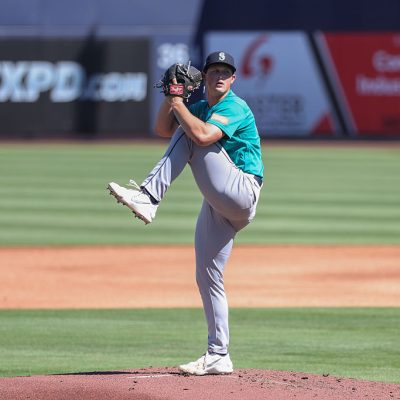
2. Seth Hernandez – RHP – Pittsburgh Pirates
Height/Weight: 6’4″, 200 | Bat/Throw: R/R | 1st Round (6), 2025 (PIT) | ETA: 2028
| Fastball | Changeup | Curveball | slider | Command | FV |
| 60/65 | 60/70 | 50/55 | 50/55 | 40/55 | 60 |
In recent memory, few prep starting pitchers have garnered more praise than Seth Hernandez. Possessing a heater that touched triple-digits along with arguably the best changeup in the draft, Hernandez was a slam dunk for the Pirates when he fell to them at sixth overall.
He’s arguably been better than advertised with the fastball shape impressing as well as the breaking balls looking vastly improved compared to when he was an amateur. With how well the Pirates have developed arms, Hernandez looks like he could be the next ace-level prospect to come out of this system.
Arsenal
On the bump, Hernandez’s mechanics are as clean and repeatable as they come. He lifts his leg to gather in a manner that allows him to coil into his back hip – almost like you’d see from a hitter in their stride – and this move has allowed him to reach 102 MPH with his heater
Aside from already touching 102 MPH, Hernandez’s fastball is special. The pitch has touched 18+ IVB with over seven feet of extension, which both work together to create a difficult look for opposing hitters. Even though he’s made just two professional outings, his control will be something to monitor, as he only threw 42.9% of heaters in the zone during his 2026 debut in Low-A.
His changeup had a legitimate argument as being the best in the Pirates’ system the moment they drafted him last year, and that statement still stands. It sits in the low-mid 80s with a good amount of arm-side movement, which has allowed it to tunnel incredibly well off his electric heater. The 13 MPH of velocity separation from the more then seven feet of extension that Hernandez averages seems to pull hitters onto their front side quite easily.
Hernandez’s breaking balls look much sharper in the early going of his pro career than they had as an amateur. His gyro slider will sit in the upper 80s, but can eclipse 90 MPH with late bite that can fool hitters trying to sit heater. It’s a natural throw for him, showcasing a good feel to command it to the glove side.
His 79-91 MPH curveball has more teeth to it as well, flashing two plane break and diving under barrels. It’s an excellent third offering for Hernandez to left-handed hitters, but he will mix it in to righties as well.
Outlook
We’re still incredibly early in Hernandez’s professional career, but he’s already flashed the stuff needed to be the future best pitching prospect in the minor leagues. The main question will be his command, but in the early going of his professional career, the right-hander has been filling up the zone.
His stuff gives him the ability to get swings and misses outside of the strike zone with a fastball that can always get him back into counts if he falls behind, but if his command reaches the above average territory that his athleticism and feel to pitch imply, the sky is the limit.
Hernandez’s leaps with his breaking balls heading into his pro debut give him a potentially lights-out four-pitch mix that should only become more refined with reps. He’s an arm that could move quickly despite being a prep draft pick. If he reaches his full potential, Hernandez possesses the ability to be an ace-caliber arm later in his career.
An oblique injury unfortunately cut his first pro season short at 74 innings, but Hernandez should be full go for his follow up campaign.
3. Jackson Flora – RHP – San Francisco Giants
Height/Weight: 6’5″, 205 | Bat/Throw: R/R | 1st round (5), 2026 (SFG) | ETA: 2028
| FASTBALL | Sweeper | Changeup | Cutter | COMMAND | FV |
| 60/60 | 55/60 | 45/55 | 50/50 | 40/50 | 50+ |
Comfortably the top pitcher in the 2026 class, Flora took a huge step forward in an impressive sophomore season before utterly dominating in his draft year to the tune of a 1.06 ERA in 102 innings for the UC Santa Barbara Gauchos. Flora offers loud stuff with the ability to harnass it.
Arsenal
A four pitch mix, Flora’s lively fastball leads the way, averaging 96 MPH, flirting with triple digits with some carrying life that plays up given how well he works down the mound for a 6-foot-5 righty. Working off of the fastball is a plus sweeper that mostly sits in the low 80s. There’s some variance in shape with some sweepers featuring more ride while others have more tilt, looking more like a sweeping curveball. The pitch averages roughly 15 inches of horizontal with sharp, late bite.
Flora added a kick change in his draft year which really elevated his arsenal. His feel for it is still a work in progress, with the variance in shape added to the challenge to land it consistently, but it flashes plus and became his most trusted secondary against lefties. The hard, late arm side diving action it features can make it an effective offering to mix in right on right as well to bury under the hands of hitters.
He will also feature a cutter in the upper 80s, giving him an affective fourth look for hitters of both handedness and working off of his heater well.
Outlook
Flora’s fastball, slider combination paired with his athleticism and build on the mound give him a strong foundation with the development of his changeup and cutter making it easy to envision a middle-rotation arm as he continues to progress. Aside from one uncharacteristic six walk outing in his final season, Flora filled up the zone at a respectable clip, which paired with his stuff and pedigree, should help him move through the minor leagues quickly.
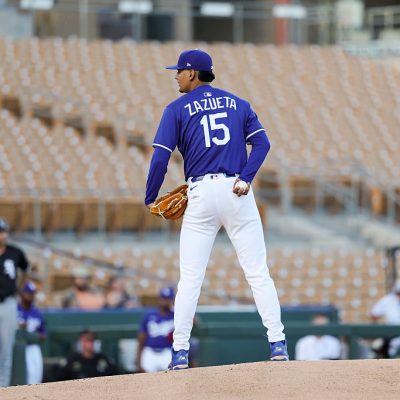
4. Christian Zazueta – RHP – Los Angeles Dodgers
Height/Weight: 6’3″, 170 | Bat/Throw: R/R | IFA: $110,000, 2022 (NYY) | ETA: 2027
| FASTBALL | Changeup | Sweeper | Cutter | COMMAND | FV |
| 60/65 | 50/60 | 45/50 | 45/50 | 50/60 | 50+ |
Acquired from the Yankees in exchange for Caleb Ferguson before the 2024 season the Dodgers identified Zazueta after he repeated at the DSL in what was viewed at the time as a likely forgettable swap. Zazueta evolved into a different pitcher in the Dodgers org, seeing his fastball jump three ticks since the 2024 season with some of the best command in the Minor Leagues.
Arsenal
A four pitch mix headlined by his unique fastball and changeup, Zazueta now sits in the mid 90s, with his heater, touching 99 MPH that features plus carry from a 5.3 foot release height and flat approach angle. His above average extension also helps the fastball get on hitters quickly.
The lively fastball sets up his changeup well, which averages 19 inches of arm side with 8-10 MPH of velocity separation and 10 inches of vertical separation. His great feel for the pitch helps it play up as well, tunneling off of the fastball effectively while landing it for a strike roughly 70% of the time.
Zazueta adjusted his slider heading into 2026 to be more of a true sweeper, which has made it a much more effective weapon to keep righties in check. He will also go to an upper 80s cutter that is useful bridge pitch that he will mix in evenly to hitters of both handedness.
Outlook
Zazueta’s fastball, changeup combo paired with above average command and improved supplemental offerings makes it easy to envision him landing as at least a back end starter. He’s athletic and moves well on the mound. There could be room for more velocity for Zazueta, who has steadily seen his fastball increase in that department over the last three seasons while reaching the upper 90s more frequently as his 2026 campaign progressed. That could push his ceiling to that of a high-end No. 3 option.
5. Gage Wood – RHP – Philadelphia Phillies
Height/Weight: 6’1″, 215 | Bat/Throw: R/R | 1st Round (26), 2025 (PHI) | ETA: 2027
| FASTBALL | Slider | Curveball | Splitter | COMMAND | FV |
| 60/70 | 50/60 | 50/55 | 35/45 | 40/50 | 50+ |
Wood transitioned from the Arkansas bullpen to the rotation in 2025 and following a detour due to a minor shoulder issue, he sprinted through the finish line, capped off by a 19 strikeout no-hitter in the College World Series. Wood’s elite fastball gives him the floor of a big league relief arm, but if he can refine his secondaries, there’s intriguing upside as a starter.
Arsenal
Technically a four pitch mix, Wood threw his fastball 63% of the time in his draft year, which is understandable given how dominant it is. He racked up a strike rate north of 70% while opponents mustered just a 65% Z-contact rate against it with a chase rate north of 30%.
The fastball has continued to be dominant through High-A and Double-A, averaging 96 MPH with the riding life that really plays up from his extremely flat vertical approach angle, causing hitters to consistently swing under it and expand at the top. He will still use it close to 60% of the time.
Wood has significantly upped his slider usage as a pro, favoring it over his curveball that he had featured most frequently. The former has improved plenty, flashing plus at 85-87 MPH with slurvy action. The late bite paired with the way that it tunnels off of the fastball have made it an effective chase pitch for righties.
Wood will go to low 80s two plane curveball more against left-handed hitters that will dive under barrels. While it’s sharp for how big the break is, the inconsistent shape can yield inconsistent results at times which paired with the depth can make it difficult to consistently land for a strike.
He also mixed in a nascent splitter in the upper 80s which could in theory work well off of his hoppy fastball if he can harness it at all.
Outlook
There’s some reliever risk that comes with a pitcher like Wood, but his ability to dominate the zone with the fastball, proved slider and knack for generating ground balls hedge some of that concern. Wood’s slider development has been extremely encouraging, and with a 70 grade heater that can dominate hitters of both handedness, the presence of two distinct breaking balls to pair has taken some of the pressure off of the development of his splitter.
Wood will still need to find more consistency with his curveball and developing the changeup to a point where hitters at least have to think about it will significantly aid his ability to keep lefties in check. The challenge to consistently command his curveball has resulted in far more free passes and advantage counts to left-handed hitters. Wood offers middle-rotation upside with the fallback of an All Star caliber relief arm.
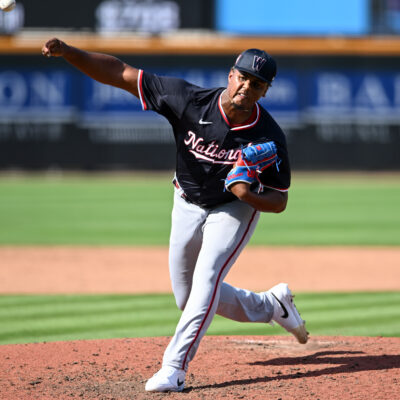
6. Jarlin Susana – RHP – Washington Nationals
Height/Weight: 6’6″, 235 | Bat/Throw: R/R | IFA: $1.7M 2022, (SDP) | ETA: 2027
| FASTBALL | SLIDER | Changeup | COMMAND | FV |
| 70/70 | 60/60 | 40/50 | 35/45 | 50+ |
Acquired by the Nationals in the Juan Soto haul, Susana turned heads at the complex with electrifying stuff, headlined by a triple digits fastball that he struggle to reign in. Susana took a huge step forward in the command department in 2024, but injuries set him back in 2025 including a UCL sprain and later lat surgery. He got a late start to the 2026 season, but returned as advertised stuff wise. It will be a matter of health and throwing strikes for the flame throwing Susana.
Arsenal
Easily some of the best raw stuff in the Minor Leagues, Susana offers two distinct fastballs: a four seamer that averages 100 mph and a two seamer at 99 mph. He can run the four seamer up to 103 mph, exploding through the zone and dominating at the top third. His two seamer averages 15 inches of horizontal run and is mostly utilized to blow up righties inside or catch them looking at the back door.
His slurvy slider at 89-91 mph has consistently left hitters baffled, with hard break that dives beneath the barrels of hitters from both sides of the plate. He has tweaked the shape some, adding more depth to it. His command of the pitch had come along prior to injury, but he is still trying to find the same consistency with it. The action of both his two seamer and slider result in plenty of ground balls, helping him keep his pitch count down.
Rounding out his arsenal is a power changeup that he will mix in a couple times per start in the low 90s. It has a chance to be a solid fourth offering if he finds more comfort and feel for it.
Outlook
Susana has exclusively worked out of the stretch for most of his pro career, however something clicked for him mid-way through his age 19 season, repeating his release point much more consistently with a delivery that does not appear high effort for the output that the 6-foot-6 power pitcher is generating. He’s still trying to find the same rhythm since returning from lat surgery, but most importantly, the stuff has immediately returned to prior form.
While two distinct fastballs at 100 mph and a wipeout slider gives Susana the floor of a high leverage arm, his shocking strides in the command department and ability to generate ground balls now have him tracking like a high-upside starter, albeit, still with plenty of volatility.
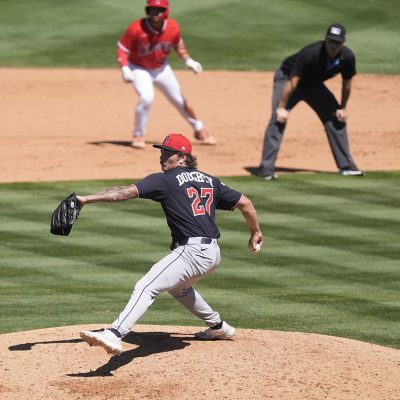
7. Braylon Doughty – RHP – Cleveland Guardians
Height/Weight: 6’1″, 195 | Bat/Throw: R/R | 1st Round, CB-A (36), 2024 (CLE) | ETA: 2027
| Fastball | Curveball | Slider | Changeup | Command | FV |
| 45/55 | 60/60 | 50/60 | 45/50 | 50/60 | 50+ |
An athletic right-hander with a great feel to spin it, Doughty is an intriguing balance of polish and upside for a prep arm.
Arsenal
Doughty flexes his athleticism and balance on the mound by varying his leg kick to throw hitters off, sometimes holding it at the top or hesitating, other times working quicker to home while filling up the zone at a solid clip. Out of the stretch, Doughty works extremely quick to home and holds runners on well.
A three-pitch mix, Doughty’s fastball will sit 92-94 mph, but has pushed to the mid-90s in shorter spurts. The shape is somewhat standard at this point, but Doughty generates high spin rates, providing optimism that he can create more ride as he shores up his spin efficiency.
His best pitch is his 80-82 mph curveball with two-plane break, hovering around 2,900-3,100 rpm. It already has the looks of a plus pitch with a good feel to locate it east and west. Doughty will also throw a slider in the mid-to-upper 80s, also flashing plus, but it can blend with his curveball. The fourth offering for Doughty is a changeup in the mid-80s that flashes average but has been inconsistent for him, given his limited use of it.
Outlook
Doughty’s athleticism and feel to pitch make him the ideal template for an organization like the Guardians to build on and develop. Having flashed velocities as high as 97 mph, there’s optimism for an uptick with Doughty in addition to improved spin efficiency that could have the fastball looking above average.
With his pair of quality breaking balls and a changeup that has a chance to develop into a viable offering, Doughty has the pieces to provide a quality four pitch mix that is maximized by what could be plus command. Even if Doughty’s stuff stalls, he has the pitch mix and command to land as a serviceable back end starter.
8. River Ryan – RHP – Detroit Tigers
Height/Weight: 6’2″, 205 | Bat/Throw: R/R | 11th Round (340), 2021 (SD) | ETA: 2024
| FASTBALL | SLIDER | CURVEBALL | CUTTER | CHANGEUP | COMMAND | FV |
| 60/60 | 60/65 | 50/55 | 55/55 | 45/50 | 50/50 | 50+ |
A former two-way player at Division II UNC-Pembroke, Ryan stood out as an infielder, hitting .308 while serving as the team’s closer. It was Ryan’s electric stuff that really turned the heads of Padres officials (and Dodgers) on the backfields, shifting his focus to the mound and impressing with his feel for an impressive assortment of pitches. He missed the first half of 2024 with a shoulder issue before Tommy John surgery cut his standout MLB debut short.
Ryan returned in 2026 with the stuff right back as advertised, if anything with louder stuff, looking like a high floor rotation piece with middle-rotation upside. He was shipped to Detroit with Zyhir Hope and Brady Smith as part of the Tarik Skubal return.
Arsenal
You can tell Ryan was a collegiate infielder with the way he operates on the mound. His delivery is loose, athletic and repeatable with plus arm arm speed. The right-hander will mix in five offerings with his four seam fastball leading the way at 40% usage. The high spin four seamer has averaged nearly 98 MPH since returning from elbow surgery, generating good whiff within the zone, with a two seamer that he will mix in two ticks below.
Ryan’s slider is his best pitch, now sitting right around 90 MPH with late gyro break. The pitch dives beneath barrels making it effective to both righties and lefties while picking up plenty of ground balls. He will throw a harder bridge-cutter in the low 90s that is an above average offering as well.
The second breaking ball for Ryan is a curveball in the low 80s that he effectively separates from his slider with around 13 inches of vertical break and 11 inches of horizontal break. He will mix it in around 10% of the time overall, predominantly to lefties, with his lowest strike rate among any of his offerings.
Rounding out the arsenal is an upper 80s changeup that has looked far improved since returning from injury. It gives him another look for lefties other than his curveball, with Ryan steadily gaining more confidence in the pitch.
Outlook
Ryan’s late switch to the mound and Tommy John surgery, paired with the Dodgers pitching depth have all caused him to become the eldest top 100 prospect ever (27 years old), but there’s no denying that Ryan is a big league caliber arm with middle-rotation stuff. There’s understandably some health concerns, but his athleticism on the mound, deep pitch mix and improved command give him a great chance of at least landing as a back end starter who is big league ready
9. Kendry Chourio – RHP – Kansas City Royals
Height/Weight: 6’0″, 160 | Bat/Throw: R/R | IFA: $247,500, 2025 (KC) | ETA: 2028
| FASTBALL | Curveball | Changeup | COMMAND | FV |
| 50/60 | 50/55 | 55/60 | 50/60 | 50+ |
Somewhat of a low key signing in the Royals 2025 IFA class, Chourio has immediately impressed with his advanced stuff and pitchability, encouraging the Royals to send him straight to the Arizona Complex League rather than the DSL, where he dominated, earning a Low-A promotion before his 18th birthday.
Arsenal
A three pitch mix, Chourio’s fastball already sits 95-97 MPH and he consistently pounds the zone with it. The shape leaves a bit to be desired at this stage, but the sheer velocity Chourio is already capable of sitting at and his command of the pitch is enough for him to dominate lower level hitters. For it to perform like a plus fastball at the highest level, Chourio may need to gain another tick or find a way to generate a bit more ride. Both seem entirely possible given how young he is and his quality feel to pitch.
Chourio’s best pitch is his upper 80s changeup with late arm side fade. He already has a pretty good feel for it, giving the pitch a good chance to land as a plus offering. The 79-81 curveball rounds out the arsenal, with two plane break, flirting with 3,000 RPM, giving him an above average third piece.
Outlook
Chourio is as advanced of a teenage arm as you are going to find and the results back it up. He’d likely benefit from adding a fourth offering, whether that be a sinker to insulate the four seamer a bit, a slider, or both. But the starting template of three above average or better offerings and a great ability to command them gives Chourio a foundation few young arms have.
10. George Klassen – RHP – Los Angeles Angels
Height/Weight: 6’3″, 230 | Bat/Throw: R/R | 6th Round (193), 2023 (PHI) | ETA: 2026
| FASTBALL | SLIDER | Curveball | COMMAND | FV |
| 60/60 | 70/70 | 50/60 | 35/40 | 50 |
After a undergoing Tommy John surgery as a freshman at Minnesota and struggling to throw strikes afterward, Klassen saw things click in pro ball, quickly looking like a steal by the Phillies in the sixth round. Klassen was packaged as the headliner, along with Samuel Aldegheri, in the Angels return for Carlos Estevez.
Arsenal
The stuff is loud for Klassen boasting a fastball that averaged 97 MPH in 2024 along with a pair of nasty breaking balls. His fastball can flirt with the dead zone, but Klassen generates whiffs off of sheer velocity and deception, turning inwards and hiding the ball as he strides forward before uncorking somewhat of a sling shot delivery.
His breaking balls really play up from this slot, with a 90 MPH gyro slider that hovers around zero inches of vertical and horizontal break, darting sharply below bats. It was one of the best performing breaking balls in the minor leagues in 2024, holding opponents to an OPS below .400. Klassen’s power curveball at 85-87 MPH with slurvy two-plane action. He will utilize it more against left-handed hitters who OPS’d below .500 against it in 2024.
Outlook
Klassen still is below average in the command department and the maximum effort in his delivery lends concern that it may be difficult for him to consistently throw strikes as a starter. His sheer quality of stuff and pair of breaking balls that are effective to lefties and righties could continue to help him fend off the reliever risk, but he will need to take another step forward in the command department in 2025 to stick as a starter and push closer to his middle-rotation upside. If he moves to the bullpen, Klassen could be a wipeout high leverage arm.
11. Anthony Eyanson – RHP – Baltimore Orioles
Height/Weight: 6’2″, 210 | Bat/Throw: R/R | 3rd Round (87), 2022 (BOS) | ETA: 2027
| FASTBALL | Slider | Curveball | Changeup | COMMAND | FV |
| 55/55 | 60/65 | 55/55 | 30/40 | 55/55 | 50+ |
Eyanson was a strike thrower at LSU who worked hard to increase his velocity and improve his arsenal after being drafted, setting him up for immediate success in his pro debut. Eyanson mowed through High-A and Double-A competition before being sent to Baltimore as part of the Adley Rutschman haul.
Arsenal
Featuring an over-the-top delivery, Eyanson tends to cut his pitches, leaning into his supination bias with success with an arsenal that works well vertically. His cut-ride fastball has jumped a tick on average from his draft year, now sitting mostly 93-95 MPH, touching 97. The cut-ride action helps him stay above barrels at the top of the zone while the variance in shape (sometimes more cut, sometimes more ride) seems to create a wide ranging spray results for hitters.
Eyanson’s gyro slider tunnels extremely effectively off of the heater as the release is nearly impossible for hitters to differentiate, staying on a nearly identical plane to his fastball before biting downwards late. As a result, Eyanson both picks up plenty of whiff on the pitch against hitters of both handedness as well as ground balls.
Working through the same vertical shoot, Eyanson’s curveball looks the part of a solid third offering, featuring a plenty of depth at 78-81 MPH. Averaging 34 inches of vertical separation from his fastball with minimal horizontal movement, the curveball gives Eyanson another platoon-neutral breaking ball, taking the pressure off of his nascent changeup.
Outlook
Between Eyanson’s track record of throwing strikes and his improved stuff, the right-hander looks like a high-probability rotation piece who should move through the Minor Leagues quickly. Though everything works mostly glove side for Eyanson, he has done a great job of keeping both lefties and righties in check.
Finding a distinct cutter that could bridge between the slider and fastball could be an effective equalizer while giving him a fourth velocity band given how inconsistent his changeup is with his supination bias. As he stands now, Eyanson looks the part of a high-probability No. 4 starter who likely won’t spend too much time in the Minor Leagues relative to his peers.
12. Nolan Perry – RHP – Toronto Blue Jays
Height/Weight: 6’2″, 195 | Bat/Throw: R/R | 12th Round (368), 2022 (TOR) | ETA: 2027
| FASTBALL | SLIDER | Curveball | Splitter | COMMAND | FV |
| 55/55 | 55/55 | 60/60 | 40/50 | 40/50 | 50 |
A 12th round pick in 2022, Perry struggled through his first two pro seasons, but flashed quality stuff. Elbow surgery following the 2024 season kept Perry out in 2025 before returning to action in 2026 where his stuff has taken a huge leap, along with his command.
Arsenal
Perry boasts a quality four pitch mix, with a natural ability to spin the baseball. His high spin heater sits 93-95 MPH with good carry from a slightly below average release point. His two-plane curveball stands out as his best swing and miss offering at 78-81 MPH with sharp bite for how much movement it features, dominating lower-level hitters of both handedness.
The slider looks the part of an above average offering as well with some variance in shape and velocity as well, sometimes looking more cutterish in the upper 80s and others sitting closer to the mid 80s with gyro action. Perry’s fourth pitch is a mid 80s splitter that flashes above average but is quite inconsistent from a shape and command perspective.
Outlook
The uptick in stuff and improved command have altered Perry’s outlook to an arm that boasts middle-rotation stuff, with an importance place on being able to handle a starter’s workload and maintaining the command gains at the upper levels. The baseline of an above average heater and a pair of quality breaking balls makes it easy to envision a back-end outcome even if the command lands in the fringy department. If Perry responds well to what will be the largest workload of his professional career by a wide margin, he should see his stock continue to soar.
13. Karson Milbrandt – RHP – Miami Marlins
Height/Weight: 6’2″, 225 | Bat/Throw: R/R | 3rd Round (85), 2022 (MIA) | ETA: 2026
| FASTBALL | Slider | Curveball | Sweeper | Changeup | COMMAND | FV |
| 60/60 | 65/65 | 50/50 | 50/55 | 40/40 | 40/45 | 50 |
Milbrandt is the best pitching example in the Marlins org of a prospect who pre-dated the front office and now took a leap under the new player development infrastructure. The fastball ticked up in 2025, as did the quality of secondaries. He made another leap in 2026, seeing his stuff jump another tick while making huge strides with his command.
Arsenal
Not only did Milbrandt see his fastball go from 94 MPH on average to nearly 96 MPH, but he also added an upper-80s slider that immediately became his most effective and consistent offering.
The fastball will occasionally touch 98 MPH with ride that will play up from a horizontal release. The unique look Milbrandt creates with the heater and improved velocity has made it dominant within the zone while being an excellent chase pitch at the top.
His hard bullet slider tunnels of the fastball well with short, late drop that garnered both whiffs within the zone and chase below it. Milbrandt’s feel for the slider is as consistent as any of his offerings, landing it for a strike at a high clip while varying the velocity from as low as 85 MPH to as high as 90 MPH.
Milbrandt’s sweeper has overtaken his curveball as his third most reliable offering, though the two pitches can blend together. The sweeper tends to be closer to the mid 80s while the curveball is a tick or two below, but both flash above average.
He found a bit more depth with the curveball as he has worked to separate it further from a sweeper that already has a little bit more vertical break than most. His low three-quarters release could play a part in the curveball being more inconsistent shape wise and bleeding into the sweeper. That said, the vertical break the sweeper features helps it perform more platoon-neutral in addition to a gyro slider that performs well against hitters of both-handedness.
Outlook
Milbrandt’s improved stuff resulted in a breakout 2025 season, which he followed up with a strong Arizona Fall League showing. With a middle-rotation starter’s arsenal, the key variable for Milbrandt heading into 2026 was command and particularly fastball command.
After having the tendency to spray his heater in 2025, Milbrandt has been able to fill up the zone with it in 2026. Given the velocity and shape of the pitch, Milbrandt’s improved ability to locate it has helped him both get ahead more frequently and set up his exciting breaking balls.
Even with a zone percentage that is up nearly 10% on his fastball in 2026, Milbrandt has upped the chase rate against the pitch by almost 10% as well, putting into perspective how much more effectively he his setting up hitters and executing it.
Good execution of a great fastball only helps the rest of his secondaries more while chipping away at the overall walk rate. Improving from below average command to even just fringe-average will be enough for Milbrandt to stick as a starter and reach close to his middle-rotation upside, which he appears to be well on his way to doing.
14. Caden Scarborough – RHP – Texas Rangers
Height/Weight: 6’5″, 185 | Bat/Throw: R/R | 6th Round (171), 2023 (TEX) | ETA: 2027
| FASTBALL | Sweeper | Changeup | COMMAND | FV |
| 55/60 | 60/60 | 40/50 | 45/55 | 50 |
A multi-sport athlete in high school, Scarborough flew under the radar before the Rangers snagged him in the sixth round in 2023, signing him for early fifth-round money. He looked very raw in his first pro season, which was also disrupted by a lat strain, before bursting onto the scene in 2025 at Low-A and High-A.
Arsenal
Mostly a two-pitch mix for Scarborough at this point, the right-hander dominated lower-level hitters with his fastball and sweeper. The fastball sits 93-95 MPH, touching 97 with carry that will play up from his 5.1 foot release height and roughly 25 degree arm angle.
He also commands the fastball well, boasting a strike rate of nearly 70% in 2025 while working well to all four quadrants. He naturally creates plenty of arm-side run as well from his low slot, making it a decent ground ball pitch when he locates it at the lower half.
Scarborough’s best pitch is his sweeper in the low 80s. It averages more than 16 inches of horizontal action, which only plays up from his slot. Despite the big shape, Scarborough commands it well, generating good in-zone whiff and chase figures.
Rounding things out is a splitter that is a work in progress, but has flashed. He started to mix it in a bit more as the season progressed, with the chance to be a decent third offering.
Outlook
Scarborough’s athleticism and deception, paired with his impressive command of a good fastball and slider tandem gives him a strong foundation. The splitter coming along will surely help diversify his arsenal, but given his feel to pitch, a cutter or shorter slider shouldn’t be too big of a hurdle for him to add to the equation.
The Rangers are understandably very excited about Scarborough’s upside, and after a great first full pro season, he has a chance to truly break out in 2026.
15. Ramon Marquez – RHP – San Francisco Giants
Height/Weight: 6’3″, 170 | Bat/Throw: R/R | IFA: $10,000, 2025 (PHI) | ETA: 2028
| FASTBALL | Changeup | Slider | COMMAND | FV |
| 50/55 | 70/70 | 50/55 | 45/55 | 50 |
After turning in a solid pro debut in 2025, Marquez has broken out in a big way, seeing his fastball jump a tick and a half to complement one of the best changeups in the Minor Leagues. Marquez decimated Low and High-A bats before being traded by the Phillies with Marty Gair for Luis Arraez and Caleb Killian.
Arsenal
Marquez utilizes a three pitch mix, headlined by one of the best changeups in the Minor Leagues. The low 80s changeup features roughly 12 MPH of separation from his fastball with high spin and an identical looking release that has allowed it to pick up a comical 65% whiff rate through his first 13 appearances of the 2026 season.
Now sitting in the mid 90s with his fastball, Marquez’s heater both is playing more effectively within the zone and working in tandem with his changeup more effectively. The shape leaves a bit to be desired, so the uptick in velocity certainly helps the heater look like at least an average offering. His above average command of the pitch helps his case as well.
Given the way Marquez stays behind the baseball from a three-quarters release which can create more arm side run than vert. If he could find a way to distinguish more of a four seamer and sinker combination, it would certainly help his case rather than what often looks like a high spin two seam/four seam hybrid.
Marquez does not really have anything that breaks glove-side but his gyro slider is the closest thing. The pitch has benefitted from his uptick this season, sitting in the upper 80s, topping at 91 MPH. It has helped Marquez keep righties in check much more effectively and looks like an above average third pitch.
Outlook
It’s just a three pitch mix at this stage, but one that already looks like it could play in the back of a rotation with Marquez’s 70 grade changeup leading the way. Finding a way to throw more of a true sinker and four seamer would help his case, but Marquez’s uptick in velocity paired with both the fastball and slider has really helped complement his leading weapon.
Workload will be important to monitor with Marquez as there’s some effort to his delivery and he is in his second pro season with the ingredients to climb through the Minor Leagues quickly. Marquez throws plenty of strikes and looks like a high-probability back end starter with middle-rotation upside.
16. Tyler Bremner – RHP – Los Angeles Angels
Height/Weight: 6’3″, 190 | Bat/Throw: R/R | 1st Round (2), 2025 (LAA) | ETA: 2027
| FASTBALL | Changeup | Slider | COMMAND | FV |
| 60/60 | 65/70 | 40/50 | 50/55 | 50 |
Bremner offered one of the highest floors in the draft with an above-average fastball and the best changeup of the class. A strike thrower, Bremner fits the bill of the potentially fast-moving arm that the Angels like to target, but for him to consistently succeed in the big leagues, he’ll likely need to find a reliable third pitch.
Arsenal
Bremner utilized a three-pitch mix at UC Santa Barbara, dominated by his fastball and changeup. The 95-97 MPH fastball has looked the part of a plus pitch since joining the Angels org, with good run and ride from a flat approach angle.
The quality heater sets up Bremner’s wipeout pitch, a 70 grade changeup that averages 10 MPH in velocity separation and 18 inches of total movement separation. It is both a gaudy swing and miss pitch and a weak contact-inducer that is effective against hitters of both-handedness. He maintains his arm speed and release point well, making it difficult for hitters from each side of the plate to pick up.
The upper 80s slider lags far behind the fastball and changeup for Bremner, with inconsistent, often cutterish shape. He has mentioned that it is intended to be a gyro slider, but his pronation bias likely causes the pitch to stay up more than desired. There’s enough glove-side separation from his arm-side moving offerings to be an effective third pitch if he can find more consistency with it from both a shape and command perspective.
Outlook
Bremner’s fastball and changeup, paired with a track record of avoiding free passes should make him a candidate to climb through the Minor Leagues quickly, beyond the fact that he is in an Angels organization that already has the propensity to do so.
For Bremner to reach his middle-rotation upside, he will need to find more consistency with his breaking ball. The effectiveness of his changeup against hitters of both handedness helps, but he will need to find a way to get his slider to break more consistently vertically for it to be a reliable third pitch. A likely easier and more attainable addition to his arsenal given his pronation bias would be a sinker.
With the combination of a plus heater and double-plus changeup, even just an average third offering could put Bremner on track to be a middle-rotation option. Add in a sinker and a four pitch mix could push that ceiling even higher. If the third offering stalls out, Bremner’s fastball/changeup combo should be enough for him to still be a quality big league starter.
17. Travis Sykora – RHP – Washington Nationals
Height/Weight: 6’6″, 230 | Bat/Throw: R/R | 3rd Round (71), 2023 (WSN) | ETA: 2028
| Fastball | Slider | Changeup | Command | FV |
| 55/60 | 60/60 | 45/55 | 35/50 | 50 |
A powerful prep arm who overpowered hitters on the summer circuit, the Nationals shelled out borderline-first round money to sign Sykora away from the University of Texas in 2023, and it’s paying dividends to open his pro career. The start of Sykora’s 2025 season was delayed due to hip surgery followed by Tommy John surgery just 30 innings into his return.
Arsenal
Standing at 6-foot-6 with a three pitch mix that generates plenty of whiff, Sykora really turned heads as an amateur with a fastball that can get into the upper 90s but sits 94-96 MPH. While characteristics are more generic, the pitch performs well off of the sheer velocity from his unique short arm release, setting up his secondaries well. He still has room to improve in regards to his command of the heater, tending to throw too many non-competitive fastballs well above the zone.
His slider is his go-to out pitch at 83-85 MPH with gyro break, tunneling off of his fastball well with the downward action from his tough release. The pitch picks up plenty of swing and miss (25% whiff rate) and when hitters are fortunate enough to get to it, it’s typically weak contact on the ground. He commands the pitch more consistently than his fastball at this point, landing it for a strike nearly 70% of the time.
Rounding out the arsenal for Sykora is a splitter in the mid 80s that flashes above average. He maintains his arm speed well while killing spin to around 1,200 RPM, helping it drop late. With a more consistent feel for the pitch, it could play closer to plus, racking up gaudy whiff numbers when it is around the zone. He has started to find a better feel for the pitch as the season has progressed.
Outlook
For a prep arm with such exciting stuff, Sykora has a pretty good feel to pitch and will even do little things like speeding up his delivery or slowing it down to throw off hitter’s timing. He throws enough strikes to maintain a reasonable walk rate, but he tends to mix in too many non-competitive pitches at this stage, particularly with his fastball. Sykora enjoyed quite an impressive season for a 6-foot-6 prep arm who was still 19 years old at season’s start, already flashing middle rotation upside. As he climbs levels, location and execution will become more important, but three at least above average offerings and a unique delivery makes Sykora the most exciting Nationals pitching prospect not named Jarlin Susana.

Written by
Aram Leighton is the Co-Founder and Executive Editor for Just Baseball. A Syracuse University grad, Aram is one of the hosts of the Just Baseball Show…