
Where the Brewers Need To Improve at the Trade Deadline
The Brewers are once again one of MLB's top contenders as the trade deadline approaches. Is this the year they go all-in?
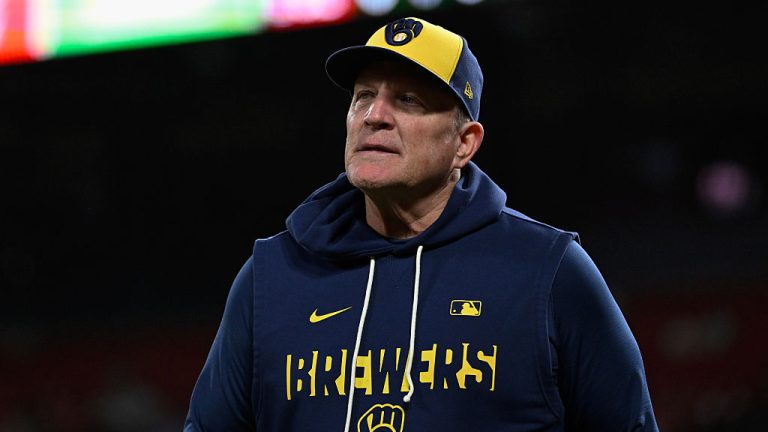
We are officially less than two weeks from the 2026 MLB trade deadline, which means contenders will be scrambling to bolster their rosters before August 3 in hopes of making a deep postseason run.
One of those teams is the Milwaukee Brewers, owners of the second-best record in Major League Baseball through 101 games. Milwaukee has picked up right where it left off a season ago, setting a franchise record for the best first-half record just one year after winning a franchise-best 97 games.
There’s no question the Brewers will be a postseason contender, but the bigger question is whether Matt Arnold and company are satisfied with the roster as currently constructed or if the front office has more moves up its sleeve before the deadline.
For a team that has come so close to reaching the promised land year after year, is this the season the Brewers finally push their chips to the center of the table? Let’s break down what they still need at the trade deadline.
Stats and rankings were taken prior to play on July 21.
Pulse Check: What’s the Current State of the Brewers’ Roster?
The Brewers are once again one of the best teams in Major League Baseball. Add in the fact that they possess arguably the game’s best farm system, both in terms of top-end talent and organizational depth, and Milwaukee is positioned to make a significant splash if it chooses to do so.
Despite their record, this roster is far from perfect. Few contenders are without flaws, which is what makes trade deadline additions so impactful league-wide. The question is whether the Brewers are comfortable relying on their internal options or if they are finally willing to part with prospect capital to acquire an impact player who could help push the franchise toward its first World Series title.
Even if Milwaukee enters the market for marquee names, identifying the right fit is just as important as making a move. Every addition must address a clear need while complementing a roster that has already established itself as one of baseball’s best. And for an organization like Milwaukee, where every roster spot is carefully considered, that puzzle becomes even more complicated.
The Offense: Is It Good Enough?
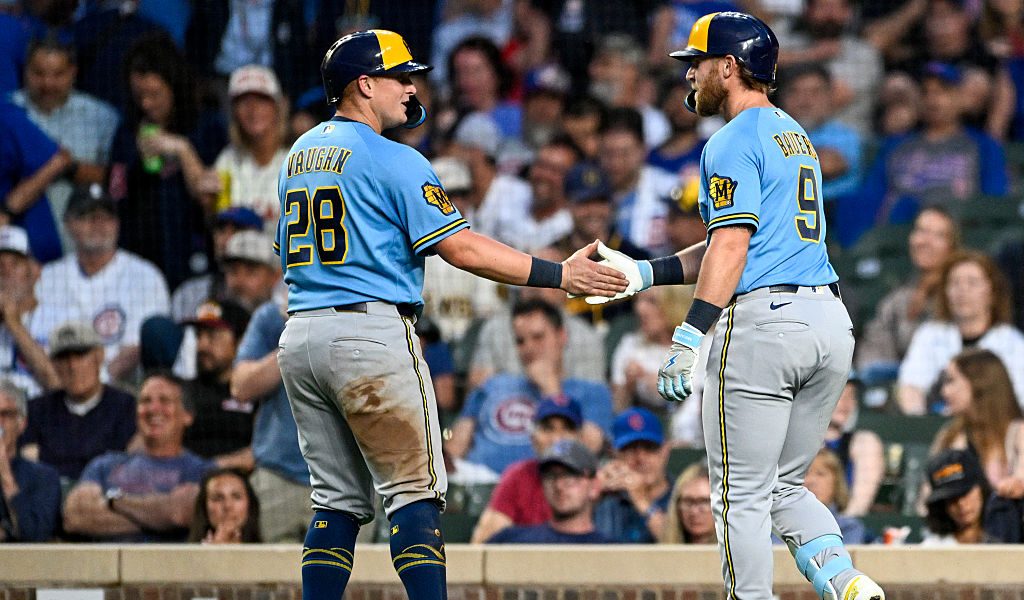
Starting with the offense, there’s plenty to like, and many of the positions are already spoken for. That makes an addition to this part of the roster unlikely, but that doesn’t mean it’s off the table.
As is typically the case, the Brewers boast one of the best offensive approaches in baseball and get on base at one of the highest rates in the league. They own the lowest chase rate in MLB (26.2%) and the sixth-best whiff rate (23.6%), helping them walk at the second-highest rate in baseball (10.7%) and strike out at one of the lowest marks (21.2%).
The Brewers also swing less than any team in the majors and are tied for the fourth-most pitches per plate appearance, consistently grinding out at-bats and passing the torch to the next hitter. It’s an approach that has served as the foundation of their success over the past few seasons, and it will continue to be this team’s identity.
The elephant in the room, however, remains the team’s lack of power. It’s a conversation that seems to surface every trade deadline, and this season is no different.
Milwaukee ranks in the bottom third of baseball in slugging percentage, 27th in isolated power, and dead last in home runs. They do rank third in MLB in doubles, largely due to the team’s astounding speed, but the home run potential remains a concern.
In the end, October baseball often comes down to slugging. The question is whether this version of the Brewers has enough power to get over the postseason hump and make a legitimate run at the franchise’s first World Series title. That’s the difficult question Matt Arnold and the front office must answer over the next two weeks.
Where Could They Add?
The other part of the equation when adding a bat is finding the right fit. Frankly, most spots in the starting lineup, as well as the bench, appear spoken for, with perhaps the lone exception being the left side of the infield.
Rookie Cooper Pratt has settled in at shortstop, pushing Joey Ortiz over to third base. Pratt has been an above-average hitter by wRC+ this season while providing solid defense at shortstop, giving the Brewers exactly what they hoped for when they called him up and signed him to an extension as a 21-year-old.
That said, Pratt is still just a rookie, and that’s important to remember when evaluating this team’s postseason aspirations. How much faith do they have in Pratt when it comes to the postseason? That’s one of the more intriguing questions facing the front office over the next two weeks.
Ortiz presents an equally interesting case. Dating back to the beginning of last season, he’s been one of the least productive hitters in baseball. Since moving over to third base, however, he’s begun to turn things around.
Since June 29, Ortiz is slashing .300/.344/.550 with an OPS near .900 and a 144 wRC+ across 19 games. It’s been his best stretch of baseball since he was a rookie with the Brewers back in 2024. It’s still a relatively small sample, but Ortiz’s recent hot stretch could have a significant impact on how Milwaukee approaches the trade deadline.
Ortiz has also accumulated +5 Outs Above Average and +3 Defensive Runs Saved in just 156.1 innings at third base this season. His glove remains elite, and if this recent stretch is any indication that he can provide even league-average production at the plate, he’s more than capable of holding down the bottom of Milwaukee’s lineup.
It’s also worth noting that David Hamilton is working his way back from a right hamstring injury and will spell reps at both shortstop and third base once he returns.
If this question had been asked a month ago, replacing Ortiz would have been the clear and obvious answer, and it felt like the Brewers were destined to add a bat on the left side of the infield. But with the way Pratt and Ortiz have played over the past few weeks, it feels less likely by the day that Milwaukee makes that move.
This lineup could certainly use an influx of power, but it doesn’t feel like the Brewers are willing to sacrifice the elite defense Ortiz provides in exchange for an offensive upgrade. With Milwaukee already sitting among the top five in baseball in runs scored as is, standing pat on the position-player side of the roster may ultimately be the route that makes the most sense.
The Bullpen: Lethal When Healthy
The bullpen has been riddled with injuries throughout the season, as evidenced by the Brewers’ recent additions of relievers Bryse Wilson (free agent) and Lance McCullers Jr. (trade). For a team that relies on its bullpen as much as Milwaukee does, there is no such thing as having too many quality arms.
That said, the Brewers’ top three relievers have been outstanding this season. Milwaukee’s bullpen ranks fifth in ERA, third in FIP, and eighth in WHIP. Aaron Ashby has been a workhorse, Abner Uribe is in the middle of another strong season with a mid-2.00s ERA, and Trevor Megill has been one of the best relievers in baseball since April 16, posting a 1.09 ERA across 33 appearances. His 1.8 fWAR over that stretch is tied with Mason Miller for the highest mark among relievers.
As long as those three remain healthy and continue handling the back end of games, a marquee bullpen addition seems unlikely. However, adding another middle-inning option is not out of the question, depending on how Chad Patrick performs between now and the deadline.
The Brewers could also get a boost from within, as DL Hall is currently working his way back through a rehab assignment and could eventually reclaim a high-leverage role in the bullpen. Still, Milwaukee has shown a tendency to add bullpen help at the trade deadline regardless of how strong the relief corps appears, so another addition cannot be ruled out.
The Starting Rotation: The Area To Address
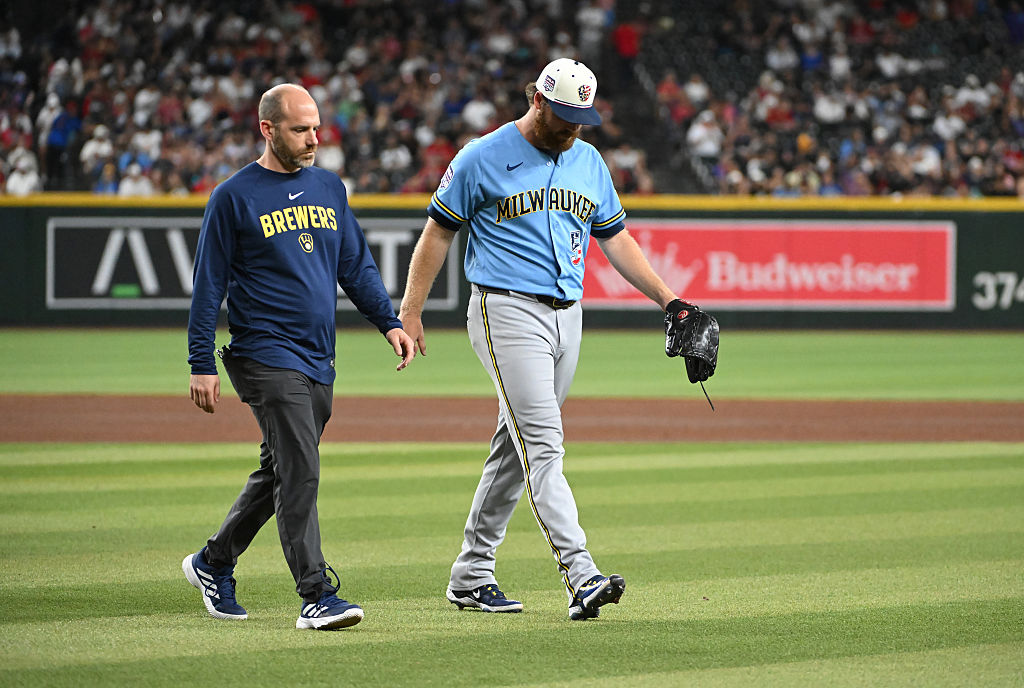
That brings us to the starting rotation.
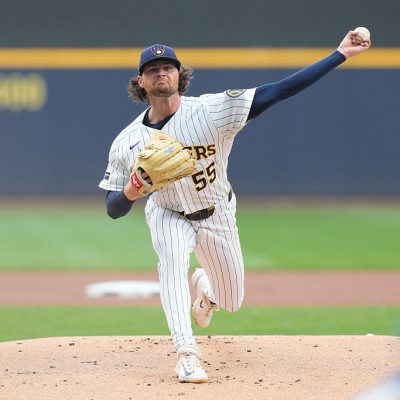
Led by NL Cy Young favorite Jacob Misiorowski, the Brewers’ rotation ranks first in MLB in ERA, FIP, SIERA, fWAR, and opponent batting average while ranking second in WHIP. If one thing has become clear this season, it’s that Misiorowski has the ability to completely change a game every time he takes the mound. While the postseason is a different animal, few pitchers can match the impact he brings.
But beyond Miz, there are questions despite what the dazzling team ERA might suggest.
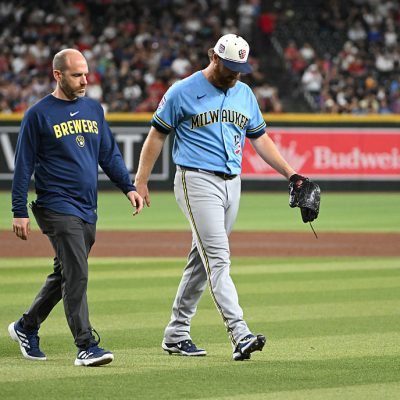
Brandon Woodruff will miss the rest of the season with another shoulder injury, and Kyle Harrison is working his way back from forearm tightness. Harrison was outstanding across his 17 starts before landing on the injured list, but a return to that level of production is never guaranteed, especially for a young pitcher coming back from an arm injury.
Logan Henderson has done nothing but produce when called upon, pitching to a sub-3.00 ERA across seven starts this season. He recently returned from the injured list after missing a month and a half with a back injury, but he’s claimed an important role in the middle of the Brewers’ rotation.
Brandon Sproat has shown plenty of flashes this season but is still searching for consistency as he adjusts to the major league level. He also has to prove he can work deeper into games and navigate opposing lineups multiple times. Sproat currently owns a 3.55 ERA the first time through an order, but that number rises to 5.45 the second time through and 9.35 the third time through.
He’s going to be a valuable piece for the Brewers in the long run, but the current version of him is not someone the team can confidently turn to in a postseason game.
Robert Gasser has shown flashes of his own while also experiencing some struggles, and Shane Drohan has filled a rotation spot admirably, pitching to a 3.20 ERA across 10 starts and 10 relief appearances. However, it remains to be seen how much confidence the Brewers have in turning to any of those options in Game 2 or Game 3 of a playoff series.
Gasser and Drohan are the “veterans” of the group at 27 years old, but Gasser has fewer than 100 career MLB innings under his belt while Drohan still has rookie eligibility. Misiorowski, Harrison, Sproat, and Henderson are all 25 years old or younger.
Youth is not inherently a weakness, and it doesn’t automatically mean Milwaukee needs to add a veteran starter. However, without Woodruff, the rotation’s lack of postseason experience is worrisome.
The Brewers have plenty of options, and if they choose to trust the arms that have gotten them to this point, few could fault the front office for that decision. But adding a veteran starter into the mix to serve as the Robin to Misiorowski’s Batman could be the move that helps Milwaukee fully capitalize on its championship potential.
The question boils down to whether the Brewers are willing to pay the price for a premium arm at the deadline.
Final Thoughts
The Brewers are one of the most difficult teams to predict at the trade deadline. They have been in contention for nearly a decade, yet they have rarely made the big splash that puts them over the top.
That’s a big reason why they’ve been so successful over all these years, but it’s also why they’ve failed to see a deep postseason run during that same span.
On one hand, this roster is built around youth and controllable talent, giving the Brewers plenty of bites at the apple if they continue developing this core.
On the other hand, Milwaukee has a chance to separate itself from the pack in a year where few teams have truly established themselves as the team to beat. The roster is already in a strong position, and adding an impact starter and another offensive piece could be enough to push the Brewers toward a National League pennant.
But the Brewers have faced this same crossroads before. Despite fans and analysts calling for the team to pursue a marquee addition at the deadline, Milwaukee has typically trusted its internal options and stayed true to its process. That appears to be the direction things are trending again in 2026, although we won’t know for certain until the August 3 deadline passes.
For now, the Brewers will look to continue their momentum after posting the best first half in franchise history. Coming off a franchise-record 97-win season, Milwaukee appears poised for another historic campaign. The question is whether the organization will trust the formula that has gotten it here or defy the models and make the aggressive move necessary to finally reach the mountaintop.
Become a Member of Just Baseball
Subscribe and upgrade to go ad-free!
* Save 25% by subscribing annually.

Written by
Joey Peterson is a graduate of the University of Wisconsin-Madison and an editor for Just Baseball. He covers the Milwaukee Brewers, along with general MLB topics…