
Why College Pitchers Were Coveted in the 2026 MLB Draft
The most coveted assets in the 2026 MLB Draft weren't high school players, but college arms. Here's why.
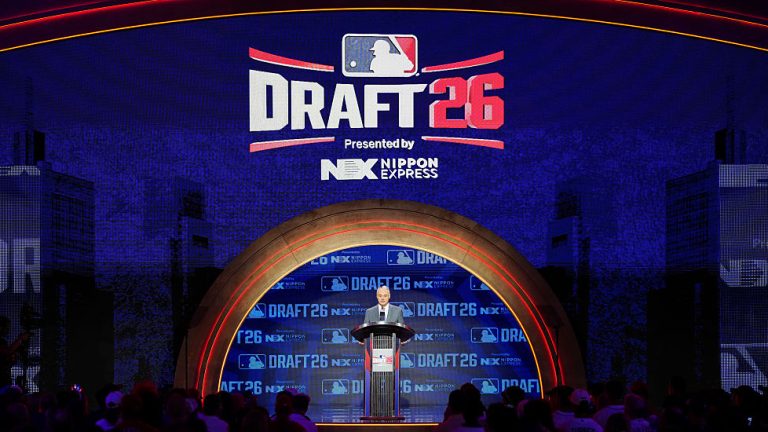
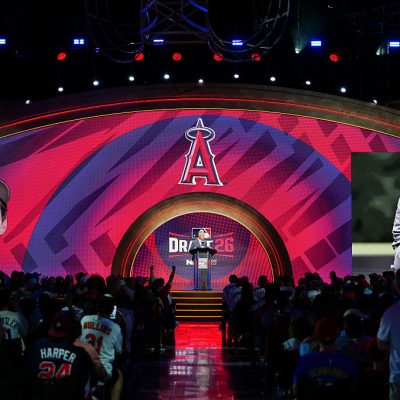
Ahead of the 2026 MLB Draft, there was a lot of buzz surrounding the top prep prospects in the class, as many of these players were profiled as coveted assets for teams down the line. After all, these prospects have often showcased the most upside of the options typically on the table. With the MLB Draft Combine helping a lot of these prospects rise to the top, it’s easy to understand where this excitement was coming from.
However, on Draft Day, what transpired shocked analysts across the industry, as the most coveted assets were not high school players, but college arms.
In fact, this was one of the most college-pitching-heavy drafts in recent memory, with teams such as the Chicago Cubs taking almost exclusively college arms.
On the surface, it may just seem like these teams ultimately decided that they liked the college arms they were selecting more than the other names remaining on the table. While this is partially true, the underlying reasons as to why these players were more coveted than ever are far more complicated.
With the impact of NIL money being a huge factor that scared teams away from selecting the top prep talent on the board, and the developmental risks that come with high school prospects potentially outweighing the potential gains for these players, the conversation around what made the most sense for many of these teams on Draft Day was quite extensive.
Let’s take a closer look at the multitude of reasons why college arms were the most coveted asset in the 2026 MLB Draft, and why this trend may become more and more common for drafts in the near future.
The Impact of NIL Money
First and foremost, one of the biggest talking points that explains why college arms were more coveted assets in this year’s draft is the topic of NIL money. Ever since multiple landmark court rulings made it possible and colleges became able to pay their athletes, MLB teams have had to compete financially with college programs, something they didn’t have to do previously.
Naturally, with top college programs now able to pay their athletes, schools have far more leverage in negotiations and are often even able to help convince their prospects to come to school as opposed to signing once they’re selected.
While it’s important to note that the figures handed out in baseball are often far less than they are in college football and basketball, they don’t have to be astronomical amounts to lead players to seriously consider heading to school.
Even if seven-figure deals are few and far between, six-figure deals are not. Players are able to potentially earn hundreds of thousands of dollars while developing in high-level facilities, potentially working toward a degree, while having the chance to be selected much higher when they’re eligible next.
With the latter point, players can dream of more money, especially as first-round slot values continue to increase.

This has led teams to avoid selecting prep players committed to certain schools that are willing to pay up for their players while also featuring a high-quality developmental experience, and instead pivot to the safer option: players who are already in college.
In most cases, draft-eligible juniors are far more willing to sign with their respective clubs. They’ve already been to college, developed, worked on their degrees, and, most importantly, they’ve already been financially compensated for their efforts.
While schools are sometimes able to convince their players to play out their senior years, these figures can be smaller than what teams are willing to offer, and with most college prospects already feeling like they’ve gotten their worth out of NCAA action, they choose it’s time to sign.
As for seniors, these prospects are without many other options if they desire to continue playing baseball. It’s either sign for whatever the team offers, go the independent ball route, try to play in a foreign league, or hang up the spikes.
With this being the case, teams are often able to significantly low-ball these prospects, offering them under-slot deals and incredibly small signing bonuses, with the main thing to offer being the chance to make it to the big leagues.
Tying this back to the idea of college arms being the most coveted assets during the 2026 MLB Draft, teams were able to sign them for well below slot values and, in many cases, avoid competing with college programs financially. This ultimately allows them to more effectively use their bonus pool, spending more of it on the highest-end talent in the class.
Pitchers are Developmentally Safer
While the impact of NIL money was certainly a factor that led to college pitchers being more desirable than ever in 2026, this only explains the college side of this point.
Why, though, does this idea almost exclusively apply to college arms?
In the era of data, analytics, biomechanical metrics, and easier access to information, teams view college pitchers as safer developmentally. While their tools rarely translate on a one-to-one scale, teams can measure and project the success many of these arms will have in professional baseball much more easily, as fewer questions exist surrounding their game.
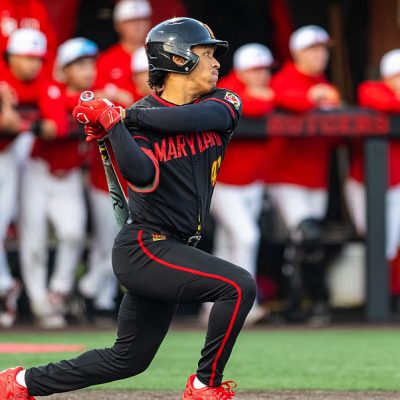
For starters, college arms, especially those playing in high-level conferences such as the SEC and ACC, have an extensive, proven track record. As these conferences get better and better, the competition becomes more like what they’ll face in the lower levels.
Even though there’s still a relatively large gap here, if a pitcher performs well when routinely squaring off against potential first-round-talents, they are more likely to handle professional hitters better. This is a huge reason why college arms are so coveted. Recently, these conferences are producing incredibly talented and well-developed offensive players.
However, at the end of the day, college success can still only take players so far. This idea leaves out international prospects who are sometimes further ahead developmentally, and it fails to account for hitters with multiple years of professional experience.
This is why the teams truly rely on stuff, something that routinely translates incredibly well and serves as a strong foundation to fall back on.
For example, if a starting pitcher can generate high vertical break on his four-seamer, spin his breaking balls well, and showcase a refined mix, this will often translate with far fewer uncertainties. These are traits that usually don’t just disappear, even if their shapes change slightly when switching to the minor league or major league baseballs.
Going one step further, even if the stuff backs up slightly, teams have gotten so good at knowing what this looks like that they’re able to prepare for it. For example, if a starting pitcher was spinning heaters with 20 inches of vertical break in college, they’ll typically lose about 2 to 3 inches of vertical break when adjusting to the professional baseballs. While the shape changes slightly, a heater with 17 to 18 inches of vertical break is still fantastic, and inching closer to elite territory.
With data more rampant than ever, this is easier to evaluate and project than ever before, making these college arms safer bets to succeed at the next level.
The same cannot be said for hitters, especially on the prep side. Even the offensive profiles with the best batted-ball metrics can run into unquantifiable issues, such as pitch recognition, sequencing, game planning, swing decisions, or other unforeseen mechanical inefficiencies or issues.
Piggybacking off of these ideas, starting pitchers are generally easier to develop than hitters as long as they come with the right “carrying traits” that allow them to hold their own initially. This is an idea that the Pittsburgh Pirates have honed in on heavily, and it’s helped them routinely churn out front-end pitching prospects.
Essentially, this model is that teams target pitchers with “plus” fastballs and one “plus” breaking ball. In other words, if teams can find a player with elite fastball characteristics and a very good breaking ball, they already have a strong foundation that will lead to success in the lower levels. With these traits, the teams can then expand their arsenals and refine the little things that can take their games to the next level without preventing success altogether.
When it comes to high school prospects, many of these ideas are not applicable. They’re far harder to project, feature little data, and the translation to immediate professional success is far less certain. Not only this, but without their developmental years in college, many of these players are still essentially balls of clay that have yet to be formed into capable professional players, something that can often take plenty of time.
Taking all of these things into consideration, the safety in the developmental track and projectability are exactly why college arms are so valuable to teams. This is even why teams feel okay with reaching on arms that express many of these characteristics, as they feel that they can help get the best out of these players without many question marks.
Will Selecting Many College Arms Become Even More Rampant?
While this trend was overwhelmingly clearer during the 2026 MLB Draft, this trend isn’t exactly new. It feels as though teams have been more willing to go all-in on college arms in the 2020s, and it’s just becoming more and more common with each draft that passes.
Knowing this and thinking back to the reasons we’ve discussed in this piece, is this a trend that we’ll see become even more rampant in the coming seasons?
In my opinion, this is very likely. NIL money is increasing more and more every year; colleges are becoming more savvy with their development, and essentially they’re a more attractive destination than ever. While all of this is happening, teams can get their hands on data more easily now than ever, which makes these prospects easier to project.
Essentially, even without the financial aspect, these players are safer bets, and the potential savings that come with them are simply a bonus.
Assuming the upcoming CBA doesn’t drastically change the draft process, this strategy will likely become more and more common around the league, especially as more teams find success while following this model.
College arms are cheaper, safer, and easier to project than ever before, making them more attractive to MLB teams than ever before.
Become a Member of Just Baseball
Subscribe and upgrade to go ad-free!
* Save 25% by subscribing annually.

Written by
Jay Staph, a huge baseball fan and stat nerd, founded and ran his own baseball writing website, BSBWrites, at just 16-years-old. With focal points around prospects,…