
Davis Martin and Sean Burke Have Become Cornerstones of the White Sox Rotation
Martin and Burke have taken their games to another level with upgraded arsenals and command.
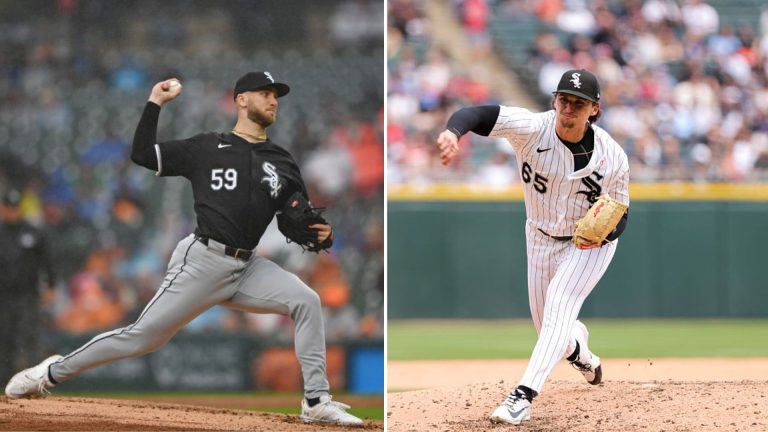
Entering the season needing to display growth in order to maintain a rotation spot heading into the future, Davis Martin and Sean Burke have become the stabilizers of the Chicago White Sox rotation.
The 2026 season has represented a massive step forward for the White Sox organization, particularly the offense, which has become one of the best in baseball.
The rotation was set to be one with question marks heading into the year, and while the back half remains far from solidified heading into a fascinating trade deadline for the team, two long-term members of the organization have proven they’re here to stay.
Opening Day starter Shane Smith was optioned and then hit the IL with an issue that was likely bothering him this spring, and free agent signing Anthony Kay has been hit-or-miss in his stateside return following two years in Japan.
Meanwhile, Erick Fedde has been largely unable to capture his 2024 magic, and top prospect Noah Schultz has gone through an adjustment period settling into MLB.
The other two arms in the White Sox rotation have taken their games to another level with upgraded arsenals and command to go along with results and underlying data to back it up.
Davis Martin, now the longest-tenured member of the organization, started out the year guns blazing and has slowed down marginally, but has certainly broken out and then some. Sean Burke, who started Opening Day in 2025 after an excellent first few games of his MLB career in 2024 but struggled for much of last year, has turned a corner, particularly of late.
With much of the future pitching staff seemingly yet to be determined, Martin and Burke now look like fixtures in this rotation for years to come.
A 14th-round selection back in 2018, Martin showed some intrigue through the first 51 outings of his MLB career spanning from 2022-2025 but never to the degree he has this season.
Following an average first start of the season in March, Martin was one of the best pitchers in baseball throughout April and May, pitching to a 1.72 ERA with a 2.13 FIP to back it up. While he has had a few hiccups that have taken his numbers back a notch, this breakout was far from a coincidence.
Martin’s arsenal has shifted greatly over the course of his career. Last season, Martin relied heavily upon his fastball, changeup, and slider. Those three offerings accounted for 79% of his pitches thrown. This year, that trio totals just 51% of his usage with a noticeable drop in all three pitches.
This offseason and spring were a turning point for Martin from a usage standpoint as he began working in more of a true cutter, which actually resembles his slider from the early stages of his career, while his current slider is a more traditional slider with less vertical rise.
So far in 2026, he has used six different pitches at least 13% of the time, with significant upticks of his sinker, curveball, and the aforementioned adjusted cutter.
“I feel like I always have something for each hitter, which creates confidence and allows me to tunnel [differently],” said Martin on his expanded arsenal.
The ability to work towards his arm side has been a clear strength this season. While he’s throwing his kick change much less than in prior seasons, the pitch has been more effective than ever while paired with the sinker in the same quadrant.
Utilizing a “kitchen sink” type of approach, as described by Burke in regards to Martin, has been a key way to meet each batter where they’re at and avoid playing into their strengths.
“He’s a kitchen sink guy. Talking through how he sets stuff up and what he’s doing to attack…the understanding of sequencing and tunneling is a constant conversation,” said Burke in regards to his close relationship with Martin.
While their stuff is very different, this approach has been a key for Burke this season as well; he has broken out in his own right recently.
After a challenging first full MLB season in 2025 that included being optioned to Triple-A, Burke did some digging this offseason alongside his pitching coaches on how to maximize his plus stuff.
“I look around the league at the most successful starters, and you see the four-seam, sinker, cutter mix,” said Burke.
Formerly a pitcher who generally relied on just a four-seam fastball and a pair of breaking balls, Burke started to work a sinker into his mix late last season and then a cutter this winter as a harder variation of his plus slider. This season he has thrown those two pitches combined over 20% of the time, with the sinker shining against right-handed hitters and the cutter against lefties.
“If I can land multiple fastballs in different quadrants, it forces guys to make decisions…that leads to more chase,” said Burke. The two new fastballs, while reducing the usage of the breakers, have made them more effective.
“Puts guys on their heels more, and then helps the spin play up more. They can’t sit on it as much,” explained Burke.
A fascinating wrinkle to Burke’s expanded arsenal is the fact that his sinker, and cutter to a lesser extent, has not graded out as a good pitch this season. Last season, his changeup was hit hard. He has phased that out largely with the two new fastballs coming into the mix. But why is the sinker such a prominent pitch if it’s not effective?
Burke explained the emphasis placed on utilizing more pitches for some starting pitchers by White Sox senior advisor to pitching Brian Bannister. While it may seem counterintuitive to not throw the best stuff, it has opened up the way that many arms like Burke are able to pitch.
“It’s much harder now to beat guys with one or two pitches. In a vacuum, it might not be your best pitch, but how it plays off your other stuff is useful,” said Burke.
During the 2025 season, Burke allowed a 43% hard-hit on his four-seam fastball, and the pitch graded out as a -2 run value offering despite being a generally impressive shape with some of the best vertical movement in baseball.
This season, the pitch has been Burke’s best with just a 35% hard-hit and opposing hitters batting just .191 against it. The pitch has played up at a high clip with the additional fastballs in his mix playing a role in that.
Burke’s success obviously goes beyond just the arsenal, as his command has been a world of difference from last season, and he noted that his overall delivery has been cleaner due to some minor adjustments.
Still far from a command artist, Burke has cut his walk rate down by nearly 3% this season. Candidly, he explained that he was not always confident in each pitch being a strike last season.
“I feel like I can throw every pitch now in the zone when I need to,” said Burke.
His last four outings have showcased the upside he possesses when able to command his stuff, as seen by him allowing two or fewer runs with at least six strikeouts in each of those starts. He is not a finished product, but Burke certainly has proven to be a legit mid-rotation MLB starter.
The future of pitching for Chicago is still murkier than the other side of the ball, but these two have solidified themselves as core pieces of this rotation, with each having four years of team control beyond 2026.
As two guys who were with the organization when times were dark, they have been part of growth and are embracing this new energy to the fullest.
“Every aspect of the White Sox culture has taken a step for the better…to see where we’re at eight years later [since being drafted] is special,” said Martin. “This is the most fun I’ve had since my Texas Tech days.”
The overhaul from top down was noted by both as tangible. The motivation to win while enjoying showing up to work every day is higher than ever.
Become a Member of Just Baseball
Subscribe and upgrade to go ad-free!
* Save 25% by subscribing annually.

Written by
Elijah is the Chief Operating Officer for Just Baseball Media. He manages the operations of the company and oversees the management of our staff. Additionally, he…