
What Does Selling Look Like for the Rockies This Year?
The Rockies have several valuable trade chips who could bring back significant returns at the trade deadline. Who could be on the move?
The Colorado Rockies are tied for the second-worst record in MLB at 36-53, once again at the fault of their poor pitching staff compounded by the high elevation of Coors Field.
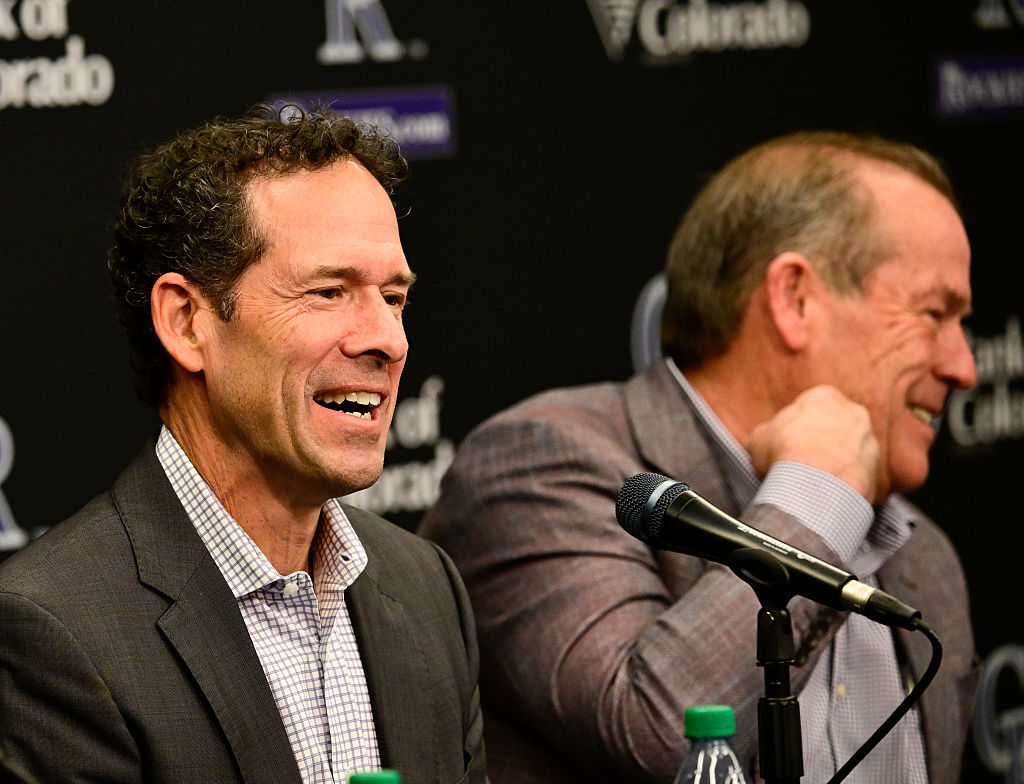
Despite the poor record, the Rockies have been playing a better brand of baseball under new management, led by team president Walker Monfort, president of baseball operations Paul De Podesta, and general manager Josh Byrne, clearing house of the analytically disposed leadership to forward-thinking minds tasked with turning around a deadened franchise.
While it’s practically impossible to go from worst to first in MLB, especially in the Dodgers-dominated NL West, the Rockies have a new core that gives some intrigue to the future of the club.
Still, Colorado is likely a few years away from reaching a contention window, meaning pieces are going to have to be dealt. It doesn’t have to be this deadline, but the weeks leading up to August 3 serve as a starting point to continue crafting an identity, with the front office having to decide which names are future contributors and which are expendable.
Key Performers
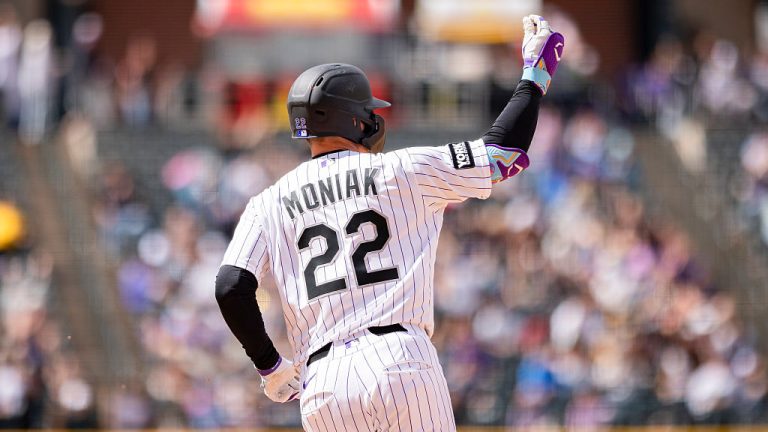
Hunter Goodman and Mickey Moniak have emerged as some of the premier power hitters in the league.
Goodman is tied for second in the entire league behind just Kyle Schwarber in home runs, with his 27 home runs (and counting) the most ever from a Rockie before the All-Star break.
Moniak has mashed 39 home runs in 189 games over his Rockies tenure, slugging .615 over 203 plate appearances this season.
The Diamondbacks dumped outfield depth over the offseason in Jake McCarthy, who’s batting .308 with nine home runs, five triples, and 16 doubles. Rookies TJ Rumfield and Cole Carrigg both have a wRC+ over 120, and second-year players Troy Johnston and Kyle Karros have been terrific bottom-of-the-order bats.
Ryan Feltner has continued to attempt to conquer Coors Field, running a 116 ERA+, above league average for his third consecutive season, while bullpen arms Antonio Senzatela, Brendan Bernadino, and Jimmy Herget hold down the late innings with ERAs in the 3.00s.
Deciding Who Stays and Who Goes
Colorado brass has crafted an odd core, but a talented core nonetheless, creating a dilemma of attempting to sell high or keep for a future playoff run.
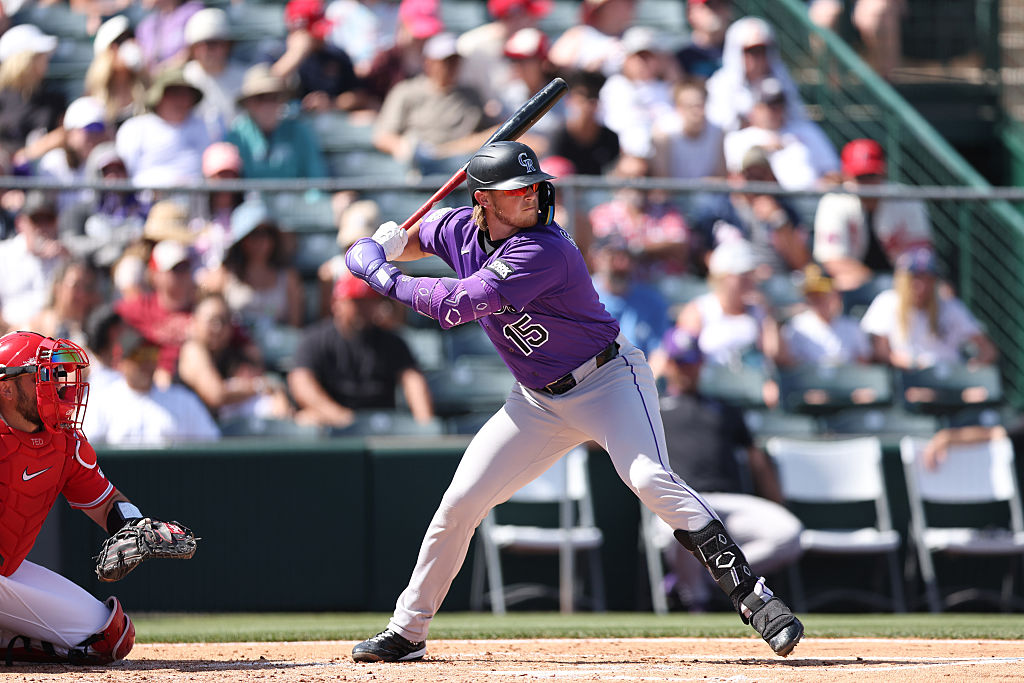
Goodman poses the toughest decision, as finding a young franchise catcher is not an easy feat. But high-whiff, high-chase power bats aren’t necessarily a demographic that yields long-term results.
His mix of premium exit velocities, barrel accuracy, and air-pull rate is tantalizing, and he’s under team control until 2029, which is sure to produce a sizeable package. Goodman has also hit better away than at Coors.
The Yankees and Padres are in the market for a catcher, and would likely pay a hefty sum for Goodman’s services.
New York is much more equipped to swing a big deal, with names like Carlos Lagrange, Dax Kilby, or Spencer Jones able to headline a package, while the Padres would need to dig deeper into their bag and deal four or five of their top-15 prospects to get a deal done.
Still, it’s going to be tough to deal the best player on a young team, especially one with as much team control as Goodman.
Moniak is another tough case given his drastic home-road splits, slugging .746 at home and .411 away. Plus, there’s a surplus of serviceable left-handed hitting outfielders and a shortage of quality righties, so there may not be as many suitors for Moniak.
The former No. 1 overall pick could be a nice piece to have as the club transitions into a contention window, though like Goodman, Moniak’s success could be seen as unsustainable and selling high could be the move depending how his market materializes.
On the pitching side, Feltner has a solid six-pitch mix with weird enough shapes that have gotten him success pitching at high elevation. Nearly all of his pitches are atypical of the shapes from the average MLB right-hander. The new pitching coaches haven’t changed much with Feltner apart from minor tweaks to his pitch usage.
Clearly, what Feltner is doing works at Coors Field, at least to an above league average clip. He’s not an ace-caliber pitcher, so he can be dealt for the right price, but keeping Feltner along for the ride would certainly help them push towards contention over the next two years at least.
Willi Castro, Senzatela, Bernadino, and Herget should be their surefire trade chips that will garner decent returns from contenders needing a utlity man and bullpen depth.
Jose Quintana, Michael Lorenzen, and Tomoyuki Sugano could be on the move as well. Seth Halvorsen, Victor Vodnik, and Jaden Hill are potential trade candidates as controllable relief arms.
A Growing Farm System
Whichever direction the front office goes, it’s clear the Rockies are attempting a formula of surrounding their power hitters with contact-oriented bats and speedsters. Pitching-wise, they’ll need arms with unique traits to get outs at an extremely hitter-friendly park.
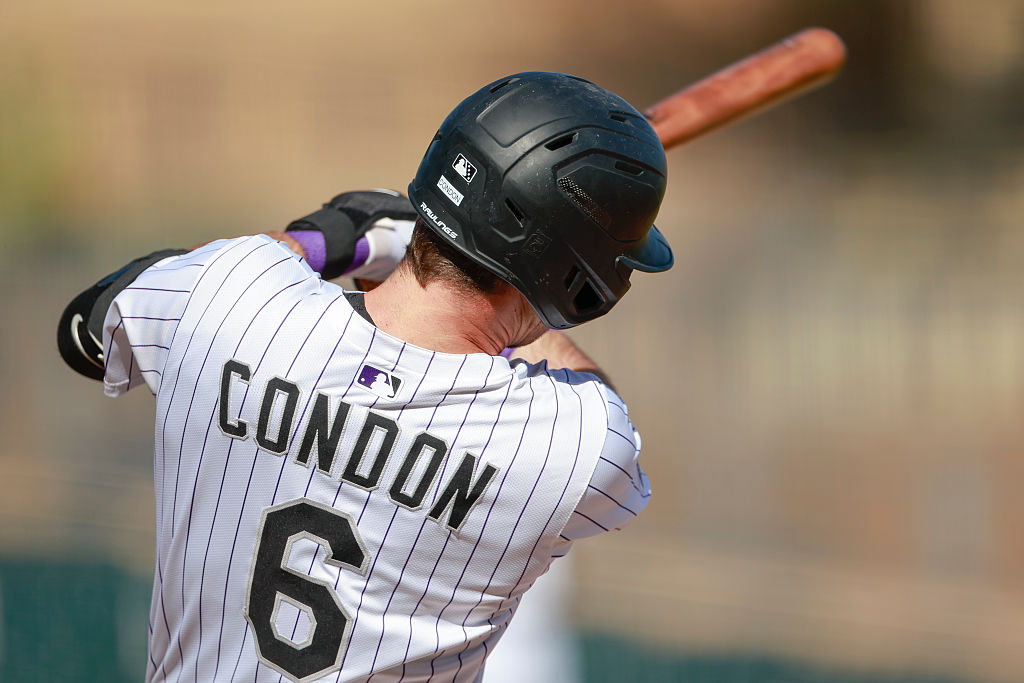
The Rockies have drafted big power bats with their past two first-round picks in Charlie Condon and Ethan Holliday, the former of which looks to debut sometime this season. Plus, whichever direction the new leadership chooses to go with the No. 10 pick in the upcoming draft will be significant.
Our draft team had Colorado selecting Sawyer Strosnider in their most recent mock, who would fit well in the caverous Coors Field, while other prospects like Derek Curiel and Ryder Helfrick are heavily tied to the Rockies.
They also have a back-to-back at 37 and 38, in which arms like Joey Volchko and Ben Blair would be quality additions to their pitching cores. Ty Head, Aiden Robbins, and Archer Horn are possibilities for bats.
Also coming up the pipeline are Roldy Brito and Jared Thomas, who look to be their contact-speed types.
What Does The Future Look Like?
The Rockies have a plethora of ways to go in the coming weeks with the draft and trade deadline swifty approaching.
If the front office decides this is not the core they can compete with moving forward, dealing Goodman and offloading their supporting cast may be the way to go.
Should they deem the offense one that can last two to three years with constant production, the Rockies look to be entering a new age and contention window.
This dilema won’t be solved in a single summer, but this one is as big as any to both disect their current club and decide their plans for the future.
Become a Member of Just Baseball
Subscribe and upgrade to go ad-free!
* Save 25% by subscribing annually.

Written by
Landon is a recent high school graduate, currently 17 years old going to study Media at UC Riverside next fall. He excels with data analysis inside…