
The Best Is Yet To Come For the 2026 Dodgers
The Dodgers are a juggernaut, and they haven't even played their best baseball. What happens when all the pieces come together?
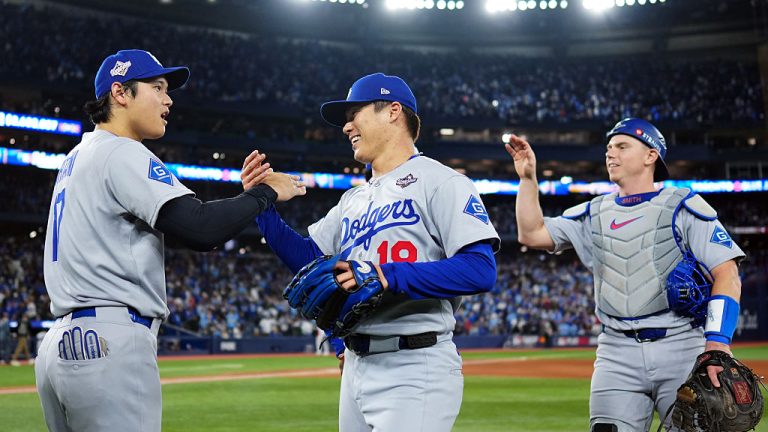
Heading into the first weekend of June, the Los Angeles Dodgers lead MLB in both wRC+ and ERA. A notable feat that becomes even more mind-boggling when taking a deeper dive into their roster through just over two months of play.
Mookie Betts, Max Muncy, and Will Smith have all missed varying amounts of time with injury, while Teoscar Hernandez, Kiké Hernández, and Tommy Edman are currently on the injured list.
It’s long been documented that the Dodgers have a major league-caliber pitching staff on their injured list, and that’s no different this season, with Blake Snell, Tyler Glasnow, Edwin Diaz, and more potential contributors out of commission for the time being.
If you were told that Andy Pages would be the Dodgers’ most valuable position player in June, you’d think the offense would be floundering, and while that may be the case for some notable bats, their 123 team wRC+ tells a different story.
If you were told that Eric Lauer would be making starts in Los Angeles, you wouldn’t believe they’re putting up a combined 3.08 ERA through 62 games.
The Dodgers are a juggernaut, and they haven’t even played their best baseball. Let’s take a look at how this is possible, and what the roster would look like at full strength.
Stats recorded prior to play on June 4.
The Best Offense in Baseball
Shohei Ohtani, Freddie Freeman, and Muncy are handling business as usual, and there’s arguably more in the tanks, as all three are underperforming their expected stats. Still, apart from them, it’s been a wide range of outcomes for the Dodgers’ offense.
Breakout Bats
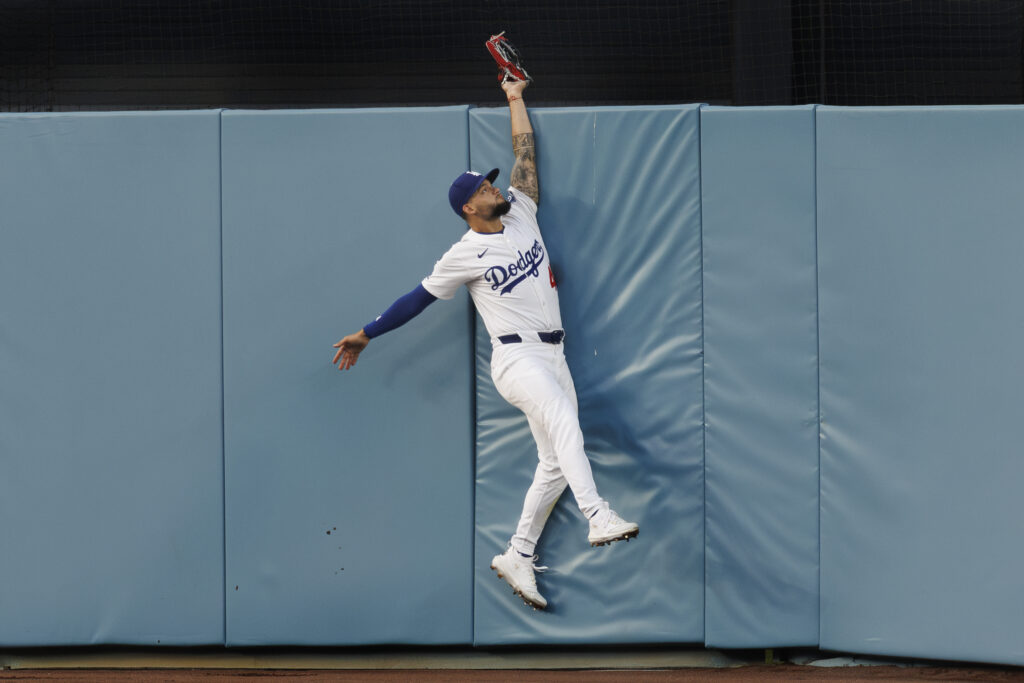
At the forefront is Pages, who is quickly turning into a top player and one of the best center fielders in the game. He began the year scorching hot, holding an OPS north of 1.000 through the first 23 games of the season.
Pages has kept steady, slashing .291/.339/.530 with 13 home runs and world-class defense, good for a 2.7 fWAR, which is tied for third best in the league. The peripherals support continued offensive production, and he’s currently on pace for over 30 home runs and five fWAR.
While Dalton Rushing isn’t a full-time starter, his 144 wRC+ certainly contributes to the Dodgers’ offensive excellence. His first 27 at-bats were a marvel, clubbing seven home runs in that span. Rushing has yet to homer since that stretch, but he’s been a sparkplug off the bench.
Another notable bench bat has been Alex Call, who provides some of the best bat-to-ball and swing decisions across the league. Deployed on the short side of the platoon, Call is slashing .476/.520/.619 against left-handed pitchers and has yet to strikeout in 25 plate appearances against them.
It’s been a minuscule sample size, but since returning to the big leagues following a demotion, Alex Freeland has gone 6-for-16 with a homer and a double. The former top prospect is fighting to stick on the roster, looking to get the bat going, and already supplying stellar defense at second base.
Struggling Superstars
While the offense has been elite, Kyle Tucker, Betts, and Smith have come well short of expectations.
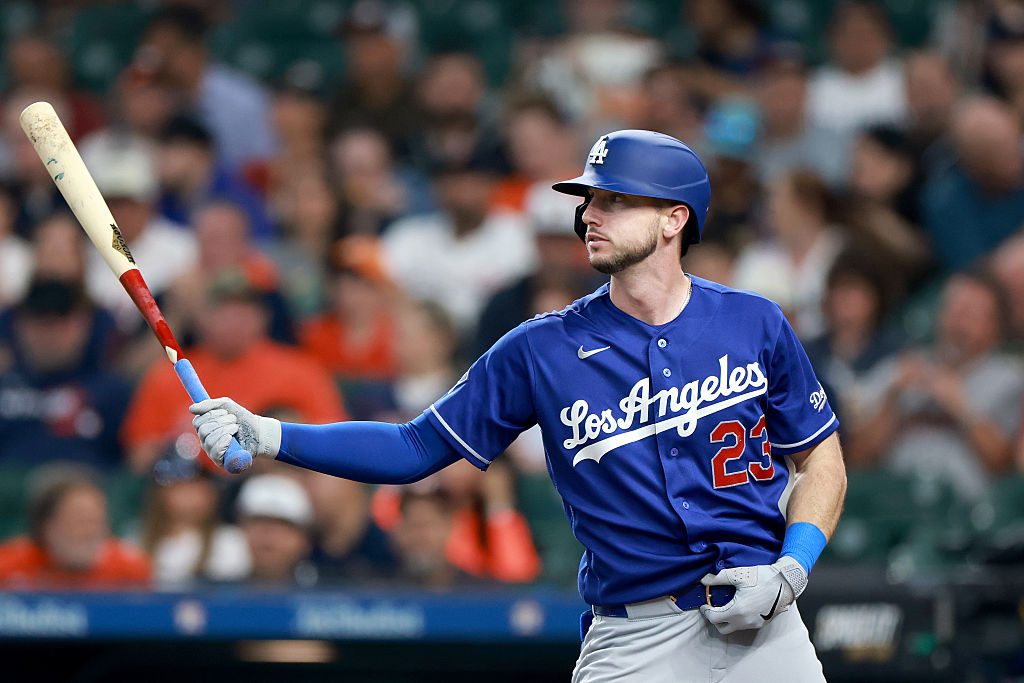
Tucker earned himself a $240 million contract despite a poor second half with the Cubs last season, and he’s carried the struggles into 2026, where he’s slashing .243/.340/.399. Still above-average marks, but nowhere near the $60 million billing.
His subdued contact quality supports the mellow numbers, as he owns an average exit velocity south of 90 mph and a paltry 5.8% barrel rate. Tucker has never been an elite raw power bat, more so relying on an optimal launch profile, but the latter hasn’t been far off from his career norms.
The swing decisions have regressed, expanding more often and offering at the first pitch at a 46% clip, which isn’t allowing him to get his pitch much as he should.
Tucker received the second-highest AAV in MLB for a reason, and the hope is that he’s just pressing to begin the season. At his best, he’s a top-10 batter in the sport, and having that down the stretch would be huge for Los Angeles.
On the other hand, Betts’ peripherals suggest that he’s been unlucky thus far. While a return to MVP form is unlikely, there’s a path to All-Star-caliber play, akin to his 2024 season, where he put up a 140 wRC+.
Here’s a look at his underlying data in 2024 and 2026:
| 2024 | 2026 | |
| xBA | .282 | .260 |
| xSLG | .468 | .421 |
| exit velocity (MPH) | 89.9 | 90.2 |
| hard-hit% | 39.5% | 36.5% |
| barrell% | 6.0% | 8.3% |
| air pull% | 21.4% | 19.8% |
| Chase% | 21.1% | 21.4% |
| Whiff | 14.9% | 13.5% |
While Betts still has a long way to go to carve himself out of the 76 wRC+ hole he’s put himself into, there’s still a productive hitter buried in the Dodgers’ shortstop.
Moving down to the seven hole with a .716 OPS thus far, Smith has been the fourth-unluckiest batter in the league this season by wOBA minus xwOBA. He owns an elite batted-ball profile with the plate discipline to match it. As the season moves along, Smith should regress back to one of the top-hitting catchers in the league.
The Best Pitching Staff In Baseball
It was easy to envision the Dodgers’ carving through lineups with a four-headed monster of aces atop the rotation and the highest-paid relief pitcher all time in the ninth inning, but the contributions have come from some more unlikely sources.
Who’s Leading the Way?
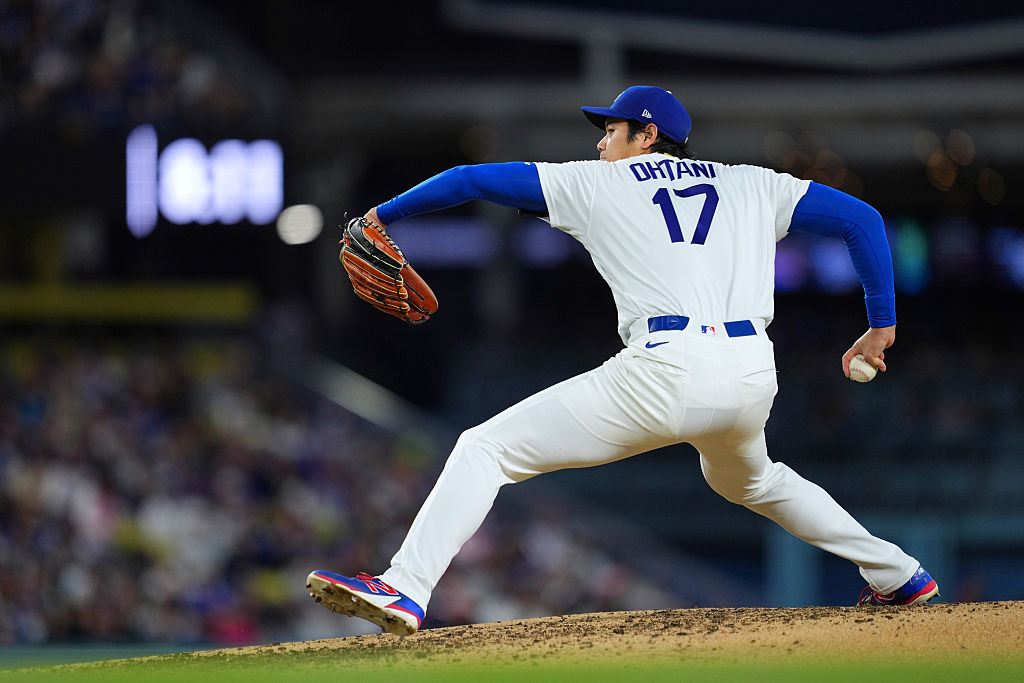
World Series MVP and ace Yoshinobu Yamamoto is as steady as they come, putting up a 2.86 ERA in 69.1 innings thus far, but Shohei Ohtani is the one sparking the Cy Young buzz.
It’s well known that Ohtani has the stuff to be one of the best pitchers in the league, but no one could’ve expected him to be this good, rocking a 0.82 ERA through his first 10 starts. He’s gone at least five innings in all 10, and at least six innings in nine of them.
He’s only continued cementing his status as the greatest talent to touch a baseball since joining the Dodgers, and should he be supplied the innings, there’s a great shot at grabbing his first Cy Young Award.
The third anchor of the rotation has been Justin Wrobleski, who’s posted a 2.87 ERA while averaging over six innings per start. It’s been an odd year for Wrobleski, striking out just 16% of batters with below-average contact quality suppression, but he’s managed to get by thus far.
As of late, he’s been incorporating more swing-and-miss into his game, punching out nine Phillies in his most recent start.
The Bullpen
Dodgers relievers have really stepped up in the absence of key arms like Diaz, Brusdar Graterol, Brock Stewart, and more, creating a tight competition of arms come October.
Ranging from bounce-backs, consistent performers, and breakouts, Los Angeles’ bullpen has been lockdown:
| IP | ERA | FIP | K% | BB% | |
| Tanner Scott | 25.2 | 2.10 | 2.70 | 30.9% | 3.2% |
| Alex Vesia | 20.1 | 2.21 | 1.81 | 35.0% | 12.5% |
| Kyle Hurt | 18.2 | 2.41 | 2.72 | 30.1% | 9.6% |
| Blake Treinen | 18 | 3.00 | 3.87 | 23.4% | 9.1% |
| Will Klein | 25.1 | 1.78 | 2.06 | 25.3% | 8.4% |
| Jack Dreyer | 22.2 | 2.66 | 3.06 | 25.8% | 6.5% |
| Edgardo Henriquez | 22 | 3.27 | 3.45 | 21.1% | 10.0% |
After a down season, Scott has returned to form at the right time, stepping into the closer role in Diaz’s absence. Alex Vesia has been one of the most underrated relievers in the league since his debut with the Dodgers, and Blake Trienen is turning back the clock.
Jack Dreyer and Edgardo Henriquez are building off productive rookie seasons, while Will Klein has continued cruising since his World Series heroics.
Arguably, the most impactful arm has been Kyle Hurt in his return to the big leagues, after debuting all the way back in 2023. He’s getting high-leverage opportunities and is fighting to stay on the roster through the season.
Breakthroughs Imminent
The next piece of the puzzle is to get the young rotation arms going. While they’ve delivered some quality outings, Emmet Sheehan and Roki Sasaki have not yet shown what they’re capable of.
Coming off a mini breakout campaign last season, Sheehan has been inconsistent to start 2026, particularly in the run prevention category. Still, he has some of the best stuff amongst all starting pitchers in the game, shown by his 29% whiff and 36% chase rates. He’s one of just five qualified starters to hit those marks this year.
Sasaki’s recent turnaround is worthy of its own article, and would take up another 1,000 words to go into depth. In short, since he began to throw both a new splitter and his old forkball on May 2, Sasaki has thrown 28.1 innings to a 3.18 ERA. For reference, he held a 6.35 ERA prior. He’s also increased his slider usage, which has quickly become his best-performing offering.
This has coincided with an increase in velocity and spin capacity, which is allowing him to generate more carry on his fastball, in turn garnering more swing-and-miss. Sasaki’s average induced vertical break on his fastball is above 17 inches over his past two games, marking the first time he’s achieved that in his MLB career. His most recent start against the Phillies was also the first time he was clocked at triple digits in 2026.
Not only is the stuff improved, but the command is as well. Outside of last year’s playoff run, this is the best we’ve seen Sasaki, and he’s only getting started.
Reinforcements On the Way
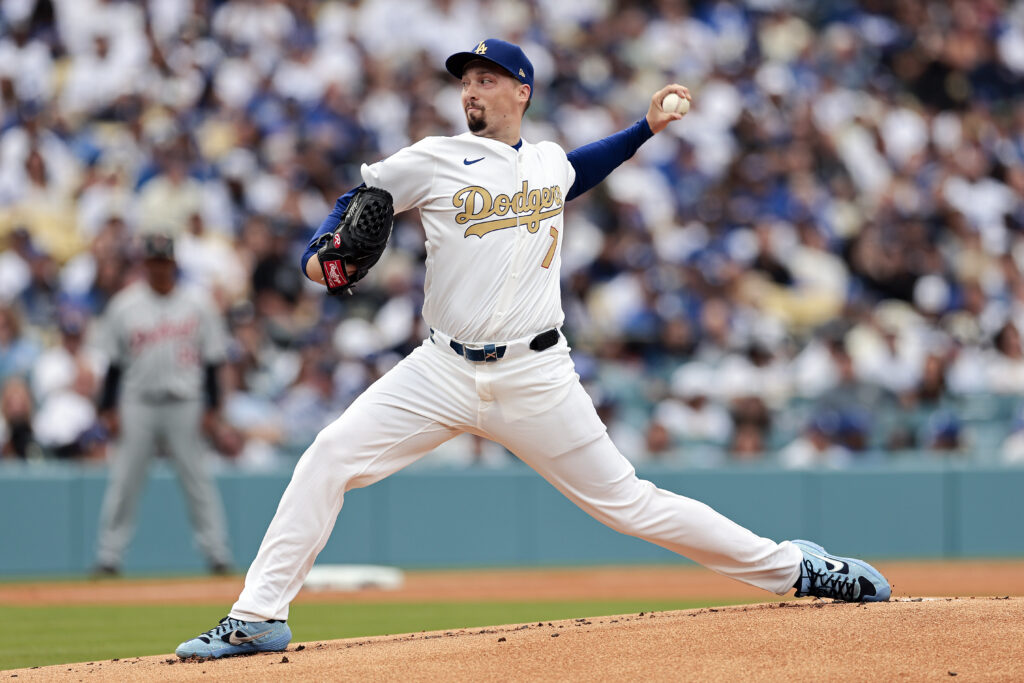
Set for a return sometime after the All-Star break, two-time Cy Young Award winner Blake Snell is bound to come back and shove like he did last year in August. The long-awaited return culminated in a 3.18 ERA over 34 postseason innings, including a eight inning one-hitter in Game One of the NLCS.
Glasnow hit the injured list with back spasms in early May, but setbacks in his recovery have kept him out of play for longer than expected. As of now, it isn’t public knowledge when he will return.
Prior to injury, Glasnow pitched to a 2.72 ERA in 39.2 innings, finding success when raising his sinker usage. The often-injured Glasnow missed the 2024 World Series run, but contributed both rotation and bullpen innings last October to the tune of a 1.72 ERA.
An electric debut was interrupted by the dreaded UCL tear, causing River Ryan to miss the entire 2025 season. Despite the long layoff, Ryan was still very much in contention to crack the Opening Day roster, though it was decided to keep him in Triple-A to continue to build up after over a year off.
Ryan will turn 28 before the season’s end, but still remains a consensus top 100 prospect, and our 41st-ranked prospect in our most recent update. Regardless of age, Ryan’s mix of premium velocity, stuff, and pitchability is hard to attain. The Dodgers’ top pitching prospect shouldn’t last long in Oklahoma City.
Edwin Diaz didn’t look himself to kick off his Dodgers’ tenure, discovering loose bodies in his throwing elbow, which required surgery. Los Angeles is eyeing a post-All-Star break return for the highest-paid reliever in the history of Major League Baseball.
Along with Diaz is a list of arms that any team would love to have in their bullpen. Stewart, Graterol, Ben Casparius, Evan Phillips, and Jake Cousins are all set to return in the coming months.
Who Are the Dodgers At Their Best?
It’s no secret that the Dodgers have the depth and star power to three-peat, even without additions at the deadline, so what could their postseason roster look like?
Projected Lineup
| 1. Shohei Ohtani – DH |
| 2. Andy Pages – CF |
| 3. Freddie Freeman – 1B |
| 4. Mookie Betts – SS |
| 5. Kyle Tucker – RF |
| 6. Will Smith – C |
| 7. Max Muncy – 3B |
| 8. Teoscar Hernandez – LF |
| 9. Tommy Edman – 2B |
The front eight are as close to a lock to make the starting lineup as you’ll get. The lineup is sure to go through changes as players heat up or cool down, but their names are going to be stamped on in October.
Starting second baseman, on the other hand, is an interesting conversation. Edman’s struggles against right-handed pitchers have long been documented, and Freeland is and will continue making his case to stick with the big league club. For the time being, the $74 million man wins out.
Projected Bench
| Miguel rojas – INF |
| Enrique Hernandez – INF/OF |
| Alex Freeland – INF |
| Dalton Rushing – C/1B |
It’ll be tough to keep Call off the roster, but Hernandez brings both versatility and extensive playoff experience, as does Rojas. Freeland serves as the left-handed bench bat, though a potential James Tibbs III call-up, or even Ryan Ward, could challenge him.
Projected Rotation
| Yoshinobu Yamamoto |
| Shohei Ohtani |
| Blake Snell |
| Tyler Glasnow |
Barring injury, this part of the team is a near lock. It’s the best unit in the major leagues.
Projected Bullpen
| Tanner Scott |
| Edwin Diaz |
| Alex Vesia |
| Will Klein |
| Jack Dreyer |
| Edgardo Henriquez |
| Kyle Hurt |
| Justin Wrobleski |
| Roki Sasaki |
| Emmet Sheehan |
This is by far the most competitive part of the team, with just 10 spots to fill and a laundry list of names that could be contributors in October. Treinen is the bullpen mainstay that doesn’t make the roster crunch, as his peripherals indicate heavy regression to take place.
Sheehan, Sasaki, and Wrobleski all have experience in the bullpen and have excelled in that role, which already takes three positions in the stable. The remaining performers fill in the rest of the way.
Become a Member of Just Baseball
Subscribe and upgrade to go ad-free!
* Save 25% by subscribing annually.

Written by
Landon is a recent high school graduate, currently 18 years old, studying Media and Cultural Studies at UC Riverside. He excels with data analysis inside baseball…