
How 2017 Penalties Doomed the Astros Long-Term
Nearly a decade after the Astros' cheating scandal, they've got an aging and expensive roster with minimal help on the way. Here's a look at how 2017 changed the organization and left it in the spot it's in today.
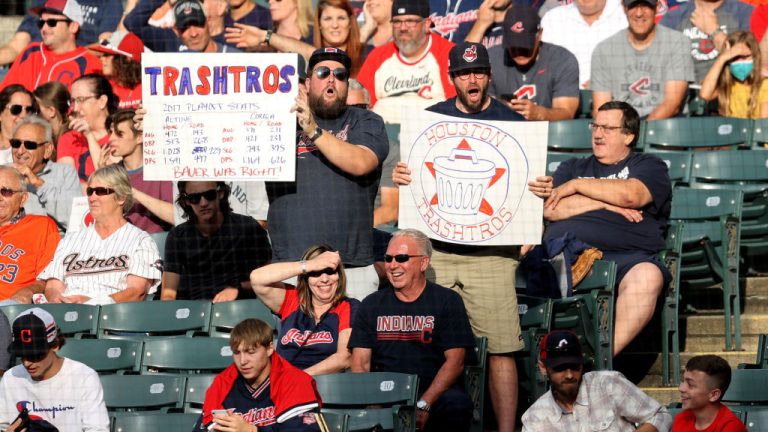
The Houston Astros‘ sign-stealing scandal from their 2017 World Series run enraged most of the baseball world for the way it soiled the victory and Jose Altuve’s AL MVP season, with Yankee and Dodger fans feeling the most slighted.
It also impacted specific players like Mike Bolsinger, who sued the team alleging the cheating ended his major league career.
The announcement of punishments revamped the whole debate and argument.
Players were granted immunity to talk about what happened with Major League Baseball officials, and they spilled the beans about exactly what happened.
Ultimately, the Astros’ general manager, Jeff Lunhow, assistant general manager, Brandon Taubman, and manager, AJ Hinch, were all suspended for a year. Taubman has already been fired for offensive and insensitive comments to female reporters, and Lunhow and Hinch were fired after the punishments were handed down.
Houston was also fined $5 million, the maximum amount by the collective bargaining agreement at the time, and stripped of its first- and second-round picks in the 2020 and 2021 drafts.
Those punishments were widely seen as light at the time they were handed down, but the 2026 version of the Houston Astros probably doesn’t think so.
Nearly a decade after the season in question, Houston has an aging and expensive roster that’s one of the worst in the sport, and there’s minimal help on the way.
That’s due to both the tangible punishments (the loss of draft picks) and the intangible pressure to prove 2017 wasn’t solely a product of the cheating.
Here’s a look at how 2017 changed the Houston Astros’ organization and left it in the spot it’s in today.
Draft Picks
With one of the worst farm systems in baseball currently, and maybe one of the shallowest of all time, those four top draft picks being forfeited is coming back to bite the Astros. They have next to no homegrown depth and the pipeline to the bigs just isn’t there.
Part of that is development, and part of it is not having the draft capital to get good players.
Projecting who Houston would’ve taken is an inexact science. We’ll never know what decisions would’ve been made, and how being part of a different organization would’ve changed a player’s development.
But we can take a look at who was taken with the selection that should’ve been Houston’s, and some of the guys taken in the same vicinity and use hindsight.
2020 First Round (30th overall)
The first pick the Astros lost could be one of the biggest losses of this exercise. The Orioles selected Jordan Westburg, who has battled injuries but been a productive major leaguer but has constantly battled injuries. At worst, Westburg would’ve been a valuable trade chip who could’ve netted something worthwhile.
The Pirates took Carmen Mlodzinski 31st overall, and his 2026 breakout is turning this into another major what if. Mlodzinski is looking like a mid-rotation starter or a swingman with leverage capability, both roles the Astros could desperately use as they try to climb back into a weak AL West race.
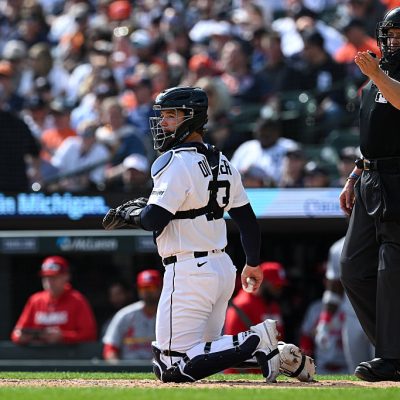
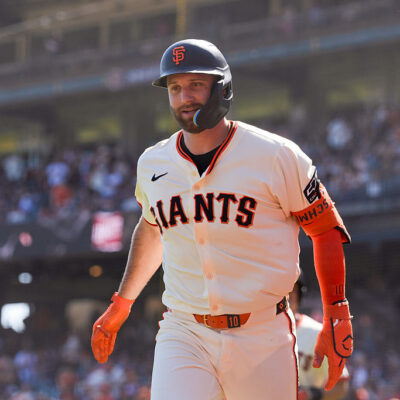
The rest of the first round was relatively light on hits, but Dillon Dingler went at the top of the second, right-hander Jared Jones was the seventh pick of the second round and Casey Schmitt went 12th in that round. All three have broken out in the last two years and have varying levels of upside.
Dingler has at this point surpasses Yainer Diaz both offensively and defensively. Jones has top-of-the-rotation stuff, and that could get even better with a new pitch after rehab. Schmitt, like Westburg, provides lots of defensive versatility in the infield. The difference is Schmitt has been more available and a better defender, but not quite the same bat.
2020 Second Round (67th overall)
This pick doesn’t hurt too much because of who was taken with the pick, plus the timing in the draft. Houston still got a compensation pick at 72nd overall for losing Gerrit Cole in free agency, taking Alex Santos II.
Santos, now 24, has a 3.54 ERA in 20.1 innings at Double-A Corpus Christi this season with 27 strikeouts and 17 walks.
The Giants took Nick Swiney at 67. Swiney actually found his way to the Houston organization for 2025, throwing 49 innings at High-A Asheville. He hasn’t pitched this season.
Alec Burleson was the only major leaguer to be drafted in the back end of Round 2, but he would be a welcome addition to this Astros squad. He could likely handle left field and hit enough to be valuable, especially given the upward trajectory of his career.
The only positive-WAR player drafted in the third round was Kyle Harrison, who has been traded twice before figuring it out in the MLB this season.
2021 First Round (15th overall)
The Brewers took both of the Astros’ selections, and their first rounder was Sal Frelick. Frelick has turned into a great outfield defender who hasn’t been able to stand out in a crowded Milwaukee group. He hasn’t hit consistently, but guess who could use some high-floor outfield depth right about now.
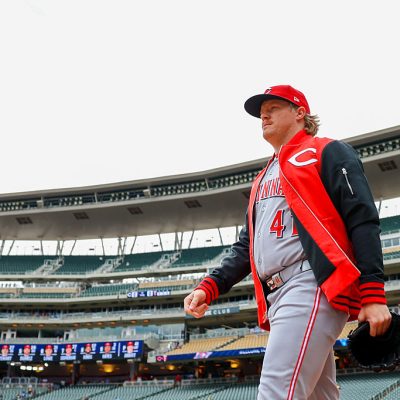
Matt McLain was taken by the Reds two picks later. He’s been hampered by injuries, but there could still be better days ahead with a change of scenery.
Michael McGreevy was picked by St. Louis right after McLain, and this is one that would’ve changed the 2026 Astros’ outlook before the season. Houston needs an inning-eater desperately, especially with Hunter Brown having missed lots of time.
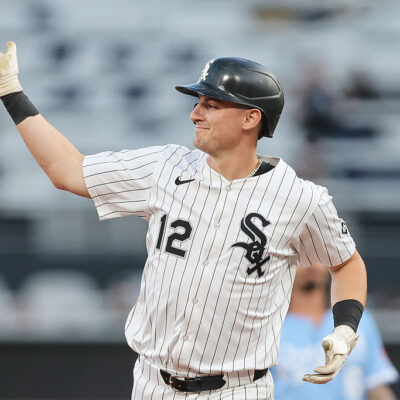
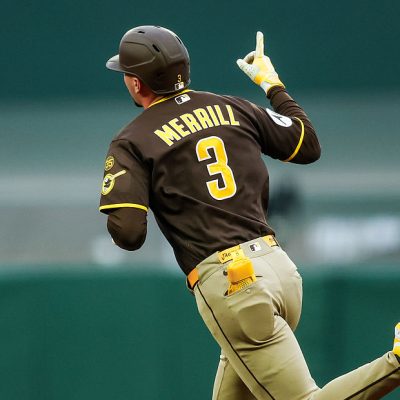
Colson Montgomery (22nd to the White Sox), Gavin Williams (23rd to the Indians), Jackson Merrill (27th to the Padres) and Carson Williams (28th to the Rays) would all have changed the organization also.
2021 Second Round (51st overall)
Milwaukee selected 6-foot-7 lefty Russell Smith with this pick, but Smith has dealt with a plethora of injuries and hasn’t pitched since dominating at Double-A in 2024.
It’s harder to project futures the later you get in a draft, but a few notable names were taken shortly after the 51st pick.
Cincinnati nailed the first couple picks of this draft, with Andrew Abbott going 53rd overall. The lefty would slot in perfectly in the Astros’ current rotation, even if the Crawford Boxes might cause some problems with his fly ball rate.
Spencer Schwellenbach was picked 59th by the Braves as a shortstop. His evolution into one of the top starting pitchers in the MLB wasn’t expected on draft day, but he’d be welcome in any rotation in the league.
James Wood went 62nd to the Padres and Kyle Manzardo went 63rd to the Rays. Wood was a project who has reached about his peak potential, while Manzardo was a college masher who has been a solid major league hitter to this point.
Joshua Báez (Cardinals) and James Triantos (Cubs) went 54th and 56th, respectively. Both prospects could add depth to a shallow system and potentially be big-league contributors right now.
Going for it
The Astros organization had to stay on the attack with a mid-tier farm system and a solid core in its prime in 2020.
Part of that need to stay active was because of the players in place, and part of it is because of the pressure on the team to prove it didn’t win in 2017 solely because of the cheating.
The chips had to be pushed in pretty consistently both in terms of spending player assets. That has lead to the lack of depth in the Astros’ system in 2026.
Trades
The 2020 season was odd with the shortened season and some underperformance over the two-month season.
The first major trades happened at the 2021 trade deadline.
2021
Houston acquired Kendall Graveman, Rafael Montero, Yimi García, Yainer Diaz and Rafael Montero. Houston sent out Joe Smith, Abraham Toro, Bryan De La Cruz, Austin Pruitt and Myles Straw.
These deals were relatively minor, but Graveman and García were both rentals. Add in that Toro and Straw are still useful bench pieces and this looks a little worse, but the trip to the World Series will alleviate some of that.
2022
Houston acquired Logan Cerny, Mauricio Dubón, Christian Vázquez, Trey Mancini, Jayden Murray and Will Smith (P). Houston sent out Garrett Stubbs, Michael Papierski, Wilyer Abreu, Enmanuel Valdez, Chayce McDermott, Jose Siri, Jake Odorizzi and Lewis Brinson.
A World Series title eliminates any misgivings about these deals, but a lot of talent went out the door. Stubbs has been a useful backup catcher and team leader for the Phillies over the past handful of years, McDermott had at one point been a solid pitching prospect for the Orioles and Siri had a few quality seasons as a defense-first outfielder.
Then comes Abreu, who was shipped out of town for half of a season of Vázquez. Abreu has blossomed into an elite corner outfield defender and a middle-of-the-order bat.
Dubón provided multiple years of value, Smith was nails in the bullpen for the stretch run and Vázquez and Mancini were brutal during their time in Houston. It was a mixed bag of results for this group.
2023
Houston got Graveman (again) and Justin Verlander, while they gave up Korey Lee, Ryan Clifford and Drew Gilbert.
The Astros’ system clearly started getting weaker at this point, with the team valuing its prospects unless there’s a quality player coming back.
Verlander’s return went well, but the 2024 season was the beginning of the future-Hall of Famer’s downturn. Graveman’s second stint in Houston also went well.
Gilbert hasn’t proven to be too big of a loss, but at the time it represented a very aggressive move. Clifford still hasn’t debuted, but is the No. 81 overall prospect in the Just Baseball Top 100 prospects. Lee was always a somewhat-esteemed catcher, but that hasn’t translated to MLB production.
2024
Houston got Jacob Amaya, Luis Rodriguez, Yusei Kikuchi and Caleb Ferguson. Houston gave up Valente Bellozo, Corey Julks, Jake Bloss, Joey Loperfido, Will Wagner and Kelly Austin.
This year was the beginning of the end of the dynasty, and a few of these moves backfired. Amaya went a whole 0-for-1 in an Astros jersey and Rodriguez never made the major leagues. Kikuchi has the best stretch of his career in Houston and Ferguson was solid, but the price paid for Kikuchi was steep.
Bloss had lots of promise and is returning from an arm injury, Loperfido helped Toronto make the 2025 World Series and Wagner had a nearly .800 OPS in 24 games in 2024. Bellozo, the return for Amaya, has had some of the best luck in the majors but is currently struggling in Colorado.
2025
Houston acquired Isaac Paredes, Cam Smith, Hayden Wesneski, Juan Bello, Jesús Sánchez, Carlos Correa and Ramón Urías. In return, they gave up Kyle Tucker, Ryan Pressly, Chase Jaworsky, Esmil Valencia, Matt Mikulski and Twine Palmer.
This was the first season since 2016 that the Astros missed the postseason, and Houston gave an attempt at salvaging an aging roster. The return for Kyle Tucker was solid, but giving up that level of player will always hurt a roster. Once Paredes went down, taking on Correa in essentially a salary dump (apologies to Mikulski) made sense.
Smith seems to be a wise investment, even if the immediate returns aren’t groundbreaking. Wesneski was solid before an arm injury derailed his 2025 campaign.
Jaworski, Valencia and Palmer are still unknowns, with the chance to make the risks worth it or not.
2026
Houston got Nick Allen, Mike Burrows, Kai-Wei Teng and Joey Loperfido. Houston gave up Dubón, Anderson Brito, Jacob Melton, Jancel Villarroel and Jesús Sánchez.
The front office appeared to realize the window was closing and was willing to make one last run at the playoffs while also acknowledging there’s not much left here.
The Dubón-for-Allen trade has looked like a disaster, Burrows is yet to show the promise he did in the minors and Loperfido was fine in 20 games before getting hurt.
Teng has been the true catch here, throwing to a 2.19 ERA in 37 innings in 2026.
—————
The Astros put themselves in this position by illegally stealing signs back in 2017. They have a World Series title to show for it, and the repercussions of that decision have now put the organization in a bind.
Become a Member of Just Baseball
Subscribe and upgrade to go ad-free!
* Save 25% by subscribing annually.

Written by