
Milwaukee Brewers vs. Tampa Bay Rays: 2026 World Series Preview
For the first time since 1980, we'll have a guaranteed first-time World Series Champion. Here's how the Brewers and Rays stack up.
 | |
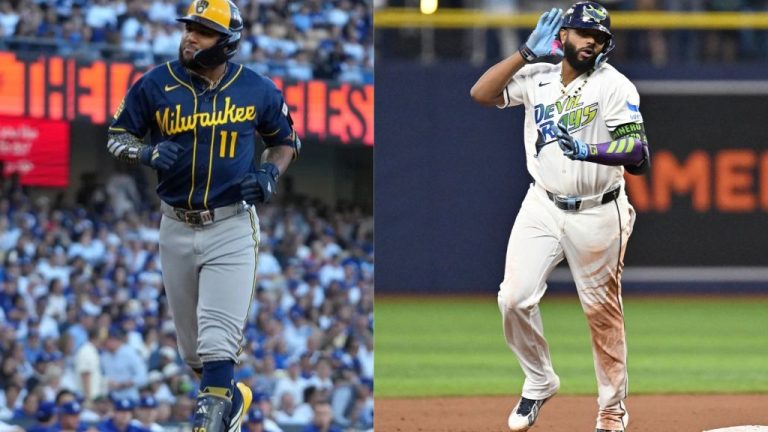
Folks, we made it. After an outstanding regular season and a thrilling postseason that’s been every bit as exciting as advertised, it’s time for us to crown a champion.
This year’s Fall Classic consists of the Tampa Bay Rays on the American League side and the Milwaukee Brewers on the National League side.
The Rays enter the series on the heels of an AL-best 98 wins in the regular season. On the other end, the Brewers won a franchise-best 103 games and was the NL’s best squad.
For the first time in nearly 50 years, we’re guaranteed to have a first-time champion. What more can you ask for? Major League Baseball’s biggest spenders and flashiest teams have been eliminated, and we’re down to two of the scrappiest units around that play the game the way many people consider to be the “right way.”
Here’s how the two teams match up:
| Offense | RAYS | brewers |
| HR | 169 (22nd) | 154 (T-28th) |
| RBI | 700 (13th) | 788 (2nd) |
| AVG | .259 (T-1st) | .258 (T-1st) |
| OBP | .326 (T-5th) | .341 (1st) |
| SLG | .402 (T-13th) | .403 (T-10th) |
| OPS | .728 (8th) | .743 (T-3rd) |
| wRC+ | 104 (T-5th) | 107 (3rd) |
| fWAR | 23.9 (4th) | 26.1 (3rd) |
| Pitching | RAYS | brewers |
| ERA | 3.72 (7th) | 3.51 (2nd) |
| FIP | 4.04 (12th) | 3.71 (T-3rd) |
| K% | 22.3% (14th) | 25.8% (T-1st) |
| BB% | 6.9% (1st) | 8.6% (19th) |
| fWAR | 16.8 (8th) | 22.6 (4th) |
Starting Pitching
Brewers

It was the case in the two previous series, and it will certainly be the case in the World Series: The Brewers must find a way to win the Jacob Misiorowski start. This won’t be an easy feat, considering how well Drew Rasmussen has been throwing the ball, but with the NL Cy Young winner on the mound at home, this is one Milwaukee will need to take to set the tone early.
Misiorowski was the best pitcher in Major League Baseball this season, pacing all of MLB in ERA (1.80), FIP (2.17), WHIP (0.80), OBA (.157), and K-BB% (31.3%). I don’t need to sell you on Miz. By now, he’s become a household name because of his sheer velocity, and he became appointment television for any baseball fan throughout the 2026 season.
However, it is fair to wonder if fatigue is starting to catch up with the Brewers’ ace in October. Whether it’s a result of facing the best of the best in terms of competition or his career-high workload starting to show, Misiorowski hasn’t displayed the same level of sharpness in his two postseason starts that we saw during the regular season.
In his first start, Game 1 of the NLDS, Miz had to battle to get through four innings. He allowed two runs on four hits and a walk while striking out six, but the Padres had a solid game plan against him: fight off pitches and work deep into counts. Miz finished with just a 22% whiff rate in that outing, which pales in comparison to the 37.3% mark we saw during the regular season.
It was a similar story in his next outing against the Dodgers in Game 1 of the NLCS, where Misiorowski completed 4.1 innings of one-run ball while allowing five hits and striking out five batters. Miz’s whiff rate sat at 24% in that outing, while his overall strike rate dropped by nearly 10 percentage points, leading to three walks.
Misiorowski will need his best stuff to fend off the Rays, and, conversely, if Tampa Bay can win the Misiorowski start, it will significantly shift the odds in its favor for the rest of the series.
Likely receiving the Game 2 start for Milwaukee will be rookie Logan Henderson, who carved through hitters during the regular season but is coming off arguably the worst start of his big-league career in Game 2 of the NLDS.
Henderson, who pitched to a 2.47 ERA while striking out more than 10 hitters per nine innings during the regular season, was largely responsible for the Dodgers’ first three runs in that outing. A wild pitch led to a run in the first inning, while an errant pickoff attempt and a misthrow to first base gifted the Dodgers two more runs. Henderson had a short leash that evening as a result.
He’s still given up just three runs across nine innings this postseason (two starts). However, in a Game 2 matchup likely to pit him against Freddy Peralta, he’ll have his work cut out for him if he hopes to outduel the Brewers’ longtime ace.
Beyond those two is where the chaos begins for Milwaukee.
Robert Gasser has emerged as the team’s No. 3 starter in the postseason, as he’s been one of the more reliable starters in MLB since the All-Star break. Gasser pitched to a 2.86 ERA across 63 innings in the second half and has carried that momentum into October. In his two starts, he’s allowed just one earned run across nine innings of work. In the NLCS, he tossed five scoreless innings against Los Angeles, allowing just three hits and walking one.
More importantly, his velocity was up nearly two ticks across the board in that outing, and it appears he’s improving and gaining more confidence with each start. It’s a welcome sight for Milwaukee, and he’s in line to make the first start at Tropicana Field in Game 3.
Dustin May started Game 3 of the NLDS, but the end result was two runs allowed across three innings on three hits and two walks. After a sharp first inning, the Padres’ hitters got to him, leading to a short outing. He then followed opener Shane Drohan in Game 4 of the NLCS against the Dodgers, where he surrendered a three-run bomb to Shohei Ohtani that put Los Angeles ahead 4-0 in the second inning.
Frankly, although it wasn’t successful in the NLCS, a piggyback of Drohan and May is the most likely scenario for the Brewers in Game 4 of the World Series. Considering arms like Chad Patrick and Kyle Harrison haven’t pitched this postseason and Milwaukee will want to save its other six bullpen arms for later in the game, Pat Murphy’s only option may be to roll with Drohan and May once again and hope they can cover enough innings to bridge the gap to the hottest bullpen in the sport right now.
Game 5, if necessary, would then turn back to Misiorowski on normal rest, and from there, the Brewers could structure their pitching plans however they’d like. It’s really Game 4 where things get dicey and could end up being a pseudo-bullpen game for Milwaukee.
Rays
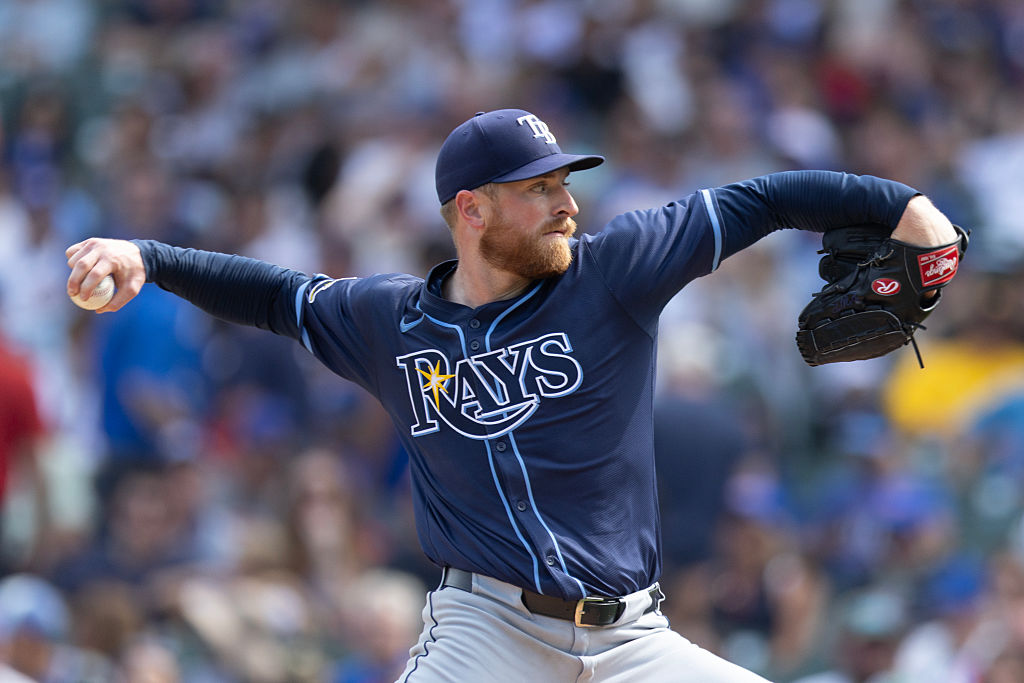
These two teams were very similar in the 2026 regular season when it comes to starting pitching. Where the Brewers had the advantage in K/9 and FIP, the Rays have the edge in BB/9 and ERA.
As of now, all signs are pointing to a Drew Rasmussen vs. Jacob Misiorwski matchup on Friday in Milwaukee. Rasmussen, 31, is a former Brewer who has gotten better with age and is now one of baseball’s best starters. The right-hander hasn’t had a single regular-season ERA north of 3.00 since a 12-game cameo in 2020 and was an All-Star for the second time in 2026.
He has been incredible so far this postseason, with 21 innings across three starts, highlighted by just three earned runs, 23 strikeouts and just three walks. Rasmussen is far and away the best starter on the Rays, but he is absolutely not their only legitimate weapon.
Following him will likely be another former Brewer in Freddy Peralta. The right-hander was dreadful in 2026 prior to a mid-season trade to the Rays, and his stock has skyrocketed ever since.
After eight years in Milwaukee that saw him become a beloved fan favorite, he’s set to return to where it all started with a combined 1.13 ERA through three starts and 16 innings in this year’s postseason.
It seems that as things currently stand, 36-year-old Nick Martinez getting the ball for the Rays in Game 3. The veteran led the majors with a 1.3 BB/9 this season and made his first All-Star Game as well.
He’s a crafty and experienced arm who didn’t perform all that well in his lone ALDS start this year, but he rebounded in a big way against the Cleveland Guardians in his lone ALCS outing. He turned in a great season this year, but he’s the first starter we’ve covered so far that’ll have an even remotely short leash.
Following Martinez, the Rays are going to lean heavily into their typical chaotic gameplan and either circle back to Rasmussen on short rest, or roll with a bullpen game like they’ve always loved to do.
Griffin Jax, Ian Seymour, and Steven Matz are the only other pitchers on the Rays’ projected World Series roster to have made starts during the regular season. Each of them have experience as traditional starters, bulk relievers, and even short relievers. Versatility is the name of the game on this team’s pitching staff, and they’ve got a lot of it.
Of course, so does their last remaining roadblock to get that elusive first ring. That’s exactly why these are the two teams who are left standing.
Bullpens
The bullpen is where things get a bit more dicey for each team. The Brewers have a ton of depth, but some of their arms can get a bit wild. On the other end, the Rays remained stingy with their walks and home runs allowed, but they fell short in the run-prevention department when matched up to their last-remaining opponent.
Brewers

Milwaukee’s bullpen was borderline unhittable in the NLCS against the Dodgers. Whether it was Trevor Megill throwing down the hammer in the ninth, Aaron Ashby going multiple innings to close out games, or DL Hall and JoJo Romero putting out fires in big moments, this bullpen is on one of the best runs we’ve seen in recent memory and will be fully rested for the upcoming matchup with Tampa Bay.
To put numbers behind my high praise, Milwaukee’s bullpen is pitching to a dazzling 1.33 ERA across 40.2 innings this postseason. In the NLCS, the bullpen allowed just five earned runs across 21.2 innings, and three of those runs came on the aforementioned Shohei Ohtani home run off Dustin May in Game 4.
The Brewers have utilized five go-to relievers this postseason, and, with the exception of one arm, each one has been unhittable.
If it weren’t for Jake Bauers’ heroics in multiple games in the NLCS, you could argue Aaron Ashby was Milwaukee’s NLCS MVP. In three appearances against LA, Ashby tossed 6.2 innings of scoreless baseball, allowing only three baserunners (two hits, one walk). Overall, Ashby has made six appearances this postseason and has not allowed a run across 12.1 innings, all while striking out 11 batters.
He’s essentially serving as two relievers in one for Pat Murphy this October, entering late in ballgames in some of the most crucial situations and going multiple innings while remaining extremely effective in the process. He’s been the Brewers’ most valuable reliever and will be a key piece in getting Milwaukee across the finish line this season.
Closer Trevor Megill has not allowed a run in his five appearances this postseason, giving up just one hit while striking out six. Across his final 57 appearances of the regular season, Megill ranked second in the National League among qualified relievers with a 1.59 ERA. The only NL reliever ahead of him over that same span? Teammate Abner Uribe.
Uribe once again put together a stellar season as Milwaukee’s setup man, pitching to a 1.97 ERA across 61 appearances. However, he’s really the only reliever in this bullpen’s core to show a crack in the armor this October. On the surface, his 2.84 ERA across seven appearances is respectable, but he’s surrendered six hits and issued five walks while hitting a batter.
That could suggest the heavy workload of back-to-back seasons is starting to catch up with him. Still, for the time being, the Brewers just need him to return to the elite form fans have grown accustomed to seeing for one more series.
DL Hall has really stepped up this October, tossing 5.1 scoreless innings, while JoJo Romero has punched out nine batters in four appearances. By this point in October, Murphy’s trust tree has been established, and it would be malpractice not to continue rolling with this group of relievers to carry the team to its first World Series title in franchise history.
They’ve been an essential piece in getting Milwaukee here, but can they finish the job? We’ll find out in due time.
Rays
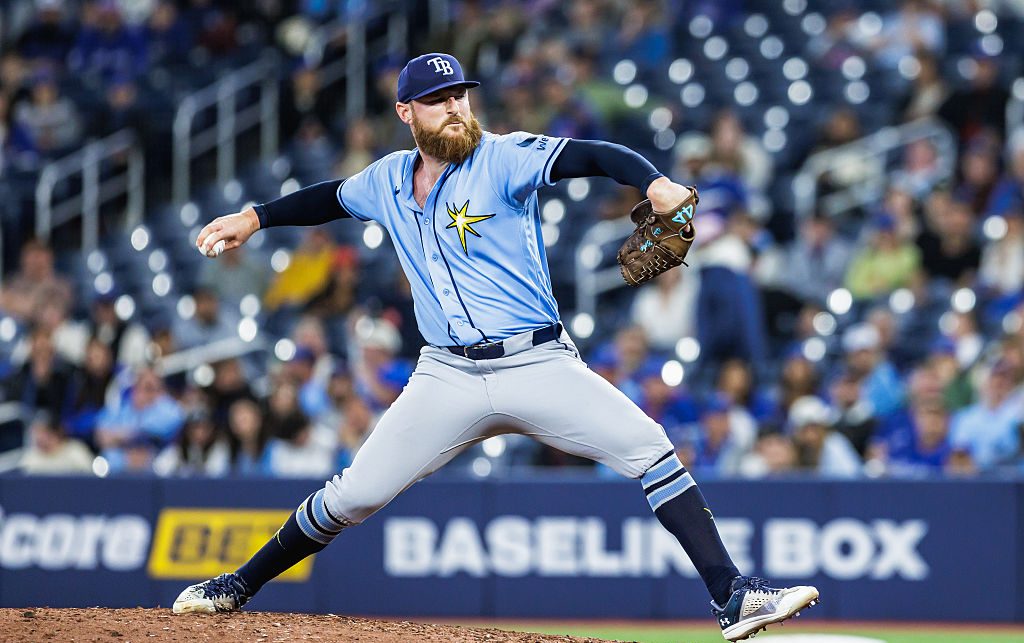
The back-end of the Rays’ bullpen has some serious dudes in it, led by breakout closer Bryan Baker, who randomly led the majors in saves (41) this year while turning in a 1.44 ERA and 3.07 FIP through 65 games and 62.1 innings of work.
He has yet to allow a single run through his first seven postseason outings thus far, while punching out six and walking two.
Kevin Kelly, 28, enjoyed a career year in 2026 as well, posting a 2.44 ERA and 3.02 FIP in 71 outings. He set career highs in most major categories and has also performed well in the first playoff innings of his career.
During the regular season, opponents hit just .196 off of Kelly in high-leverage innings, which should work out nicely for the Rays, as every pitch he’ll throw in the coming series will be in the highest of leverages.
Cam Booser is another notable player worth mentioning, as he enjoyed a breakout year at the age of 34. The left-hander appeared in 42 games for the Rays, posting a 1.98 ERA and 2.93 FIP across 41 innings of work.
Following in the footsteps of his other trusted Rays relievers, Booser has yet to allow a single run this postseason in his first six outings and 4.2 innings of work.
Behind the big three names here, the Rays also received a pair of standout outings from Ian Seymour, who can either start or eat multiple innings as a reliever. He went recorded two outs in Game 1 and four more in Game 2 against the Guardians.
While his shaky performance in Game 4 kept things interesting, the left-hander is a high-strikeout arm and has proved his worth multiple times over this season.
Tyler Wells and Steven Matz, who are also capable of going multiple innings at a time, each went two scoreless with a combined six strikeouts against Cleveland in Game 3. Wells surrendered two runs in two of his ALCS outings, but he looked sharp in the other two. That slight lapse in consistency is a bit concerning.
The Rays have their band of trusty heroes in their ‘pen, sure, but it’s not difficult to see that this is where cracks begin to show in their roster. There’s going to be a ton of pressure placed on their starters to keep them in the game for as long as possible, because the Brewers simply have many more relief-pitching weapons available than the Rays do.
Key Storylines to Watch: Brewers
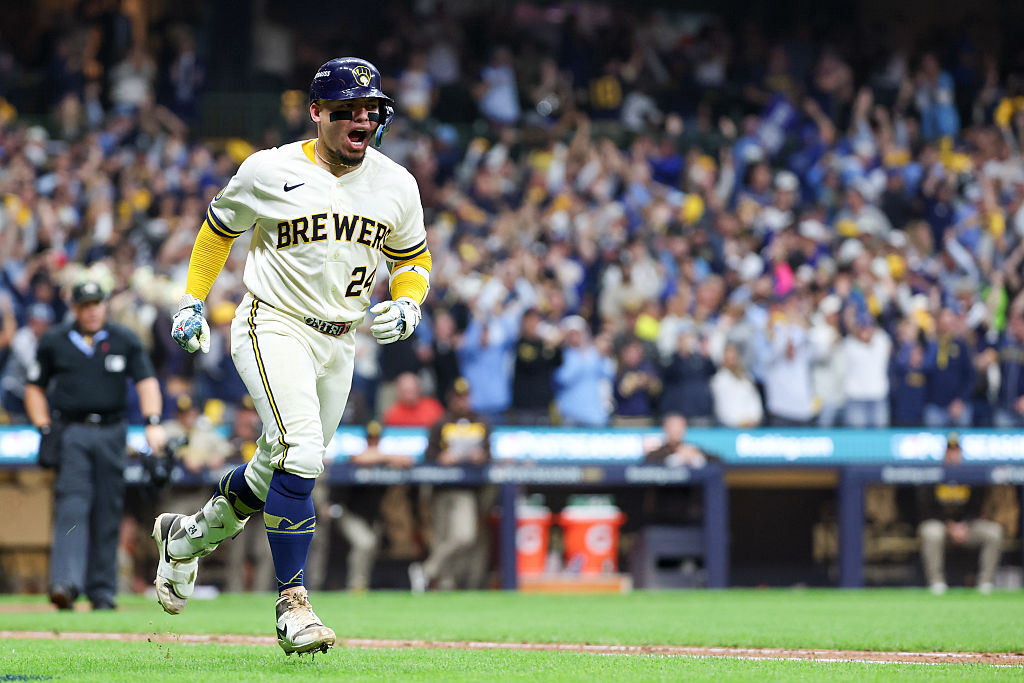
The Brewers Don’t Need to Be Perfect to Be Dangerous
The Brewers struck out over 30% of the time against the Dodgers in the NLCS. How do you overcome that? You slug your way to victory, and that’s exactly what the Brewers did.
Milwaukee slugged .445 in the NLCS and out-homered Los Angeles seven to one in the series. Not only did they outplay the Dodgers at their own game, but they also came up with the big swing in key moments. Bauers’ Game 3 go-ahead homer off Blake Snell and Garrett Mitchell’s go-ahead homer off Tanner Scott were two signature moments in their respective careers and, honestly, in Brewers franchise history.
It wasn’t just the power, though. Sure, the Brewers struck out 45 times in four games, which was more than the Guardians had and three fewer than the Rays had in six games. But Milwaukee delivered the big swing when it needed it most and, more importantly, put together quality at-bats in pivotal moments of the ballgame.
There have already been countless examples of that this postseason.
Jackson Chourio’s Game 2 walk-off against Mason Miller in the NLDS doesn’t happen if Christian Yelich, Sal Frelick, and Gary Sánchez don’t walk ahead of him.
Luis Lara’s go-ahead single in Game 1 of the NLCS doesn’t happen if Mitchell doesn’t draw a leadoff walk and Cooper Pratt doesn’t move him over with a sacrifice bunt.
Yelich’s two-RBI single was set up by Bauers’ famous 12-pitch walk against Yamamoto in Game 2, a sequence that eventually led to an early exit for the all-world starter. Bauers’ 11-pitch, two-run home run was the dagger in Game 3, exemplifying everything this team is about.
The Brewers may not be perfect for all 27 outs, but it’s nearly impossible to keep this lineup at bay for an entire game. From spots one through nine, Milwaukee wears down opposing pitchers with its approach at the plate. The Brewers are patient, they’re smart, and they’re proving they can deliver a big blow when they sense a moment of weakness.
They’re relentless to face, and the Rays’ pitching staff faces its toughest task yet in the World Series.
The Stars Need To Star
While Jake Bauers stole the show in the NLCS and Garrett Mitchell clobbered two decisive home runs in the series, the Brewers’ stars will need to shine if they wish to take down this red-hot Tampa Bay team.
Would you be surprised if I told you Jackson Chourio is batting .171 with a .553 OPS and a 48 wRC+ in 38 plate appearances this postseason? I sure was. But don’t let those numbers fool you. While the Brewers would certainly like to see more consistency from him at the plate, he’s left his mark on multiple Milwaukee wins throughout these playoffs.
Of his six hits so far, four stand out: a game-tying two-run homer in Game 1 of the NLDS, an improbable walk-off single in Game 2 of the NLDS against Mason Miller, a go-ahead single in the fifth inning of Game 3 of the NLDS that helped lead Milwaukee to victory, and a first-pitch ambush home run against Blake Snell in Game 3 of the NLCS.
Point being, his stats might not jump off the page, but the big moments have found him, and he’s delivered. He’s still managed to drive in seven runs and score twice in eight games. Chourio has established himself as a budding superstar in this league with a knack for delivering in the biggest moments, and the Brewers will need him to have another signature moment or two against Tampa Bay.
William Contreras has been the best hitter in the postseason, posting a 212 wRC+ while slashing a whopping .367/.457/.700 with a 1.157 OPS across 35 plate appearances. He hit the go-ahead, decisive home run that led the Brewers to victory in Game 1 against the Padres, and he was the catalyst in a Game 2 NLCS win over the Dodgers. He went 3-for-4 with a game-tying single in the first, a game-tying home run in the fifth, and a go-ahead single in the sixth.
On a team composed of even-keeled stars, Contreras is the pop of swagger in the heart of the lineup. He brings the energy every team needs to make it through the grind of the postseason, and he’ll be a major factor in determining whether the Brewers can bring home the title.
Brice Turang broke out of his prolonged postseason slump in the NLCS, going 6-for-11 with five walks and just four strikeouts. His signature swing came in Game 1, when he took a Tarik Skubal sinker the opposite way for a game-tying home run. Add in Captain Christian Yelich, the leader of this ballclub who has long been searching for his World Series ring, and those are the four players who will need to keep producing in the game’s biggest moments.
Get Back to Playing Clean Baseball
This one is short and sweet: The Brewers must clean up their defensive play if they want to win the World Series.
The Brewers have committed eight errors so far this postseason, and frankly, it’s a miracle they’ve only lost one of the eight games they’ve played. Their defensive miscues have nearly come back to bite them several times.
Cooper Pratt has three errors on his ledger, Logan Henderson has two, and Brice Turang, David Hamilton, and Sal Frelick have one apiece. The Brewers have managed just fine to this point despite the defensive miscues, but the Rays are much like the Brewers: they will take advantage of any inch the Brewers give them.
Milwaukee has somehow managed to avoid letting those errors come back to haunt it, but it’s only a matter of time before one does. That said, the Brewers are 7-1 this postseason despite those mistakes, so it’s hard to imagine just how good this team could be if it gets back to playing sound defense.
Key Storylines to Watch: Rays
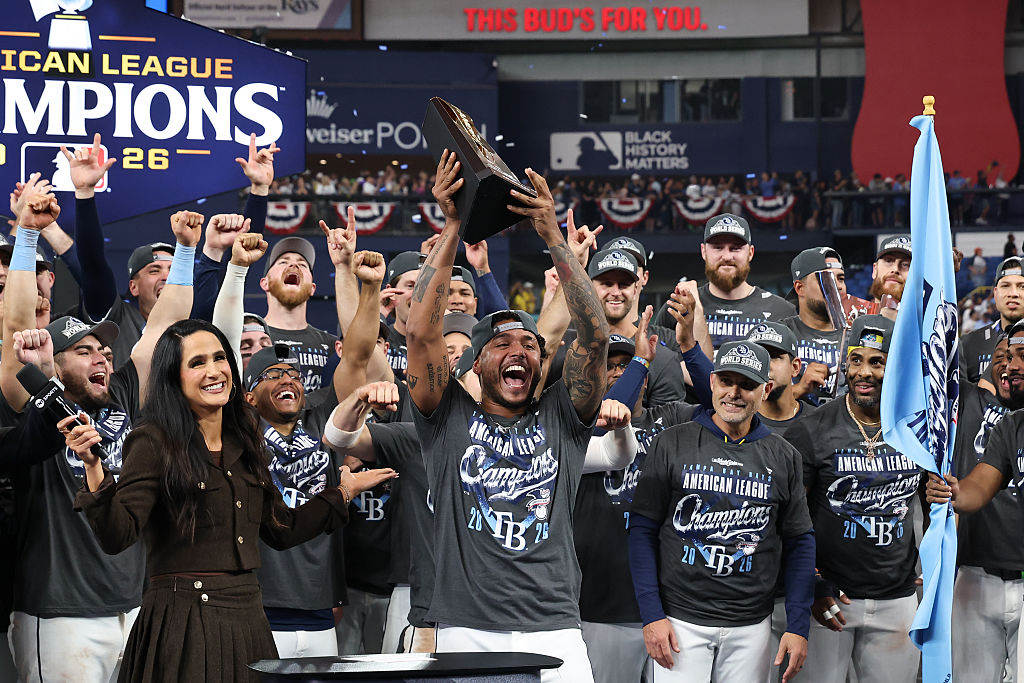
Freddy Peralta’s Redemption Story
Peralta’s career began in 2018 with the very same Brewers he’s about to try and take down, which is enough to garner headlines to begin with. He logged postseason innings for them in 2018, 2020, 2021, and then each year from 2023 to 2025.
While the business side of baseball always takes priority, the hurler affectionately known as “Fastball Freddy” is sure to get applause in his return to where it all began.
That’s only part of why Peralta is going to have a ton of eyes on him when he first takes the ball. The other primary part of his equation is his looming trip through free agency.
The right-hander’s first trip to the open market is going to be an interesting headline to monitor once the offseason officially commences. Entering the 2026 campaign, he was sitting pretty and ready to bring home some serious bacon once he hit the free-agent pool, but a horrible 22-start showing on the New York Mets left a sour taste in many people’s mouths.
In 113.2 innings as a Met, Peralta turned in a 4.99 ERA and 4.46 FIP with an ERA+ that dipped all the way down to 81, which shows his overall production as 19% below league average. That’s not exactly ideal for a player in his walk year.
He improved in every way after the move to the Rays, and just recently brought home ALCS MVP honors. While his stint on the Rays (in both the regular season and postseason) has helped him add some value to his coming free-agent contracts, a sterling showing on the game’s biggest stage will help everyone involved even more.
The Supporting Bats Need to Come Through
The Rays’ offense fired on all cylinders throughout the regular season, doing so in typical Rays fashion by not relying on the longball to win games.
Sure, Yandy Diaz and Jonathan Aranda both hit 22 home runs and face-of-the-franchise Junior Caminero hit 40+ homers for the second year in a row, but otherwise, the lineup simply lacked thump.
There are ways to make that type of play work, but only if the team is doing the little things right.
So far in this year’s playoffs, the Rays have two hitters with a wRC+ north of 100: Diaz and Caminero.
Otherwise, the rest of the lineup hasn’t come through and started to pull its weight just yet. Aranda’s 96 wRC+ has him just 4% below average, which is decent enough, but the fall-off after him is pretty dramatic.
After the top-three of Diaz (151), Caminero (127), and Aranda (96), here’s a look at every other qualified hitters on the team this postseason:
- Chandler Simpson – 64
- Liam Hicks – 62
- Victor Mesa Jr. – 21
- Jonny DeLuca – 21
- Taylor Walls – 12
If there’s a silver lining here, it’s that the playoff sample size is tiny for the Rays, and most of these bats listed above were positive regular-season contributors.
We know what Simpson brings to the field. He’s never swings at bad pitches, has some of the quickest feet in baseball, and has a 99 Baserunning Run Value that simply can’t be ignored. He doesn’t hit for power, but he’s pesky and can change the momentum in a single inning with lightning speed.
Hicks, the team’s big offensive trade add this year, had a 130 wRC+ in 41 post-trade games for the Rays. He’s gotten better as he’s gone at the big league level, and his uncanny ability to draw walks is sure to march Brewers pitchers’ pitch counts through the roof.
Both Mesa (128) and DeLuca (102) were above-average run-producers for the Rays during the 2026 campaign. The latter has much more big league experience than the former, but we shouldn’t simply forget how solid they both were before the postseason.
You don’t have to turn the clock back very far to find when they were last positive contributors to this team.
Still, the need for someone to step up behind the top-three couldn’t be more apparent. Caminero has already done his part and has been every bit the playoff hero the Rays needed him to be.
Now it’s time for the supporting staff to wake up.
Throwing the First Punch Is Crucial
The Brewers just finished showing a prime example of why it’s so important to gain the momentum early and to keep running with it. In the NLCS against the Los Angeles Dodgers, the Brewers put the pedal down and somehow swept the defending back-to-back World Champions.
Winning the first game or two is of the utmost importance when you’re dealing with the best teams in the game, and the Brewers just proved that.
If the Rays are able to find a way to get to Misiorowski, who has shown his fair share of fatigue this postseason, and steer the early momentum in their favor, the pieces could very easily fall into place from there.
Getting to Misiorowski is no simple feat, fatigue or not. But if the Rays get him on one of his good nights and lose the series-opening contest, having to go after Logan Henderson the following evening is all the more difficult and improbable.
No team is really “sitting pretty” in this series in the days leading up to it. But we know how easily things can sway early on in these high-stakes series.
No matter how you slice it: the Rays need to be as aggressive as possible against both Misiorowski and Henderson, because having to claw back from even a single-game deficit can be too tall of a mountain to climb at this point in the year. These are the most important games in either of these franchises’ histories, and it’s time for this year’s heroes to make themselves known.
Prediction
This is everything a baseball purist could want in a World Series matchup. The two best teams in each respective league during the regular season have made it all the way to the final series of the season, the one for all the marbles, playing tremendous baseball along the way.
There are so many similarities between these two teams, from the way their organizations are run and the style of baseball they play to the values instilled from top to bottom and the profiles of players they gravitate toward.
There’s a reason why both teams have been so successful over the years despite being two of the smaller-market teams in the sport. Both have built a winning formula predicated on winning within the margins, executing the fundamentals as well as anybody, and creating a winning culture that gets everyone bought in.
In the end, this is the matchup we deserved to see, and it’s shaping up to be the most evenly matched showdown fans could have asked for. Both teams are red-hot, both have tremendous home crowds behind them, and it may very well boil down to which team blinks first. Isn’t that everything the World Series should be?
Get the popcorn ready, because this has the makings of a World Series matchup to remember.
Final prediction: Brewers in 6.
Become a Member of Just Baseball
Subscribe and upgrade to go ad-free!
* Save 25% by subscribing annually.