
How Darwinzon Hernández Fits the 2027 New York Mets
The New York Mets signed Darwinzon Hernandez to a multi-year deal to add a high-upside reliever to their bullpen going into 2027.
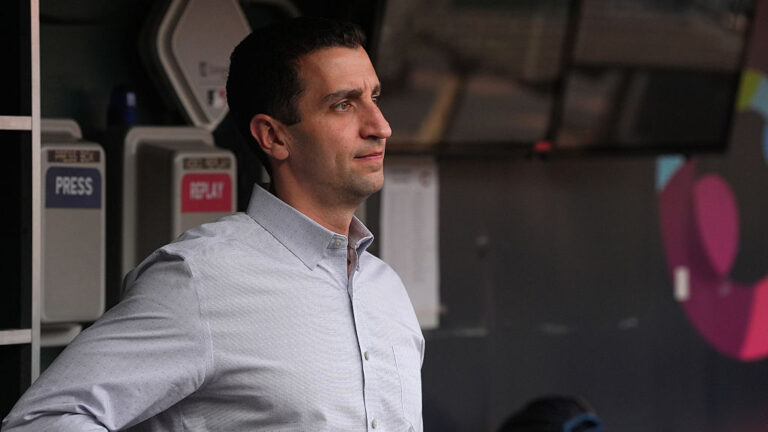
What a week for the New York Mets, acquiring a much-needed left-handed arm for their pitching staff to bolster their 2027 postseason hopes
I am, of course, talking about Darwinzon Hernández, whom the Mets signed from the Fukuoka SoftBank Hawks of the Nippon Professional Baseball League (NPB) to a three-year, $12 million deal.
Hernández joins a list of recent pitchers who used NPB to revitalize their careers and return stateside. Players like Chris Martin, Ryan Brasier, Joely Rodríguez, Nick Martinez, Miles Mikolas, and Matt Moore have all used NPB as an intermediary stop between their MLB seasons.
| MLB FIP Before NPB | MLB FIP After NPB | Change in FIP | |
| Chris Martin | 3.71 (2 seasons) | 3.08 (9 seasons) | -0.63 |
| Ryan Brasier | 4.27 (1 season) | 3.52 (8 seasons) | -0.75 |
| Joely Rodriguez | 5.17 (2 seasons) | 3.45 (5 seasons) | –1.72 |
| Nick Martinez | 5.36 (4 seasons) | 3.96 (5 seasons) | -1.40 |
| Miles Mikolas | 4.81 (3 seasons) | 4.28 (9 seasons) | -0.53 |
| Matt Moore | 4.32 (9 seasons) | 4.58 (4 seasons) | +0.26 |
Five out of six recent pitchers to return to MLB after pitching in NPB produced better results.
Pitchers who can identify inefficiencies or flaws in their mechanics, and then also have the avenue to work and improve on those areas, are popular candidates for potential bouncebacks. The struggles that came early in their MLB careers led them to reanalyze which pitches, qualities, and traits they needed to refine to be effective MLB pitchers.
Darwinzon Hernández Player Profile
Age in 2027: 30
Contract: 3 years, $12 million
MLB Career (2019-2022): 91 G, 85.1 IP, 5.06 ERA, 18 HLD, 14.0 K/9, 7.7 BB/9, 4.54 FIP
NPB Career (2023-26): 136 G, 131.2 IP, 2.46 ERA, 48 HLD, 11.48 K/9, 2.94 BB/9, 2.35 FIP
2026: 45 G, 42.2 IP, 1.48 ERA, 18 HLD, 10.97 K/9, 3.38 BB/9, 2.67 FIP
2026 Versus Lefties: 82 PA, .174/.253/.174, 0 HR, 28.0 K%, 7.3 BB%
2026 Versus Righties: 89 PA, .182/.292/.299, 3 HR, 32.6 K%, 11.2 BB%
2027 Projections (Steamer): 54 G, 54.0 IP, 3.88 ERA, 13 HLD, 9.34 K/9, 3.81 BB/9, 4.04 FIP
Hernández joined the Boston Red Sox organization as an international free agent in 2013 and was featured on MLB Pipeline’s Red Sox top 10 organizational prospect list from 2018-2020. The Venezuelan native made his debut in 2019 and did not accumulate any fWAR over 85.1 career innings. His last year with the Red Sox was in 2022, where he posted a 21.60 ERA and a 20 ERA+ over seven relief appearances (6.2 IP).
In 2023, Hernández signed with the Fukuoka SoftBank Hawks before breaking out in 2024. He quickly emerged as an extremely effective left-handed arm, efficient at leaving runners on base and limiting walks.
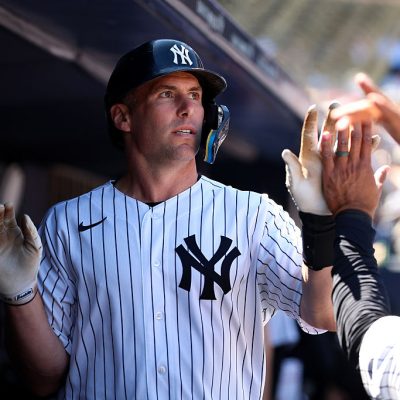

NPB Improvements
Over his three full seasons with the Hawks, Hernández walked 43 batters while striking out 168 over 131.2 innings. The 6-foot-2 lefty also seems to have the right demeanor to succeed as a reliever. Hernández was impressive with runners on base, having a LOB% of 90.9% while also having 48 holds during his three seasons.
While struggling with command during his MLB tenure, he refined it in NPB, cutting his BB/9 in half. Even with a larger focus on his control, the former Red Sox kept his strong strikeout ability with a K/9 north of 11.
The 29-year-old’s underlying data and NPB stats can give the Mets confidence that the 29-year-old’s recent success will carry over to MLB. His 2.67 FIP supports his extremely effective season, and his recent changes to his repertoire and arm slot add to the value he can provide to the Mets bullpen.
Repertoire and Usage
When looking at Hernández’s NPB breakout, his change in pitch usage and fastball velocity combined with his unique three-quarters arm slot is a major reason.
With the Red Sox in 2022, he used three pitches:
| 2022 Usage | Avg. Velo (2022) | |
| Four-Seam Fastball | 61.0% | 94.3 mph |
| Slider | 25.8% | 84.2 mph |
| Curveball | 13.2% | 78.3 mph |
Hernández’s three pitches worked better against lefties, as his platoon splits were a .643 OPS against lefties and a .829 OPS against righties. Righties were not being fooled out of the zone against his pitch mix, accounting for his slider being hit for a 182 wRC+ and his fastball at a 119 wRC+ across his four MLB seasons.
Combine this with his questionable overall control, and Hernández could not put it all together with the Red Sox. However, looking at 2026 repertoire in NPB, we see how he became more of a two-pitch pitcher to take advantage of his increase in velocity and movement on his fastball and slider:
| 2026 Usage | Avg. Velo (2026) | |
| 4-Seam Fastball | 72.0% | 96.0 mph |
| Slider | 24.0% | 87.9 mph |
| Curveball | 4.0% | 82.5 mph |
Delivery
The two-time Japan Series Champion made some changes to his delivery in NPB, but overall he maintains a similar look to his motion with the Red Sox.
Hernández starts on the third-base side of the rubber and has taken advantage of his ¾ arm slot and cross-fire motion to have success in NPB. Hernández shortened his stride in NPB to allow his lower-half mechanics to be more consistent and add depth to his slider.
The short stride has made at-bats extremely uncomfortable for lefties. The cross-fire motion with the shorter stride allows Hernández’s fastball to play up in the zone. It also adds more depth to his slider to induce more chase.
The Hawks lefty starts his motion by sinking his hip during his glove separation. He then uses his shorter stride with his lower arm slot to sling his arm across his body from the left side of the mound. By also starting on the third base side of the rubber and striding towards the first base on-deck circle, he slightly hides the ball from the batter behind his body.
One noticeable change he made was around his glove arm. Hernández in 2022 tucked his glove directly to his back hip. In 2026, he allows his glove to rotate more around his body to enhance his cross-fire motion and lower his arm angle. By being more rotational in his follow-through, the Hawk added whip and deception to his offerings.
For the Hawks in 2026, Hernández posted an extremely impressive chase rate on his slider, sitting at 42.2%. With the combination of his shorter stride to increase velocity, being more rotational with his glove side, and his pitch usage adjustments, Hernández has redefined himself into a strong left-handed reliever out of the bullpen.
Fit for the New York Mets in 2027
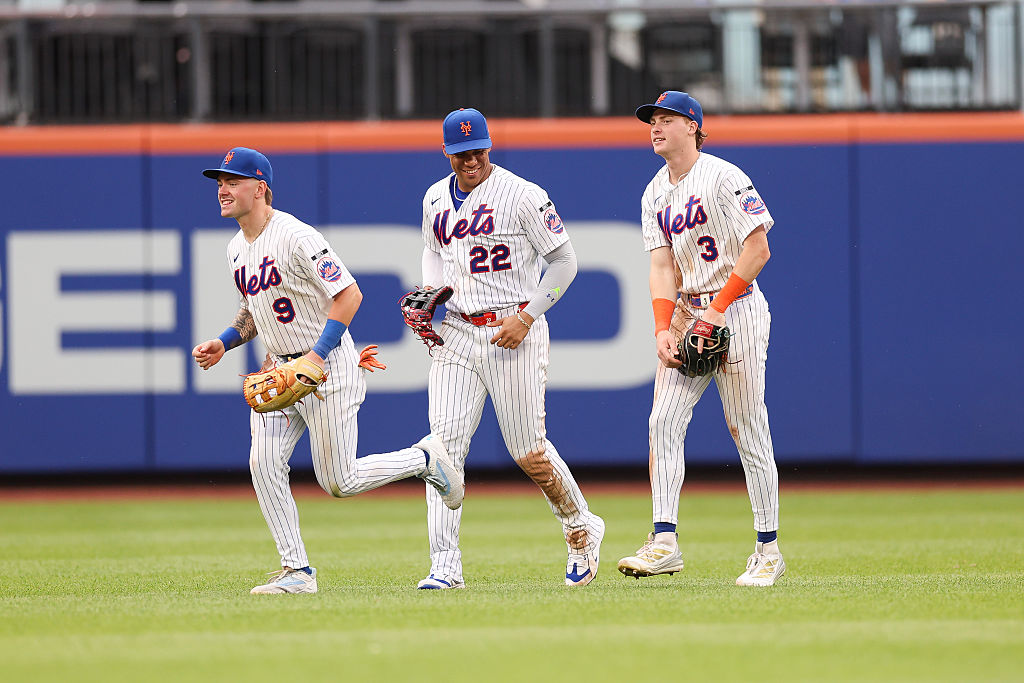
The Mets needed bullpen help going into 2027 after selling off many of their pieces at the 2026 trade deadline. Both left-handers were traded, with AJ Minter going to the Minnesota Twins and Brooks Raley to the Philadelphia Phillies.
The Mets’ other options for left-handed bullpen arms include Nate Lavender, who posted an impressive 1.66 ERA and 1.85 FIP in 21.2 IP in his rookie season. Other lefty options for the Mets include Cionel Pérez and Jefry Yan. Perez pitched to a 2.66 FIP in 29.1 IP, while Yan pitched to a 4.82 FIP in 20.1 IP with New York in 2026.
With Lavender, Hernández figures to be a primary left-handed option for the Mets. Signing a three-year deal is unique for the recent track record of MLB pitchers returning to the US after a stint overseas. However, after $4 million per year, the risk is low for a reliever that displayed a refined repertoire and improved results over three full NPB seasons.
Since 2024, the Mets have primarily used two left-handers out of their bullpen, with additional left-handers providing depth. In 2024, Jake Diekman and Danny Young combined for 69.2 IP. In 2025, Raley and Gregory Soto combined for 59.2 IP, and in 2026 it was Raley again, with Pérez totaling 60.2 IP.
Hernández will aim to provide the Mets bullpen with stability as one of the main left-handed options late in games. In a division with many left-handed sluggers like Bryce Harper, Kyle Schwarber, James Wood, and Matt Olson, Hernández should be prepared to play an integral role in their 2027 bullpen.
This signing has a low AAV for the Mets and has high upside if he can maintain success with his fastball-slider combo and refined delivery. Hernández, at 29 years old and once a top 10 prospect for the Red Sox, is a nice bounceback candidate for the Mets going into 2027.
Become a Member of Just Baseball
Subscribe and upgrade to go ad-free!
* Save 25% by subscribing annually.

Written by
Justin Fuls is a former pitcher at Oberlin College and recently joined the Just Baseball team for the upcoming offseason