
This Year’s Hall of Fame Election Was Bigger Than Just Its Results
The elections of Carlos Beltrán and Andruw Jones tell us many things about the BBWAA Hall of Fame voting process.
 | |
| | 
Every BBWAA National Baseball Hall of Fame election plays a role in dictating the results of those that come later.
Whether it’s an inductee that sets a standard for others or a down-ballot candidate that is set up to eventually see their day, all of these elections affect those that come after them. But there’s something about the 2026 election where this speaks louder than ever before.
The elections of Carlos Beltrán and Andruw Jones tell us many things about this process.
Beltrán’s election indicates that the 2017 Astros sign-stealing scandal is not the dealbreaker that PED use or other off-field issues have been in the past. It’s something that will be helpful for players like Jose Altuve, Carlos Correa, George Springer and Alex Bregman when it’s their time.
Jones earning induction tells us that players who debut on the ballot with 7% of the vote can’t be counted out, something we’ve never been able to say before.
But if anything, the biggest takeaway from this year’s voting cycle is that this is simply not the same process that it was as recently as five years ago.
The electorate is changing. There are more of them, they are younger, and they are open-minded. This year was a perfect example of that. We went from 394 ballots cast in last year’s election to 425 this year; 31 more ballots and the most submitted in any election since 2019.
According to Ryan Thibodeaux’s tracker, there are 39 ballots from first-time voters that we currently know of. All but one of them voted for Beltrán, over 90% voted for Jones, and more than 75% voted for Chase Utley and Félix Hernández.
Year after year, a new group of first-time voters will continue to cycle in, and people with this more inclusive line of thinking will make up an increasing percentage of the voter base. The gains we saw from several candidates weren’t a fluke – they were a sign of what is to come.
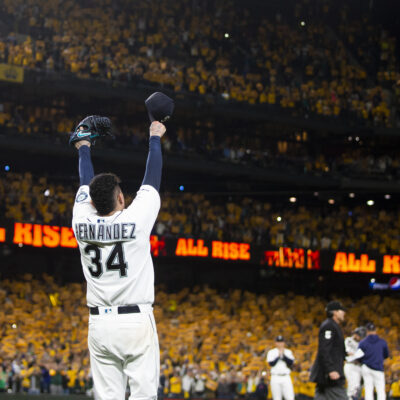
Perhaps the biggest storyline of this cycle, other than the two players elected, was the meteoric rise of Hernández in his second year on the ballot. Hernandez tallied 20.6% of the vote in his first year on the ballot in 2025; a good start, but still a long way to go.
Since the start of the 21st century, seven other players posted between 20-25% in their first year on the ballot (excluding Cole Hamels).
Of these seven, none of them gained more than 4.3% in year two. Historically, it’s a hard place to immediately build momentum off of. Yet, Félix flipped the script and climbed to 46.1% in his second year. His 25.5% rise between years ties Luis Aparicio’s rise from 1982 to 1983 for the highest in voting history.
A gain like this changes the entire trajectory of Hernández’s path to 75%. Debuting at 20% used to mean you either get in at the back end of your career, or you aren’t elected by the BBWAA at all. Instead, the writers are fast-tracking King Félix’s induction, which now seems likely to happen in the next couple of years.
Although the levels of these gains for Hernández and others on the ballot may have caught some off guard, it was always clear that this was going to be a big year for returning candidates.
With three candidates (Ichiro, CC Sabathia, and Billy Wagner) leaving the ballot from last year and a weak first-year player class, there were a lot of votes to be redistributed from 2025. In these circumstances, returning players tend to have strong years.
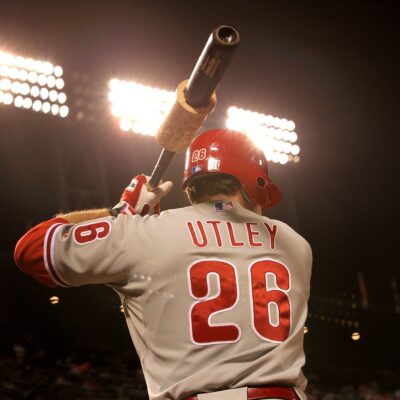
This applied to players like Chase Utley, Andy Pettitte and Bobby Abreu. Utley made his way up to 59.1% in his third year on the ballot, a 19.3% gain from last year. This came thanks to a 17.4% gain in pre-election votes and a 19.7% increase in post-election votes. Utley will be the closest returner to 75% on next year’s ballot, needing a 15.9% increase to cross the line.
After struggling to cross above 17% for his first six years, Pettitte was able to keep his candidacy alive for another year, raking in 48.5% of the vote. It’s his second straight year gaining at least 14% of the vote.
The former Yankees left-hander now has two years to attain 26.5% of the vote and get to 75%. Sounds crazy, but it’s been done before. Edgar Martinez gained 26.8% of the vote in his final two years on the ballot — ending up with 85.4% in 2019. Larry Walker also made up a 40.9% deficit in his final two years before his 2020 election.
Even if he doesn’t eventually make it, it seems likely that Pettitte, who in 2007 admitted to PED use during his career to heal injuries, could top 66% of the vote. That would be more than all-time home run leader Barry Bonds or seven-time Cy Young winner Roger Clemens ever achieved.
One might wonder how someone like Pettitte, a fellow PED user, could possibly get closer to the Hall than players like Bonds or Clemens. If this happens, it would be the strongest example of the changing electorate — large swaths of voters who never had a chance to vote for Bonds or Clemens showing up for other players with steroid issues.
As for Abreu, reaching the 20% threshold would’ve been an achievement. He instead shot higher and got to 30.8%, a n11.3% increase over his 2025 total. He now has three years left to make up roughly 45% of the vote.
Although it’s unlikely he will get in through the BBWAA, a strong finish could make him a candidate to rebound on an Era Committee ballot, the same way players like Fred McGriff (Class of 2023) or Jeff Kent (2026) eventually made it in.
Lastly, it was a surprisingly strong debut year on the ballot for Hamels, who checked in with 23.1% of the vote in year one. This total tops the debuts for Hall of Famers Mike Mussina and Bert Blyleven. He even surpassed Félix’s debut total from 2025.
At the beginning of this cycle, it felt like Hamels was just hoping to stay on the ballot and earn a second look. Instead, he’s now looking to build momentum on an already established case.
This is the start of a new era in Hall of Fame voting. There are so many precedents that have been bypassed and will eventually become obsolete in due time. When we look back in several years, I will remember this year as a turning point in the process, due to the new voters and the rises by these returners.
Next year, returners can look forward to a cycle followed by three departures from the ballot and only one strong addition. Buster Posey will headline next year’s ballot and look to make it in his first year, which I think he will do. We also have a chance to see Utley make his way to 75% and several others set a clearer path for a future induction.
Written by
Daniel Curren is a writer with Just Baseball. He loves sabermetrics, baseball history, and the Hall of Fame.