
These Five Players Could Gain the Most From a Deadline Trade
If any of these players are traded this summer, they won't be eligible for a qualifying offer. That could really help them in free agency.
In theory, the qualifying offer is a way for teams to get some fresh talent in return for a star player leaving in free agency. It seems like it should promote competitive balance and perhaps encourage free agents to re-sign with their most recent team.
In practice, however, there’s no one the qualifying offer affects more than the players themselves. When a free agent is attached to a qualifying offer, teams can use that to drive down his asking price.
The players this hurts the most are the ones who weren’t sure things to get the QO in the first place. Occasionally, guys who reject the offer end up signing for less than what they turned down, because the QO injures their market so severely.
Thankfully, players have a couple of ways to escape the qualifying offer system. For one, a player who received a QO in a previous offseason – whether they rejected or accepted – isn’t eligible to receive another. That means players like Sonny Gray and Kevin Gausman don’t have to worry about the QO holding them back this year.
The other way to avoid a qualifying offer is to be traded mid-season. Only players who are continuously with the same organization from Opening Day until the end of the regular season are eligible.
So, for certain players, being traded in the middle of the season can really help them heading into free agency. Today, I’m going to consider who those players might be.
You won’t see any of the top impending free agents on this list. Tarik Skubal will sign a massive deal this winter no matter what. Jazz Chisholm Jr. isn’t getting traded. Freddy Peralta will probably look for the kind of short-term prove-it deal that plenty of QO free agents end up signing anyway.
Yet, there are quite a few guys who (a) could realistically be traded and (b) could earn significantly more in free agency without the qualifying offer dragging them down. Let’s take a look at who they are.
Stats updated prior to games on July 17.
Honorable Mentions
Dustin May, SP – St. Louis Cardinals
Is this winter’s free agent market so thin that Dustin May could actually receive a qualifying offer? The Cardinals gave him $12.5 million last offseason, and his stuff has looked much better this year than it did in 2025. Still, I don’t think May’s QO case is strong enough for him to be anything more than an honorable mention.
Ryan Jeffers, C – Minnesota Twins
Like May, Ryan Jeffers is a borderline qualifying offer candidate at best, and there’s no guarantee his team will sell. The Twins are tied for the third AL Wild Card spot after the first half, and they recently made a minor trade for Tommy Nance.
Adrian Morejon, RP – San Diego Padres
Will the Padres sell? On paper, they’re a better team than the Cardinals or the Twins, but their division is unwinnable, which means their only path to the playoffs is through the Wild Card.
Even if they aren’t throwing in the towel, it isn’t ridiculous to suggest that A.J. Preller would try to trade Adrian Morejon, considering San Diego already has Mason Miller as its closer, with a couple of dominant set-up men working their way back from the IL (Jason Adam and Jeremiah Estrada).
With that said, I’m not confident the Padres would give Morejon a qualifying offer even if they could. He’s been as dominant as any relief pitcher not named Mason Miller over the past three seasons, but relievers rarely get the QO. Just last year, San Diego chose not to give one to Robert Suarez.
Another wrinkle is the fact that the Padres are luxury tax payors, which means the compensatory pick they get when a QO free agent signs elsewhere comes lower in the draft. That means they have less incentive to give one out in the first place.
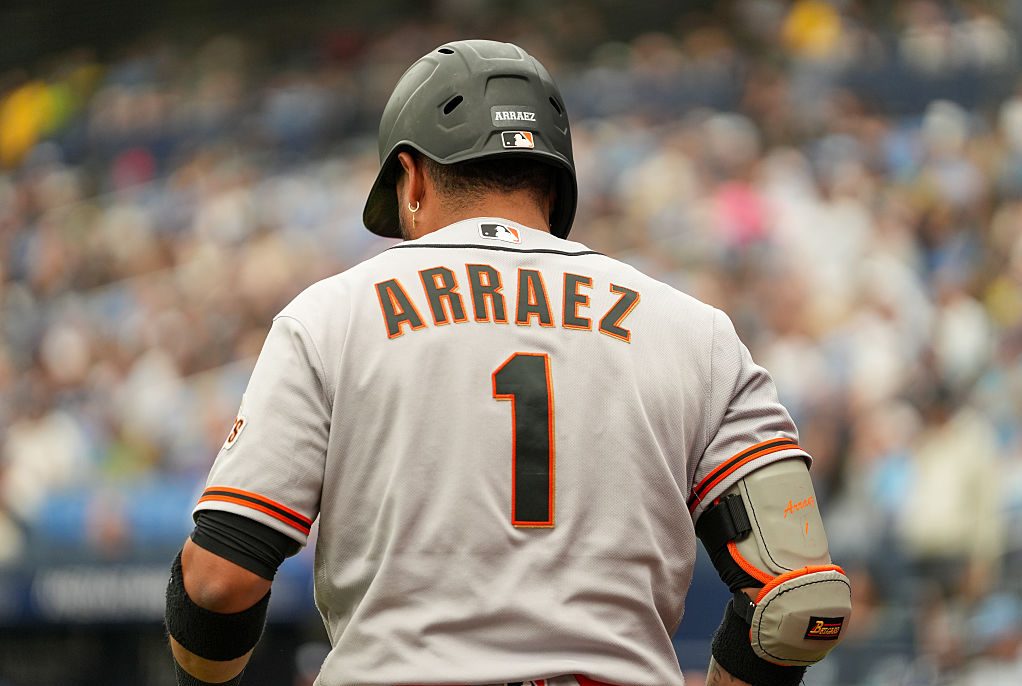
Luis Arraez, 2B – San Francisco Giants
There’s no question that Luis Arraez could benefit from a midseason trade, but there’s also no question he’s getting traded. It’s such a foregone conclusion that the Giants will trade their All-Star second baseman that we don’t even have to entertain the possibility of him being eligible for a qualifying offer.
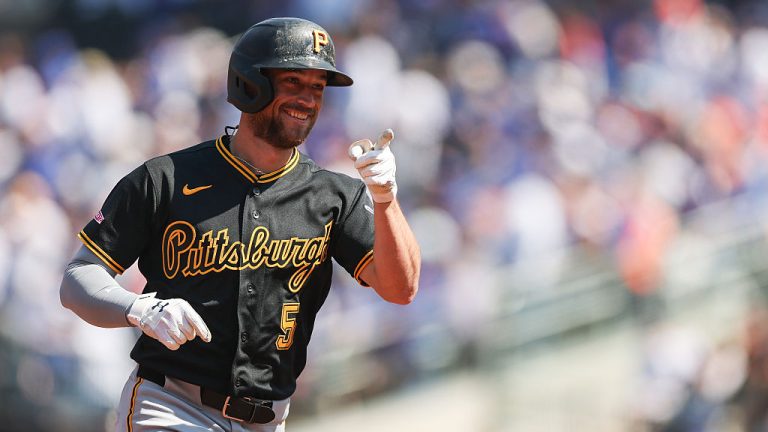
Brandon Lowe, 2B – Pittsburgh Pirates
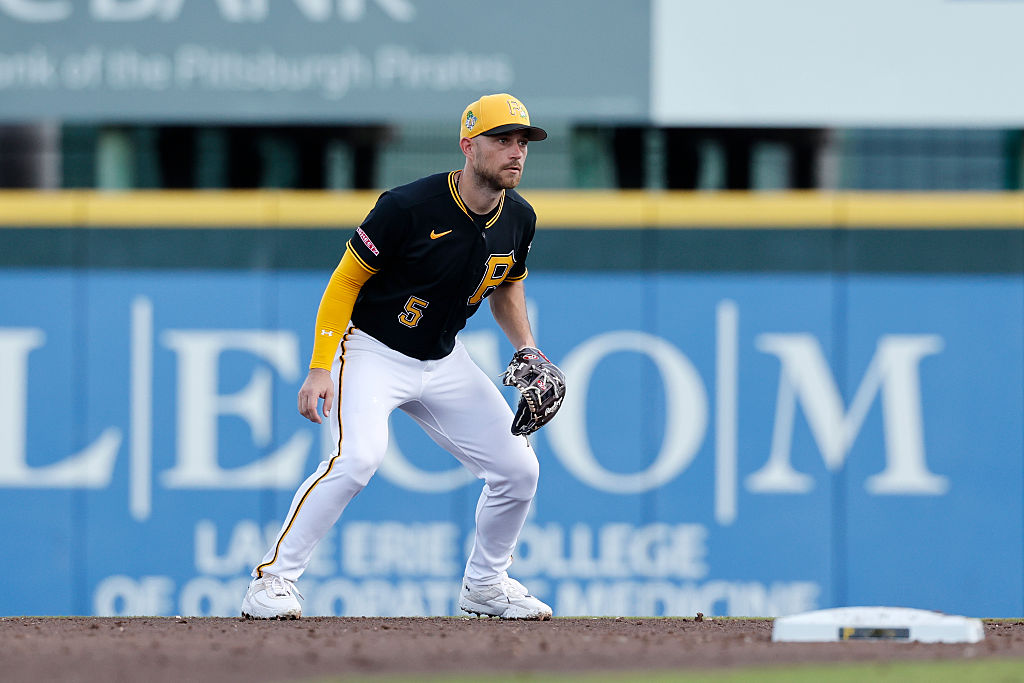
Brandon Lowe has come down to earth after a hot start, as have his Pirates. His full-season numbers are now very close to his averages from the last four years.
Lowe is a well-above-average hitter, but he isn’t the game-changing talent he looked like in his first few seasons. When it comes to players who recently received a qualifying offer, a good point of comparison for Lowe is fellow second baseman Gleyber Torres. Lowe has a 117 wRC+ and 9.4 fWAR since 2023; Torres has a 114 wRC+ and 9.0 fWAR in the same span.
However, there are a couple of key differences between the two. When Torres received the QO, he was coming off his age-28 season, and he had taken at least 600 PA in each of the past three seasons. Lowe just turned 32, and he’s only surpassed 600 PA once in his career.
So, getting (and accepting) the QO wasn’t such a bad thing for Torres. He’s making a nice chunk of change in 2026, and he can look for a more lucrative, long-term deal this coming winter.
Given his age and injury history, Lowe would probably be more hesitant to accept the qualifying offer. But for the same reasons, having a QO attached to his name could limit his earning power in free agency.
Trevor Rogers, SP – Baltimore Orioles
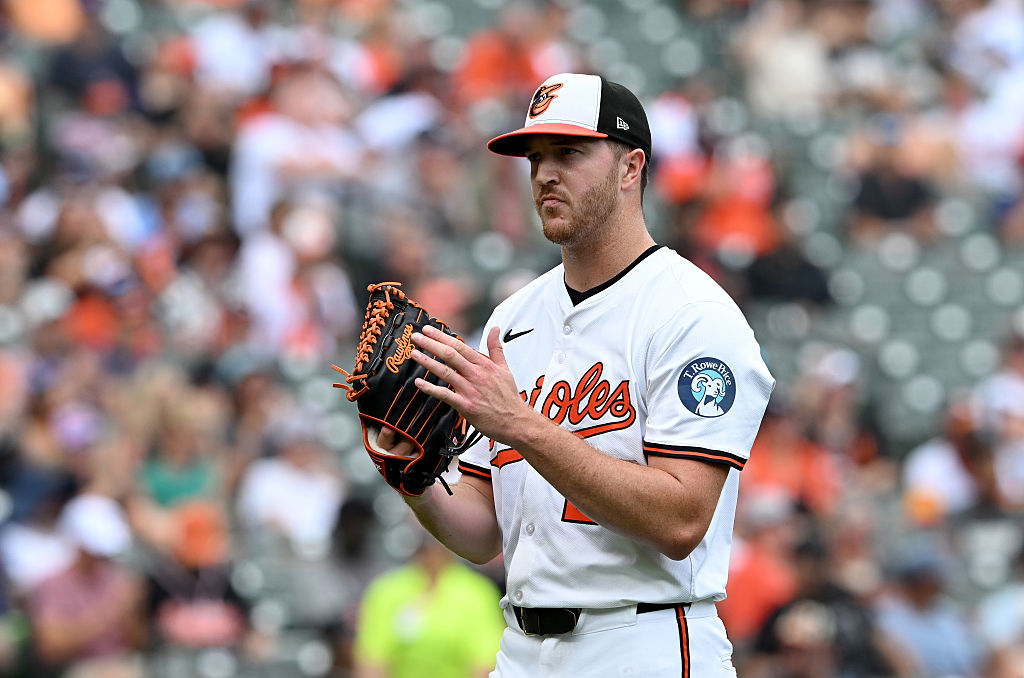
There was a time when Trevor Rogers looked like he could be one of the more exciting names in a weak free agent class. He pitched to a 1.81 ERA in 18 starts in 2025, and his first three starts in 2026 were all gems as well.
Then, Rogers gave up 35 runs (33 earned) in 29.2 innings over his next seven starts. His season ERA ballooned to 6.84, and his underlying numbers weren’t much better. Many started to wonder if his brief run of dominance was just a mirage.
Now, Rogers has a 1.73 ERA in his latest seven outings. He pitched into the sixth in all but one of them. The highlight of that stretch was a scoreless seven-inning performance against the Dodgers. Considering the quality of the competition, it was arguably the greatest start of his career.
We still don’t know who Trevor Rogers really is, and there might not be enough time left in the season to figure it out. That means he’ll be trying to get a team to take a gamble on him this offseason. He won’t command ace money, but he’ll be looking for someone to pay for his high upside, not his spotty track record. It will be a lot easier to do that if he isn’t attached to a qualifying offer.
Casey Mize, SP – Detroit Tigers
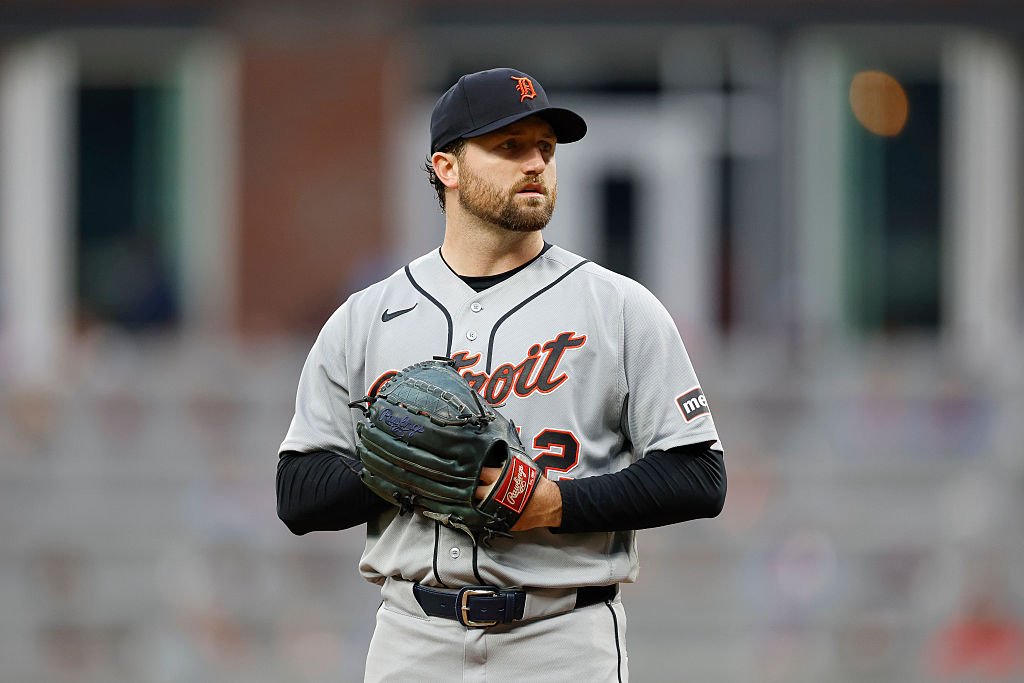
Casey Mize has looked terrific this season. In 14 starts, he owns a 2.79 ERA. His xERA is 3.08. The only AL hurlers who have him beat in both categories (min. 70 IP) are Cy Young front-runners Cam Schlittler and Dylan Cease.
The former first-overall pick is building off a 2025 season in which he put up a 3.87 ERA/3.66 xERA in 28 starts. He might not be the ace the Tigers once dreamed of, but he’s shedding the “bust” label that was starting to follow him around.
Unfortunately, Mize has another label to worry about. He has already been on the IL twice this season, first with a right adductor strain and later with more inflammation in the same area. He also missed time in both 2024 and ’25 with hamstring issues. Before that, he sat out almost all of 2022 and ’23 recovering from Tommy John surgery.
The right-hander has never thrown enough innings to qualify for the ERA title, and his “injury-prone” label will hurt more than any qualifying offer. The two of them together could make it quite difficult for him to cash in on a truly excellent campaign.
Clay Holmes, SP – New York Mets
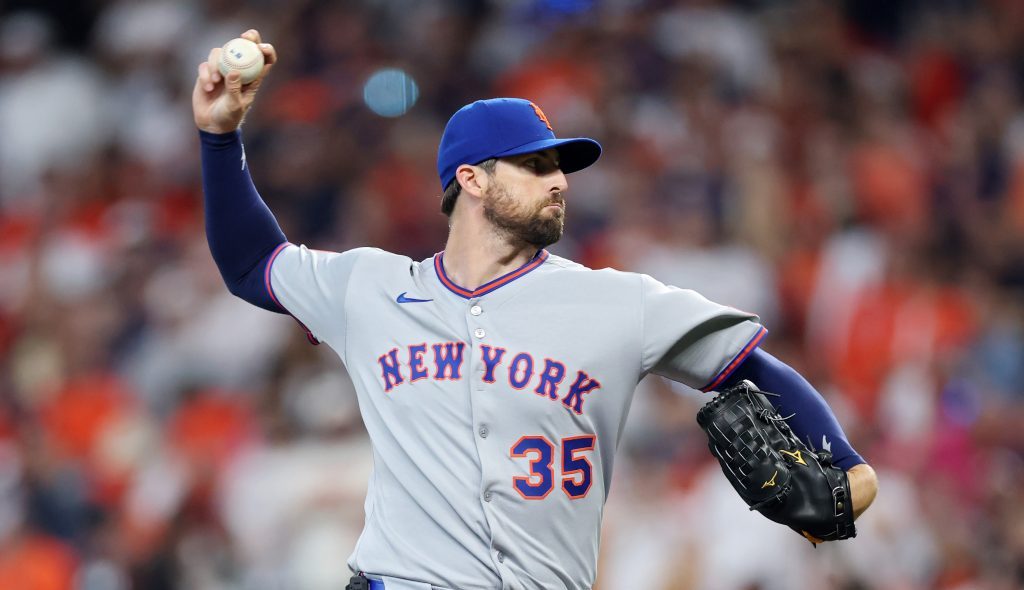
Clay Holmes has a $12 million player option for 2027 that he’s likely to decline. That will make him a free agent for the second time in three years.
The righty didn’t get a qualifying offer the last time he hit free agency. He’s two years older now, but he’s also proven he can succeed as a starting pitcher. That should make the difference.
In 218.1 innings for the Mets over the last two seasons, Holmes has pitched to a 3.26 ERA, a 4.22 xERA, and 3.1 fWAR. He can’t rely on his sinker quite as heavily as he did when he was a closer, but his groundball rate is still elite, thanks in part to the kick change he added to his arsenal.
A pitcher with mid-rotation skills is usually a good candidate for the qualifying offer. But unlike, say, Chris Bassitt and Sean Manaea – a pair of mid-rotation starters who got qualifying offers from the Mets – Holmes doesn’t have much of a track record as a starter. Bassitt and Manaea did just fine for themselves in free agency with the QO attached, but Holmes might not be so fortunate.
Taylor Ward, OF – Baltimore Orioles
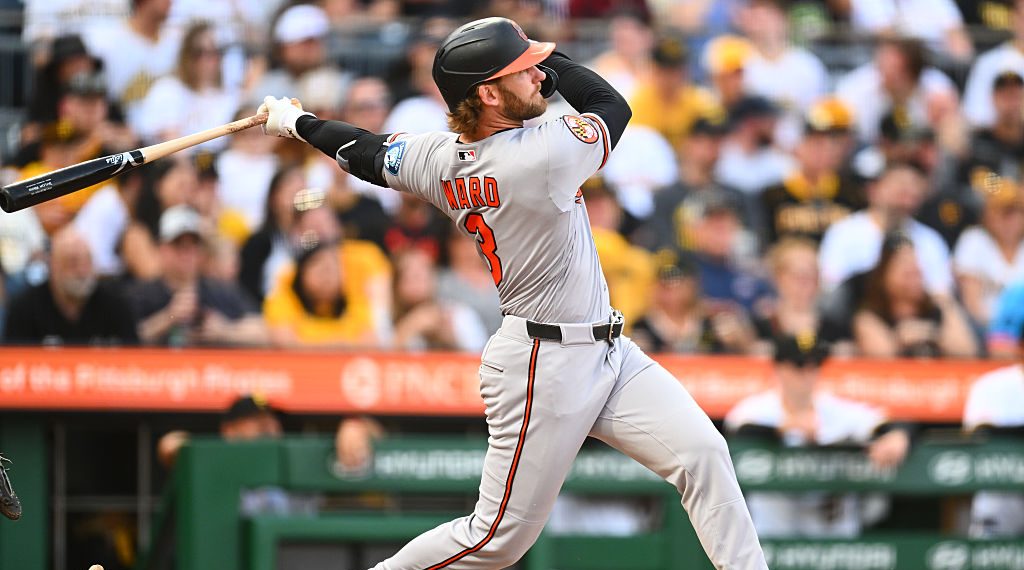
Taylor Ward has been a different kind of hitter this year; his walk rate has shot up, while his power has disappeared. What hasn’t changed is that Ward is still a consistently productive player. In fact, his .348 xwOBA and 120 wRC+ are the highest they’ve been since 2022.
I struggled to find a good qualifying offer comp for Ward, but I still think he’ll get one if the Orioles don’t trade him. I also think he’d turn it down, because he’s on the older side for a first-time free agent (he turns 33 in December). He’s going to want to look for a multi-year deal.
The big question is whether he’ll be able to find the deal he’s looking for as a non-star player attached to a qualifying offer.
Become a Member of Just Baseball
Subscribe and upgrade to go ad-free!
* Save 25% by subscribing annually.

Written by
Leo Morgenstern is one of the managing editors for Just Baseball. He is also the managing editor at Jays Centre. His writing has appeared all over…