
The Reds’ Pitching Development Problem Is Starting To Show
If a team like the Reds cannot thrive when it comes to developing pitching, they'll struggle to ever escape mediocrity.
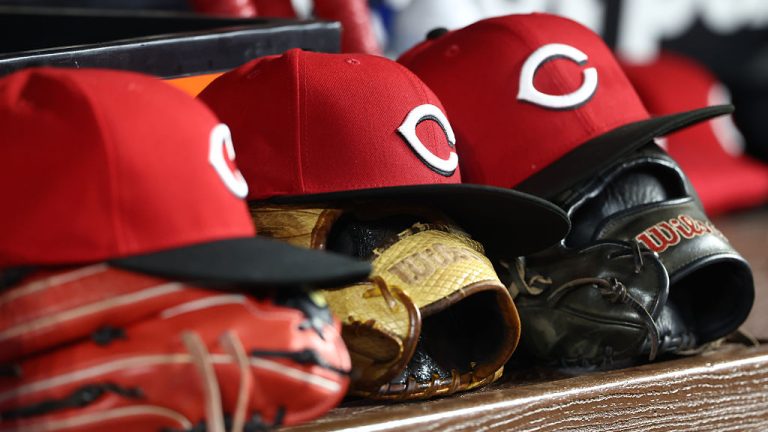
After jumping out to a 20-11 record to begin the season, the Cincinnati Reds have taken a turn in the wrong direction, falling to 17-28 since the start of May. While missing Elly De La Cruz since June first certainly is a factor, the team’s pitching depth, especially in the bullpen, has been tested.
Before I can go any further, let me address the first thought on your mind. What do you mean by pitching development problem? The Reds have a number of good, homegrown pitchers!
That’s true, but pitchers such as Hunter Greene, Chase Burns, Nick Lodolo, Rhett Lowder, and Andrew Abbott were all high draft picks, with Abbott (57th in ’21) being the only non-top-10 pick of the bunch. These talented arms were not in need of that much development and likely would have performed well regardless of the organization they were drafted into.
What I want to focus on are the success stories. Later-round picks, waiver wire wins, international free agents, and so on. The diamonds in the rough. The arms with stuff, but stuff that needs refinement. Where are those arms on the Reds roster and in their system?
Sure, they matter less when you have the top 10 picks, but as the season, and the years, go on, they matter more and more, especially for a team like the Reds.
The Need for Development in Cincinnati
It will come as no shock that the Reds are not often big spenders in free agency. Ownership and market size have been the primary factors driving impact free agents elsewhere, but playing their home games in Great American Ball Park is a driver as well.
Even if park factors and other statistics say Great American is not as poor for pitchers as its reputation, free agents often make decisions based on reputation and personal experience instead of the statistical measures of a playing field. Not to mention, a few pitchers have complained about the mound not quite feeling up to regulations.
Whatever reason you choose, free agent starting pitchers are not usually landing in Cincinnati, which emphasizes the need for the team to draft and develop.
The Reds’ tradition of losing has afforded them a number of high draft picks, which they have used on pitchers like the names mentioned prior, but developing more arms from within would allow the Reds to use the occasional high draft pick to round out a roster instead of using them as their primary way to acquire high-end arms.
The trickle-down effect of subpar pitching development can be seen in this year’s team. Without spawning bullpen arms from development, like we have seen the best small-market teams do, the Reds had to sink their limited resources into veteran relievers, taking money away from possible improvements elsewhere.
Sinking $20 million dollars into 35-year-old Emilio Pagán felt like a move made out of fear, knowing how thin the internal options were. Pierce Johnson ($6.5M), Caleb Ferguson ($4.5M), Brock Burke (trade, $2.3M), then scrambling and having to settle for Chris Paddack because of how thin the options were, in June nonetheless, are all products of not having developed enough arms.
Don’t get me wrong, I want the Reds to add veterans and proven players, but when the money is as tight as it is in Cincinnati, having to sink dollars into the bullpen at this rate hurts the operation elsewhere. Adding Paddack, who’s been a subpar pitcher for some time, only emphasizes the issue at hand.
One avenue the Reds could have gone down in order to improve would have been trading someone like Brady Singer or Nick Lodolo prior to the season. We see small market teams such as the Guardians, Rays, and Brewers take this route often, but the Reds have not built up the pitching depth in the upper minors for a move like this to be possible.
Lastly, the need for internal development can be as simple as the fact that surviving a season of 162 games requires depth. Pitching injuries have risen in recent years, and we all know you need a lot more arms than what you see on the Opening Day roster. Getting through a season requires having arms that can fill in for smaller stints, which usually comes from organizational depth, but the Reds have not built that luxury.
Who Is Coming Up Short?
As always when things go wrong or do not go as we had hoped, the first move is to find someone to blame. In sports, especially. Well, in this scenario, I think there’s plenty of blame to go around.
Let’s start with the players who are actually throwing the baseball. I will not sit here having never touched 60 mph and try to tell you these players are not doing what it takes, considering I do not see what they are doing behind the scenes. But, it is possible that these players are just not good enough to be in that 1% of baseball players who are good enough to play at the highest level.
Connor Phillips has the stuff to be a lethal weapon, but one issue has held him back since the day he got to pro ball. Zach Maxwell can fit into the same category along with Luis Mey. Tony Santillan looked like he had figured it out last season, even with the peripherals saying it might not be true, but has reverted back to his issues. All of these arms have one thing in common, and it’s a lack of command.
When you see so many guys struggle with the same issue with little to no year-over-year improvement, my focus starts to turn towards the coaching staff. Not only at the major league level, but throughout the system.
In the past few seasons, how many arms have truly taken a step forward and held that success for more than a short period of time? How many breakout pitchers have you seen come from the Reds organization? Why are so many pitchers struggling with the same issue?
Even without the knowledge and evidence of what the Reds organization is doing day in and day out with their pitchers from the minors all the way up to the majors, the proof of troubles is shown on the field.
Luke Weaver was a disaster in Cincinnati, left, and turned into a high-priced reliever closing out big games. Jeff Hoffman did the same. Even Casey Legumina is finding success now that he’s landed in Tampa. While some of the reclamation projects through the years could be happenstance, the bigger issue lies with what is coming up the pipeline.
Of the Reds’ top 10 prospects, according to MLB Pipeline, four are pitchers: No. 7 Chase Petty, No. 8 Aaron Watson, No. 9 Sheng-En Lin, and No. 10 Jose Franco. We know Franco is likely more of a depth option at best, and Petty might be a better bullpen arm than starter, which isn’t ideal for a first-round pick and return for Sonny Gray.
Watson is 19 years old and without much evidence one way or another, and Lin, 20, has a 4.89 ERA with a 1.57 WHIP in Single-A.
Hunter Parks has some intrigue, but he is walking 16% of batters. Ty Floyd was a second-round pick, but he can’t stay healthy. Cole Schoenwetter and Luke Hayden caught some eyes in the past, but they are struggling to produce enough to get out of Single-A.
In Triple-A Louisville, Nick Sando, an undrafted free agent, is about the only arm that I would say comes with enough intrigue to really catch my eye, and even I’m skeptical. Drop down to Double-A, and it’s Jose Acuna, who I do like, and maybe Nestor Lorant.
Bottom line, the Reds do not have enough arms in the upper minors that look like they could at least contribute out of the bullpen. I’m not talking about developing into stars, just contribute. To me, that is a development issue.
The general manager deserves blame as well, but when this many pitchers do not take steps forward, I see it as an organizational system failure and not simply that Nick Krall (who I will not defend) managed to draft or sign this many flat-out bad players.
As more and more of these high-draft-pick arms go deeper into arbitration, we will see the lack of depth and development in a brighter light. We are seeing it now in the bullpen and rotational depth, but once you peel away Singer, Lodolo, and eventually Abbott, who do you think will replace them? Because I do not see that answer within the Reds system.
Final Thoughts
Are there other issues in this organization I could focus on that are even greater? Unfortunately, yes. But for a team that will rely on internal development more than supplementing via trade or free agency, the pitching is a problem. Maybe it is not in the spotlight today, but it’s coming very soon.
The best small-market teams thrive due to their pitching development. Other aspects of their organization are strong, but pitching is the heartbeat. You can find productive hitters cheaper and easier. Look at Nathaniel Lowe and JJ Bleday. Finding arms that are cheap flyers turned productive assets is much more difficult.
Fifth starters make $12-$15 million a year. The Reds had to pay Frankie Montas, coming off injury and distant from dominance, $20 million to come to Cincinnati. If a team like the Reds cannot thrive in pitching development, they will struggle to ever climb out of mediocrity.
Become a Member of Just Baseball
Subscribe and upgrade to go ad-free!
* Save 25% by subscribing annually.

Written by