
What’s the Cubs’ Plan for Their 2027 Starting Rotation?
The Cubs have plenty of work to do to rebuild their rotation this offseason. Who should they target, and what could their 2027 staff look like?
The outlook for the 2027 Chicago Cubs starting rotation is about as uncertain as it could possibly be. They have seen six players who made nine or more starts for them this season hit free agency, leaving a sizeable project for the front office to sort out.
Their rotation during 2026 was unstable, to say the least, due to both injuries and poor performance. In early April, they lost their ace, Cade Horton, for the season. Their big offseason addition, Edward Cabrera, posted a 5.96 ERA and hit the injured list three times, while Ben Brown‘s season was ended by an injury in June after a masterful start.
Pitching was the main reason the Cubs failed to make a deep postseason run. As a team, they won both a Gold Glove and Silver Slugger, while the rotation finished 26th in fWAR as a group. If they want to improve upon this, they will need to be extremely thorough, leaving no stone unturned.
The Cubs will need to evaluate external additions, look to retain arms, and develop from within as well. In doing so, they will need to allocate money in the right places and ensure a more stable foundation heading into 2027. Here’s how Jed Hoyer and his team may look to rebuild the rotation from the ground up.
The Departures
Before looking at candidates and strategies for the Cubs to help rebuild the rotation, let’s fully establish the extent to which the Cubs are losing rotational innings.
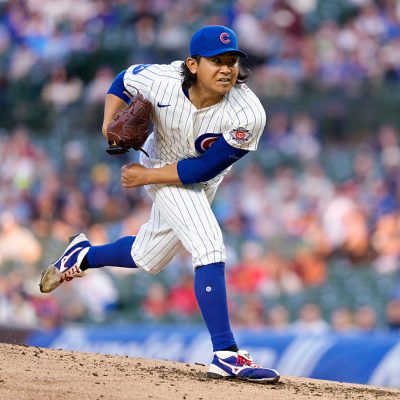
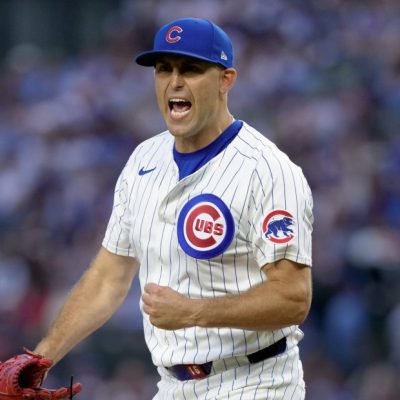
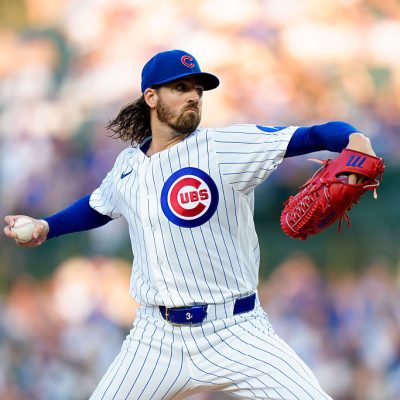
Each of Shota Imanaga, Matthew Boyd, Clay Holmes, Kevin Gausman, David Peterson, and Colin Rea is currently on the open market. Those six combined to cover 106 starts and 617.1 innings for Chicago.
While Holmes, Gausman, and Peterson were acquired after the beginning of the season, it’s still safe to say they were all major contributors. The six posted a total of 5.8 fWAR, while the entire rest of the staff combined for just 0.2.
There is plenty of production on the table to be replaced beyond simply volume. The front office must look to add value rather than just fill innings in 2027. They essentially have to start from scratch, and while one or more of these names may return, other options will absolutely be covered.
Replacing from Within
With the names on the free agent market and Chicago’s considerable financial resources, much of the focus has been on how aggressively the Cubs will pursue external additions in 2027. However, they do have some options already in place for next season that have flown under the radar.
First, their former ace Justin Steele is set to make his return to the mound for the first time since April 2025. He underwent elbow surgery then and nearly made it back to the majors in 2026, but the organization didn’t want to rush him. Instead, he’s set to rejoin the club this spring. There are no guarantees Steele will return to form, but even some version of his past self could be a huge contributor.
Aside from him, there are a few names who could be in the mix for the final rotation spot: Javier Assad, Edward Cabrera, and Braxton Garrett.
The team knows what they’re getting with Assad: a reliable backend rotation or long-relief option. Cabrera offers a higher-upside arm, though he dealt with injuries and poor performance in 2026. Still, the front office has indicated that he remains a major part of its plans moving forward. The more unknown candidate is Garrett, who was acquired at the trade deadline this year but pitched just once for the big-league squad while spending the rest of his time in Triple-A.
Rounding things out are two electric arms whose seasons were cut short in 2026. Both Cade Horton and Ben Brown were looking to prove themselves to the league but were mostly unable to do so. Horton went down in his second start after a dominant rookie year, while Brown looked like an ace before a recurring neck injury sidelined him.
The options to fill out the rotation, in addition to some newcomers or returners, are there. However, this cannot be an excuse for the front office not to be aggressive.
Who Should They Retain?
Each of the former Cubs entering free agency was a major contributor to the 2026 team. Still, some are better fits moving forward than others. So, who should they look to bring back to the squad this year?
The most obvious answer is Clay Holmes. He is an elite ground-ball pitcher who has thrived since transitioning to a starting role. Over the past two seasons, among pitchers with at least 250 innings, his 57.6% ground-ball rate ranks third in MLB, and he has a 3.44 ERA.
Just behind him on that list is David Peterson, who has induced ground balls at a 52.5% clip. Peterson had an excellent run in Chicago to finish his year, posting a 2.66 ERA over his final 71 innings pitched.
While the other players have their strengths, given the defensive ability of Chicago’s infield, none is a better fit than these two. Holmes is the more attractive option but will likely have a more competitive market, while Peterson will likely land a shorter-term deal.
However, relative to other arms on the market, the likely financial commitment to these two would be mild. With their ground-ball ability, each could see their production enhanced, providing great value. If the Cubs were to bring back anyone, both of these options make perfect sense.
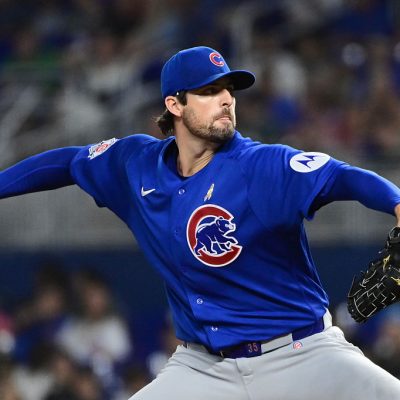
Finding a Frontline Arm
While retaining one or two familiar faces could help stabilize the rotation, the Cubs should also look to bring in a higher-end starter from outside the organization.
There are several intriguing options on the market, each presenting different levels of upside, risk, and financial commitment. Trevor Rogers, Kaima Taira, Freddy Peralta, and Michael King are four names worth monitoring as Chicago looks to add more impact talent to its rotation.
Trevor Rogers
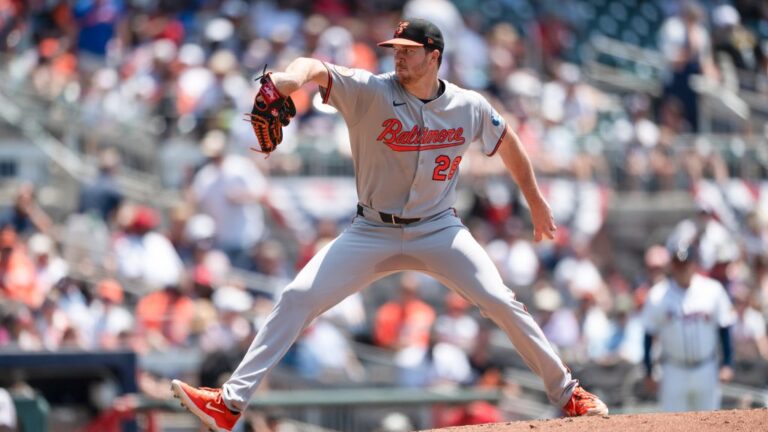
After a few rough seasons in Miami, Trevor Rogers has reestablished himself as a front-of-the-rotation arm. Over the past two years in Baltimore, he’s posted a 3.16 ERA. He struggled to begin 2026, but once he settled in, he dominated once again.
His profile backs up the performance. He uses an outlier fastball that generates elite ride for his 22-degree arm slot and solid extension to lead his mix. This allows his secondaries to play up, and he commands them very well.
With this arsenal, Rogers generates chase, suppresses hard contact, and keeps the ball in the yard, something the Cubs need badly.
He is still only 29 years old but should command a multi-year deal and a sizeable annual salary, in addition to having a qualifying offer attached to him. It would be a risk, but as with any big deal, one that may be worth taking.
Freddy Peralta
One of baseball’s former aces struggled mightily to begin the season with the Mets. Prior to the trade deadline, he had a 4.99 ERA, but after being dealt to the Rays, he looked much more like his usual self.
With Tampa Bay during the regular season, he posted a 3.25 ERA and allowed just three earned runs over his final six starts. His strikeout numbers weren’t up to par with his career marks, but he still produced at an elite rate.
Obviously, he has an impressive track record of success. Prior to this season, he was riding a streak of six consecutive years with a sub-4.00 ERA. On top of that, he has a history with Craig Counsell from his time in Milwaukee.
The 2026 Cubs lacked strikeouts, so that, paired with his track record and managerial familiarity, makes him a strong option. His struggles raise valid concerns, but his finish had him looking like a true bounce-back candidate.
Michael King
Since making the switch to a starting role, Michael King has consistently been one of the best pitchers in the game. Over 432 innings since the start of 2024, he has a 3.15 ERA and 436 strikeouts. He has positioned himself to land a potentially $100 million contract, and rightfully so.
The numbers on the surface are among the best. However, some trends potentially make him the highest-risk realistic option for Chicago.
In each of the last three years, King’s strikeout rate has dropped, totaling 6.7 percentage points over that span. On top of that, his expected ERA and SIERA have been trending upward. Essentially, he isn’t missing bats like he used to. That’s not the end of the world, but it’s a concern that aligns with what the ERA predictors are suggesting.
With his projected contract potentially as high as any non-Skubal arm this offseason, it’s fair to wonder if that would be a worthy investment. It will come down to whether the Cubs believe in the surface numbers enough to live with what’s happening under the hood.
Kaima Taira
After dominating NPB, Kaima Taira is ready for a new challenge. The 5-foot-8 right-hander has one of the more unique pitcher profiles we’ve seen in some time and could be a major factor in Major League Baseball.
What makes him so different is his fastball. He is able to get down the mound at an elite level for his size, generating 6 feet, 8 inches of extension during the 2026 season. Because of this, his release height is extremely low. Pair that with mid-to-upper-90s velocity, and you have a true outlier.
There are questions about how it will translate with MLB baseballs, so there is still some risk, but his production in Japan has been undeniable.
He worked as a reliever in 2025, posting a 1.71 ERA over 52.2 innings pitched. Taira followed that campaign up with an even better 1.36 ERA this year, but as a starting pitcher.
His upside is extremely high, and with his bullpen experience, he could still have a fairly high floor. There are some caveats, like a large contract and posting fee, but a 27-year-old with potentially elite stuff is hard to deny. This may be the time for Jed Hoyer to put some money on the line and bring in a potential front-line starter.
The Trade Market
While free agency presents several intriguing options, the Cubs should also explore the trade market for potential rotation upgrades.
There has been some uncertainty surrounding the availability of several high-end starters this offseason, but a new name has reportedly entered the conversation. According to Robert Murray of FanSided, the Giants are now open to listening to offers for Logan Webb.
Webb would undoubtedly represent a significant addition to Chicago’s rotation, although acquiring him would come at a considerable prospect cost. With two years of team control remaining, the Giants would have little reason to move their ace without receiving a substantial return.
The Cubs have long been rumored, or at least assumed, to have interest in Webb, mostly because his profile perfectly fits the team’s needs. He leads the majors in innings pitched since the start of 2021, has a 3.35 ERA over that span, and, you guessed it, generates tons of ground balls.
Of anybody available in free agency or via trade, the price may sting the most, but there may not be a better fit. Webb is a true number one and would be massive for the future of the Cubs.
How Does It All Work Out?
There are countless possibilities for how the 2027 Cubs rotation will end up. They could spend big, make a blockbuster trade, look to run it back, or trust the development team. In all likelihood, it’ll be some combination of these approaches.
In my ideal world, the Cubs would land one of Rogers or Taira, bring back Holmes, and potentially retain Peterson as well. This would give them a much more stable foundation with Steele returning and Cabrera still in the mix. Assad and Garrett would provide additional depth, while Brown and Horton could work their way back into the rotation as the season progresses.
Realistically, bringing in one higher-end starter and retaining at least one familiar arm seems like the most likely outcome. The trade market will certainly be explored as well, though the cost of acquiring someone like Webb could make free agency the more attractive route.
The Cubs don’t have to rely entirely on external options, but being content with what they currently have would be a dangerous approach. They need to be aggressive in improving upon 2026, and with the resources and candidates available, there’s no reason they can’t put together a much stronger rotation.
Become a Member of Just Baseball
Subscribe and upgrade to go ad-free!
* Save 25% by subscribing annually.

Written by
Carson Wolf is a writer at Just Baseball covering the Chicago Cubs and MLB, he is the creator of The Wrigley Wire on X. He is…