
Top Landing Spots for Free Agent Matthew Boyd
After a successful two-year stint in Chicago, Matthew Boyd will hit the open market. Which teams make the most sense for the 35-year-old southpaw?
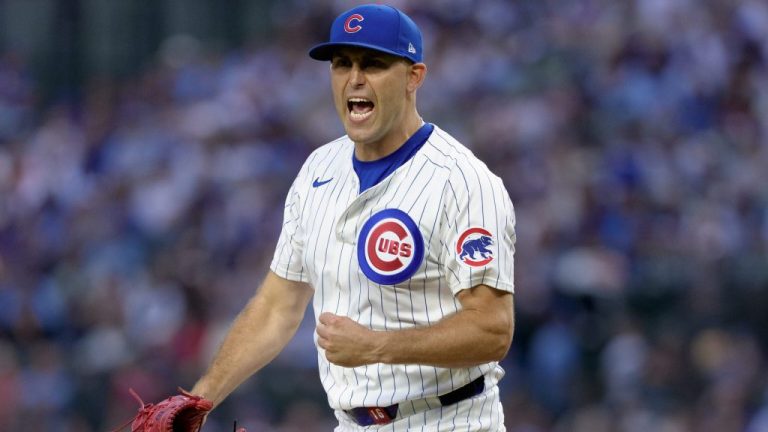
After signing with the Cubs ahead of the 2025 season, Matthew Boyd experienced a resurgence. He had dealt with serious injury issues leading up to the deal, failing to eclipse 80 innings in any season from 2020 to 2024. Chicago took a gamble on his health, giving him a two-year, $29 million deal, and it paid off.
His first season with the team went very well. He pitched 179.2 innings — his most since 2019 — and posted a 3.21 ERA. After just one season, the contract looked to be a huge win for the Cubs.
Then this year came along, and the injuries began to resurface. After just two starts, he was placed on the 15-day injured list with a left biceps strain. He returned in late April, made three more starts, and injured his meniscus, again sidelining him for an extended period.
He returned from his injuries in late June and remained healthy the rest of the way. He earned strong results, though they may not have been enough to outweigh the red flags.
Boyd is now an unrestricted free agent and should draw interest from teams looking for an experienced starter. While his injury history and recent regression raise some concerns, his track record suggests he still has plenty to offer. Here are five potential landing spots for Matthew Boyd this offseason.
Free Agent Profile: Matthew Boyd
- Age in 2027: 36
- 2026 Stats: 22 GS, 126.2 IP, 3.91 ERA, 1.21 WHIP, 4.21 FIP, 6.82 K/9, 2.77 BB/9
- 2026 Salary: $14.5 million
- Qualifying Offer: No
Contract Projection
- Contract Length Expectation: 1-2 years
- Expected AAV: $13-18 million
Teams will have many factors to consider when evaluating Matthew Boyd this offseason.
Beginning with the concerns, teams must take into account his injury history, aging body, and regressing numbers. His long history of injuries resurfaced in 2026, and as he continues to age, these concerns will only grow. His strikeout rate declined, his walk rate increased, and his fastball became considerably more susceptible to hard contact.
As for velocity, he hasn’t lost too much just yet. His four-seamer was down just half a tick this year, though the injuries may have factored into that. However, it still became much more susceptible to damage than in the past.
From 2025 to 2026, opponents increased their batting average, slugging percentage, and weighted on-base average (wOBA) by more than 40 points each against his four-seam fastball. If this trend continues, it could also impact the effectiveness of his secondary pitches.
Still, plenty of teams will be in the market for a veteran arm with experience both at the top of a rotation and in the postseason. While he may be on the backend of his career, his production suggests he still has more to give.
Over the last two seasons, his overall numbers have remained strong. During his tenure with the Cubs, he posted a 3.50 ERA over 306.1 innings and accumulated 5.0 fWAR. His results were a little shakier this year, with a 3.91 ERA and 4.21 FIP, though that is still manageable production for a middle-to-backend starter.
With a projected one- to two-year deal and a relatively modest financial commitment, Matthew Boyd will likely be a low-risk signing. That should be attractive to plenty of organizations, particularly contenders.
Free Agent Landing Spots for Matthew Boyd
Chicago Cubs
Perhaps the most obvious suitor for Matthew Boyd is the Chicago Cubs. The Cubs are set to have Clay Holmes, Shota Imanaga, David Peterson, Kevin Gausman, and Colin Rea hit free agency this winter, on top of Boyd. They will undoubtedly be in search of starting pitching.
One of the few established starters currently set to return is Justin Steele, who missed the entire 2026 season following elbow surgery in 2025. Next up would be Edward Cabrera, whose first season in Chicago didn’t go well. He spent three separate stints on the injured list, and when he was healthy, he was a liability. He posted a career-worst 5.96 ERA and strikeout rate. Clearly, there is work to be done.
With the project Jed Hoyer has in front of him, filling out the back end of the rotation may be easiest if he looks to reunite with members of the 2026 staff.
The organization is not only familiar with Boyd but has also seen him make four postseason starts for the club. He would provide a veteran presence in what could be an inexperienced rotation next year, something teams value.
However, Jed Hoyer has made it clear that improving the pitching staff is a top priority this winter. Whether bringing Boyd back would accomplish that is a legitimate question.
As we covered, his numbers remain strong, but there are legitimate red flags. Still, the likely contract would be relatively low-risk, and if the Cubs get 2025 Matthew Boyd, it could lead to much more success in the rotation next season.
San Diego Padres
The San Diego Padres have long continued their trend of bringing veteran arms into their rotation while looking for bargain opportunities. In recent years, they added Walker Buehler on a minor league deal, Nick Pivetta on a deal with club options, and Casey Mize and Robbie Ray at this year’s trade deadline.
If A.J. Preller follows this trend during the offseason, the Padres match up well for a potential deal with Matthew Boyd. They will need to acquire starters, with the previously mentioned arms, along with Michael King, now in the free agent market. Their current depth chart has only one starter, Randy Vásquez, who made more than six starts in 2026.
The return of Joe Musgrove does make this situation slightly less complicated. Musgrove saw his first MLB action since 2024 during this year’s postseason, pitching three scoreless innings with four strikeouts.
If the Padres believe Musgrove can return to his pre-injury form, it could help alleviate some of their rotation concerns. However, after missing two full regular seasons, there are no guarantees.
There are plenty of uncertainties with the Padres’ current group of starters, so adding a veteran like Boyd could help stabilize the rotation. With significant turnover in San Diego and the organization’s history of acquiring established veteran arms, Boyd stands out as a logical target who could provide much-needed stability.
San Francisco Giants
The 2026 season saw four young Giants pitchers undergo season-ending Tommy John surgery. Hayden Birdsong, Trevor McDonald, Blade Tidwell, and Carson Whisenhunt all underwent the procedure, with the latter three potentially out until 2028.
This has left San Francisco with a lack of arms in its rotation, with Logan Webb and Landen Roupp as the only clear locks for the Opening Day rotation. They also have Adrian Houser, but he was unable to replicate his 2025 season and finished this year with a 4.55 FIP while making just 16 starts.
Adding an arm like Matthew Boyd would provide the team with much more stability, and he actually fits the ballpark very well. Oracle Park has consistently been one of the most difficult stadiums to hit home runs in, posting a home run park factor of just 78 over the past three seasons, according to Baseball Savant.
With Boyd’s declining strikeout rate and the increased damage hitters did against him in 2026, pitching in a stadium that suppresses home runs could be particularly beneficial. Obviously, any pitcher would likely benefit from this, but with an arm like Boyd, who should come at a cheaper price, and a rotation searching for stability, the fit is certainly there.
Given San Francisco’s need for immediate rotation help and the potential return of several young starters in the coming years, Boyd could provide valuable stability without requiring a significant long-term commitment.
Atlanta Braves
The Atlanta Braves, contrary to the other teams on this list, have multiple established starters set for their rotation next season. A top three of Chris Sale, Grant Holmes, and Bryce Elder is a very solid group, though the final two spots are anything but a certainty.
Since his impressive breakout in 2022 and 2023, Spencer Strider has struggled to stay on the field. Over the past three seasons, he has hit the injured list five times, and his production has been affected by it. From 2024 to 2026, he’s made just 33 starts and posted a 4.78 ERA. As good as he was, his reliability just hasn’t been there.
Behind him would likely be Reynaldo López, who was a swingman in 2026, making half of his appearances as a starter. He posted a 5.02 ERA in his starts last season but was solid in relief. He may be better suited for a bullpen role, opening a spot for Atlanta to add another arm.
Spencer Schwellenbach and Hurston Waldrep are young arms in the Braves’ system as well, though both underwent season-ending elbow surgeries in August. Waldrep is expected to miss the entire 2027 season, while Schwellenbach’s availability remains uncertain.
With the pieces the Braves already have, bringing in a veteran arm like Matthew Boyd could provide much-needed stability.
While he carries injury concerns of his own, he would give Atlanta another established option rather than forcing the team to rely on the uncertain health of Strider and Schwellenbach. On a short-term deal, he could also help bridge the gap until Atlanta’s younger arms return to full health.
The Braves have the talent to compete in the National League, but their rotation needs additional stability. Adding an established veteran like Boyd could help them avoid another season in which injuries leave their starting staff shorthanded.
Cleveland Guardians
The Cleveland Guardians actually have a relatively full rotation, or at least it looks that way on the surface. Their starting group ranked in the top 10 in ERA last season, and they will only lose Foster Griffin, who was acquired at the trade deadline, to free agency.
With Gavin Williams and Parker Messick, two ace-level arms, headlining their rotation, there is already plenty of upside. The rest of their rotation, however, was inconsistent at best.
Tanner Bibee was stellar in his first two seasons but hasn’t performed at that level since. He has covered more than 180 innings in both 2025 and 2026, but with declining strikeout rates and increased vulnerability to damaging contact, his ability to return to the top of Cleveland’s rotation has come into question.
The rest of the team’s starts were mostly covered by Joey Cantillo and Slade Cecconi. However, after Cantillo posted a 12.1% walk rate as a starter, he was moved to the bullpen. Cecconi also transitioned to relief, though that came after Cleveland brought in Griffin.
The team has an opening, and Matthew Boyd has succeeded in Cleveland, making the two a logical match. In 2024 with the Guardians, he posted a 2.72 ERA over eight regular-season starts before surrendering just one run over 11.2 postseason innings.
While Cleveland has the internal options to fill out its rotation, adding another established starter could help the club build on its ALCS appearance. The biggest question may be whether the Guardians are willing to allocate their limited resources toward pitching rather than addressing their offensive needs.
Become a Member of Just Baseball
Subscribe and upgrade to go ad-free!
* Save 25% by subscribing annually.

Written by
Carson Wolf is a writer at Just Baseball covering the Chicago Cubs and MLB, he is the creator of The Wrigley Wire on X. He is…