
Breaking Down the 2027 BBWAA Baseball Hall of Fame Ballot
Fourteen newcomers have joined the ballot, headlined by Buster Posey. What can fans expect from this election cycle?
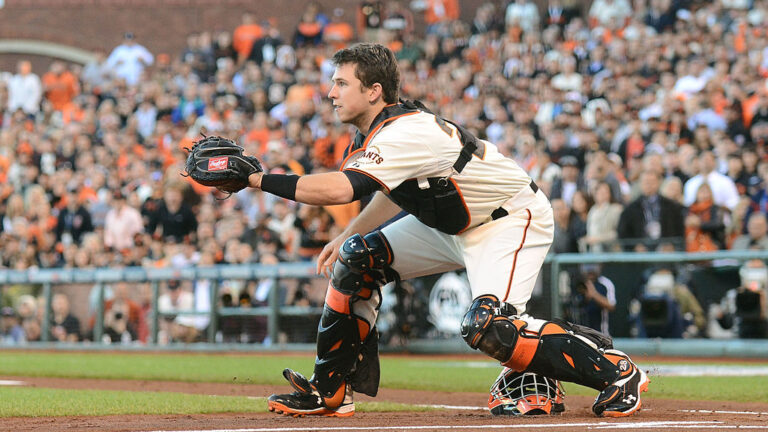
The BBWAA has released its ballot for the 2027 Baseball Hall of Fame election. Fourteen newcomers will join the 13 holdovers in pursuit of the ultimate dream, a spot amongst the game’s immortal figures. With ballots due in six weeks and all to be revealed in two months, it’s time to break down this year’s ballot and go over what to expect when results come out.
The analysis of this election begins and ends with the top rookie on the ballot, a backstop who rewrote his franchise’s history and set the modern gold standard at his position. Players like Jon Lester and Ryan Zimmerman may get a handful of votes, but it’s this one new face that is poised to make a serious run at Cooperstown starting, and maybe ending, this year.
Welcome to the Ballot, Buster Posey
Despite only playing 12 seasons in the big leagues, Buster Posey had one of the most dominant careers we’ve ever seen from a catcher. He was drafted fifth overall in 2008 by the San Francisco Giants, a team he would go on to spend his entire playing career with before later being hired as the team’s President of Baseball Operations in 2024.
Posey rushed through the minor leagues, joining the big league team for a seven-game stint at the end of the 2009 season. Then, the real magic began.
A 23-year-old Posey tore through the 2010 season, earning National League Rookie of the Year honors with his .305/.357/.505 slash line, good for a 133 OPS+ and 3.9 fWAR. It stands as one of four seasons by a catcher age 23 or younger to hit .300 and slug .500 (min. 400 plate appearances), joining 2006 Joe Mauer, 2006 Brian McCann and 1937 Rudy York.
Posey went on to hit .288 with a .354 OBP in the team’s 15 playoff games en route to the Giants’ first World Series title in 56 years. To this day, he remains the only catcher to win Rookie of the Year and a World Series in the same season. The 2010 Giants are the only team to win a World Series with a rookie as their primary catcher since Andy Etchebarren and the 1966 Baltimore Orioles.
The next year, Posey was famously involved in a home plate collision with Marlins outfielder Scott Cousins, which forced him to miss 117 games with a leg injury. But once he’d return, he’d deliver his career-defining year.
In what FanGraphs considers to be the most valuable season ever produced by a catcher, 2012 Buster Posey took the baseball world by storm. His .336 batting average not only kept Miguel Cabrera away from an MLB triple crown, but it’s also the seventh highest batting average ever recorded by a catcher in a qualifying season.
Beyond the average, Posey posted a .408 OBP, .549 SLG and 171 OPS+ in his MVP-winning season. That last mark trails only 1997 Mike Piazza and 2009 Joe Mauer as the highest in a qualifying season at the position.
According to FanGraphs, Posey’s 2012 season joins 1991 Cal Ripken Jr. and 1996 Ken Griffey Jr. as the only in baseball history with 40+ Offensive Runs Above Average and 30+ Defensive Runs Above Average. The two other players to accomplish what Posey did that year both received more than 98% of the Hall of Fame vote.
Lastly, his 9.8 fWAR is the highest ever by a catcher. The other players to post exactly 9.8 fWAR in a season are George Sisler, Willie Mays, Jimmie Foxx, Stan Musial, Robin Yount, Ty Cobb, Mickey Mantle and Ripken. All inner-circle Hall of Famers, and Posey is right there.
No matter which way you slice it, Posey’s 2012 season is on the Mount Rushmore of catcher seasons in baseball history. For him to create the most valuable season ever at the position just 14 years ago is just about unprecedented.
According to FanGraphs, the only players to produce a top-five fWAR season at any position in the 21st century are Posey, Cal Raleigh, Adrian Beltre, Alex Rodriguez, Bobby Witt Jr., Barry Bonds, Aaron Judge and Shohei Ohtani. Posey is the only one to have produced a position’s top season this century.
Posey and the Giants won another World Series in 2012 with Posey hitting a crucial grand slam in the decisive game of the NLDS in Cincinnati. He became the first and only player to win a Rookie of the Year, MVP and multiple championships by their age-25 season.
As the years went on, Posey continued to be one of the league’s top catchers in the 2010s. He even won another title with the Giants in 2014. By 2018, he had racked up 40.7 bWAR, the eighth highest among catchers in the first 10 seasons of their career. All seven of the catchers above him on that list are now in the Hall of Fame.
Three years later, Posey announced his retirement after 2021 at just 34 years old. During his time in the majors from 2009-2021, only Mike Trout, Clayton Kershaw, Max Scherzer and Justin Verlander produced a higher fWAR than Posey.
His final numbers include a career .302/.372/.460 slash line, a 129 OPS+, 1,500 hits, 158 home runs, 719 RBI and 57.9 fWAR, the eighth highest all-time among catchers, with all above him in the Hall of Fame. He did this despite ranking 56th in career plate appearances among catchers.
The former Giants catcher is one of only 18 players to retire with a career OPS+ of at least 125 and 10 or more defensive WAR, according to Baseball Reference. He joins Johnny Bench as the only catcher to reach those marks since the league integrated nearly 80 years ago.
He’s also one of 16 players with a .300 career batting average and 10+ dWAR, a list made up of Posey and 15 Hall of Famers.
Lastly, he and Pete Rose are the only players to win a Rookie of the Year, MVP and three or more championships.
Numbers aside, there are plenty of reasons to be optimistic about Posey’s chances to be elected this year as a first-ballot Hall of Famer. The BBWAA has, in the recent past, been eager to support a catcher with any chance of getting in.
In 2016, the writers inducted Mike Piazza on his fourth ballot despite Piazza appearing on some of the most stacked ballots in recent memory. One year later, they elected Pudge Rodriguez on his first ballot despite him being linked to PED use. More recently, they voted in Joe Mauer on his first ballot, who had the second lowest career bWAR of any first-ballot HOFer since 2003 (David Ortiz).
Writers who choose not to vote for Posey this year will probably cite the length of his career, and therefore a lack of certain milestones. His 1,500 career hits would be the lowest for a player inducted into the Hall of Fame since Ross Youngs, who was inducted in 1972 (not counting pitchers or Negro League players).
Despite this, Posey’s career rate stats as a catcher, championships, and loyalty to one team are among the factors likely to push him over the necessary 75% of the vote this year. But will anyone else be joining him from the BBWAA ballot this year? Let’s take a look at the top returner.
Chase Utley’s time to shine
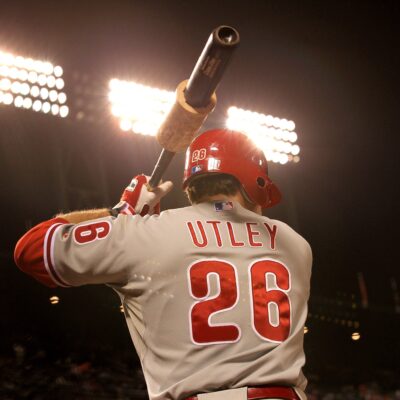
After last year’s inductions of Carlos Beltrán and Andrew Jones, Chase Utley is now the top vote-getting returner on this year’s ballot. The former Phillies second baseman received 59.1% of the vote on his third ballot in 2026, setting himself up nicely for a future induction. Whether or not it happens this year is its own question.
As the only returner to have his name on more than half of the 425 ballots cast last year, Utley appears as the only holdover with a chance to reach Cooperstown in 2027. But it’s still a long way to go.
Last year, Utley improved by 19.3% over his 2025 percentage. An identical gain this year would put him at 78.4%, getting him over the line to reach induction. To just reach 75%, he would need an increase of at least 15.9% in this cycle. It’s doable, but still a lot to ask of anyone over the course of a year.
There are three types of writers who vote for the Hall of Fame: those who publicize their ballots before the election, those who allow their ballots to be shown after results are announced, and those who keep their names, and their votes, anonymous. The more secretive the writer is, the less likely they tend to be to vote for most players, and Utley catches the extreme end of that.
Utley’s Vote Totals
| Year | Pre-Election Public Vote | Post-Election Public Vote | Private Vote | Total |
|---|---|---|---|---|
| 2024 | 39.2% (217) | 17.5% (103) | 12.3% (65) | 28.8% (385) |
| 2025 | 51.9% (216) | 30.8% (117) | 14.8% (61) | 39.8% (394) |
| 2026 | 69.0% (245) | 55.8% (120) | 25.0% (60) | 59.1% (425) |
Utley’s case has made great inroads with voters throughout his time on the ballot, especially with the post-election public vote, which has shifted 319% in his favor since his first year. But it’s the private vote that has been tough to crack. Even if it makes up the smallest portion of the electorate, only pulling a quarter of those voters makes it more of an uphill battle.
According to Ryan Thibodaux’s tracker, Utley received the lowest share of the private vote for any candidate to amass 50% of the vote in any year since at least 2014, which is as far back as the data goes. No candidate inducted into the Hall of Fame since 2014 has received fewer than 56.7% of the private vote in their induction year, meaning Utley essentially has to at least double his 2026 score of the private vote to have a chance.
The good news for Utley’s case is that the private vote offers plenty of room for improvement, and that increasing the number of voters by 31 last year means the private vote makes up a smaller portion of the electorate.
The bad news is just how harsh they’ve been to him. In 2026, Andy Pettitte, Alex Rodriguez, Manny Ramirez and Utley’s former teammate Jimmy Rollins did better with the private vote despite reaching a lower overall vote total. From 2020-2025, candidates to receive 50-59% of the total vote averaged 42.5% of the private vote, leaving Utley’s 25% last year far behind the benchmark.
In 2026, Utley flipped 50 voters who didn’t vote for him in 2025 and missed induction by 68 voters. If he is able to make it to 75% this year, it will probably be in no small part thanks to a shift in the private vote that helped get him across the finish line.
Fortunately for him, his status as this year’s top returner will probably force many who have avoided voting for him in the past to reconsider. He’s gotten more than 30% of writers to change their mind about him since his debut year on the ballot, which is crucial for convincing that final 15.9%.
Make or Break for Andy Pettitte
Nearly three years ago, Andy Pettitte received 13.5% of the vote in his sixth year on the ballot, a 3.5% drop from the previous cycle. This rendered his case all but dead in the water. After failing to surpass 17% in his first six years, he would have needed to more than quadruple that in the final four. Somehow, that dream is still alive as he enters year nine on the ballot.
Pettitte jumped to 27.9% in 2025 and 48.5% in 2026, a 35% increase over the course of two cycles. Keeping that pace in his final two years on the ballot would land him at 83.5% by 2028. Every year has been survive and advance, and this one is no different.
Pettitte’s Vote Totals
| Year | Pre-Election Public Vote | Post-Election Public Vote | Private Vote | Total |
|---|---|---|---|---|
| 2024 | 15.7% (217) | 8.7% (103) | 13.8% (65) | 13.5% (385) |
| 2025 | 32.4% (216) | 18.8% (117) | 29.5% (61) | 27.9% (394) |
| 2026 | 58.0% (245) | 35.8% (120) | 35.0% (60) | 48.5% (425) |
Over these two years, Pettitte has made huge gains across the board. His support from the pre-election public ballots more than tripled, the post-election public vote more than quadrupled, and the private vote nearly tripled. Flipping this many voters in such a short time span seems improbable, but it’s been done before.
Before his eventual induction in 2019, Edgar Martinez found himself likely to miss. After his sixth year on the ballot, was at 27% of the vote, needing to flip another 48%. He then gained an average of 14.6% of the vote in his final four years to finish at 85.4% by year 10. He didn’t just get to 75%, he cruised over it in his final year.
Soon after that, Larry Walker achieved perhaps the most remarkable final stretch we’ve ever seen. After year six in 2016, he had only managed 15.5% of the vote and couldn’t top his 22.9% high point from 2012. It felt like his window to make a run had closed.
In years seven and eight, Walker started making gains, but only enough to get him to 34.1%, more than 12% behind where Pettitte is now. He then went on to reach 54.6% in year nine and 76.6% in year 10, gaining a remarkable 20% of the vote in two straight years to finish it off.
Late climbs like this aren’t unprecedented, and Pettitte has already put in the work. With another 26.5% to go, it seems like some of the heavy lifting is already done. A repeat of his 20.6% gain this year would put him at 69.1%, putting induction well within reach going into his final year. Staying on the pace he’s made in the last two years, a 17.3% average gain over two years, would put him at 65.8%, still a strong place to be with one more chance.
However, there is one pretty significant obstacle standing in his way. It goes back to something Pettitte confessed nearly 20 years ago.
In 2007, Pettitte admitted to using Human Growth Hormone (HGH) in 2002 as an aid to recover from an elbow injury. HGH was put on MLB’s banned substances list in 2005.
The Hall of Fame voters’ rejection of many players linked to PED use is well documented, most notably with Barry Bonds and Roger Clemens.
But before Bonds and Clemens fell off the ballot in 2022, it did feel like they could find their way in despite the allegations. Both players debuted on the ballot around 35% in 2013 and were climbing into the mid-50s years later. During this rise, Ken Rosenthal notably wrote that the writers’ “war on steroids” was “crumbling.”
Months later, Hall of Fame second baseman Joe Morgan famously wrote an open letter to the BBWAA pleading writers to keep players linked to PED use out of the Hall. It was around this time that Bonds, Clemens and other players plateaued around 60% in their final years before falling off the ballot.
The question now is, does Pettitte suffer the same fate? Or does he cross through the barriers? Today’s electorate is younger and more open-minded than it was 10, or even five years ago, and could see through Pettitte’s links to PEDs as they previously have with guys like David Ortiz and Ivan Rodriguez.
He’s already received more sympathy from the writers than players like Alex Rodriguez and Manny Ramirez, who both tested positive for PEDs and were suspended accordingly. Pettitte falls into neither of those categories, which may serve to benefit him going forward.


The Fast-Tracked Case of Félix Hernández
Aside from Beltran and Jones, no one had a better election night last year than Félix Hernández. After attaining 20.6% of the vote in his debut year in 2025, it felt like King Félix would have to wait several years for a potential induction. Last year, that timeline changed dramatically.
Hernandez jumped by 25.5%, landing at 46.1% of the vote in year two. For context, this was tied for the biggest year-to-year jump ever achieved by anyone between years, comparable only to Luis Aparicio from 1982 to 1983.
Félix’s massive jump was not only shocking because of how much he climbed, but it also defied the recent precedent. Since the start of the 21st century, seven other players posted between 20-25% of the vote in their first year on the ballot (excluding Cole Hamels, who has not yet recorded a second-year result).
Of those seven, none of them gained more than 4.3% in year two. Hernández gained more than five times that number. For someone to start at that point and immediately gain that much momentum simply doesn’t happen.
To ask Félix to do something like this again is practically unfair given the rarity of a 25-point jump. But if he did, an identical gain would put him at 71.1, just a few votes away from induction. Barring a miracle, he won’t get inducted this year. But he can do the next best thing, secure a likely induction in 2028.
Hernández’s Vote Totals
| Year | Pre-Election Public Vote | Post-Election Public Vote | Private Vote | Total |
|---|---|---|---|---|
| 2025 | 24.1% (216) | 16.2% (117) | 16.4% (61) | 20.6% (394) |
| 2026 | 55.5% (245) | 38.3% (120) | 23.3% (60) | 46.1% (425) |
In the public vote, Hernández got 71 writers who didn’t vote for him two years ago to check his name last year. According to the tracker, it’s the most flips achieved by anyone in any year in recorded history. Like Utley, Félix’s next step is with the private vote.
While the pre-and-post-election public support for Hernández doubled in both categories, his performance with the private vote only increased by 42%.
For a guy who had a short but awesome peak with the Seattle Mariners and whose overall numbers are clouded by an abrupt flameout in his early thirties, King Félix is setting himself up for an easy induction taking no more than three of four years. This comes less than a decade after Johan Santana, a pitcher with a similar career arc, fell off the ballot after one year, receiving only 2.4% of the vote.
For Hernández to make his way into Cooperstown after a few years this soon after Santana’s swift exit would show not just how much the electorate has shifted, but also how much the ballots have cleared up in the last decade.
What To Expect From Other Returners
There are two factors that are typically key indicators of what any election will look like for returning players on the ballot. If a significant number of players leave the ballot due to election or maxing out on ballot-eligible years, and if the newcomers don’t consist of multiple HOF-worthy players, the lost votes typically go to players returning to the ballot. Last year, we got the perfect storm of this.
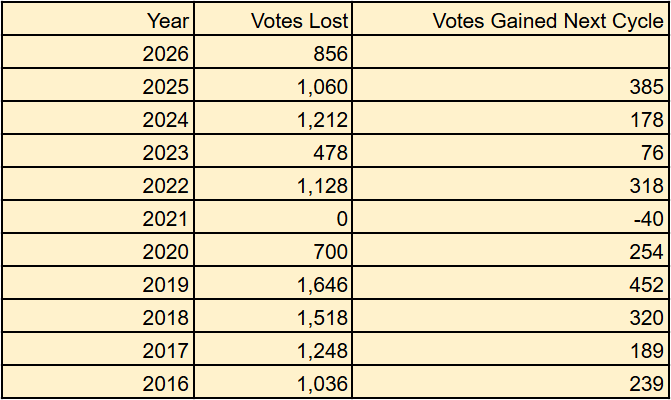
In 2025, the departures of Ichiro, CC Sabathia and Billy Wagner left 1,060 votes to be redistributed. 385 of those went to holdovers on the ballot, the most we’ve seen in any year since 2019. With Beltrán, Jones and Manny Ramirez absent from this year’s ballot, there are 856 votes lost.
This is an encouraging number for anyone looking to up their totals from last year, but it probably won’t be quite what it was last year. In 2026, no newcomer received more than 23.8% of the vote (Hamels), and no others even stayed on the ballot. With Posey’s arrival on this ballot, a lot of those votes will probably go in that direction.
Nonetheless, this will be a big year for others looking to make their way up the ladder. Guys like Bobby Abreu, Jimmy Rollins, Cole Hamels, Dustin Pedroia, Mark Buehrle, David Wright and Francisco Rodríguez are among those who stand to benefit.
The results of this year’s election will be revealed on Tuesday, Jan. 19.
Become a Member of Just Baseball
Subscribe and upgrade to go ad-free!
* Save 25% by subscribing annually.

Written by
Daniel Curren is a writer with Just Baseball. He loves sabermetrics, baseball history, and the Hall of Fame.