
The Baltimore Orioles Are a Sneaky Fit for Kyle Tucker
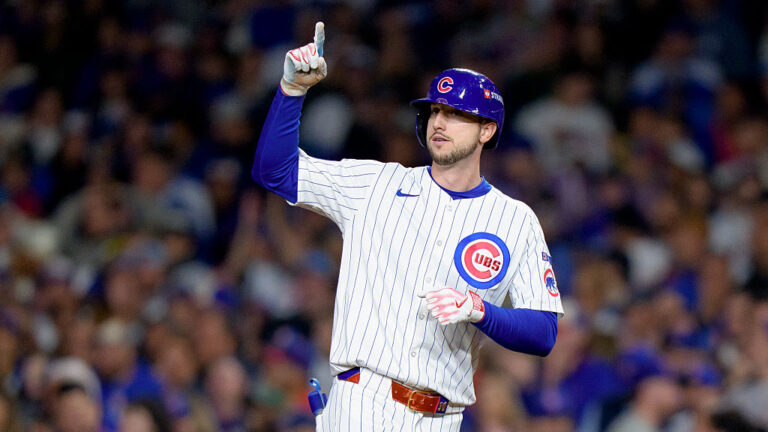
With Kyle Tucker still on the open market, here is why the Baltimore Orioles make for a sneaky-good fit for the superstar outfielder.
 | |
| | 
The Baltimore Orioles’ offseason has been nothing if not a roaring success.
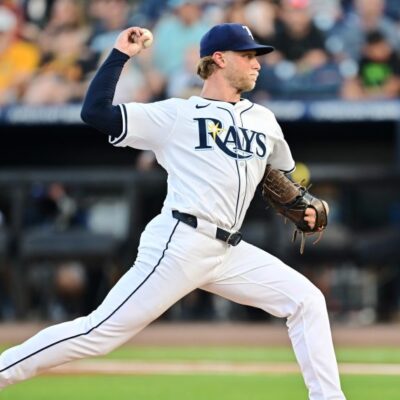
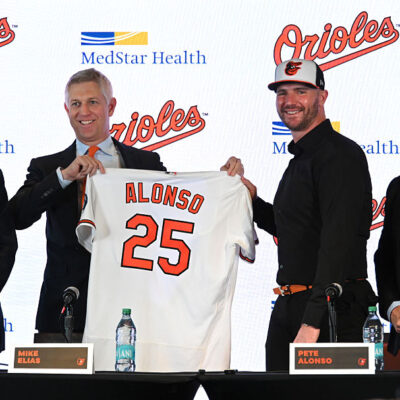
While the wound of losing out on Kyle Schwarber — who re-signed with the Philadelphia Phillies — hadn’t fully healed, Baltimore swung a deal with first baseman Pete Alonso on a five-year deal worth $155 million. That was the marquee move of the Orioles’ offseason, but they’ve also added Taylor Ward, Andrew Kittredge, Ryan Helsley, and Shane Baz.
If that quintet of moves completed the offseason, the Orioles still enter 2026 among the winners of the offseason for several reasons. However, they still could stand to add significant impact to the big-league club, taking the offseason from simply a home run to a grand slam.
How? Two words: Kyle Tucker.
The market surrounding the All-Star outfielder has been under-publicized this winter. Though one of the best players in the game, the pursuit of his services hardly feels like a sweepstakes.
Maybe that’s just compared to offseasons past with Juan Soto and Shohei Ohtani. That said, it feels like much more’s been made about Alex Bregman’s and Bo Bichette’s free agency.
Anyway, the teams you’d expect in his market are the Los Angeles Dodgers, Toronto Blue Jays, and New York Mets, to name a few. But the Orioles sneakily make a lot of sense as well.
Why is that? Let’s examine.
Financial Flexibility
Even after adding Alonso and Helsley, the Orioles are projected at roughly $170 million against the luxury tax in 2026. That’s about $74 million beneath the first Competitive Balance Tax threshold.
While they don’t have to spend up to that apron, they’ve got more than enough space to add another high-priced free agent if they want to. There are other more glaring weaknesses on the roster, for sure. Even after acquiring Baz from Tampa Bay, the Orioles can still stand to add another arm to the rotation.
The drawback? The top remaining free-agent starters — southpaws Framber Valdez and Ranger Suarez — each come with the qualifying offer attached. While Tucker also does, he’s younger and an everyday player in addition to being more valuable on an annual basis. While he’ll cost significantly more per season, he’s got a greater chance to meet the value of his contract for longer.
Of course, the Orioles also have some uncertain futures on the roster, namely shortstop Gunnar Henderson and catcher Adley Rutschman. Unfortunately, the former is a Scott Boras client and the latter’s recent struggles may dissuade him from signing something long term.
By the time Rutschman’s rookie deal expires, contracts such as Helsley and Tyler O’Neill will be up. Even if the switch-hitter resurrects his offensive output, that’s $30.5 million off the books in time for those negotiations.
Outfield Upgrade Could Be Helpful
The Orioles outfield, by and large, is set in stone for 2026. They traded for Ward in November, have Colton Cowser in center, and Dylan Beavers in right. Moreover, they have an abundance of first basemen, so it’s not like they can rotate an outfielder at designated hitter and sign Tucker.
That said, Ward is a rental. While there’s also Leody Taveras, the aforementioned O’Neill, and a trio of minor leaguers with Heston Kjerstad, Enrique Bradfield Jr., and Jud Fabian, none are close to Tucker’s pedigree.
The reason the outfield is still an area of weakness stems from Cowser’s regression in 2025. After finishing as a Rookie of the Year finalist in 2024, he struck out 35.6% of the time, posted an 83 wRC+, and his defense has also historically been better in left than center.
Beavers projects as more of a true corner outfielder as well. But for one season, they could make it work with him in center field just to get his bat in the lineup. Last season, the lefty bat posted a 125 wRC+ and a .375 on-base percentage.
Trying Beavers for a year in center, playing Tucker in right, then having the two flanking Bradfield or a 2027 free agent really optimizes the Orioles offense.
Teams Hungry for Outfielders
Around baseball, there are several outfield-hungry teams. There’s been no shortage of reporting of the Kansas City Royals’ desire to add more outfielders, but there’s also Pittsburgh, the Dodgers, and the Cincinnati Reds, to name a few.
One thing all those teams have in common is controllable starting pitching. The Royals especially have floated a willingness to swap pitching for outfield help. Kris Bubic’s name finds itself in trade speculation, as does Cole Ragans, even if unlikely.
The Pirates may be less inclined to trade for outfield help after acquiring Jake Mangum in the Brandon Lowe deal. However, there’s still a need for it in Pittsburgh, with additional arms potentially acquirable.
Ballpark Fit and Lineup Optimization
Since 2024, Camden Yards is the second-most hitter-friendly ballpark to lefties in baseball. It was a down year for Tucker last year in the power department, but Wrigley Field is among the league’s least friendly to lefties.
As we’ve seen in his career, Tucker can tailor his swing to his home ballpark. In 2024, he was among the game’s best in pull air rate, but had a 29.3% oppo air rate. He dropped the latter to 17.5% in his one year with the Cubs, maintaining elite pull air.
His batted-ball profile wouldn’t have lent itself to more home run production the last two years at Camden. However, his profile his past two healthy seasons would’ve seen more home run production in Baltimore.
It’s not a seamless fit, but great teams often acquire talent and figure it out later. Injuries happen, trades occur, among other variables, but here’s what adding Tucker could do for the Orioles lineup:
| Jackson Holliday (L) 2B |
| Kyle Tucker (L) RF |
| Pete Alonso 1B |
| Gunnar Henderson (L) SS |
| Adley Rutschman (S) C |
| Taylor Ward LF |
| Dylan Beavers (L) CF |
| Jordan Westburg 3B |
| Samuel Basallo (L) DH |
Adding Tucker would take their lineup that is already one of the more lethal ones on paper to a whole new level. Nothing is off the table, and monitoring the Tucker sweepstakes in the coming weeks will be one of the most crucial storylines to follow across MLB.
Written by